
In the realm of finance, numbers are the raw data, but percentages are the narrative. Whether you are analyzing a stock portfolio, managing a corporate budget, or simply trying to understand the impact of inflation on your purchasing power, knowing “how to find out the percent” is the fundamental skill that separates passive observers from informed decision-makers. Percentages provide a universal scale, allowing us to compare apples to oranges—or, more accurately, a small-cap tech stock to a blue-chip utility company.
This guide moves beyond basic arithmetic to explore how percentages function within the world of money, providing you with the tools to calculate, interpret, and leverage these figures for financial success.

1. The Core Mechanics: Calculating Returns and Growth in Personal Finance
At its simplest level, a percentage represents a part of a whole. However, in personal finance, we rarely use percentages to slice a pie; we use them to measure the velocity of wealth. Understanding how to calculate your rate of return is the first step in auditing your financial health.
The Basic Formula for Financial Growth
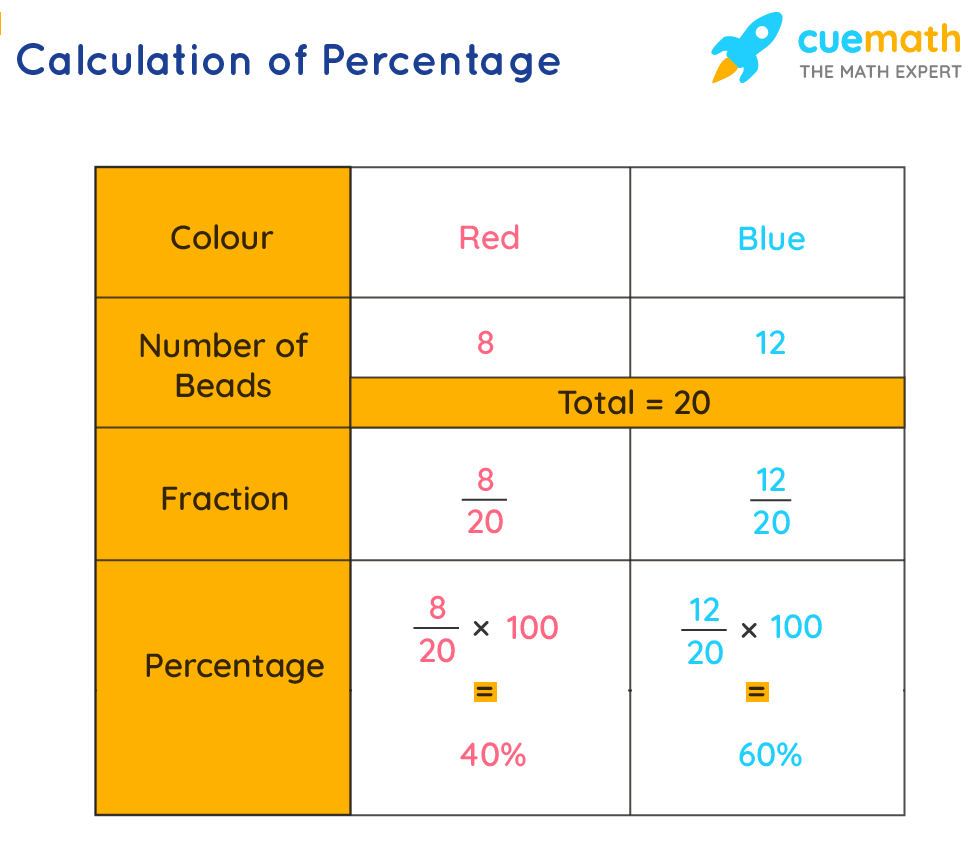
To find out the percent of growth in any investment, you must understand the relationship between your initial capital and your final gain. The standard formula is:
((Current Value – Original Value) / Original Value) x 100.
If you invested $5,000 in a mutual fund and it is now worth $5,750, your “percent” of profit is 15%. While the $750 gain is the nominal value, the 15% is the metric that allows you to compare this investment’s performance against other benchmarks, like the S&P 500 or a high-yield savings account.
Annualized Returns and CAGR
While simple percentage growth is useful for a quick snapshot, it doesn’t account for time. This is where the Compound Annual Growth Rate (CAGR) becomes essential. If an investment grows by 50% over ten years, that is significantly less impressive than 50% over two years. Finding the annualized percent helps you understand the “smoothed” yearly growth rate, providing a realistic view of how your money is working for you over long horizons.
The Rule of 72
A favorite “short-cut” for many financial advisors is the Rule of 72. By dividing 72 by your fixed annual percentage rate of return, you can estimate how many years it will take for your initial investment to double. For example, if you are earning a 6% return, your money will double in roughly 12 years. This mental math is a powerful tool for long-term retirement planning.
2. Percentages as a Tool for Risk Management and Budgeting
In the context of money management, percentages serve as the guardrails for your financial life. They help you determine if you are overleveraged or if your spending is out of alignment with your long-term goals.
The Debt-to-Income (DTI) Ratio
Lenders and mortgage brokers live and die by the DTI ratio. To find this percent, you divide your total monthly debt payments by your gross monthly income. Generally, a DTI of 36% or less is considered healthy. If you find your DTI creeping toward 50%, the percentage is sending you a clear signal: you are at a high risk of financial insolvency should your income fluctuate.
The 50/30/20 Budgeting Framework
One of the most effective ways to manage personal cash flow is through the percentage-based 50/30/20 rule.
- 50% to Needs: Housing, utilities, and groceries.
- 30% to Wants: Dining out, travel, and hobbies.
- 20% to Savings and Debt Repayment.
By looking at your spending through the lens of percentages rather than raw dollar amounts, you can maintain a consistent lifestyle even as your income grows. This prevents “lifestyle creep,” where expenses rise at the same rate as salary increases, leaving the individual with no more net savings than when they started.

Understanding Effective Tax Rates
Many people are confused by tax brackets, often fearing that a raise will result in less take-home pay because they “moved into a higher bracket.” Knowing how to find your effective tax rate—the actual percentage of your total income that goes to the government—is vital. This is calculated by dividing your total tax tax liability by your total taxable income. Because of the progressive nature of most tax systems, your effective rate is almost always lower than your marginal rate.
3. Advanced Business Metrics: Profit Margins and Market Share
For entrepreneurs and business owners, finding the percent is not just about personal wealth; it is about the viability of the enterprise. In business finance, percentages reveal the efficiency of operations.
Gross vs. Net Profit Margins
A company can have millions of dollars in revenue and still be failing. To find out the health of a business, we look at the profit margin percentages.
- Gross Profit Margin: ((Revenue – Cost of Goods Sold) / Revenue) x 100. This shows how efficiently a company produces its products.
- Net Profit Margin: ((Total Revenue – All Expenses) / Revenue) x 100. This is the “bottom line” percentage. It tells you exactly how many cents of every dollar earned actually stay in the company’s pocket.
High-growth tech companies often have high gross margins (80%+) but negative net margins as they reinvest for growth. Conversely, retail businesses might operate on thin net margins of 2% to 5%, relying on high volume to generate absolute wealth.
Market Share and Penetration
In corporate strategy, finding the percent of market share is the primary way to measure competitive standing. If the total industry spend is $1 billion and your company captures $100 million, you have a 10% market share. Monitoring how this percentage changes year-over-year is more indicative of brand strength than simply looking at internal sales growth. If your sales grew by 5% but the market grew by 20%, your “percent” of the market actually shrank, indicating a loss in competitive edge.
Customer Acquisition Cost (CAC) and LTV
Modern business finance relies heavily on the ratio between the Lifetime Value (LTV) of a customer and the Cost of Acquisition (CAC). If it costs $100 to acquire a customer who spends $500 over their lifetime, your “return on acquisition” is high. Expressing these as percentages of total marketing spend helps businesses decide where to allocate capital most efficiently.
4. Financial Tools and Technology for Precise Calculations
While the logic of “how to find out the percent” remains constant, the tools we use to derive these numbers have evolved. Moving beyond the basic pocket calculator, specialized technology allows for deeper financial modeling.
Leveraging Spreadsheet Software
Excel and Google Sheets are the industry standards for financial percentage calculations. Functions like =IRR() (Internal Rate of Return) and =XNPV() (Net Present Value) allow users to calculate complex percentages that involve irregular cash flows over time. Mastering these formulas is essential for anyone involved in real estate investing or business valuation.
Investment Platforms and Robo-Advisors
In the modern fintech landscape, apps like Vanguard, Fidelity, or Betterment automatically calculate your time-weighted returns and expense ratios. However, it is crucial to understand what these percentages represent. For instance, an “expense ratio” of 0.75% might seem small, but over 30 years, that percentage can eat away nearly 20% of your total potential portfolio value due to the lost opportunity for compounding.
The Role of Inflation: Real vs. Nominal Percentages
In an era of economic volatility, you must be able to calculate the “real” percentage of return. If your savings account offers a 4% interest rate, but inflation is running at 5%, your “real” return is -1%. This distinction is vital for preserving wealth. Financial tools now often include inflation-adjustment toggles, helping investors see the true purchasing power of their future gains.
Conclusion: The Strategic Power of Percentages
Understanding “how to find out the percent” is more than a mathematical exercise; it is a fundamental pillar of financial literacy. Percentages strip away the noise of large, confusing numbers and reveal the underlying truth of a financial situation. They allow an individual to see if their debt is manageable, if their investments are beating the market, and if their business is operating efficiently.
By mastering these ratios—from the simple ROI to the complexities of net profit margins and debt-to-income ratios—you gain the ability to speak the language of money fluently. In the world of finance, those who understand the percentages are the ones who ultimately control the dollars. Whether you are building a personal budget or a multi-million dollar business, let the percentages be your North Star, guiding you toward informed, data-driven, and prosperous decisions.
aViewFromTheCave is a participant in the Amazon Services LLC Associates Program, an affiliate advertising program designed to provide a means for sites to earn advertising fees by advertising and linking to Amazon.com. Amazon, the Amazon logo, AmazonSupply, and the AmazonSupply logo are trademarks of Amazon.com, Inc. or its affiliates. As an Amazon Associate we earn affiliate commissions from qualifying purchases.