
In the intricate world of personal finance, certain numbers serve as fundamental keys to accessing and managing your money. Among these, the bank routing number stands out as a crucial identifier, facilitating a vast array of electronic transactions that are central to modern financial life. While many people are intimately familiar with their account numbers, the routing number often remains a less-understood, yet equally vital, piece of information. Understanding what it is, why it’s important, and crucially, how to locate it, is essential for anyone navigating the complexities of their financial responsibilities.

This comprehensive guide will demystify the bank routing number, exploring its significance and providing clear, actionable steps on how to find yours, whether you’re setting up direct deposit, paying bills online, or initiating a wire transfer. We’ll delve into the most common and reliable methods, ensuring you have the knowledge and confidence to manage your financial information effectively and securely.
Understanding the Cornerstone of Electronic Payments: Your Routing Number
Before diving into how to find your routing number, it’s paramount to grasp what it is and why it holds such importance in the financial ecosystem. This foundational understanding will illuminate its role and underscore the necessity of knowing where to locate it.
What is a Routing Number? A Unique Identifier for Financial Institutions
At its core, a bank routing number is a nine-digit code that identifies your financial institution, much like a postal code identifies a specific geographic area. Officially known as an ABA (American Bankers Association) routing transit number, it was established in 1910 to process paper checks. Today, its primary function has expanded to enable the secure and efficient routing of electronic funds transfers (EFTs) between different banks. Each unique routing number corresponds to a specific bank, and sometimes even to a particular branch or a specific type of transaction offered by that bank.
The Federal Reserve plays a critical role in managing and maintaining the database of routing numbers, ensuring their accuracy and integrity across the U.S. financial system. Without these unique identifiers, the seamless flow of money that we often take for granted – from paychecks landing in our accounts to online bill payments – would be impossible.
Why Your Routing Number is Indispensable for Modern Finance
The utility of a routing number extends far beyond the traditional checkbook. In today’s digital age, it is a prerequisite for numerous essential financial activities, streamlining processes and ensuring your money reaches its intended destination.
- Direct Deposit: Perhaps the most common use, your routing number (alongside your account number) is necessary for employers to deposit your paycheck directly into your bank account. This eliminates the need for physical checks and ensures timely access to your funds.
- Automated Bill Payments (ACH Transactions): Setting up recurring payments for utilities, loans, or subscriptions often requires your routing number. These Automated Clearing House (ACH) transactions are electronic transfers that debit your account directly, offering convenience and preventing late fees.
- Wire Transfers: For faster, often larger, one-time transfers of funds, both domestic and international, your bank will require your routing number. Note that some banks may have specific routing numbers designated for wire transfers versus standard ACH.
- Tax Refunds: When opting for direct deposit of your tax refund from the IRS, you’ll need to provide your routing and account numbers to ensure the funds are sent to the correct bank.
- Electronic Funds Transfers (EFTs): Generally, any electronic movement of money between banks, whether initiated by you or a third party, will leverage routing numbers for identification and direction.
Routing Number vs. Account Number: Clarifying the Distinction
While often requested together, it’s vital not to confuse your routing number with your bank account number. They serve distinct but complementary purposes:
- Routing Number: Identifies which bank the money is going to or coming from. It’s the address of the bank.
- Account Number: Identifies which specific account at that bank the money is going into or coming from. It’s the specific apartment number within the bank’s address.
Both pieces of information are crucial for ensuring that transactions are routed correctly and applied to the intended individual account. Providing one without the other, or providing incorrect information for either, can lead to delayed transactions, returned payments, or even funds being misdirected, causing significant inconvenience and potential financial headaches.
Primary Methods to Locate Your Routing Number Quickly
Fortunately, finding your bank routing number is typically a straightforward process, thanks to its ubiquitous presence across various financial touchpoints. Here are the most reliable and frequently used methods.
The Classic Approach: Your Checkbook
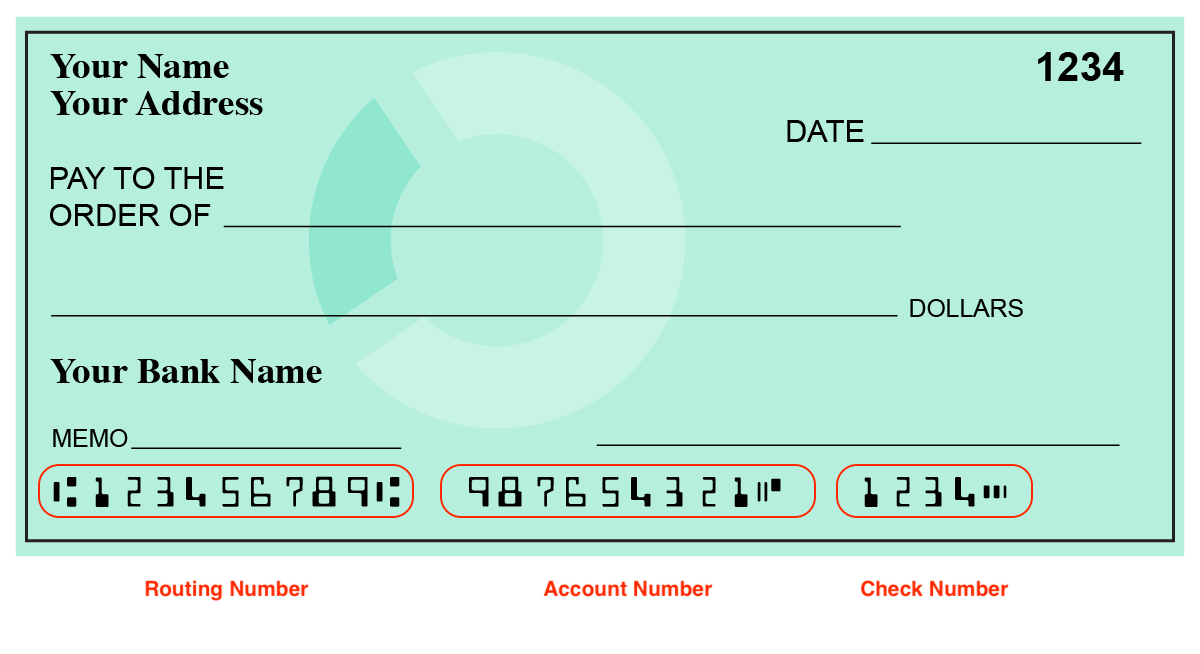
For those who still use physical checks, your checkbook is arguably the most traditional and often the easiest place to find your routing number. Look at the bottom edge of any check from your personal checkbook. You’ll typically see three sets of numbers printed in a special font called magnetic ink character recognition (MICR).
From left to right, these numbers usually represent:
- Routing Number: The nine-digit code on the far left.
- Account Number: The set of numbers in the middle, identifying your specific account.
- Check Number: The number on the far right, matching the printed check number in the upper right corner.
Pro Tip: While most checks follow this left-to-right order, some credit union checks or specialized checks might slightly alter the sequence. Always confirm that the nine-digit number you’re identifying matches the typical format of a routing number.
The Digital Convenience: Online Banking and Mobile Apps
In our increasingly digital world, your bank’s online platform or mobile application is an exceptionally convenient and often the most current source for your routing number. This method is particularly useful if you don’t have checks readily available or prefer digital access.
- Log In: Access your bank’s official website or open their mobile app on your smartphone or tablet.
- Navigate to Account Details: Once logged in, look for a section related to your specific checking or savings account. This might be labeled “Account Details,” “Account Info,” “Direct Deposit Information,” or similar.
- Find the Routing Number: Within this section, your routing number will typically be displayed prominently, often alongside your account number. Some banks might have a dedicated “Direct Deposit Form” or “Wire Transfer Instructions” page that explicitly lists the necessary numbers.
Banks are increasingly making this information easily accessible within their digital platforms, recognizing the frequent need for it in today’s financial landscape. If you have multiple accounts with the same bank, ensure you are looking at the details for the correct account, as some banks may use different routing numbers for different account types or branches.
Your Paper Trail: Bank Statements
Bank statements, whether received in paper form via mail or accessed digitally as e-statements, serve as another reliable record of your financial details, including your routing number.
- Paper Statements: If you receive monthly paper statements, locate a recent one. The routing number is usually printed on the statement, often near your account number, bank address, or in a section dedicated to “Account Information” or “Direct Deposit Instructions.”
- E-Statements: For those who opt for paperless statements, log into your online banking portal, navigate to the “Statements” section, and download a recent electronic statement. Open the PDF document and search for the routing number, typically in the same locations as a physical statement.
Bank statements are official documents, ensuring the accuracy of the routing number provided. They also serve as a good backup if you can’t access your online banking or don’t have checks handy.
Alternative Avenues for Retrieval and Verification
While the primary methods cover most scenarios, there are times when you might need to explore alternative routes or verify the information you’ve found.
Direct Communication: Contacting Your Bank
If you’re unable to find your routing number through any of the above methods, or if you want to confirm its accuracy for a crucial transaction, contacting your bank directly is always a safe and recommended option.
- Customer Service Hotline: Call your bank’s customer service number (usually found on their website, the back of your debit card, or a previous statement). After verifying your identity, a representative can provide your routing number. Be prepared to answer security questions to ensure you are the legitimate account holder.
- In-Branch Visit: If you prefer face-to-face interaction, visit a local branch of your bank. A teller or customer service representative will be able to provide the routing number for your account after verifying your identity with a valid ID.
Direct communication with your bank eliminates any guesswork and ensures you have the correct and most up-to-date information, which is especially important for wire transfers where accuracy is paramount.
Leveraging the Bank’s Official Website
Beyond logging into your specific account, many banks provide general information on their public-facing websites, including FAQs or dedicated pages for common customer inquiries.
- Search Function: Use the search bar on your bank’s website and type in “routing number” or “direct deposit.”
- FAQ / Help Section: Browse the “Frequently Asked Questions,” “Help,” or “Contact Us” sections. Banks often list their primary routing numbers here, especially for general ACH transactions.
- Direct Deposit Forms: Some banks offer downloadable direct deposit forms that pre-fill the routing number, simplifying the process for setting up payroll.
While general routing numbers are often listed, always double-check if your bank specifies different routing numbers for different types of transactions (e.g., domestic wire transfers versus ACH).
The Federal Reserve E-Payments Routing Directory
For advanced users or those needing to verify a routing number for a specific institution, the Federal Reserve provides an online E-Payments Routing Directory. This comprehensive database lists all active routing numbers used by financial institutions in the U.S.
- Purpose: While primarily used by financial institutions themselves, it can be a tool for individuals to look up or verify a bank’s routing number by searching the bank’s name.
- Caution: When using this directory, ensure you are searching for the correct legal name of your bank and be aware that large banks may have multiple routing numbers depending on their internal structure or specific services. For personal transactions, relying on your bank’s official channels (online banking, checkbook, customer service) is generally simpler and more direct.
Key Considerations and Best Practices for Routing Numbers
Knowing how to find your routing number is just one part of the equation. Understanding how to use it responsibly and what pitfalls to avoid is equally crucial for sound financial management.
The Absolute Necessity of Verification
Accuracy is paramount when dealing with financial numbers. An incorrect routing number can lead to:
- Delayed Transactions: Funds might be held up or returned to the sender.
- Misdirected Funds: In rare but serious cases, funds could be sent to an incorrect account at another institution.
- Fees: Some banks charge fees for returned payments due to incorrect information.
Always take a moment to double-check the routing number, especially when setting up new direct deposits, recurring payments, or initiating wire transfers. If in doubt, verify with your bank directly.
Security Precautions: Sharing Your Routing Number Judiciously
While a routing number alone is generally not enough for someone to access your funds (they would also need your account number and potentially other identifying information), it’s still a piece of sensitive financial data.
- Share Only When Necessary: Provide your routing number only to trusted entities, such as your employer for direct deposit, legitimate bill pay services, or government agencies for tax refunds.
- Beware of Phishing Scams: Be vigilant against unsolicited requests for your banking information, especially via email or suspicious websites. Legitimate organizations you already do business with will rarely ask for this information in an unprompted email.
- Secure Digital Platforms: Only enter your routing number on secure websites (look for “https://” and a padlock icon in the URL) and within your bank’s official mobile app.
Practicing good digital hygiene and being cautious with your financial information protects you from potential fraud and identity theft.
Navigating Multiple Accounts and Bank Changes
Life often involves more than one bank account or even switching banks. Here’s what to keep in mind:
- Bank-Specific Numbers: Each financial institution has its own unique routing number(s). If you have accounts with different banks, their routing numbers will differ.
- Account-Specific Numbers (Sometimes): While less common for standard checking/savings, some larger banks may have different routing numbers for specific types of accounts, branches, or for specialized transactions like international wires. Always confirm the correct number for the specific account you intend to use.
- Bank Mergers and Acquisitions: When banks merge or are acquired, routing numbers can change. If your bank has recently undergone such a change, it’s critical to verify the current routing number. Old routing numbers may continue to work for a transitional period, but it’s best to update your information promptly with employers and billers.
Understanding Routing Numbers for Specific Transactions
It’s worth reiterating that while a bank typically has a primary routing number, certain transactions might require a different one:
- ACH vs. Wire Transfers: Some banks use one routing number for standard ACH transfers (like direct deposit and bill pay) and a different one for domestic wire transfers.
- International Transfers (SWIFT/BIC): For international money transfers, a routing number is generally not used. Instead, you’ll need a SWIFT (Society for Worldwide Interbank Financial Telecommunication) code or BIC (Bank Identifier Code), which serves a similar purpose for global transactions. Do not confuse these with your domestic routing number.
Always confirm the specific routing number required for the type of transaction you are initiating with your bank.

Conclusion
The bank routing number, a seemingly small detail, underpins the vast majority of electronic financial transactions in the United States. From ensuring your paycheck arrives on time to enabling seamless online bill payments, its accurate use is fundamental to effective personal finance management. By familiarizing yourself with the various methods to locate this crucial nine-digit code—whether through your checkbook, online banking, bank statements, or direct communication with your bank—you empower yourself with the knowledge to navigate your financial life with confidence and precision.
Remember to prioritize accuracy and security when handling your routing number, verifying its correctness for all critical transactions and sharing it only with trusted entities. In an increasingly digital financial landscape, mastering these foundational elements ensures that your money moves where it needs to go, when it needs to get there, safely and efficiently.
aViewFromTheCave is a participant in the Amazon Services LLC Associates Program, an affiliate advertising program designed to provide a means for sites to earn advertising fees by advertising and linking to Amazon.com. Amazon, the Amazon logo, AmazonSupply, and the AmazonSupply logo are trademarks of Amazon.com, Inc. or its affiliates. As an Amazon Associate we earn affiliate commissions from qualifying purchases.