
In the intricate world of finance, percentages are far more than mere mathematical symbols; they are the universal language that quantifies change, risk, return, and proportion. From calculating the interest on your savings account to understanding the performance of your investment portfolio, the ability to “find out a percentage” is not just a useful skill—it’s an indispensable tool for informed financial decision-making. This article delves into the core principles of percentages, exploring their pervasive applications across personal and business finance, and equipping you with the knowledge to confidently navigate your financial landscape.
Understanding the Fundamentals of Percentages
At its heart, a percentage is simply a way of expressing a number as a fraction of 100. The term “percent” derives from the Latin “per centum,” meaning “by the hundred.” This standardized measure allows for easy comparison of ratios and proportions, regardless of the size of the underlying numbers. In finance, this standardization is critical for comparing diverse financial metrics on an equal footing.
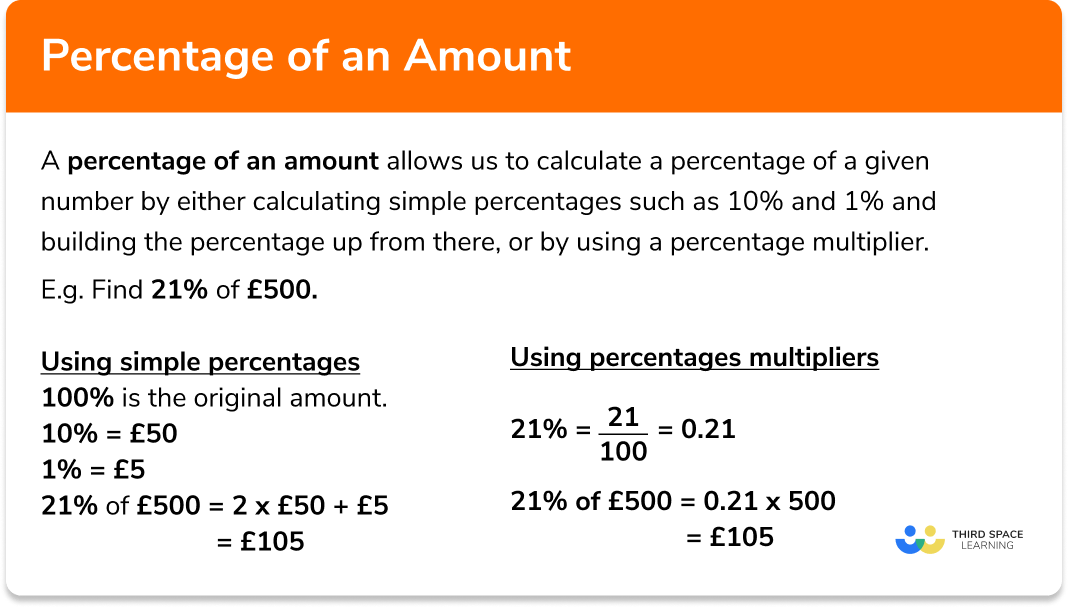
What is a Percentage? The Concept of ‘Per Hundred’
Imagine you have a pie cut into 100 slices. If you take 25 slices, you have 25 out of 100, or 25%. This intuitive concept scales up to any number. A percentage tells you how many units of a given quantity would be present if the total quantity were 100. For instance, if your investment grew by 10%, it means for every $100 you invested, you gained $10. This ‘per hundred’ framework simplifies complex comparisons, making it easier to grasp relative values quickly.
The Basic Formula: Part/Whole x 100
Calculating a percentage boils down to a simple, yet powerful, formula:
Percentage = (Part / Whole) x 100
Here:
- Part is the specific quantity or amount you are interested in.
- Whole is the total quantity or the reference base.
Let’s say you spent $300 on groceries from a total monthly budget of $2,000. To find out what percentage of your budget went to groceries:
- Part = $300 (groceries)
- Whole = $2,000 (total budget)
- Percentage = ($300 / $2,000) x 100 = 0.15 x 100 = 15%
This formula is the bedrock upon which nearly all financial percentage calculations are built, from calculating discounts to determining profit margins.
Converting Decimals and Fractions to Percentages
Before applying the formula, it’s often necessary to convert numbers into a usable format.
- Fractions to Percentages: If you have a fraction, simply divide the numerator by the denominator to get a decimal, then multiply by 100. For example, 3/4 is 0.75, which is 75%.
- Decimals to Percentages: To convert a decimal to a percentage, multiply it by 100 and add the percent symbol. For instance, an interest rate expressed as 0.05 is 0.05 x 100 = 5%. This conversion is particularly common when dealing with financial ratios or growth factors.
Practical Applications in Personal Finance
Percentages are the unsung heroes of personal finance, guiding everyday decisions and long-term planning. Mastering their calculation empowers you to take control of your financial well-being.
Calculating Discounts and Sales Tax
One of the most immediate uses of percentages in daily life is in shopping.
- Discounts: If an item is $50 and there’s a 20% discount, you calculate the discount amount first: $50 x 0.20 = $10. The final price is $50 – $10 = $40.
- Sales Tax: If an item costs $100 and the sales tax is 7%, the tax amount is $100 x 0.07 = $7. The total cost is $100 + $7 = $107.
Understanding these calculations ensures you’re paying the correct amount and can effectively budget for purchases.
Understanding Interest Rates (Loans, Savings, Credit Cards)
Interest rates are perhaps the most common percentage you’ll encounter in finance.
- Savings Accounts: A 1% annual interest rate means your savings will grow by 1% of the principal amount over a year.
- Loans and Mortgages: An interest rate on a loan dictates the cost of borrowing money. A 5% interest rate on a $200,000 mortgage means you’ll pay a significant portion of your monthly payment towards that 5% charge on the outstanding balance.
- Credit Cards: Credit cards often carry very high annual percentage rates (APRs). A 20% APR can quickly lead to substantial debt if balances are not paid off in full, as the interest compounds rapidly.
Knowing how to interpret and calculate interest is crucial for minimizing borrowing costs and maximizing savings growth.
Budgeting and Expense Ratios
Effective budgeting hinges on understanding where your money goes, often expressed in percentages.
- Expense Ratios: You might allocate 30% of your income to housing, 15% to food, and 10% to transportation. Calculating these ratios helps you identify areas for potential savings and ensures you stay within your financial goals. For example, if your housing expenses are $800 and your take-home pay is $3,000, your housing percentage is ($800 / $3,000) x 100 = 26.67%. This allows you to compare against general financial guidelines, like the 50/30/20 rule (50% needs, 30% wants, 20% savings/debt).
Tracking Personal Savings Goals
Percentages are invaluable for monitoring progress towards financial goals. If you aim to save $10,000 for a down payment and have already saved $2,500, you’re 25% of the way there ($2,500 / $10,000) x 100. This provides a clear, digestible metric of your progress, motivating you to stay on track.
Percentages in Investing and Business Finance
Beyond personal budgets, percentages form the backbone of investment analysis and corporate financial reporting. They enable investors and business leaders to assess performance, risk, and strategic positioning.
Analyzing Investment Returns and Growth Rates (ROI, CAGR)
- Return on Investment (ROI): This fundamental metric measures the profitability of an investment. If you invest $1,000 and it grows to $1,200, your profit is $200. ROI = ($200 / $1,000) x 100 = 20%. A higher ROI indicates a more efficient use of capital.
- Compound Annual Growth Rate (CAGR): CAGR smooths out annual fluctuations to show the average annual growth rate over a specified period longer than one year. It’s essential for understanding the long-term performance of an investment. For instance, if an investment grew from $10,000 to $15,000 over three years, its CAGR would be ((Final Value / Initial Value)^(1/Number of Years) – 1) x 100. In this case, (($15,000 / $10,000)^(1/3) – 1) x 100 = (1.5^0.3333 – 1) x 100 = (1.1447 – 1) x 100 = 14.47%.
These metrics allow investors to compare different investment opportunities and assess their portfolio’s health.
Understanding Profit Margins and Markups
For businesses, percentages are vital for profitability analysis.
- Gross Profit Margin: (Gross Profit / Revenue) x 100. This shows how much profit a company makes from each dollar of sales after accounting for the cost of goods sold. A 30% gross profit margin means 30 cents of every sales dollar is gross profit.
- Net Profit Margin: (Net Profit / Revenue) x 100. This is the ultimate measure of profitability, showing how much profit a company makes after all expenses, including taxes, have been deducted.
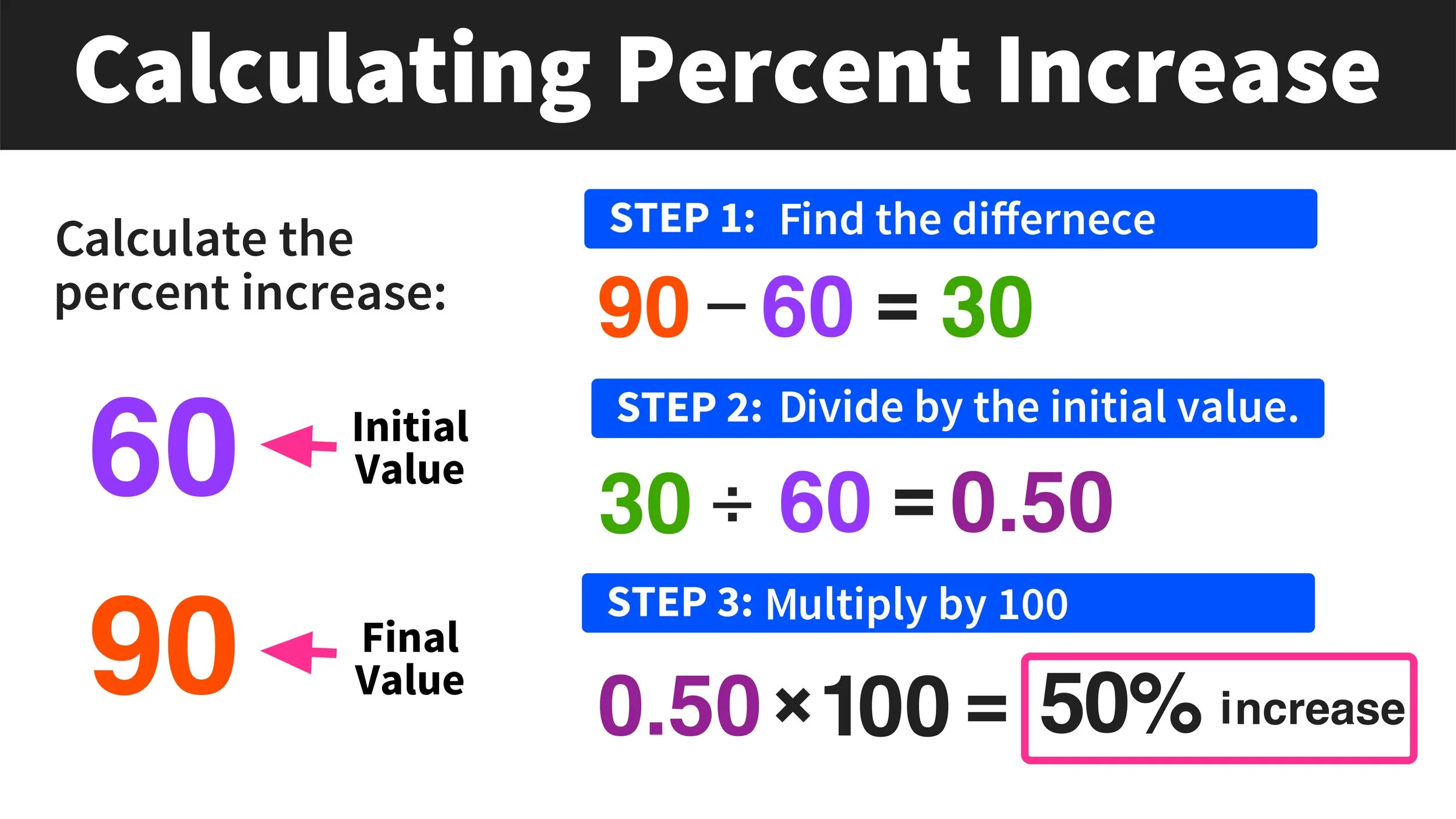
- Markups: Businesses often use markups to price products. If an item costs $10 to produce and is sold for $15, the markup is $5. Percentage Markup = ($5 / $10) x 100 = 50%.
These percentages are critical for pricing strategies, operational efficiency, and investor relations.
Diversification and Asset Allocation
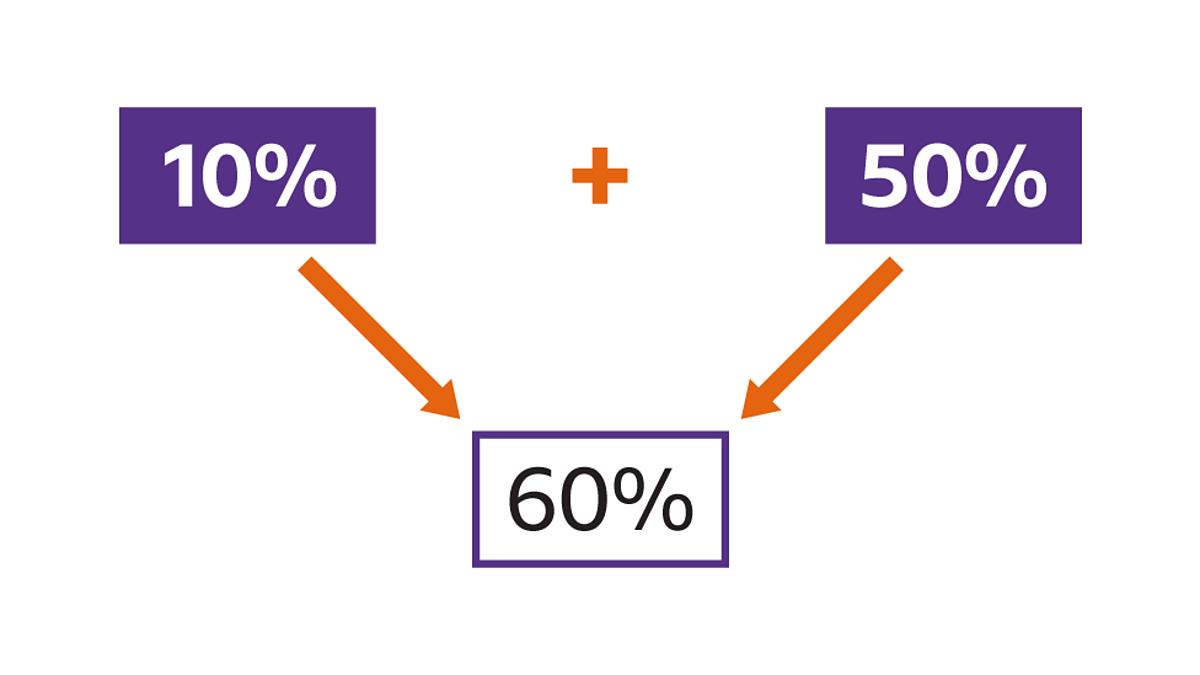
In portfolio management, percentages dictate diversification strategies. Asset allocation involves deciding what percentage of your portfolio to invest in different asset classes, such as stocks, bonds, and real estate. For example, a common rule of thumb might suggest a 60% allocation to stocks and 40% to bonds, depending on age and risk tolerance. Understanding these percentages is crucial for balancing risk and return.
Market Share and Financial Ratios
Businesses frequently use percentages to measure market position and financial health.
- Market Share: (Company’s Sales / Total Market Sales) x 100. This metric shows a company’s proportion of the total sales in its industry, indicating its competitive standing.
- Financial Ratios: Ratios like the debt-to-equity ratio (Total Debt / Shareholder Equity) are often expressed as percentages or decimal equivalents to quickly assess a company’s leverage or solvency. A company with a 50% debt-to-equity ratio means it has half as much debt as equity, providing a quick snapshot of its financial risk.
Common Pitfalls and Advanced Considerations
While percentages simplify financial data, certain nuances and advanced concepts require careful attention to avoid misinterpretations.
Percentage Change vs. Percentage Points
It’s crucial to distinguish between percentage change and percentage points.
- Percentage Change: This measures the proportional change relative to an initial value. If an interest rate increases from 4% to 5%, the percentage change is ((5-4)/4) x 100 = 25%.
- Percentage Points: This refers to the absolute difference between two percentages. In the above example, the interest rate increased by 1 percentage point (from 4% to 5%). Confusing these can lead to significant misstatements, especially in financial reporting and policy discussions.
The Impact of Compounding
Compounding, often called the “eighth wonder of the world,” dramatically amplifies the effect of percentages over time. When returns or interest are reinvested, they generate their own returns, leading to exponential growth. Understanding how small percentage returns compound over decades is vital for long-term investing and retirement planning. Conversely, compound interest on debt can similarly escalate financial burdens.
Avoiding Misinterpretations
Percentages can sometimes be misleading if the base (the ‘whole’) is not clearly understood or if they are presented out of context. Always question the ‘whole’ being used for calculation and consider the absolute numbers alongside the percentages to gain a full picture. For instance, a 100% growth on a $10 investment is only $10, whereas a 10% growth on a $1,000,000 investment is $100,000.
Tools and Resources for Percentage Calculations
While the basic formula is straightforward, modern financial tools can streamline complex percentage calculations.
Using Calculators and Spreadsheets
For quick calculations, a basic calculator (physical or on your smartphone) is sufficient. For more involved financial planning, spreadsheets like Microsoft Excel or Google Sheets are invaluable. They allow you to set up formulas once and apply them to various scenarios, making it easy to model different financial outcomes, track budgets, and analyze investment performance over time. Functions like RATE, FV, PV, and PMT in spreadsheets are designed for percentage-based financial calculations.
Online Financial Tools
Numerous online calculators and financial planning tools offer specialized percentage calculations, such as mortgage payment calculators, compound interest calculators, and retirement planners. These tools often provide user-friendly interfaces to input specific financial variables and quickly visualize the impact of different percentages on your financial future. Many banking and investment platforms also incorporate percentage-based dashboards to display returns, portfolio allocations, and loan progress.
Conclusion
The ability to “find out a percentage” is a fundamental cornerstone of financial literacy. From the simple act of calculating a discount to the complexities of investment analysis and business financial health, percentages provide the quantitative framework for understanding and making informed decisions. By grasping the basic formula, recognizing their diverse applications, and being mindful of common pitfalls, you empower yourself to navigate the financial world with greater confidence, precision, and ultimately, success. In an increasingly data-driven landscape, mastering percentages is not just a skill—it’s a critical asset for building and preserving wealth.
aViewFromTheCave is a participant in the Amazon Services LLC Associates Program, an affiliate advertising program designed to provide a means for sites to earn advertising fees by advertising and linking to Amazon.com. Amazon, the Amazon logo, AmazonSupply, and the AmazonSupply logo are trademarks of Amazon.com, Inc. or its affiliates. As an Amazon Associate we earn affiliate commissions from qualifying purchases.