
Understanding how to find your monthly interest rate is a fundamental skill in personal finance, a crucial piece of knowledge that empowers you to make smarter decisions about borrowing, saving, and investing. Whether you’re scrutinizing a credit card statement, evaluating a mortgage offer, or projecting the growth of your savings, the monthly interest rate offers a granular view that annual rates often obscure. While annual percentage rates (APR) and annual percentage yields (APY) are commonly quoted, breaking these down to a monthly figure provides clarity on immediate financial impact, aiding in budgeting and strategic financial planning.
This guide will demystify the process of finding your monthly interest rate, explaining the core concepts of APR and APY, detailing the calculation methods, exploring practical applications across various financial products, and highlighting the tools available to assist you. By the end, you’ll be equipped with the knowledge to precisely calculate and leverage this vital metric for your financial well-being.
Deciphering Annual Rates: APR vs. APY
Before diving into monthly calculations, it’s essential to grasp the difference between the two primary annual interest rates you’ll encounter: Annual Percentage Rate (APR) and Annual Percentage Yield (APY). Though often confused, they represent distinct aspects of interest and are applied in different financial contexts.
The Annual Percentage Rate (APR): Your Borrowing Cost
The Annual Percentage Rate (APR) is the most common way lenders express the cost of borrowing money. It represents the annual rate of interest charged on loans, credit cards, mortgages, and other credit products. Importantly, APR is typically a nominal annual rate, meaning it doesn’t always account for the compounding frequency within a year. For instance, a credit card with an 18% APR might charge interest daily, weekly, or monthly, but the 18% figure is the baseline annual rate used for calculation.
APR gives you a standardized way to compare loan offers, as it generally includes both the interest rate and certain fees, presenting the true annual cost of credit. However, to understand its impact on your monthly payments, you need to convert it into a monthly rate.
The Annual Percentage Yield (APY): Your Earning Power
Conversely, the Annual Percentage Yield (APY) is generally used to reflect the actual rate of return on an investment or savings account. Unlike APR, APY does take into account the effect of compounding interest over a year. This means if interest is compounded more frequently (e.g., monthly or daily), the APY will be higher than the nominal annual interest rate.
For example, a savings account with a 1.0% annual interest rate compounded monthly will have an APY slightly higher than 1.0%, perhaps 1.004%. APY provides a more accurate picture of how much you’ll actually earn over a year, making it the preferred metric for comparing savings accounts, certificates of deposit (CDs), and other interest-bearing investments. Because it already incorporates compounding, converting APY to a simple monthly rate isn’t typically done for direct payment/earning calculations, as the APY is the final, effective annual rate.
Why the Monthly Perspective Matters
While annual rates provide a useful overview, focusing on the monthly interest rate offers a more immediate and practical understanding of your financial situation. For borrowers, knowing the monthly interest rate helps you grasp exactly how much of your payment goes toward interest versus principal, enabling better budgeting and debt repayment strategies. For savers and investors, understanding the monthly growth rate allows for more precise forecasting of earnings and a clearer picture of compounding’s benefits over shorter timeframes. This granular perspective is crucial for effective cash flow management and making informed decisions that directly impact your day-to-day finances.
The Core Calculation: From Annual to Monthly
Converting annual rates to monthly rates is a straightforward process, though the exact method can vary slightly depending on whether you’re dealing with an APR for a loan or considering the underlying rate of an APY for savings.
Simple Conversion: APR to Monthly Rate
The most common scenario involves converting an APR into a monthly periodic rate, especially for loans and credit cards. Since APR is typically expressed as an annual rate, you simply divide it by 12 (the number of months in a year) to find the nominal monthly interest rate.
Formula:
Monthly Interest Rate = APR / 12
Example:
If your credit card has an APR of 18%, your monthly interest rate is:
18% / 12 = 1.5%
This 1.5% is the rate that will be applied to your average daily balance or outstanding principal each month. It’s crucial to express both the APR and the resulting monthly rate as decimals for actual calculations (e.g., 0.18 for 18%, and 0.015 for 1.5%).
This simple conversion is applicable when the APR is a nominal annual rate and you need to find the periodic rate for monthly calculations. Most loan and credit card statements use this monthly periodic rate to calculate interest charges.
Understanding Compounding and Effective Monthly Rates
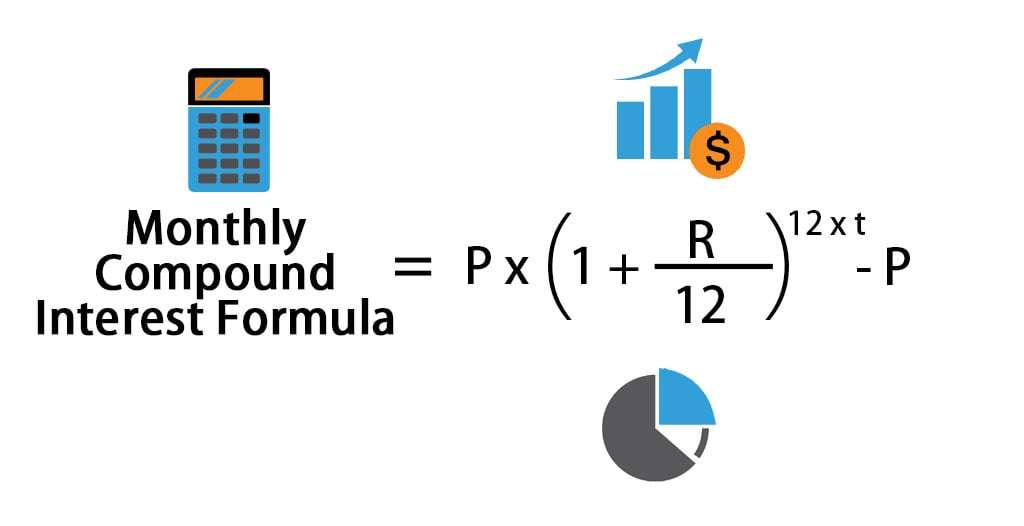
While the APR/12 conversion gives you the nominal monthly rate, it’s also important to understand how compounding affects the effective rate. APY, as discussed, already accounts for compounding to provide an effective annual rate. If you have an APY and need to determine the underlying effective monthly rate that generated it, the calculation involves working backward from the compound interest formula.
Formula for Effective Monthly Rate from APY:
Effective Monthly Rate = (1 + APY)^(1/12) – 1
Example:
If a savings account has an APY of 2.0% (meaning it truly yields 2% annually with compounding), the effective monthly rate would be:
(1 + 0.02)^(1/12) – 1
= (1.02)^0.083333 – 1
≈ 1.00165 – 1
≈ 0.00165 or 0.165%
This means that each month, your money is effectively earning about 0.165% of its balance, and that interest is then added to the principal to earn more interest in subsequent months, ultimately resulting in a 2.0% APY. This calculation is less common for day-to-day financial management but provides a deeper insight into the compounding mechanism. For most practical purposes related to loans and credit cards, the simple APR/12 calculation is sufficient.
Practical Applications in Personal Finance
Knowing how to find your monthly interest rate isn’t just an academic exercise; it’s a practical skill with direct applications across various aspects of your personal finances.

Debt Management: Credit Cards and Loans
For borrowers, the monthly interest rate is a critical metric for managing debt effectively.
-
Credit Cards: Credit card companies typically calculate interest daily, using your monthly periodic rate (APR/12). They might use an “average daily balance” method. By understanding your monthly interest rate, you can estimate how much interest accrues on your balance each billing cycle. This knowledge underscores the importance of paying off your full balance whenever possible to avoid interest charges altogether, or prioritizing high-interest debt in a repayment plan (like the debt avalanche method).
-
Loans (Mortgages, Auto, Personal): For installment loans, such as mortgages or auto loans, your monthly payment includes both principal and interest. The monthly interest rate is applied to your outstanding principal balance each month. Early in the loan term, a larger portion of your payment goes towards interest. As you pay down the principal, less interest accrues, and more of your payment is allocated to reducing the principal. An amortization schedule clearly illustrates this dynamic, showing exactly how much interest you pay each month. Calculating the monthly interest component (Monthly Rate x Outstanding Principal) helps you understand the true cost of your loan and motivates strategies like making extra principal payments to save on total interest paid over the loan’s lifetime.
Savings and Investment Growth
For savers and investors, understanding monthly interest accrual is equally important for optimizing growth.
-
Savings Accounts and CDs: While banks often quote APY, knowing the underlying monthly interest rate (especially if compounded monthly) helps you visualize your earnings on a more frequent basis. This can be particularly motivating for long-term savings goals. Comparing accounts based on their actual monthly earning power, rather than just the APY, can sometimes reveal subtle differences in how often interest is compounded and applied.
-
The Power of Compounding: When interest is compounded monthly, it means that the interest earned in one month is added to your principal, and then that new, larger principal earns interest in the next month. This accelerates the growth of your savings or investments over time. By grasping the monthly rate, you can better appreciate the exponential power of compound interest and how even small monthly contributions or slight increases in rate can significantly impact your long-term wealth accumulation.
Leveraging Tools for Accuracy and Insight
While the formulas are straightforward, various tools can simplify the process of finding and applying monthly interest rates, enhancing both accuracy and insight.
Spreadsheet Functions (Excel/Google Sheets)
Spreadsheet software like Microsoft Excel or Google Sheets are powerful tools for financial calculations. They allow you to easily perform the basic APR/12 conversion and also handle more complex scenarios, such as determining a monthly rate from loan payment details.
-
Simple Conversion: Type
= (APR_Cell / 12)to get the monthly rate. -
RATE Function: If you know the number of payments (nper), the payment amount (pmt), and the present value (pv) of a loan, you can use the
RATEfunction to find the monthly interest rate. For example,=RATE(nper, pmt, pv)will return the periodic rate. Remember thatnpershould be total monthly payments, andpmtandpvshould have consistent signs (e.g., ifpvis positive,pmtshould be negative). -
EFFECT and NOMINAL Functions: These functions can help you convert between nominal annual rates and effective annual rates (APY) for various compounding frequencies, which can then be used to derive monthly rates.
Online Calculators and Financial Apps
The internet is a trove of specialized calculators designed to simplify interest rate calculations.
-
Loan Calculators: Websites for banks, financial institutions, and independent finance blogs often provide loan calculators where you input the loan amount, interest rate, and term to see your estimated monthly payments and the breakdown of principal and interest. Many allow you to input an APR and directly display the monthly interest portion.
-
Interest Rate Converters: Specific tools exist online that allow you to convert between different interest rate types (e.g., nominal annual rate to effective monthly rate).
-
Budgeting and Investment Apps: Modern financial apps like Mint, YNAB, or those offered by investment platforms often integrate interest rate calculations. They can show you how much interest you’re paying on debts, earning on savings, and project the growth of your investments, implicitly utilizing monthly interest rate calculations.
When using online tools, always ensure they come from reputable sources to guarantee accuracy.
Strategic Decision-Making with Monthly Rates
Mastering the calculation and understanding of monthly interest rates moves you beyond basic financial literacy into the realm of strategic financial planning. This knowledge empowers you to make highly informed decisions that significantly impact your financial future.
Informed Borrowing and Lending
Understanding monthly interest allows you to truly compare different loan products. A seemingly small difference in APR can translate into hundreds or thousands of dollars in interest over the life of a loan. By calculating the actual monthly interest cost, you can:
-
Compare Offers Effectively: Evaluate which loan or credit card offers the most favorable terms, not just in headline APR, but in actual monthly cost.
-
Negotiate Better Rates: Armed with precise calculations, you can negotiate more effectively with lenders or justify refinancing existing debt.
-
Understand True Cost of Credit: Recognize the total amount of interest you’ll pay over time, encouraging a more responsible approach to borrowing. This is particularly crucial for large purchases like homes or cars, where even a slight adjustment in the monthly rate can have massive long-term implications.
Optimizing Savings and Investments
For your savings and investments, the monthly interest rate clarifies the actual rate of return and helps you harness the power of compounding.
-
Maximizing Compounding: By understanding which accounts compound more frequently (e.g., monthly vs. annually) and at what effective monthly rate, you can choose products that accelerate your wealth growth.
-
Forecasting Growth: More accurately project how quickly your savings or investments will grow over short and long periods, aiding in setting realistic financial goals.
-
Evaluating Opportunities: Compare the potential returns of different investment vehicles on a consistent monthly basis, informing decisions about where to allocate your capital.
Enhancing Financial Literacy
Ultimately, the ability to find and interpret your monthly interest rate is a cornerstone of robust financial literacy. It removes ambiguity and replaces it with clarity, enabling you to:
-
Take Control: Move from passively accepting quoted rates to actively understanding their implications for your personal cash flow and net worth.
-
Build Confidence: Feel more confident in financial discussions, whether with lenders, financial advisors, or when making independent investment choices.
-
Long-Term Planning: Lay a solid foundation for long-term financial planning, from retirement savings to debt freedom, by having a precise grasp of how interest works for and against you on a monthly basis.

Conclusion
The monthly interest rate is far more than just a mathematical figure; it’s a powerful tool for financial empowerment. By taking the time to understand its derivation from APR and APY, applying it to real-world scenarios across loans, credit cards, and savings, and utilizing the available tools for accurate calculation, you gain a granular perspective that is invaluable for sound financial management.
Embrace this fundamental financial skill. It will enable you to make informed decisions, optimize your borrowing and saving strategies, and ultimately, steer your financial journey with greater confidence and control. The path to financial well-being begins with understanding the numbers that shape your financial reality, and the monthly interest rate is undoubtedly one of the most significant.
aViewFromTheCave is a participant in the Amazon Services LLC Associates Program, an affiliate advertising program designed to provide a means for sites to earn advertising fees by advertising and linking to Amazon.com. Amazon, the Amazon logo, AmazonSupply, and the AmazonSupply logo are trademarks of Amazon.com, Inc. or its affiliates. As an Amazon Associate we earn affiliate commissions from qualifying purchases.