
Securing investment is a pivotal step for many businesses looking to scale, innovate, or simply get off the ground. The journey can seem daunting, but with a strategic approach focused on financial readiness, targeted outreach, and a compelling financial narrative, entrepreneurs can successfully attract the capital needed to fuel their ventures. This guide delves into the core financial and strategic considerations for finding the right investors for your business.
Laying the Financial Foundation: Are You Investor-Ready?
Before you even think about approaching potential investors, it’s crucial to ensure your business is financially robust and demonstrably prepared for external capital. Investors are looking for a clear return on their money, and that begins with a solid financial foundation.

Solidifying Your Business Plan and Financial Projections
A comprehensive business plan is your roadmap, detailing your market opportunity, competitive advantage, operational strategy, and, critically, your financial model. Within this plan, financial projections are paramount. These should be realistic, well-researched, and extend typically three to five years into the future, covering:
- Income Statements: Projecting revenue, cost of goods sold, and operating expenses to arrive at net profit.
- Balance Sheets: Detailing assets, liabilities, and equity to provide a snapshot of your company’s financial health at specific points.
- Cash Flow Statements: Illustrating how cash is generated and used, which is often the most critical financial statement for early-stage investors concerned about liquidity and burn rate.
- Break-Even Analysis: Clearly showing at what point your business will cover its costs and start generating profit.
- Key Performance Indicators (KPIs): Identifying the metrics that will drive your business’s financial success and how you plan to track them.
Investors will scrutinize these projections for accuracy and feasibility. They want to see a clear path to profitability and understand the underlying assumptions that drive your numbers. Any inconsistencies or overly optimistic forecasts can be immediate red flags.
Understanding Your Capital Needs and Valuation
Before approaching investors, you must precisely articulate how much capital you need and for what specific purposes. A vague “we need money” will not suffice. Detail how the investment will be allocated across key areas like product development, marketing, hiring, or operational expenses. This financial clarity demonstrates a clear understanding of your business’s trajectory and resource requirements.
Equally important is understanding your business’s valuation. This can be complex, especially for early-stage companies with little to no revenue. Common valuation methodologies include:
- Discounted Cash Flow (DCF): Projecting future cash flows and discounting them back to a present value.
- Market Multiples: Comparing your business to similar public or recently acquired companies based on revenue, EBITDA, or other relevant metrics.
- Asset-Based Valuation: Valuing the tangible and intangible assets of your business.
- Venture Capital Method: A common method for startups, working backward from a projected exit valuation to determine the present value.
While a precise valuation is often negotiated, having a well-reasoned understanding of your company’s worth will position you strongly. It allows you to define the equity stake you are willing to offer in exchange for the desired investment, directly impacting an investor’s potential return.
Identifying the Right Investor Archetype for Your Business
Not all investors are created equal, and understanding the different types of capital providers is crucial for a targeted and efficient fundraising process. Matching your business stage and financial needs with the appropriate investor archetype will significantly increase your chances of success.
Angel Investors: Early-Stage Fuel
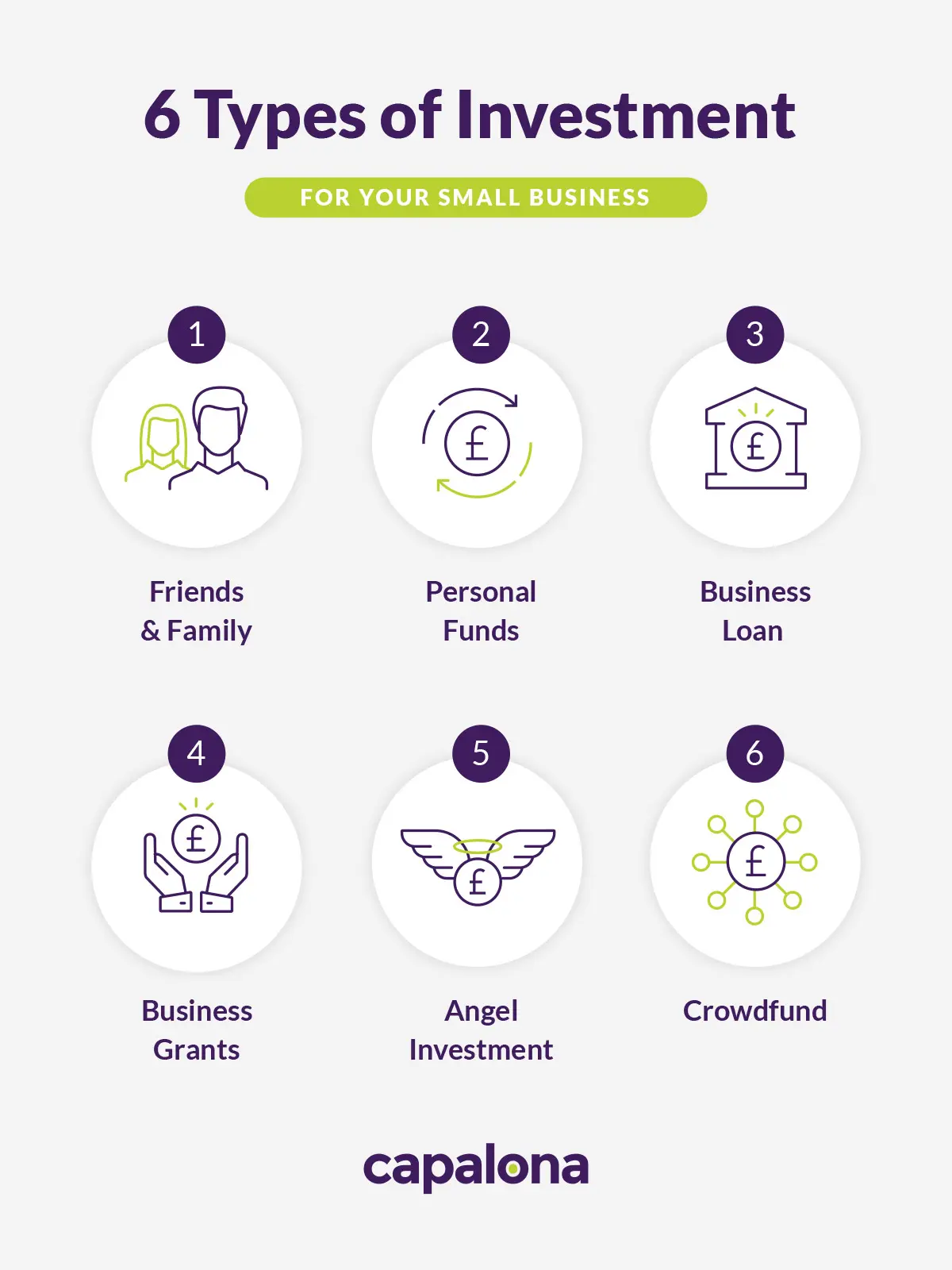
Angel investors are high-net-worth individuals who provide capital for startups, usually in exchange for equity ownership. They typically invest their own money, often taking an active role as mentors or advisors. Angel investments usually range from tens of thousands to a few million dollars, making them ideal for seed-stage or early-stage businesses. They often have an appetite for higher risk in exchange for significant potential returns and are more amenable to innovative or disruptive business models that may not yet have extensive revenue.
Venture Capital Firms: Scaling for Growth
Venture Capital (VC) firms manage funds from limited partners (e.g., pension funds, endowments) and invest in companies with high growth potential, often requiring larger sums than angel investors can provide. VCs are typically involved in later seed rounds, Series A, B, and beyond. They seek significant equity stakes and often demand board representation, providing not just capital but also strategic guidance and access to their extensive networks. VC firms are looking for businesses that can achieve exponential growth and offer a clear path to a substantial exit (acquisition or IPO).
Strategic Investors: Beyond Capital
Strategic investors are typically corporations or larger companies that invest in startups or growing businesses for reasons beyond pure financial return. They might seek to gain access to new technology, market segments, or talent, or to strengthen their supply chain. While they provide capital, the strategic alignment and potential for future partnerships or acquisitions can be even more valuable. These investments often occur when a business has reached a certain level of market validation or product maturity.
Debt Financing and Alternative Options
Beyond equity, various debt financing options can provide capital without diluting ownership. Small Business Administration (SBA) loans, lines of credit, and traditional bank loans are viable for businesses with strong cash flow and collateral.
- Crowdfunding: Platforms like Kickstarter or Indiegogo allow businesses to raise small amounts of money from a large number of individuals, often in exchange for products or equity. This can be an excellent way to validate market demand and secure initial capital.
- Grants: Government agencies or private foundations offer grants, particularly for businesses involved in research and development, social impact, or specific industries. These are non-dilutive, but often come with strict eligibility criteria and reporting requirements.
- Revenue-Based Financing: Investors provide capital in exchange for a percentage of future revenues until a certain multiple of the initial investment is repaid. This model is often suited for businesses with predictable recurring revenue.
The choice of investor type should align with your company’s stage, capital needs, growth trajectory, and long-term vision.
Crafting Your Compelling Pitch and Financial Story
Once you’ve done your internal financial homework and identified potential investor types, the next critical step is to articulate your business’s financial story in a way that resonates. Your pitch deck is not just a presentation; it’s a condensed financial prospectus designed to captivate and convince.
The Executive Summary: Your Financial Snapshot
Your executive summary, whether as a standalone document or the opening of your pitch deck, must be a concise, powerful overview of your business’s investment opportunity. It should clearly state:
- The problem you solve and your solution.
- Your market size and competitive advantage.
- Your team’s expertise.
- Crucially, your financial highlights: current traction, revenue model, key financial projections, and the amount of funding you are seeking, along with how it will be used.
- The potential return on investment (ROI) for the investor.
This summary needs to grab attention and immediately convey the financial viability and growth potential of your venture.
Detailed Financial Projections: The Numbers Speak
While the executive summary offers a snapshot, investors will demand to dive deep into your detailed financial projections. Present these clearly and logically, highlighting key assumptions. Be prepared to defend every number, from revenue growth rates to customer acquisition costs and gross margins. Visual aids like graphs for revenue growth, profit margins, and cash burn can make complex data more digestible. Crucially, show sensitivity analysis or best/worst-case scenarios to demonstrate you’ve considered various outcomes and possess a robust understanding of financial risk.
The Ask: Clear Capital Request and Equity Offer
Be explicit about the exact amount of capital you are seeking and what percentage of equity you are willing to offer in return. This demonstrates precision and a clear understanding of your valuation. Justify the “ask” by linking it directly to your use of funds and the milestones you expect to achieve with that investment. For instance, “We are seeking $1 million for 15% equity, which will allow us to launch our V2 product, expand into three new markets, and achieve monthly recurring revenue of $200,000 within 18 months.”
Presenting Your Exit Strategy: ROI for Investors
Investors are primarily concerned with how and when they will get their money back, and ideally, a substantial return on it. Clearly outline potential exit strategies, such as:
- Acquisition by a larger company: Identify potential acquirers and explain why your business would be an attractive target.
- Initial Public Offering (IPO): For high-growth companies with significant market potential.
- Secondary sale: Allowing investors to sell their shares to another private equity firm or strategic investor.
Presenting a clear, credible exit strategy demonstrates that you’ve thought about the long-term financial journey and the ultimate ROI for your partners.
The Art of Outreach and Building Investor Relationships
Finding investors is not just about having a great business; it’s about connecting with the right people and building relationships based on trust and mutual benefit.
Leveraging Your Network and Investor Databases
Start with your existing professional network. Friends, family, mentors, and advisors can make introductions to potential investors. Beyond that, specialized investor databases (e.g., Crunchbase, AngelList, PitchBook) can help identify active investors in your industry and stage. Look for investors who have previously funded similar businesses or have a stated interest in your sector. Personal introductions are always more impactful than cold outreach, so actively seek referrals.
Attending Industry Events and Pitch Competitions
Conferences, trade shows, startup accelerators, and pitch competitions are excellent venues for meeting investors in person. These events provide opportunities to refine your pitch, receive feedback, and network with potential funders and strategic partners. Even if you don’t win a competition, the exposure and connections made can be invaluable. Always be prepared with a concise elevator pitch and professional business cards.
Due Diligence Preparation: Transparency is Key
Once an investor expresses serious interest, they will initiate a due diligence process, meticulously scrutinizing every aspect of your business. This includes financial records, legal documents, intellectual property, contracts, team résumés, and market data. Prepare a comprehensive data room (often a secure online portal) well in advance, containing all relevant documentation. Transparency and meticulous organization during due diligence build trust and demonstrate your professionalism, making the investor’s job easier and accelerating the process. Any attempt to hide or obscure information will be a significant deterrent.
Navigating the Investment Process and Closing the Deal
Securing a “yes” from an investor is just the beginning. The subsequent stages involve careful negotiation and legal finalization to ensure the deal serves both parties fairly.
Term Sheets and Negotiation: Understanding the Fine Print
If an investor decides to move forward, they will present a term sheet, a non-binding document outlining the key terms and conditions of the proposed investment. This includes valuation, investment amount, equity stake, investor rights, board representation, liquidation preferences, and anti-dilution provisions. It’s crucial to thoroughly understand every clause and negotiate terms that are fair and protect your company’s long-term interests. Engage legal counsel with experience in venture capital or corporate finance to review the term sheet and guide negotiations. Focus on achieving a balance between securing the necessary capital and maintaining sufficient control and upside for yourself and your team.
Legalities and Documentation: Protecting Your Interests
Following an agreed-upon term sheet, a definitive investment agreement and other legal documents (e.g., shareholder agreements, amended articles of incorporation) will be drafted. These are legally binding contracts that formalize the investment. Again, expert legal advice is indispensable. Ensure all agreements accurately reflect the negotiated terms, address potential future scenarios, and comply with all relevant laws and regulations. This stage can be complex and time-consuming, but precision here prevents significant headaches down the road.

Post-Investment Relations: Cultivating Long-Term Value
Closing the deal is not the end of the investor relationship; it’s merely the start. Maintaining clear, consistent communication with your investors is vital. Provide regular financial reports, updates on key milestones, and transparently communicate challenges and successes. Investors often bring more than just capital; they offer valuable expertise, networks, and strategic guidance. Leverage these resources wisely. A strong, trust-based relationship with your investors can lead to follow-on funding, strategic partnerships, and invaluable support as your business grows and scales. Building this relationship on transparency and mutual respect ensures long-term alignment and maximizes the value of their involvement.
aViewFromTheCave is a participant in the Amazon Services LLC Associates Program, an affiliate advertising program designed to provide a means for sites to earn advertising fees by advertising and linking to Amazon.com. Amazon, the Amazon logo, AmazonSupply, and the AmazonSupply logo are trademarks of Amazon.com, Inc. or its affiliates. As an Amazon Associate we earn affiliate commissions from qualifying purchases.