
Understanding how to find the interest rate per month is a fundamental skill for anyone managing their personal finances, planning investments, or navigating business loans. While annual interest rates (like APR) are commonly advertised, the monthly rate often dictates the true cost of borrowing or the real growth of your savings on a more granular, immediate level. This article delves into the intricacies of monthly interest rates, offering practical methods for calculation, highlighting scenarios where this knowledge is crucial, exploring influencing factors, and providing tips for optimization.
In a world increasingly driven by financial literacy, mastering the calculation and implications of monthly interest rates empowers individuals and businesses to make smarter financial decisions, avoid hidden costs, and maximize their financial potential. Whether you’re considering a new credit card, evaluating a mortgage, or simply trying to understand your savings account statement, knowing your monthly interest rate is indispensable.

Understanding the Fundamentals of Interest Rates
Before we dive into the calculations, it’s essential to establish a solid understanding of what interest rates are and why their monthly breakdown is so important.
What is an Interest Rate?
At its core, an interest rate is the cost of borrowing money or the return on an investment. When you borrow money (e.s., a loan, credit card), the interest rate is the percentage of the principal (the amount borrowed) that you pay to the lender as a fee for using their money. Conversely, when you lend money or deposit it into a savings account, the interest rate is the percentage you earn on your principal. This rate is typically expressed as a percentage over a specific period, most commonly on an annual basis.
Annual Percentage Rate (APR) vs. Monthly Interest Rate
The most common interest rate you’ll encounter is the Annual Percentage Rate (APR). APR represents the annual cost of a loan to a borrower, including any fees or additional costs associated with the transaction, not just the nominal interest rate. It’s designed to give consumers a standardized way to compare loans. However, APR is an annual rate.
The monthly interest rate, on the other hand, is the rate applied to your principal balance each month. While APR provides a yearly overview, the monthly rate is what directly impacts your monthly payments or the monthly growth of your savings. For many financial products, interest is compounded monthly, meaning the interest you earn (or owe) is added to your principal, and then the next month’s interest is calculated on this new, larger principal. This compounding effect makes understanding the monthly rate critical.
Why Monthly Rates Matter
Monthly rates matter for several crucial reasons:
- Budgeting Accuracy: For borrowers, understanding the monthly interest applied directly informs your actual monthly payment, allowing for more precise budgeting.
- True Cost of Debt: With monthly compounding, a seemingly small difference in the monthly rate can lead to significant differences in total interest paid over the life of a loan.
- Savings Growth: For savers and investors, knowing the monthly rate helps you track the actual growth of your money, especially in accounts where interest is compounded monthly.
- Comparison: While APR is a good starting point, looking at effective monthly rates can sometimes reveal subtle differences between financial products, especially when comparing loans with varying fee structures or compounding frequencies.
Practical Methods for Calculating Monthly Interest Rates
Calculating your monthly interest rate can be straightforward once you understand the basic formulas and principles. Here are the most common methods.
Converting APR to a Monthly Rate
The simplest and most common scenario is converting an advertised APR into a monthly rate. For basic calculations, especially for loans where interest is simple or compounded monthly without additional fees embedded monthly, you can use a direct division.
Formula:
Monthly Interest Rate = APR / 12
Example:
If your credit card has an APR of 18%, your monthly interest rate would be 18% / 12 = 1.5% per month.
It’s important to note that for complex loans with significant upfront fees or daily compounding, the effective monthly rate might be slightly different from this simple division due to the way APR is defined to include all costs. However, for most consumer loans and savings accounts, this conversion provides a highly accurate monthly rate.
Calculating for Simple Interest Loans
Simple interest is calculated only on the principal amount of a loan. It’s less common for consumer loans but can be found in some short-term loans or certain types of investments.
Formula:
Monthly Simple Interest = (Principal x Annual Interest Rate) / 12
Or, if you want the monthly simple interest rate:
Monthly Simple Interest Rate = Annual Interest Rate / 12
Example:
You take a short-term loan of $1,000 at a 10% annual simple interest rate.
Monthly Interest Rate = 10% / 12 = 0.00833 (or 0.833%)
Monthly Interest Payment = $1,000 x 0.00833 = $8.33
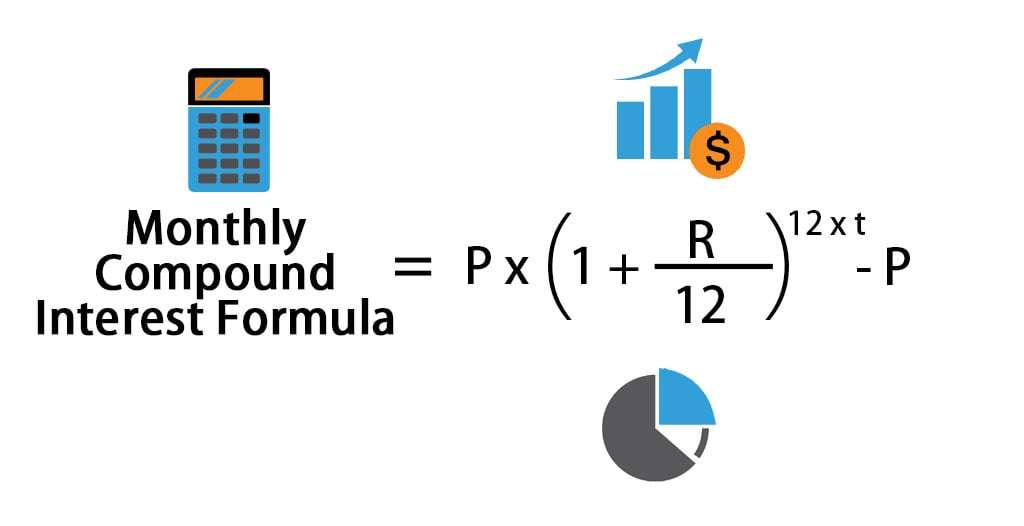
Calculating for Compound Interest (Loans and Savings)
Most loans and savings accounts use compound interest, meaning interest is calculated on the principal plus any accumulated interest from previous periods. This is where understanding the monthly rate is paramount.
When the APR is provided and interest is compounded monthly (which is very common), the conversion APR / 12 gives you the periodic monthly rate. This rate is then applied to the current balance.
Example (Loan):
You have a credit card balance of $500 with an APR of 24%.
Monthly Interest Rate = 24% / 12 = 2%
If no payments are made, the interest for the first month would be $500 x 0.02 = $10.
Your new balance for the next month’s calculation would be $500 + $10 = $510.
Example (Savings):
You have $1,000 in a savings account with an annual interest rate of 1.2%, compounded monthly.
Monthly Interest Rate = 1.2% / 12 = 0.1%
Interest earned in month 1 = $1,000 x 0.001 = $1.
New balance = $1,001.
Interest earned in month 2 = $1,001 x 0.001 = $1.001.
For more advanced scenarios involving effective annual rates (EAR) or different compounding frequencies, the calculations become more complex, often requiring the use of specific financial calculators or software. However, for the purpose of finding the basic monthly rate from a given APR, the division method is generally sufficient.
Using Online Calculators and Financial Tools
While manual calculations are valuable for understanding the mechanics, a myriad of online calculators and financial tools can simplify the process. Websites for banks, loan providers, and personal finance portals often feature interest rate calculators. These tools can not only convert annual rates to monthly ones but also estimate monthly payments, total interest paid over a loan term, or the future value of savings.
- Loan Calculators: Input loan amount, APR, and term to get monthly payments and an interest breakdown.
- Mortgage Calculators: Similar to loan calculators but specialized for housing loans.
- Savings/Compound Interest Calculators: Input initial deposit, monthly contributions, annual interest rate, and compounding frequency to see projected growth.
These tools are invaluable for quickly assessing various financial scenarios without needing to perform complex calculations by hand.
Scenarios Where Finding Monthly Interest Rates is Crucial
The ability to find and understand monthly interest rates is not just an academic exercise; it has real-world implications across various financial products and decisions.
Personal Loans and Credit Cards
For personal loans and especially credit cards, where balances can fluctuate and interest is often compounded daily or monthly, knowing the monthly rate is paramount. It allows you to:
- Estimate Interest Charges: Accurately predict how much interest you’ll owe each month based on your outstanding balance.
- Evaluate Minimum Payments: Understand how much of your minimum payment goes towards interest versus principal.
- Plan Debt Repayment: Strategize accelerated payments to reduce the principal faster and save on total interest.
Mortgages and Auto Loans
While these typically have fixed monthly payments for a fixed term, the amortization schedule (how much principal and interest you pay each month) is directly derived from the monthly interest rate.
- Understand Amortization: See how the proportion of interest to principal changes over the life of the loan. Early on, a larger portion of your payment goes to interest.
- Refinancing Decisions: Compare the monthly interest rate of your current loan with potential new loans to see if refinancing is truly beneficial.
- Impact of Extra Payments: Calculate how much an extra payment towards principal can reduce future interest charges and shorten the loan term.
Savings Accounts and Investments
On the earning side, monthly interest rates dictate how quickly your money grows.
- Compare Savings Products: Evaluate different savings accounts, money market accounts, or CDs based on their effective monthly returns, especially if compounding frequency differs.
- Project Investment Growth: For investments with regular interest distributions, understanding the monthly rate helps in projecting cash flow and overall portfolio growth.
- Retirement Planning: In long-term investment strategies, the power of monthly compounding, even at a seemingly small monthly rate, can lead to substantial wealth accumulation over decades.
Business Financing Decisions
Businesses frequently take on loans for expansion, operations, or inventory.
- Cash Flow Management: Businesses need to accurately forecast their monthly interest expenses to manage cash flow effectively.
- Cost of Capital: The monthly interest rate is a key component in determining the true cost of various financing options, helping businesses choose the most cost-effective capital.
- Return on Investment (ROI): When borrowing for a project, businesses must ensure the projected monthly returns from the project exceed the monthly interest cost of the loan.
Factors Influencing Your Monthly Interest Rate
Several variables can impact the monthly interest rate you receive or pay, extending beyond a simple APR. Being aware of these can help you secure better rates.
Credit Score and Financial History
Your creditworthiness is perhaps the most significant factor. Lenders assess your credit score, payment history, debt-to-income ratio, and other financial indicators to determine your risk profile. A higher credit score generally signifies lower risk, qualifying you for lower interest rates (and thus lower monthly interest payments). Conversely, a poor credit history often leads to higher rates to compensate the lender for the increased risk.
Market Conditions and Economic Indicators
Broader economic forces play a crucial role. The federal funds rate set by central banks (like the Federal Reserve in the U.S.) influences prime rates, which then trickle down to consumer loan products. Inflation, economic growth, and employment rates can all affect the supply and demand for money, thereby impacting prevailing interest rates. When central banks raise rates, borrowing costs, including your monthly interest rates on variable loans, tend to increase.
Loan Term and Type of Financial Product
The length of your loan and its type also affect the interest rate.
- Loan Term: Shorter loan terms often come with slightly lower interest rates because the lender’s risk exposure is reduced. However, shorter terms also mean higher monthly payments.
- Product Type: Different financial products inherently carry different risk profiles and therefore different rate structures. For instance, secured loans (like mortgages or auto loans, backed by collateral) typically have lower rates than unsecured loans (like personal loans or credit cards).
Lender Policies and Fees
Each lender has its own risk assessment models, overhead costs, and profit margins, which influence the rates they offer. Some lenders might specialize in certain types of loans, offering competitive rates in those niches. Additionally, various fees (origination fees, annual fees, late payment fees) can impact the overall cost of a loan, even if they aren’t directly part of the nominal monthly interest rate. When comparing offers, it’s crucial to look at the total cost, not just the advertised interest rate.
Tips for Managing and Optimizing Your Interest Rates
Knowing how to find your monthly interest rate is only half the battle; the other half is actively managing and optimizing it to your financial advantage.
Improving Your Creditworthiness
This is a long-term strategy but one of the most effective.
- Pay Bills on Time: Payment history is a major component of your credit score.
- Reduce Debt: Lowering your credit utilization ratio (amount of credit used vs. available) can significantly boost your score.
- Monitor Your Credit Report: Regularly check for errors that could negatively impact your score.
- Diversify Credit: A healthy mix of different credit types (e.g., credit card, installment loan) can be beneficial.
A higher credit score opens doors to lower APRs, which translates directly into lower monthly interest rates and significant savings over the life of a loan.
Shopping Around for the Best Rates
Never settle for the first offer. Always compare rates from multiple lenders—banks, credit unions, and online lenders. Different institutions will have varying policies and might offer better rates depending on your financial profile and the specific product. Use online comparison tools, but also contact lenders directly for personalized quotes. Look beyond just the APR; consider all fees and terms.
Understanding Loan Agreements
Before signing any loan agreement, meticulously read and understand all the terms and conditions. Pay close attention to:
- The stated APR and how it’s calculated.
- The compounding frequency (e.g., monthly, daily).
- Any fees (origination, annual, late payment).
- Prepayment penalties: Are you penalized for paying off the loan early?
- Variable vs. Fixed Rates: Understand if your rate can change over time.
Don’t hesitate to ask questions if anything is unclear. A clear understanding prevents surprises and helps you manage your financial obligations effectively.

Leveraging Bi-Weekly Payments or Extra Principal Payments
For loans with significant interest accrual (like mortgages), making bi-weekly payments (half your monthly payment every two weeks) effectively results in one extra monthly payment per year. This accelerates principal reduction, saving you substantial interest over the loan’s term. Similarly, even small, consistent extra payments towards the principal of any compound interest loan can significantly reduce the total interest paid and shorten the repayment period.
By consistently applying these strategies, you can take control of your monthly interest rates, reduce your debt burden, and accelerate your path to financial freedom. Finding and understanding your monthly interest rate is not merely a calculation; it’s a critical step towards informed financial decision-making.
aViewFromTheCave is a participant in the Amazon Services LLC Associates Program, an affiliate advertising program designed to provide a means for sites to earn advertising fees by advertising and linking to Amazon.com. Amazon, the Amazon logo, AmazonSupply, and the AmazonSupply logo are trademarks of Amazon.com, Inc. or its affiliates. As an Amazon Associate we earn affiliate commissions from qualifying purchases.