
Understanding the interest rate on a loan is not merely an exercise in financial literacy; it is a fundamental pillar of sound financial management. Whether you’re considering a new mortgage, car loan, student loan, or personal loan, the interest rate dictates a significant portion of the total cost you will pay over the loan’s lifetime. It’s the price of borrowing money, expressed as a percentage of the principal balance, and it can dramatically affect your monthly payments, the speed at which you pay down your debt, and your overall financial health. For many, a loan represents a substantial financial commitment, and being able to quickly and accurately identify its interest rate is the first step toward effective budgeting, smart comparison shopping, and proactive debt management. This guide delves into the essential methods and critical considerations for uncovering your loan’s true cost, empowering you with the knowledge to make informed financial decisions.
Why Knowing Your Interest Rate is Paramount
The interest rate is arguably the single most critical factor when evaluating any loan product. Its influence extends far beyond a simple number, permeating every aspect of your loan’s impact on your personal finances. A clear understanding of your interest rate allows for greater control, better planning, and the potential to save significant sums of money over the life of your debt.
Impact on Total Loan Cost
The direct relationship between your interest rate and the total amount you will repay is profound. Even a seemingly small difference of half a percentage point can translate into thousands, or even tens of thousands, of dollars over the lifespan of a long-term loan like a mortgage. For instance, a 30-year mortgage at 4% versus 4.5% will result in a substantial variance in total interest paid, highlighting why every basis point matters. High interest rates mean a larger portion of your monthly payment goes towards servicing the interest rather than reducing the principal, slowing down your equity build-up and keeping you in debt longer. Conversely, a lower rate accelerates principal reduction, freeing up cash flow and shortening your debt horizon. This fundamental understanding is crucial for assessing the true burden of debt and for making strategic decisions about borrowing.
Budgeting and Financial Planning
Accurate budgeting hinges on knowing your financial obligations down to the last dollar. Your loan’s interest rate directly determines the interest component of your monthly payment, which, when combined with the principal repayment, forms your total installment. Without this crucial piece of information, accurately projecting your cash flow and allocating funds becomes a guessing game. For individuals and businesses alike, an unexpected surge in interest payments – common with variable-rate loans – can throw a well-crafted budget into disarray. Knowing your rate allows you to forecast future expenses, assess your debt-to-income ratio, and plan for major financial goals with greater precision, fostering a sense of control over your financial destiny.
Refinancing Opportunities and Comparisons
In a dynamic economic landscape, interest rates fluctuate. What was a competitive rate yesterday might be considered high today. Keeping an eye on your existing loan’s interest rate allows you to compare it against current market offerings for similar products. This vigilance is the cornerstone of identifying potential refinancing opportunities. Refinancing can lead to a lower interest rate, which can significantly reduce your monthly payments, decrease the total interest paid, or even shorten the loan term. However, without knowing your current rate, you cannot objectively assess whether a new offer is genuinely better. Similarly, when shopping for new loans, a firm grasp of typical rates and your eligibility for them (often based on credit score) empowers you to negotiate effectively and ensure you’re not overpaying. This continuous comparison and evaluation are vital for optimizing your debt structure and saving money.
Where to Locate Your Loan’s Interest Rate
Finding your loan’s interest rate is often straightforward, provided you know where to look. Lenders are legally obligated to disclose this information clearly, and multiple avenues exist for retrieving it, both through formal documentation and direct communication.
Official Loan Documents
The most authoritative source for your loan’s interest rate is the original loan agreement or promissory note you signed when you took out the loan. These documents are legally binding contracts that detail all the terms and conditions of your borrowing, including the principal amount, loan term, payment schedule, and, crucially, the interest rate. For mortgages, you’ll find it on your Closing Disclosure (CD) or Truth-in-Lending (TIL) statement. For auto loans, personal loans, and student loans, it will be prominently displayed in the loan agreement itself. Always keep copies of these documents in a secure place, as they serve as the definitive record of your loan’s terms. If you’re unsure where your physical copies are, many lenders offer digital archives of these documents through their online portals.
Monthly Statements and Online Portals
For ongoing loans, your monthly billing statements are an excellent, readily accessible source of information. Most statements clearly itemize your principal balance, your payment due, and often, your current interest rate (especially for variable-rate loans where it might change). Beyond paper statements, nearly all modern lenders provide online portals or mobile apps where you can access your loan details 24/7. After logging in with your credentials, you can typically navigate to a “Loan Details,” “Account Summary,” or “Documents” section to view your current interest rate, payment history, and even download digital copies of your original loan agreements or recent statements. This digital access is often the quickest and most convenient way to check your rate.
Direct Contact with Your Lender
If you’ve exhausted other options, or if you simply prefer direct communication, contacting your loan servicer or lender directly is always an option. You can typically find their customer service number on your monthly statement or on their official website. When you call, be prepared to provide your account number and personal identification details (like your date of birth or social security number) to verify your identity. A customer service representative should be able to provide you with your current interest rate and answer any other questions you may have about your loan terms. It’s also possible to send a secure message through your lender’s online portal or visit a local branch, though phone calls are often the most efficient route for a quick query.
Understanding Different Types of Interest Rates
The term “interest rate” isn’t monolithic; it encompasses several distinct types and calculation methodologies, each with specific implications for your loan. A nuanced understanding of these distinctions is crucial for accurately assessing and comparing loan offers.
Fixed vs. Variable Rates
The most fundamental distinction lies between fixed and variable interest rates.
A fixed interest rate remains constant throughout the entire life of the loan. This provides predictability and stability, as your monthly principal and interest payments will not change. Borrowers often favor fixed rates for long-term loans like mortgages, as they offer protection against rising interest rates in the market. The downside is that you won’t benefit if market rates fall, and typically, fixed rates start slightly higher than initial variable rates.
A variable interest rate, also known as an adjustable or floating rate, can change periodically based on a benchmark index (e.g., the prime rate, LIBOR, or SOFR). While variable rates often start lower than fixed rates, they carry the risk that your payments could increase if the benchmark index rises. Conversely, your payments could decrease if the index falls. Variable rates are common in products like adjustable-rate mortgages (ARMs), credit cards, and some personal loans. Understanding the index your variable rate is tied to, and how often it adjusts, is critical for managing potential payment fluctuations.

APR vs. Nominal Interest Rate
It’s vital to differentiate between the nominal interest rate and the Annual Percentage Rate (APR).
The nominal interest rate is simply the stated interest rate on the loan, representing the annual cost of borrowing the principal without factoring in any additional fees.
The Annual Percentage Rate (APR), on the other hand, provides a more comprehensive measure of the true cost of borrowing. It includes the nominal interest rate plus any additional charges or fees associated with the loan, such as origination fees, discount points, mortgage insurance premiums, or closing costs. The APR aims to give consumers a single, standardized metric to compare the overall cost of different loan offers, making it a more accurate reflection of what you’ll actually pay. While the nominal rate tells you how much interest you’re being charged on the principal, the APR tells you the full yearly cost of the loan expressed as a percentage. When comparing loans, always prioritize comparing APRs, as they provide a truer apples-to-apples comparison.
The Concept of Simple vs. Compound Interest
How interest is calculated also significantly impacts the total cost of your loan.
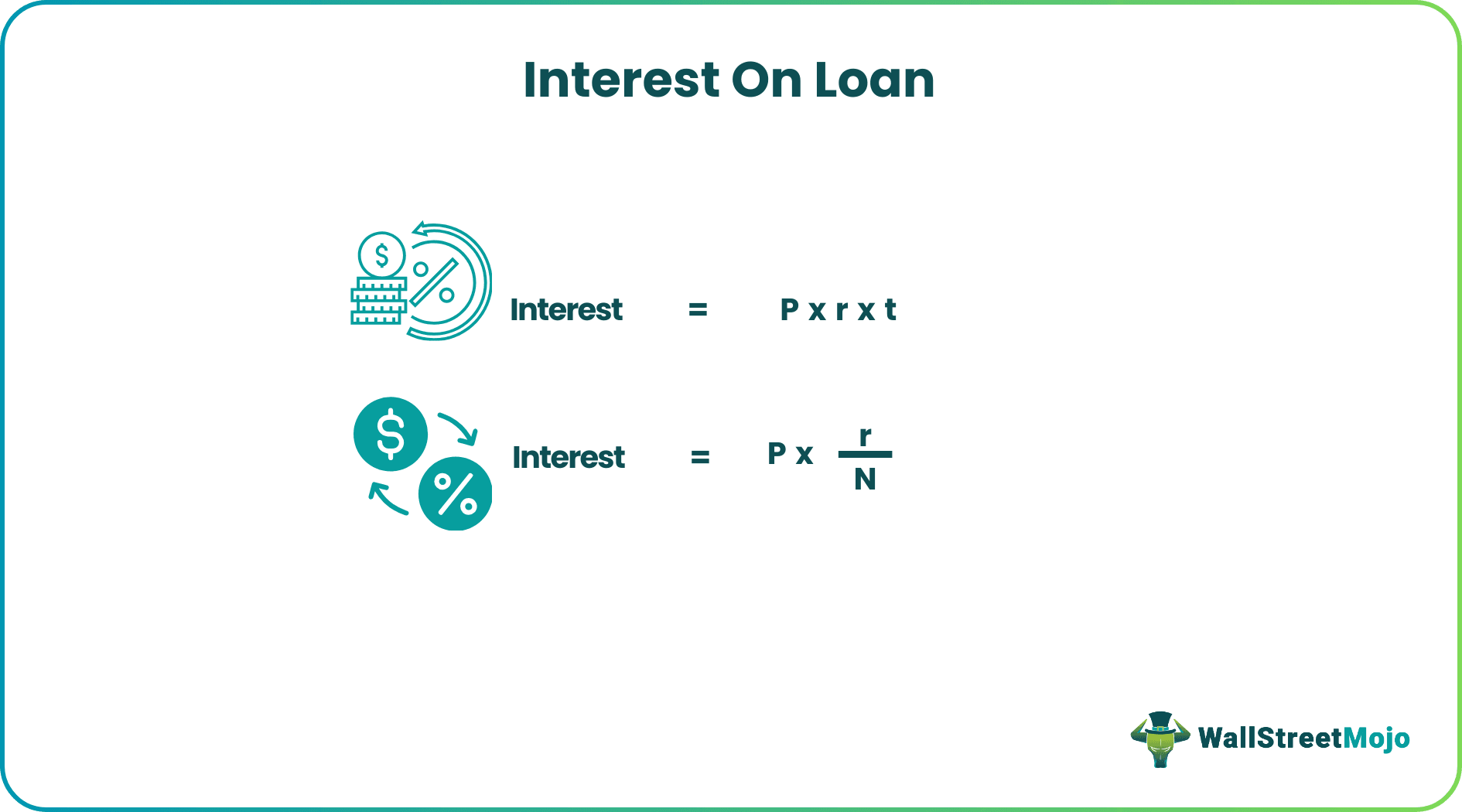
Simple interest is calculated only on the principal amount of a loan. The formula is straightforward: Principal x Interest Rate x Time. This method is less common for consumer loans but might be seen in very short-term loans or specific types of bonds.
Compound interest is much more prevalent in consumer lending, from mortgages to credit cards. With compound interest, the interest is calculated not only on the initial principal but also on the accumulated interest from previous periods. This “interest on interest” effect can lead to a much larger total repayment over time, especially for long-term loans or when payments are missed, allowing interest to capitalize. The frequency of compounding (daily, monthly, annually) also matters; more frequent compounding generally leads to higher total interest paid. Understanding whether your loan accrues simple or compound interest, and its compounding frequency, is essential for truly grasping the mechanics of your debt.
Tools and Methods for Calculating and Verifying Interest
Beyond simply finding the stated interest rate, it’s incredibly valuable to be able to calculate and verify the interest accrual yourself. This not only enhances your understanding but also empowers you to catch potential errors and make more informed financial decisions.
Online Loan Calculators
The easiest and most accessible tools for interest rate calculations are online loan calculators. Websites of financial institutions, personal finance blogs, and even government agencies offer free calculators for various loan types (mortgage, auto, personal). You typically input the loan principal, interest rate, and loan term, and the calculator instantly provides your estimated monthly payment, total interest paid, and a full amortization schedule. These calculators are invaluable for:
- Estimating payments: Before applying, to see what you can afford.
- Comparing scenarios: What if I put more down? What if I choose a shorter term?
- Verifying lender figures: Checking if the numbers provided by your lender align with standard calculations.
While highly convenient, always ensure you’re using a reputable calculator and understand its inputs, especially whether it’s calculating based on nominal rate or APR, and its compounding frequency assumptions.
Spreadsheet Formulas
For those comfortable with Microsoft Excel, Google Sheets, or similar spreadsheet software, you can create your own robust loan amortization schedules and interest calculations. Spreadsheets offer greater flexibility and precision than most online calculators, allowing you to model complex scenarios, including extra payments, refinancing options, and variable interest rate changes.
Key formulas include:
- PMT (Payment): Calculates the payment for a loan based on constant payments and a constant interest rate.
=PMT(rate, nper, pv, [fv], [type])rate: The interest rate per period (e.g., annual rate / 12 for monthly).nper: The total number of payments for the loan.pv: The present value, or the total amount that a series of future payments is worth now; also known as the principal.
- IPMT (Interest Payment): Calculates the interest payment for a specified period of a loan.
- PPMT (Principal Payment): Calculates the principal payment for a specified period of a loan.
By setting up a table with columns for payment number, beginning balance, interest paid, principal paid, and ending balance, you can build a detailed amortization schedule that precisely tracks how your loan balance decreases over time, and how much interest you’re accruing with each payment. This method provides an unparalleled level of insight into your loan’s mechanics.
Decoding Loan Amortization Schedules
An amortization schedule is a table detailing each periodic loan payment, showing how much of the payment is applied to the interest and how much to the principal. It also shows the remaining balance of the loan after each payment. Lenders often provide these schedules, especially for mortgages, and understanding how to read them is a powerful skill.
Key elements to look for:
- Payment Number: Sequential count of payments.
- Beginning Balance: The principal amount owed before a specific payment.
- Interest Paid: The portion of the payment that covers interest for that period.
- Principal Paid: The portion of the payment that reduces the loan’s principal balance.
- Ending Balance: The remaining principal after the payment.
Initially, a larger portion of your payment goes towards interest, especially on long-term loans. As the loan matures, more of each payment goes towards the principal. Decoding these schedules allows you to see the exact impact of your interest rate over time, confirm the accuracy of your payments, and understand how quickly you’re reducing your debt. It also provides a clear visual of how extra principal payments can accelerate debt payoff and save on total interest.
Strategies for Comparing and Optimizing Your Interest Rate
Finding your current interest rate is just the beginning. The real financial savvy comes from using that information to compare offers, negotiate better terms, and ultimately optimize your borrowing costs.
The Power of Shopping Around
Never settle for the first loan offer you receive, regardless of how attractive it may seem. Just as you would compare prices for any major purchase, you should actively shop around for loans. Different lenders — banks, credit unions, online lenders, and even peer-to-peer platforms — have varying underwriting criteria, risk assessments, and overhead costs, which translate into different interest rates and fees.
- Get multiple quotes: Apply to several lenders within a short window (typically 14-45 days, depending on the loan type) to minimize the impact on your credit score from multiple hard inquiries.
- Compare APRs, not just nominal rates: Remember that APR gives you the full cost, including fees.
- Look beyond the rate: Consider closing costs, prepayment penalties, and customer service quality.
This proactive approach can often uncover significantly better terms, potentially saving you thousands over the loan’s life.
Improving Your Credit Score
Your credit score is a primary determinant of the interest rate you’ll be offered. Lenders use it to assess your creditworthiness and the likelihood of you repaying the loan. A higher credit score signals lower risk, which typically translates into lower interest rates.
Strategies to improve your credit score include:
- Pay bills on time: Payment history is the most significant factor.
- Reduce credit utilization: Keep your credit card balances low relative to your credit limits.
- Avoid opening too many new accounts at once: This can signal increased risk.
- Check your credit report regularly: Dispute any errors that could be dragging your score down.
By actively working to improve your credit score before applying for a loan, you position yourself to qualify for the most favorable interest rates available.
Negotiating with Lenders
While not all loan types offer significant room for negotiation, it’s always worth trying, especially for larger loans like mortgages or business loans. If you have a strong credit profile and have received competitive offers from other lenders, use them as leverage.
- Present competitive offers: Show your preferred lender a lower APR from a competitor and ask if they can match or beat it.
- Ask for a rate reduction: Sometimes, simply asking if there’s any flexibility in the rate can yield results, especially if you’re an existing customer with a good track record.
- Understand fees: If the interest rate isn’t budging, inquire about reducing or waiving other fees (origination fees, administrative costs) that contribute to the overall APR.
Even a slight reduction in the interest rate can result in substantial savings over the loan’s term, making negotiation a valuable skill in your financial toolkit.

Considering Refinancing
If you already have a loan and market interest rates have dropped, or your credit score has significantly improved since you took out the original loan, refinancing might be a wise move. Refinancing involves taking out a new loan to pay off an existing one, ideally at a lower interest rate, with a different term, or to change the loan type (e.g., from variable to fixed).
- Calculate potential savings: Use online calculators to determine if the interest savings from a lower rate outweigh the closing costs associated with the new loan.
- Evaluate your goals: Are you looking for lower monthly payments, a shorter loan term, or a more stable fixed rate?
- Be aware of fees: Refinancing isn’t free; there are closing costs involved, similar to taking out a new loan. Factor these into your decision.
Refinancing can be a powerful tool for optimizing your debt, but it requires careful analysis to ensure it’s truly beneficial for your financial situation.
In conclusion, the interest rate on a loan is more than just a number; it’s a critical financial lever that impacts your budget, your long-term wealth, and your overall financial flexibility. By understanding why it matters, knowing where to find it, comprehending its various forms, and utilizing tools to verify its impact, you gain an invaluable advantage in navigating the complex world of personal and business finance. Armed with this knowledge, you can confidently compare options, negotiate effectively, and make strategic decisions that empower you to take control of your financial future.
aViewFromTheCave is a participant in the Amazon Services LLC Associates Program, an affiliate advertising program designed to provide a means for sites to earn advertising fees by advertising and linking to Amazon.com. Amazon, the Amazon logo, AmazonSupply, and the AmazonSupply logo are trademarks of Amazon.com, Inc. or its affiliates. As an Amazon Associate we earn affiliate commissions from qualifying purchases.