
Inflation is often described by economists as the “silent thief.” It is an economic phenomenon that erodes the purchasing power of your currency, meaning that each dollar, euro, or pound you hold buys fewer goods and services today than it did yesterday. For anyone serious about personal finance, business management, or long-term investing, understanding how to find and interpret the inflation rate is not merely an academic exercise—it is a survival skill.
In a global economy characterized by fluctuating supply chains and shifting monetary policies, the inflation rate serves as a North Star for financial decision-making. Whether you are negotiating a salary raise, adjusting your retirement portfolio, or pricing products for your business, you must know where the numbers come from and what they truly represent.
1. Navigating Official Economic Indicators and Data Sources
The first step in finding the inflation rate is knowing where to look for credible, authoritative data. Inflation is measured by government agencies that track the prices of thousands of items over time. These reports are released on a monthly basis and provide the “headline” figure that dominates financial news.
Understanding the Consumer Price Index (CPI)
The most common metric used to find the inflation rate is the Consumer Price Index (CPI). In the United States, this is managed by the Bureau of Labor Statistics (BLS). The CPI represents the average change over time in the prices paid by urban consumers for a market basket of consumer goods and services. When you hear that inflation is at 3% or 7%, the speaker is usually referring to the “Year-over-Year” (YoY) change in the CPI.
To find this data yourself, you can visit the official BLS website. They provide a monthly “Consumer Price Index Summary” which breaks down the data into specific categories like energy, food, and shelter. This granularity is vital because “headline inflation” includes volatile food and energy prices, while “core inflation” strips these out to show the underlying long-term trend.
Utilizing the FRED Database
For those who prefer visual data and historical context, the Federal Reserve Economic Data (FRED) tool, maintained by the Federal Reserve Bank of St. Louis, is an invaluable resource. By searching for “CPIAUCSL” (the code for CPI for All Urban Consumers), you can generate real-time charts that show inflation trends over decades. This tool allows investors to overlay inflation rates against interest rates or GDP growth, providing a holistic view of the financial landscape.
International and Global Inflation Tracking
If your financial interests extend beyond domestic borders, finding the inflation rate requires looking at international organizations. The International Monetary Fund (IMF) and the World Bank maintain global databases that track inflation across different sovereign nations. For European data, the Eurostat database provides the Harmonized Index of Consumer Prices (HICP), which is the standard for the Eurozone. Comparing these rates is essential for Forex traders and international investors who need to understand which currencies are losing value the fastest.
2. The Methodology: How Inflation is Calculated
To truly find the inflation rate and understand its impact on your money, you must look “under the hood” at the math and the methodology. Inflation isn’t just a random number; it is the result of rigorous statistical sampling.
The Market Basket of Goods
Economists determine the inflation rate by tracking a “market basket.” Imagine a literal shopping cart filled with the items a typical household buys: milk, gasoline, rent, health insurance, haircuts, and electronics. The BLS and similar agencies assign “weights” to these items. For instance, housing usually carries the heaviest weight because it is the largest expense for most families. If rent prices skyrocket while the price of televisions drops, the inflation rate will likely still rise because rent is weighted more heavily in the calculation.
The Percentage Change Formula
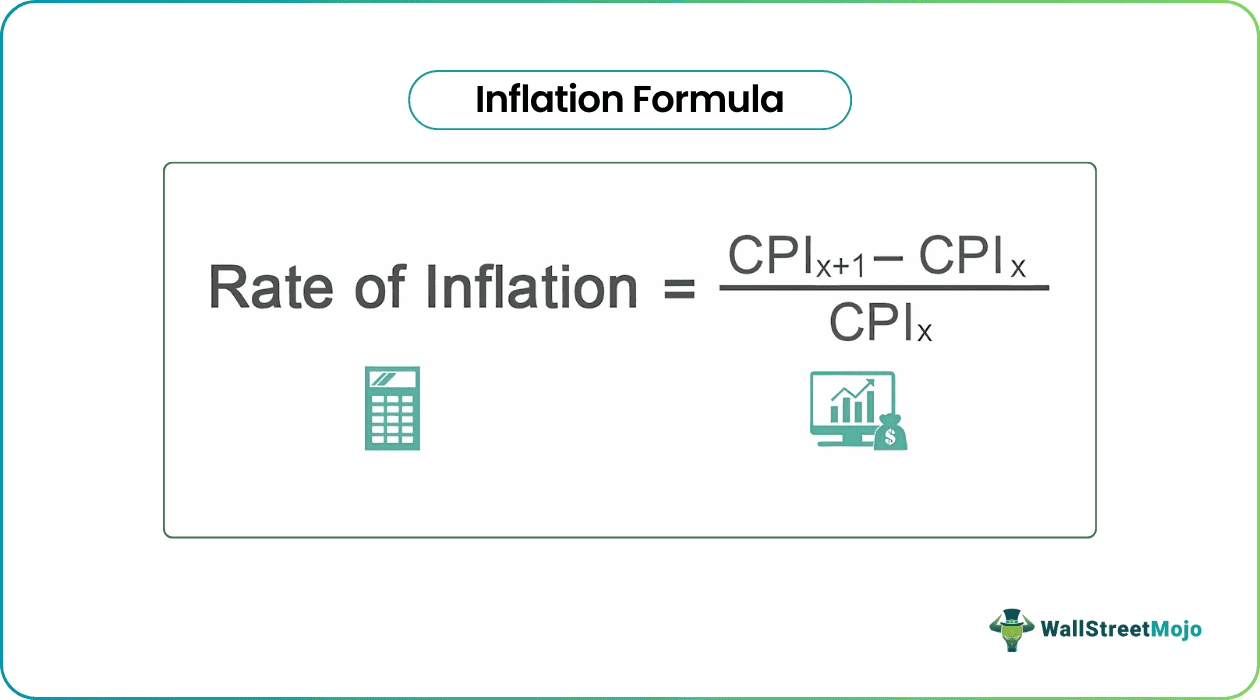
If you want to find the inflation rate manually between two specific periods, you can use the standard percentage change formula.
Inflation Rate = ((CPI x+1 – CPI x) / CPI x) * 100
In this formula, “CPI x” is the index value for the starting period, and “CPI x+1” is the index value for the later period. By performing this calculation, you can find the inflation rate for specific intervals that may not be highlighted in standard news reports, such as the inflation rate over a specific three-year period during which you held a particular investment.
Differentiating Between Headline and Core Inflation
When searching for the rate, you will often encounter two different figures. Headline inflation is the “raw” number including everything in the basket. However, because oil prices and agricultural products can fluctuate wildly due to geopolitical events or weather, economists often look at “Core Inflation.” Core inflation excludes food and energy. As an investor, finding the core inflation rate is often more useful for predicting long-term interest rate moves by central banks.

3. Calculating Your Personal Inflation Rate
While the official CPI is a helpful benchmark, it is an average. It may not accurately reflect how inflation is affecting your specific wallet. Finding your personal inflation rate is a critical exercise in personal finance and budgeting.
Analyzing Your Specific Spending Patterns
Your personal inflation rate depends entirely on your lifestyle. If you own your home outright with a fixed-mortgage or no mortgage, you are insulated from rising rents—a huge component of the CPI. Conversely, if you commute a long distance and food and fuel prices are rising, your personal inflation rate might be significantly higher than the national average. To find your rate, you should look at your year-over-year spending in key categories: housing, transportation, groceries, and healthcare.
Using Personal Finance Tools and Dashboards
Modern fintech apps have made it easier to find and track your personal inflation. Many budgeting tools allow you to export your yearly spending data into spreadsheets. By comparing what you spent on the same “lifestyle basket” this year versus last year, you can see exactly how much more income you need just to maintain your current standard of living. If your expenses rose by 10% while the national CPI was 5%, your “Money” strategy needs to be much more aggressive to compensate for the gap.
4. Why Finding the Inflation Rate Matters for Your Money Strategy
Knowing the number is only half the battle; the other half is applying that knowledge to your financial portfolio. The inflation rate is the “hurdle rate” that every investment must clear to be considered successful.
Protecting Your Purchasing Power
If you have $10,000 in a savings account earning 1% interest, but you find the inflation rate is 4%, you are effectively losing 3% of your wealth every year. In “real” terms, your $10,000 is shrinking. Finding the inflation rate allows you to realize when “safe” cash is actually a risky asset. This realization often drives investors toward “inflation hedges” such as commodities, real estate, or Treasury Inflation-Protected Securities (TIPS).
Inflation and the Cost of Debt
For business owners and individual borrowers, the inflation rate changes the math on debt. If you have fixed-rate debt (like a 30-year mortgage), high inflation is actually beneficial to you as a debtor. You are paying back the bank with “cheaper” dollars that have less purchasing power than the dollars you originally borrowed. By finding the current inflation rate and comparing it to your loan’s interest rate, you can determine if it makes sense to pay off debt early or to let the inflation erode the debt’s real value over time.
Adjusting Income and Business Pricing
In a professional context, finding the inflation rate is the primary justification for annual raises and price hikes. If you are a freelancer or a business owner, you should check the inflation rate annually to adjust your rates. If you haven’t raised your prices in two years and inflation has been 5% annually, you have effectively taken a 10% pay cut. Professional money management requires proactive adjustments based on these macroeconomic signals.
5. Advanced Tools for Monitoring Inflation Expectations
Sophisticated investors don’t just look at where inflation is; they look at where the market thinks it will be. Finding “inflation expectations” is a pro-level money move that helps in timing the market.
The Breakeven Inflation Rate
One of the best ways to find market-based inflation expectations is to look at the “Breakeven Inflation Rate.” This is found by comparing the yield on regular Treasury bonds with the yield on TIPS of the same maturity. The difference between the two is what the bond market expects inflation to average over that period. This data is readily available on the Treasury Department’s website and the FRED database.
Real-time Online Inflation Trackers
Because the CPI is a “lagging indicator” (it tells you what happened last month), some economists use real-time data to find the inflation rate today. Projects like the “PriceStats” index (formerly the Billion Prices Project at MIT) use web-scraping technology to track millions of prices across online retailers every day. These tools often flag inflationary spikes weeks before they show up in official government reports, giving savvy investors a head start on adjusting their positions.

Conclusion
Finding the inflation rate is a foundational task for anyone looking to master their financial life. It requires a blend of checking official government sources like the BLS, utilizing analytical tools like the FRED database, and performing personal audits of your own spending habits.
In the realm of personal finance and investing, the inflation rate is the benchmark for reality. It tells you whether your raises are actual increases in wealth or merely keeping you level. It tells you whether your investment returns are growing your future or simply treading water. By staying vigilant and knowing exactly where and how to find this data, you empower yourself to make informed, strategic decisions that protect and grow your capital in any economic climate.
aViewFromTheCave is a participant in the Amazon Services LLC Associates Program, an affiliate advertising program designed to provide a means for sites to earn advertising fees by advertising and linking to Amazon.com. Amazon, the Amazon logo, AmazonSupply, and the AmazonSupply logo are trademarks of Amazon.com, Inc. or its affiliates. As an Amazon Associate we earn affiliate commissions from qualifying purchases.