
In an increasingly digital financial landscape, the humble paper check might seem like an relic of the past. Yet, it remains a surprisingly persistent tool for various transactions, from paying rent and utility bills to receiving payments and making charitable donations. For many, understanding the anatomy of a check, particularly how to locate the check number, is a fundamental skill for effective financial management. This seemingly small detail plays a significant role in tracking transactions, reconciling accounts, and even preventing potential financial discrepancies. Far from being a mere identifier, the check number is a vital component in maintaining a clear and accurate record of your financial movements.

This article delves into the precise methods for finding your check number, whether you have the physical check in hand or need to retrieve this information through other means. We’ll explore why this number is so important, its standard placement, and how modern banking tools have made accessing this detail more convenient than ever. By the end, you’ll possess a comprehensive understanding of how to confidently locate and utilize your check numbers for improved financial oversight.
Understanding the Anatomy of a Check: More Than Just a Piece of Paper
Before we dive into the specifics of finding the check number, it’s essential to appreciate the structure of a standard check. A check is not merely a slip of paper; it’s a carefully designed financial instrument containing several critical pieces of information that facilitate secure and accurate transactions. Each element serves a specific purpose, contributing to the functionality and traceability of your funds.
What is a Check Number? Defining Its Role
At its core, a check number is a sequential identifier assigned to each individual check within a checkbook. Its primary function is to provide a unique reference for every transaction initiated via that particular check. Think of it as a serial number for your personal financial documents. When you write a check, this number helps you and your bank track the specific payment, making it invaluable for record-keeping and reconciliation. Without a unique identifier, tracing individual transactions would become an almost impossible task, leading to significant confusion and potential financial errors.
The Significance of the Check Number in Financial Transactions
The importance of the check number extends far beyond simple identification. It is a cornerstone for several critical financial processes:
- Record-Keeping and Reconciliation: When you record a payment in a check register or accounting software, noting the check number alongside the payee, date, and amount allows for precise matching when the transaction clears your bank account. This is crucial for balancing your checkbook and ensuring all debits are accounted for.
- Dispute Resolution: Should a payment dispute arise, the check number provides irrefutable evidence of a specific transaction. It can help you prove that a payment was made, on what date, and to whom, greatly simplifying the resolution process.
- Stopping Payments: If you need to issue a stop payment order on a check (e.g., if it’s lost, stolen, or you’ve changed your mind about a purchase), your bank will almost always require the check number to accurately identify and halt the specific transaction.
- Fraud Prevention: While not a primary security feature on its own, consistently tracking check numbers can help identify unauthorized checks or missing checks from your sequence, potentially signaling fraudulent activity more quickly.
Differentiating the Check Number from Other Key Banking Details
It’s common for individuals to confuse the check number with other numerical identifiers on a check. Understanding the distinct roles of these numbers is crucial:
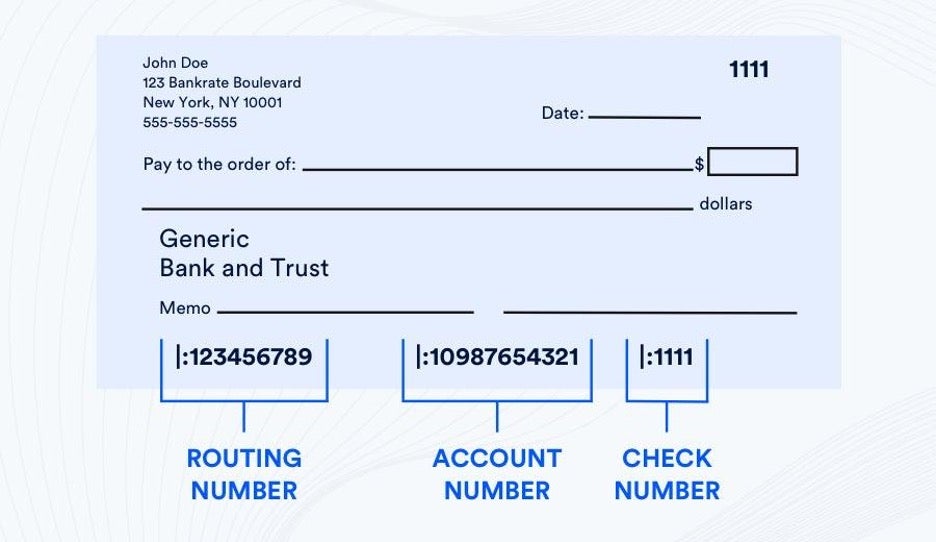
- Routing Number: This nine-digit number, usually found at the bottom left of a check, identifies the financial institution (your bank) that holds the account. It’s essential for directing funds to the correct bank during electronic transfers and check processing.
- Account Number: Typically located to the right of the routing number on the bottom of a check, this identifies your specific checking account within your bank. It’s unique to you and your account.
- Check Number: As discussed, this is the sequential identifier for the specific check document. It’s usually found at the top right and often repeated as the final set of digits on the MICR line at the bottom.
Each of these numbers serves a unique and vital function in the financial ecosystem, and confusing them can lead to processing errors or delays.
Locating the Check Number on a Physical Check
The most straightforward way to find a check number is by examining the physical check itself. While there might be slight variations in design between banks and check printers, there’s a standard placement that almost universally applies.
The Standard Placement: Top Right Corner
On the vast majority of personal and business checks, the check number is prominently displayed in the top right-hand corner. This position makes it easy to spot at a glance. It’s usually a series of three or four digits, though it can sometimes be longer, particularly for larger organizations. As you go through a checkbook, these numbers will typically increment sequentially (e.g., 101, 102, 103, etc.). This sequential numbering is key to tracking your check usage.
Variations and Exceptions: A Closer Look at Check Designs
While the top-right corner is the standard, occasional variations may exist, especially with specialized checks or older designs. Some checks might place the number slightly lower or use a different font. However, its presence in one of the corners, typically the upper right, is almost guaranteed. For business checks, the check number might sometimes be part of a larger, more complex reference number, but it will still serve as the primary identifier for that specific document. Always look for the smallest, incrementally increasing number in the corner as your primary target.
The MICR Line: A Deeper Dive into Machine-Readable Information
Another place where the check number often appears is on the MICR (Magnetic Ink Character Recognition) line at the very bottom of the check. This specialized line is printed with magnetic ink, allowing machines to quickly read and process the check.
The MICR line usually contains three distinct sets of numbers:
- The routing number (identifying your bank).
- Your account number (identifying your specific account).
- The check number (identifying the individual check).
The check number is typically the last set of digits on the MICR line. It serves as a machine-readable confirmation of the number printed in the top right corner. While the top-right corner is easier for human eyes to spot, the MICR line version is crucial for the automated clearing process. If the number in the top right seems ambiguous or hard to read, cross-referencing it with the MICR line can often provide clarity.
Finding Your Check Number Without a Physical Check
What if you need a check number but don’t have the physical check in front of you? This is a common scenario, especially when trying to reconcile past transactions, dispute a payment, or issue a stop payment. Fortunately, modern banking offers several convenient ways to retrieve this information.
Leveraging Online Banking Platforms
One of the most efficient methods to find a check number without the physical document is through your bank’s online banking portal or mobile app. Most financial institutions provide detailed transaction histories that include check numbers for checks that have cleared your account.
Here’s a typical process:
- Log in: Access your online banking account securely.
- Navigate to your checking account: Select the relevant checking account from your dashboard.
- View transaction history: Look for a section like “Transaction History,” “Account Activity,” or “Statements.”
- Locate the specific transaction: Find the payment you made using the check in question. Many banks allow you to filter by date range, payee, or transaction type.
- View details: Click on the specific transaction to expand its details. The check number is almost always listed here, often alongside an image of the cleared check. Many online banking systems even provide a digital image of the front and back of the cleared check, where you can clearly see all the details.
Consulting Your Bank Statements
Your monthly bank statements are another reliable source for retrieving check numbers. Both paper and digital statements typically list all cleared checks, along with their respective numbers, as part of your account’s debit activity.
- Paper Statements: If you receive paper statements, simply locate the month in which the check cleared. There will be a section detailing checks paid, usually listing the date, check number, and amount.
- Digital Statements: Most banks offer access to past statements in PDF format through their online banking platform. You can download and search these digital documents for the relevant check number. This method is particularly useful for looking up older transactions that might not be as easily accessible through the real-time transaction history.
The Utility of a Check Register or Ledger
For those who maintain diligent financial records, a check register or personal ledger is an invaluable tool. This is a small booklet, often provided with your checkbook, where you manually record every check you write, noting the date, check number, payee, and amount.
If you consistently use a check register:
- Locate your register: Find the physical book where you keep your records.
- Scan for the transaction: Look for the entry corresponding to the payment you’re trying to track.
- Retrieve the number: The check number will be clearly listed in your own record.
While perhaps less common in the digital age, a well-maintained check register offers an immediate, offline reference for your check numbers, independent of bank systems.
Direct Contact with Your Financial Institution
If all else fails, or if you encounter a particularly complex situation (e.g., a very old transaction, a missing statement, or a potential fraud issue), your bank’s customer service can assist you.
- Phone Support: Call your bank’s customer service line. Be prepared to verify your identity with account details and personal information. Explain which check number you need and provide as much detail as possible about the transaction (date, amount, payee).
- In-Person Visit: Visiting a local branch can also be an option, especially for more complex inquiries or if you prefer face-to-face assistance. Bring your identification and any relevant account information.
While contacting the bank directly is usually a last resort due to potential wait times, it guarantees access to the official records held by your financial institution.
Best Practices for Managing and Recording Check Numbers
Effective management of your check numbers is an integral part of responsible personal finance. It streamlines reconciliation, aids in dispute resolution, and contributes to overall financial security.
The Importance of Accurate Record-Keeping
Maintaining meticulous records of your checks is paramount. Whether you use a traditional check register, a spreadsheet, or personal finance software, always record:
- Check Number: Immediately note the number as soon as you write the check.
- Date: The date the check was written.
- Payee: The person or entity to whom the check was made out.
- Amount: The exact monetary value of the check.
- Purpose/Memo: A brief description of what the payment was for.
Consistent record-keeping allows you to quickly identify any discrepancies between your records and your bank statements, helping you catch errors or potential fraud early.
Safeguarding Your Check Information
Your check numbers, along with your account and routing numbers, are sensitive pieces of information. Exercise caution to safeguard them:
- Secure Storage: Keep your checkbook and any check registers in a secure location.
- Shred Old Checks: When checks are no longer needed (e.g., voided or extremely old), shred them before discarding to prevent identity theft.
- Online Security: Be wary of phishing attempts that try to trick you into revealing banking details. Only access your online banking through secure, trusted connections.
When to Use Your Check Number: Common Scenarios
Knowing when and how to use your check number is just as important as knowing where to find it:
- Verifying Payments: When a recipient claims not to have received a payment, providing the check number can help them track it through their bank.
- Disputes: If you’re disputing a charge or proving payment for a service, the check number is critical evidence.
- Reconciliation: As mentioned, matching cleared checks on your statement to your personal records via the check number is the foundation of balancing your account.
- Stop Payments: If a check is lost, stolen, or you need to cancel a payment, your bank will require the check number to initiate a stop payment order.
Troubleshooting Common Issues and Ensuring Accuracy
Even with standard procedures, issues can arise when dealing with check numbers. Being prepared for these situations can save time and prevent frustration.
Dealing with Illegible or Missing Check Numbers
Occasionally, a check number might be poorly printed, smudged, or, in rare cases, entirely missing from the top right.
- Refer to the MICR Line: Your first recourse should be to check the MICR line at the bottom of the check, as the number is almost always repeated there in a machine-readable format.
- Check Previous/Next Checks: If you have other checks from the same series, you can infer the number based on the sequence. For instance, if the previous check was 105 and the next is 107, the missing number is likely 106.
- Contact Your Bank: If the number is genuinely illegible on both the top and MICR line, or if it appears to be entirely missing from a physical check you are about to issue, contact your bank for guidance. It might indicate a printing error.
Understanding Digital Checks and Their Numbering Conventions
While the focus here is primarily on paper checks, it’s worth noting the rise of digital payment methods that sometimes emulate checks, such as online bill pay services where the bank issues a check on your behalf.
- Bank-Generated Checks: When your bank sends a physical check via an online bill pay service, they assign it a check number, which will usually appear on your transaction history and bank statement. This number is typically from the bank’s own sequence, not your personal checkbook’s.
- E-Checks/ACH Payments: Electronic checks (e-checks) or Automated Clearing House (ACH) payments don’t use traditional check numbers in the same way. Instead, they rely on unique transaction IDs or reference numbers generated by the payment system. While different, these serve the same purpose of providing a traceable identifier for the digital transaction.

The Role of Check Numbers in Fraud Prevention
While not a direct security feature like encryption, diligently managing your check numbers contributes indirectly to fraud prevention:
- Detecting Missing Checks: By keeping a record and noting the sequence of your checks, you can quickly identify if a check number is missing from your series, which could indicate a stolen check or fraudulent activity.
- Monitoring Unauthorized Use: If you see a check clear your account with a number that doesn’t match your records, it’s a strong indicator of an unauthorized transaction or a forged check, prompting immediate investigation with your bank.
- Stop Payment Efficacy: The accuracy of the check number is paramount for stopping a payment, which can be critical if you suspect fraud or if a check falls into the wrong hands.
In conclusion, the check number, though a small detail, is an indispensable element in effective financial management. From its standard placement on a physical check to its digital presence in online banking, understanding how to locate and utilize this number empowers you to maintain accurate records, resolve disputes efficiently, and safeguard your financial integrity. As you navigate your personal finances, remember that every detail counts, and the check number is a prime example of a seemingly minor detail with significant implications for your financial well-being.
aViewFromTheCave is a participant in the Amazon Services LLC Associates Program, an affiliate advertising program designed to provide a means for sites to earn advertising fees by advertising and linking to Amazon.com. Amazon, the Amazon logo, AmazonSupply, and the AmazonSupply logo are trademarks of Amazon.com, Inc. or its affiliates. As an Amazon Associate we earn affiliate commissions from qualifying purchases.