
In the realm of personal finance, travel is often categorized as a discretionary expense—a “want” rather than a “need.” However, for the modern professional or the dedicated explorer, travel is an investment in human capital, networking, and mental well-being. The primary barrier to this investment is frequently the volatility of airfare. Learning how to find cheap tickets is not merely a hobby for the frugal; it is a sophisticated exercise in financial optimization. By applying the principles of market analysis, leverage, and strategic timing, individuals can significantly reduce their travel overhead, allowing for greater capital allocation toward savings, investments, or high-value experiences.
The Macroeconomics of Airfare: Understanding Market Volatility
To find the most cost-effective tickets, one must first understand the financial mechanisms that dictate airline pricing. Unlike consumer goods with fixed margins, airline seats are “perishable inventory.” Once a flight departs, any empty seat represents a total loss of potential revenue. This reality drives the complex algorithms of yield management.
The Dynamics of Yield Management
Airlines employ sophisticated software to maximize revenue per available seat mile (RASM). This involves dynamic pricing, where the cost of a ticket fluctuates based on demand, lead time, and competitor pricing. From a personal finance perspective, the traveler is essentially a market participant trying to buy during a “dip.” Understanding that prices are not arbitrary, but rather a reflection of supply and demand, allows a traveler to approach booking with the same mindset as a stock trader looking for an undervalued asset.
Psychological Pricing and Consumer Behavior
Airlines also utilize price discrimination to separate “business” travelers from “leisure” travelers. Business travelers are price-inelastic—they need to be in a specific city on a specific date regardless of cost. Leisure travelers are price-elastic. By identifying the patterns that airlines use to flag “high-intent” or “low-flexibility” shoppers, you can position yourself in the lower-cost bracket. This involves avoiding the “last-minute” premium and understanding that the cheapest tickets often come with constraints that the budget-conscious traveler should be prepared to manage.
Leveraging Financial Tools and Credit Optimization
In the ecosystem of personal finance, the method of payment is often as important as the price itself. Finding cheap tickets is not just about the sticker price; it is about the “net cost” after accounting for rewards, protections, and benefits.
Maximizing Credit Card Rewards and Points
One of the most potent tools for reducing airfare costs is the strategic use of travel rewards credit cards. These financial instruments allow users to earn “currency” (points or miles) on their everyday spending. For a disciplined spender, the ROI on a high-tier travel card can be significant.
- Transfer Partners: The highest value for points is often found by transferring them to airline partners rather than booking through a bank’s travel portal. This requires a “valuation mindset,” where you calculate the cents-per-point (CPP) to ensure you are getting a deal that outperforms a cash purchase.
- Sign-on Bonuses: Strategic acquisition of new credit lines can yield massive point infusions, often enough for an international round-trip, effectively reducing the “cost” of the ticket to just the taxes and fees.
Utilizing Cashback Portals and Financial Apps
Before clicking “buy” on an airline website, the financially savvy traveler checks cashback aggregators and financial tools. Portals like Rakuten or specialized bank offers can provide 1% to 5% back on travel purchases. While this doesn’t change the initial ticket price, it reduces the total expenditure. Additionally, using price-tracking apps that offer “price drop protection” can ensure that if the market price falls after you purchase, you receive a refund for the difference, mitigating the risk of market volatility.

Strategic Budgeting: Timing the Market and Regional Arbitrage
Successful financial planning requires looking ahead. In the context of airfare, this means moving away from reactive purchasing and toward proactive “market timing.”
The “Goldilocks Window” and Seasonality
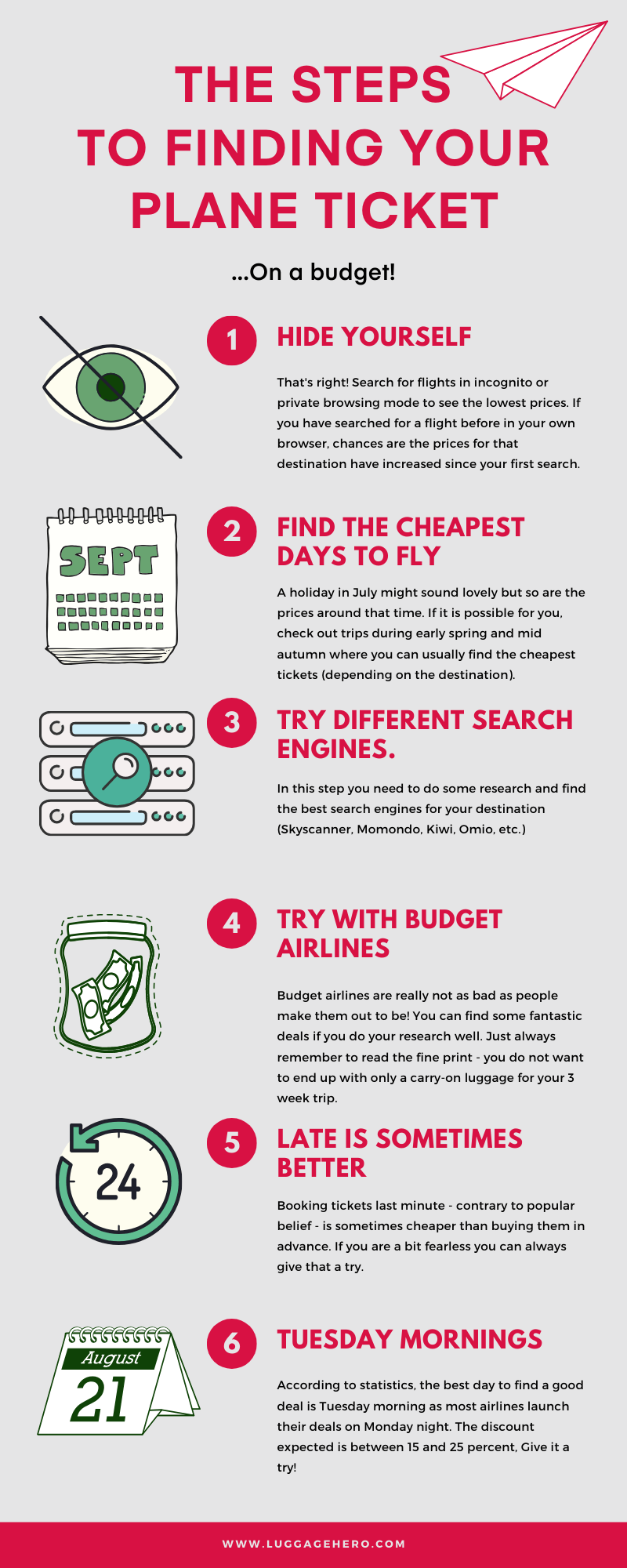
Data analysis of millions of flight paths suggests that there is a “sweet spot” for booking. For domestic flights, this is typically 1-3 months in advance, while international travel requires a 2-8 month lead time. Booking too early means you miss out on promotional sales; booking too late subjects you to the price-inelasticity of last-minute travel.
Furthermore, understanding “shoulder season”—the period between peak and off-peak travel—is a primary strategy for cost reduction. By traveling when demand is low but the utility of the destination is still high, you can secure tickets for 40-60% less than the peak season rate.
Regional Arbitrage and the “Positioning Flight”
A more advanced financial strategy involves regional arbitrage. Sometimes, flying from your home airport to a major international hub is prohibitively expensive. However, a “positioning flight”—a separate, low-cost ticket to a major hub like London, Singapore, or New York—can open up access to much cheaper long-haul fares.
By “unbundling” your itinerary and purchasing separate legs, you can often save hundreds of dollars. This requires a risk-assessment approach: you must ensure there is enough time between flights to account for delays, as these separate tickets are not protected by the airline in the same way a single itinerary would be.
Advanced Cost-Saving Frameworks and Risk Management
To truly master the art of finding cheap tickets, one must look at non-traditional methods that, while effective, require a deeper understanding of airline “Terms of Service” and financial risk.
Hidden City Ticketing: A High-Risk, High-Reward Strategy
Hidden city ticketing occurs when a traveler finds a flight with a layover in their actual destination that is cheaper than a direct flight to that destination. For example, a flight from New York to Dallas with a layover in Charlotte might be cheaper than a direct flight from New York to Charlotte. The traveler simply exits at the layover.
From a financial perspective, this exploits a quirk in hub-and-spoke pricing. However, it carries “contractual risk.” Airlines dislike this practice and may penalize frequent flyer accounts. A professional approach to travel finance involves weighing the immediate savings against the potential long-term loss of loyalty benefits.
The Value of Flexibility: “Open-Jaw” and Multi-City Itineraries
Many travelers think in terms of simple A-to-B round trips. However, “open-jaw” tickets—where you fly into one city and depart from another—can often be cheaper when considering the total cost of a trip. By analyzing the “cost per mile” of different routes within a region, you can structure an itinerary that follows the path of least financial resistance. This requires using multi-city search tools and having a flexible mindset regarding your entry and exit points.

Conclusion: Travel as a Managed Expense
Finding cheap tickets is not a matter of luck or “incognito browsing” myths; it is a disciplined application of financial principles. By understanding the economics of the airline industry, leveraging sophisticated financial tools, timing the market with precision, and managing the risks of advanced booking strategies, you can transform travel from a burdensome expense into a manageable and optimized part of your financial life.
In the end, the money saved on airfare is capital that can be redirected toward your long-term financial goals—whether that is an earlier retirement, a more robust investment portfolio, or simply the ability to travel more often. In the modern economy, being a “smart traveler” is synonymous with being a “smart investor.” By treating every flight search as a financial audit, you ensure that you are never overpaying for the “commodity” of air travel, but rather, purchasing it at its true market value.
aViewFromTheCave is a participant in the Amazon Services LLC Associates Program, an affiliate advertising program designed to provide a means for sites to earn advertising fees by advertising and linking to Amazon.com. Amazon, the Amazon logo, AmazonSupply, and the AmazonSupply logo are trademarks of Amazon.com, Inc. or its affiliates. As an Amazon Associate we earn affiliate commissions from qualifying purchases.