
In the modern financial landscape, travel is no longer viewed merely as a luxury expense but as a line item in a sophisticated personal budget that requires strategic management. For the fiscally conscious individual, the goal of finding cheap flight tickets is not just about saving a few dollars; it is about mastering the art of “travel arbitrage.” By understanding the economic principles that govern airline pricing and leveraging financial tools, travelers can significantly reduce their capital expenditure while maximizing the value of their experiences. This guide approaches flight booking through the lens of personal finance, focusing on market timing, currency manipulation, and credit optimization.
The Economics of Dynamic Pricing and Yield Management
To find the most cost-effective tickets, one must first understand the financial mechanisms used by airlines. Unlike a retail store with fixed prices, airlines utilize “Yield Management” systems—complex algorithms designed to maximize the revenue per available seat mile. This creates a volatile market where prices fluctuate based on demand, supply, and consumer behavior.
Understanding the Algorithm’s Objective
Airlines categorize travelers into two main buckets: leisure and business. Business travelers are price-insensitive but time-sensitive, while leisure travelers are price-sensitive but time-flexible. The goal of the airline is to extract the maximum amount of capital from each group. By recognizing the patterns in these algorithms, a money-savvy traveler can position themselves within the “leisure” profile to trigger lower price points. This involves booking during windows when business demand is historically low, such as mid-week or during “shoulder seasons.”
The Myth of Fixed Booking Days
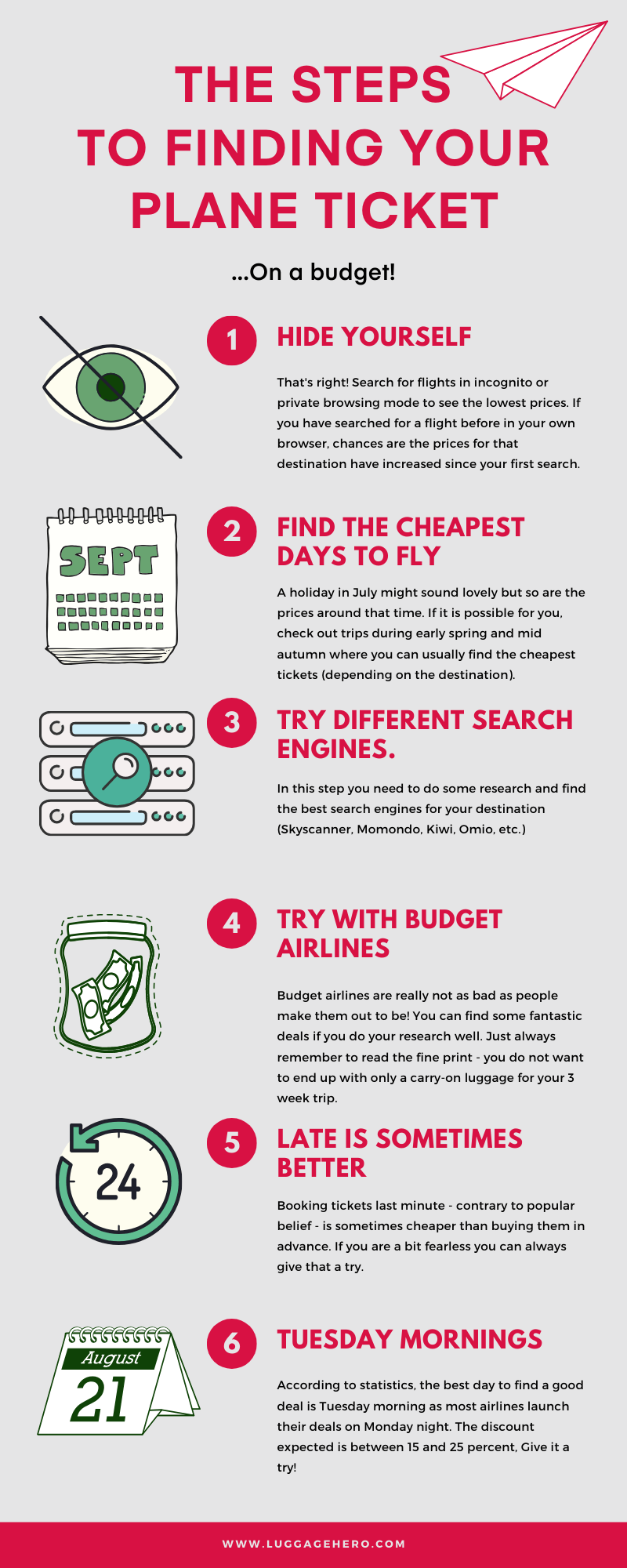
In the world of personal finance, data is king. For years, the prevailing wisdom suggested that booking on a Tuesday at midnight would yield the lowest prices. However, modern financial analysis of flight data shows that while the day of travel (Tuesday or Wednesday) is often cheaper, the day of purchase is less predictable. Instead of looking for a magic day, financial discipline dictates the use of price tracking tools that alert you to “outlier” data points—sudden price drops that deviate from the standard deviation of historical averages.
Leveraging Financial Tools and Credit Arbitrage
One of the most effective ways to find cheap flight tickets is to avoid paying for them with cash entirely, or at least to use financial instruments that offer a high Return on Investment (ROI). This is where credit card strategy and point valuation come into play.
Maximizing Travel Reward Portals
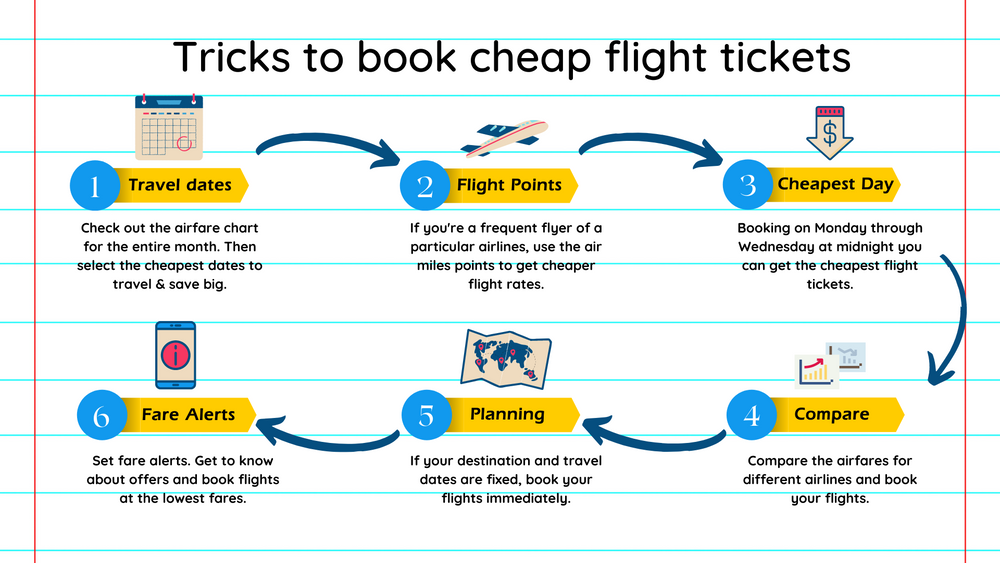
Many high-tier financial institutions offer travel portals where points are worth 25% to 50% more than their cash value. For example, if a flight costs $500, using a strategic credit card might allow you to book it for the equivalent of $330 in points. This is a form of immediate financial gain. To find the cheapest tickets, one should compare the “cash price” on search engines against the “point price” in these portals. Often, the portal reflects a discounted rate negotiated between the bank and the airline, providing an arbitrage opportunity for the cardholder.
The Power of Transfer Partners
For those looking to maximize their “Money” niche expertise, transferring points to airline partners often yields the highest value per point (VPP). While a direct booking might give you 1 cent per point, transferring those points to a frequent flyer program for a high-value international flight can result in a valuation of 3 to 5 cents per point. In financial terms, this is a 300% to 500% increase in the purchasing power of your rewards. Finding “cheap” tickets, therefore, often means finding “low-mileage” award seats that have a high cash-to-point discrepancy.
Strategic Budgeting: Timing the Market and Mistake Fares
Just as a disciplined investor waits for a market dip to buy stocks, a strategic traveler waits for “Mistake Fares” or seasonal lows to book travel. This requires a shift from a “demand-driven” approach (I want to go to Paris in June) to a “supply-driven” approach (Paris is at a 5-year low in March, so I will go then).
Capitalizing on Mistake Fares
Mistake fares occur when an airline or an Online Travel Agency (OTA) enters an incorrect price into the Global Distribution System (GDS). These are the “black swans” of the travel market. Finding a $200 round-trip ticket from New York to Tokyo is a massive financial win. To catch these, travelers must use specialized financial alert services. From a legal and financial perspective, these fares are usually honored if the ticket is issued before the error is caught, providing an unparalleled ROI on travel spending.
The “Hidden City” Ticketing Strategy
A more controversial but financially lucrative method is “Hidden City” ticketing. Because of how airline hubs are priced, a flight from Point A to Point C with a layover in Point B is often cheaper than a direct flight from Point A to Point B. Fiscally motivated travelers book the flight to Point C and simply exit at the layover (Point B). While this requires a deep understanding of airline Terms of Service to avoid financial penalties (such as the forfeiture of miles), it remains one of the most effective “hacks” to find cheaper tickets to expensive hub cities.
Currency Manipulation and Regional Pricing Loophole
Global finance offers unique opportunities for travelers to save money through currency fluctuations and regional pricing discrepancies. This is perhaps the most “pure” form of financial strategy in flight booking.
Booking in Local Currencies
Airlines often price their tickets differently depending on the “Point of Sale” (POS). For instance, a flight booked on the Spanish version of an airline’s website, priced in Euros, may be significantly cheaper than the same flight booked on the U.S. version in Dollars—even after accounting for the exchange rate. By using a VPN or simply changing the region on the airline’s website, a traveler can exploit these regional price differences.
Leveraging Foreign Exchange Rates
A savvy traveler keeps an eye on the strength of the U.S. Dollar (or their home currency) against others. If the Japanese Yen is at a historical low, booking flights on a Japanese carrier or through a Japanese travel agency can result in a net savings when the transaction is settled in your home currency. This requires using a credit card with no foreign transaction fees to ensure that the gains from the exchange rate aren’t eroded by bank fees. It is a classic move of “Foreign Exchange” (FX) management applied to the travel sector.

Conclusion: Travel as a Managed Asset
Finding cheap flight tickets is not a matter of luck; it is a matter of financial literacy and market analysis. By viewing airfare as a volatile asset class, the modern traveler can use yield management knowledge, credit arbitrage, market timing, and currency manipulation to secure the lowest possible prices.
In the long run, the thousands of dollars saved through these “Money” focused strategies can be redirected into an investment portfolio or a high-yield savings account, proving that how you spend your money on travel is just as important as how you earn it. Whether it is through the calculated use of credit card points or the exploitation of regional pricing gaps, the path to cheap travel is paved with sound financial principles. By treating every flight search as a financial audit, you ensure that your travel experiences enrich your life without depleting your net worth.
aViewFromTheCave is a participant in the Amazon Services LLC Associates Program, an affiliate advertising program designed to provide a means for sites to earn advertising fees by advertising and linking to Amazon.com. Amazon, the Amazon logo, AmazonSupply, and the AmazonSupply logo are trademarks of Amazon.com, Inc. or its affiliates. As an Amazon Associate we earn affiliate commissions from qualifying purchases.