
For the modern consumer, auto insurance is often viewed as a fixed, unavoidable monthly expense. However, in the realm of personal finance, few “fixed” costs are as flexible as your insurance premium. Finding cheap auto insurance is not merely about choosing the lowest number on a comparison site; it is an exercise in financial literacy, risk management, and strategic shopping.
By understanding the mechanics of how premiums are calculated and leveraging the competitive nature of the insurance market, you can reclaim hundreds, if not thousands, of dollars annually. This guide explores the sophisticated methods required to drive down costs without sacrificing the essential protection your financial portfolio requires.

Understanding the Financial Pillars of Auto Insurance Pricing
To find the cheapest rates, one must first understand the variables that insurance companies use to assess risk. From a financial perspective, an insurance premium is a price set based on the probability of a future payout. By influencing these variables, you can directly influence your costs.
How Risk Assessment Affects Your Wallet
Insurance companies use complex actuarial tables to determine your risk profile. Factors such as your age, driving record, and even your zip code play a massive role. For instance, living in an area with high rates of litigation or vehicle theft will naturally command higher premiums. From a money-management standpoint, it is important to realize that your driving habits are a financial asset. A clean record over five years can qualify you for “safe driver” tiers that are inaccessible to those with even minor infractions. When you view every traffic light as a potential increase in your cost of living, your behavior changes, and your premiums eventually follow suit.
The Critical Role of Credit Scores in Insurance Premiums
In most states, your credit-based insurance score is a primary determinant of your premium. Actuarial data suggests a strong correlation between financial responsibility and driving safety. From a personal finance perspective, this means that improving your credit score—by reducing debt-to-income ratios and ensuring on-time payments—is one of the most effective ways to lower your insurance costs. If you have spent the last year repairing your credit, you should immediately shop for new insurance; your improved financial standing likely qualifies you for a much lower rate than when your credit was bruised.
Strategic Comparison Shopping: Navigating the Market
The most common mistake in personal finance is “set-it-and-forget-it” syndrome regarding recurring bills. Auto insurance is a commodity market, and loyalty rarely pays. To find the cheapest insurance, you must approach the market with a cold, analytical eye.
Leveraging Online Comparison Tools for Maximum Efficiency
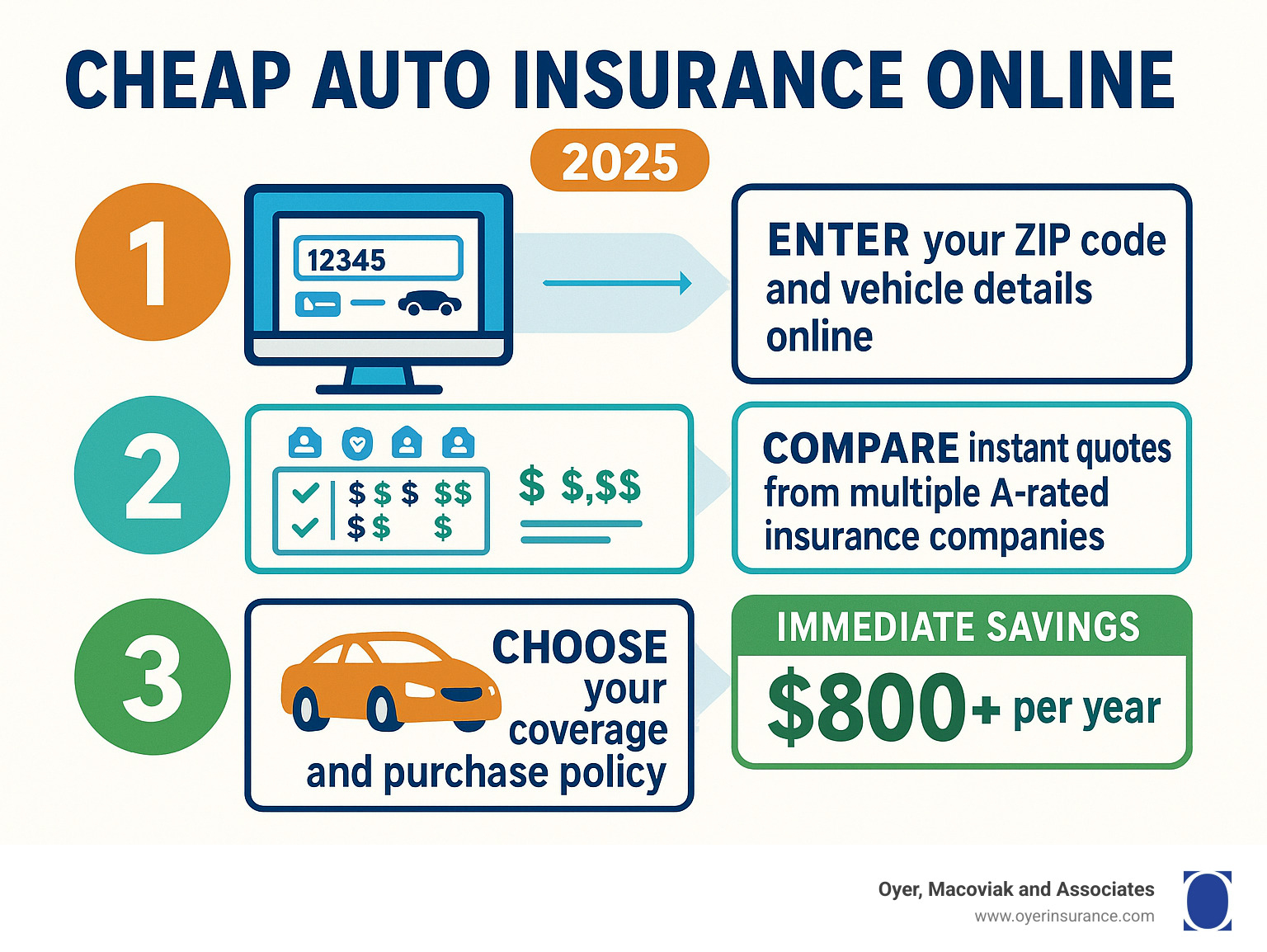
The digital age has democratized access to insurance pricing. Utilizing high-quality comparison engines allows you to view dozens of quotes in minutes. However, the savvy financial planner knows that the lowest headline price isn’t always the best value. When using these tools, ensure you are comparing “apples to apples”—the same liability limits, the same deductibles, and the same riders. Look for patterns: some companies may be aggressive in pricing for suburban drivers, while others specialize in high-risk or urban environments.
Working with Independent Agents vs. Captive Agents
While online tools are powerful, they sometimes miss regional carriers that don’t pay for placement on major search engines. This is where an independent insurance agent becomes a valuable financial ally. Unlike “captive” agents who work for a single brand (like State Farm or Geico), independent agents represent multiple companies. They can often find niche insurers that offer lower rates for specific demographics. From a business finance perspective, an independent agent acts as your broker, scanning the market to find the best ROI for your insurance spend.

Maximizing Discounts and Policy Optimization
Finding cheap auto insurance is often a game of inches. By stacking various discounts and fine-tuning your policy structure, you can shave significant percentages off your total bill.
Common Discounts and the Power of Bundling
Insurance companies value “sticky” customers. This is why the “multi-policy discount” or “bundling” is often the most significant saving opportunity available. If you consolidate your homeowners, renters, or life insurance with your auto provider, you can often see a 10% to 25% reduction across all policies.
Beyond bundling, look for lifestyle-based discounts:
- Professional Affiliations: Many insurers offer lower rates to members of specific alumni associations, credit unions, or professional organizations (like engineers or teachers).
- Safety Features: Ensure your insurer knows about your car’s anti-theft devices, lane-departure warnings, and adaptive cruise control.
- Defensive Driving Courses: Spending $25 on a weekend safety course can often result in a 5% to 10% discount for three years—a massive return on investment.
Adjusting Deductibles and Coverage Limits
The deductible is the amount you pay out of pocket before insurance kicks in. In personal finance, the “higher deductible” strategy is a classic way to lower premiums. By moving your deductible from $250 to $1,000, you could reduce your collision and comprehensive coverage costs by 15% to 30%.
However, this must be done with a plan. You should only raise your deductible if you have that amount liquid in a high-yield savings account or emergency fund. Essentially, you are “self-insuring” for small losses to save on the guaranteed monthly premium. Additionally, if you drive an older vehicle with a low market value, you should evaluate whether carrying collision and comprehensive coverage is financially sound. If the annual cost of the coverage exceeds 10% of the car’s total value, it may be time to drop it and save the difference.
Advanced Financial Tactics for Long-Term Savings
As the insurance industry evolves, new financial models are emerging that reward specific behaviors. Integrating these into your financial plan can lead to the “cheapest” possible rates available in the current market.
The Impact of Usage-Based Insurance (UBI)
For those who work from home or have short commutes, “Pay-Per-Mile” or “Usage-Based Insurance” (UBI) is a revolutionary way to save. Traditional insurance assumes a standard amount of risk based on average mileage. UBI uses a device or a smartphone app to track exactly how much and how safely you drive. If your car sits in the garage five days a week, your premium will reflect that lower exposure to risk. From a budgeting perspective, this turns a fixed cost into a variable cost that you can control through your behavior.
The Necessity of Annual Reviews and Competitive Switching
The final pillar of finding cheap insurance is the annual review. The “Price Optimization” algorithms used by many insurers actually track how likely a customer is to shop around. If the algorithm senses you are a loyal customer who doesn’t compare prices, they may incrementally raise your rates—a phenomenon known as the “loyalty penalty.”
To combat this, set a recurring calendar invite to shop your policy every 12 months, or whenever a major life event occurs (marriage, buying a home, or a birthday that moves you into a lower-risk age bracket). In the world of personal finance, the most expensive insurance policy is the one you haven’t looked at in three years. By staying active in the market, you ensure that your money is always working as hard as possible for you.
Conclusion: Insurance as a Wealth-Building Tool
Finding cheap auto insurance is not about being “cheap”; it is about being financially efficient. Every dollar saved on an insurance premium is a dollar that can be redirected into an IRA, a brokerage account, or a high-yield savings vehicle. By mastering the pillars of risk assessment, utilizing the right comparison tools, and staying vigilant with annual reviews, you transform a mundane monthly bill into a strategic component of your overall financial success. Through deliberate action and informed decision-making, you can secure the protection you need at a price that respects your bottom line.
aViewFromTheCave is a participant in the Amazon Services LLC Associates Program, an affiliate advertising program designed to provide a means for sites to earn advertising fees by advertising and linking to Amazon.com. Amazon, the Amazon logo, AmazonSupply, and the AmazonSupply logo are trademarks of Amazon.com, Inc. or its affiliates. As an Amazon Associate we earn affiliate commissions from qualifying purchases.