
In the intricate world of personal finance, understanding the foundational elements of your banking system is paramount. Among these crucial identifiers, the routing number stands out as a silent but powerful conductor, directing funds to their correct destination. Whether you’re setting up direct deposit, paying bills online, or initiating a wire transfer, knowing how to quickly and accurately locate this number is an indispensable financial skill. This guide will demystify the routing number, explain its importance, and provide clear, step-by-step instructions on how to find it, primarily on your check, but also through alternative, reliable methods. Mastering this seemingly small piece of information empowers you to manage your money with greater confidence and efficiency, ensuring your financial transactions flow smoothly and securely.

Understanding the Routing Number’s Significance
Before diving into the “how-to,” it’s essential to grasp the fundamental nature and purpose of a routing number. Often mistaken for an account number by new banking users, the routing number serves a distinct and vital function within the financial ecosystem, acting as a unique identifier for your financial institution itself.
What is a Routing Number?
A routing number, officially known as an ABA (American Bankers Association) Routing Transit Number (RTN), is a nine-digit code that identifies your specific bank or credit union within the U.S. financial system. It was established in 1910 by the American Bankers Association to facilitate the processing of paper checks. Today, while its role in paper check processing remains, its utility has expanded significantly to include a vast array of electronic financial transactions. Think of it as your bank’s address for financial mail—it tells the financial system exactly which institution should receive the funds, rather than which individual account within that institution.
Each financial institution, or sometimes different branches or regions of a large bank, may have one or more routing numbers. These numbers are public and are used to ensure that electronic funds transfers (EFTs) like direct deposits, automated clearing house (ACH) transactions, and wire transfers are routed to the correct bank. Without a precise routing number, your financial transactions could be delayed, returned, or, in rare cases, misdirected, leading to significant inconvenience and potential financial headaches. Its universality and standardization across all U.S. financial institutions underpin the efficiency and reliability of the nation’s payment infrastructure.
Why You Need Your Routing Number
The routing number is an integral piece of information required for a wide range of common financial activities. Understanding these scenarios highlights why knowing how to locate it quickly is a key component of savvy personal finance management. One of the most frequent uses is for direct deposit. When you start a new job or want to receive government benefits, you’ll typically provide your employer or payer with your routing number and account number to have funds directly deposited into your bank account, streamlining your access to earned income.
Similarly, setting up automatic bill payments or establishing recurring transfers to other accounts (like a savings account at a different bank or an investment account) often necessitates your routing number. This allows for seamless, scheduled payments without manual intervention, helping you avoid late fees and manage your budget more effectively. Wire transfers, both domestic and international, also rely heavily on routing numbers (or their international equivalents like SWIFT/IBAN codes) to ensure rapid and secure fund movement. Even tasks like ordering new checks, setting up third-party payment apps, or linking external financial accounts often require this nine-digit code. In essence, any transaction that involves moving money electronically to or from your bank account will likely demand your routing number, making it a cornerstone of modern financial operations.
Deciphering Your Check: The Primary Method
For many, the quickest and most straightforward way to find a routing number is directly on a personal check. Checks are designed with specific areas dedicated to these vital financial codes, making them readily accessible once you know where to look.
Anatomy of a Check: Where to Look
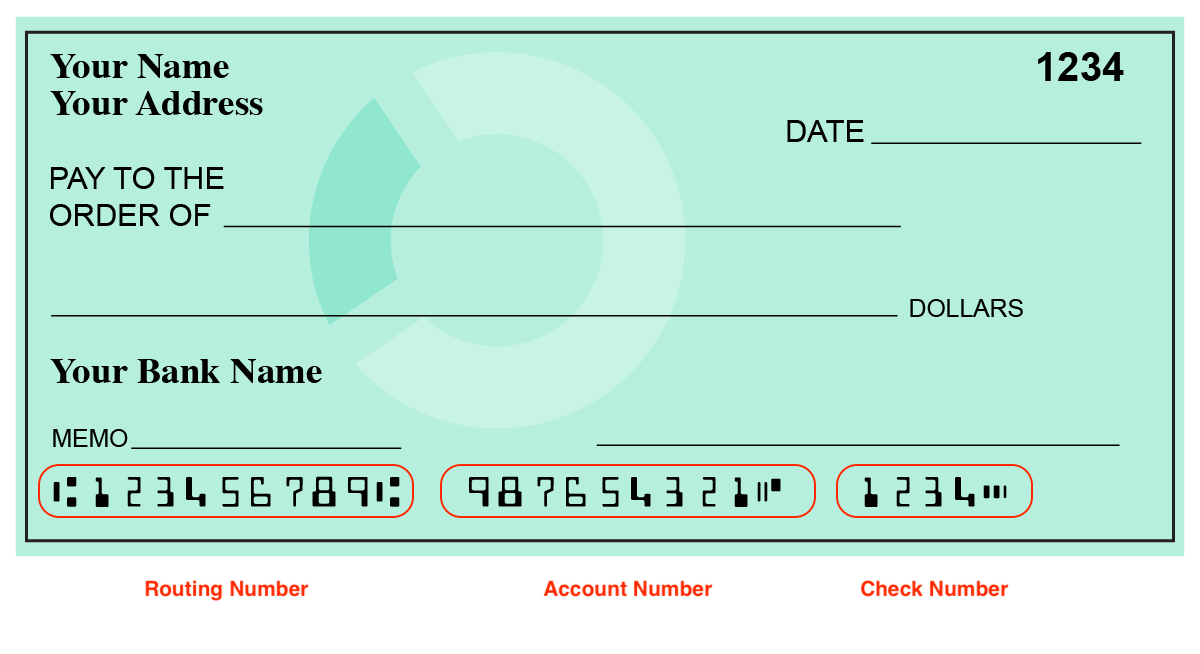
A standard personal check is more than just a piece of paper; it’s a carefully designed financial instrument encoded with critical information. To find your routing number, you need to focus on the bottom edge of the check, where a series of numbers are printed using magnetic ink, a technology known as Magnetic Ink Character Recognition (MICR). This MICR line is specifically designed to be read by automated check-processing machines, ensuring speed and accuracy in transaction clearing.
Typically, there are three distinct groups of numbers along this bottom edge. From left to right, these usually represent the routing number, followed by your account number, and finally the check number. While the order is generally consistent, it’s crucial to understand what each numerical sequence signifies to avoid confusion. Some checks may also have the check number at the very beginning of the MICR line. Familiarizing yourself with these distinct numerical segments is the first step in quickly identifying the correct routing number without error. Knowing the layout of your check effectively turns it into a handy reference card for your bank’s unique identifier.
The MICR Line: Your Key to Financial Data
The MICR (Magnetic Ink Character Recognition) line is the technological heart of a paper check, enabling its rapid, automated processing. Printed in a special font using magnetic ink, this line contains the essential identifiers that banks and financial institutions need to route funds and track transactions. The use of magnetic ink makes these numbers machine-readable, even if the check is slightly creased or stained, providing an extra layer of reliability compared to standard optical character recognition.
The MICR line is segmented into specific fields, each serving a unique purpose. The routing number, as mentioned, is almost always the first group of nine digits on the left. Following this, you’ll find your account number, which can vary in length depending on your bank, typically ranging from 8 to 12 digits. Lastly, the check number (often 3-4 digits long) helps you track individual transactions and reconcile your account. Each segment is usually separated by distinct symbols, such as a colon or a specialized character, making it visually distinct for human readers as well. Understanding the consistent pattern and the role of these symbols on the MICR line empowers you to reliably extract your routing number, ensuring you provide accurate information for all your financial needs.
Step-by-Step: Identifying the Routing Number on a Personal Check
Locating your routing number on a personal check is a straightforward process once you know exactly what to look for. Follow these steps to confidently identify the nine-digit code:
- Retrieve a Physical Check: Ensure you have one of your personal checks, ideally one that hasn’t been used.
- Examine the Bottom Edge: Lay the check flat and focus on the very bottom edge, where a series of numbers are printed in a distinct, often slightly thicker font. This is the MICR line.
- Identify the First Set of Numbers: Looking from left to right along the MICR line, the first group of numbers you encounter, separated by a special symbol (often resembling a colon or a square), is your bank’s routing number. It will always be nine digits long.
- Confirm the Digits: Count the digits to ensure it is indeed nine. Sometimes, the spacing or design might make it appear longer or shorter initially, but the routing number is consistently nine digits.
- Distinguish from Other Numbers: Immediately to the right of the routing number, you will find your account number, which is typically longer and can vary in length. Further to the right, or sometimes at the very beginning of the MICR line, you’ll see the check number (often a shorter, 3-4 digit sequence corresponding to the printed check number in the upper right corner of the check).
- Verify (Optional but Recommended): If you want to be absolutely sure, especially if your bank uses multiple routing numbers, you can cross-reference this number with information found on your bank’s official website or through your online banking portal. This step is particularly useful for new account holders or those using checks for the first time.
By following these simple steps, you can quickly and accurately find the routing number you need for any financial transaction.
Alternative Methods to Locate Your Routing Number
While your personal check is often the most convenient place to find your routing number, there are several other reliable methods available, especially if you don’t have a physical check handy or prefer digital verification.
Leveraging Online Banking and Mobile Apps
In today’s digital age, your bank’s online banking platform and mobile application are invaluable resources for managing your financial information. Most financial institutions prominently display your routing number within your account details. To find it:
- Log In: Access your bank’s official website or open their mobile app and log in securely using your credentials.
- Navigate to Account Details: Look for sections like “Account Summary,” “Account Details,” “Statements,” or “Direct Deposit Information.” For mobile apps, this might be under a specific account tab or within settings.
- Locate the Routing Number: Your routing number will typically be listed clearly alongside your account number. Some banks might label it as “ABA Routing Number,” “Routing Transit Number,” or simply “Routing #.” Many also provide a dedicated “Direct Deposit Form” within these sections, which will pre-fill both your routing and account numbers for easy setup.
This method is not only convenient but also ensures you’re getting the most up-to-date and accurate routing number directly from your financial institution, which is especially useful if your bank has different routing numbers for various types of transactions or regions.
Consulting Official Bank Documents and Customer Service

Beyond digital platforms, physical documents and direct communication channels with your bank remain reliable sources for retrieving your routing number.
Bank Statements: Your monthly or quarterly bank statements, whether electronic or paper, almost always include your routing number. It’s typically located near the top of the statement, often close to your account number and other bank contact information. Reviewing a recent statement can provide the necessary details swiftly.
Deposit Slips: If you have unused deposit slips, these documents also typically feature the routing number printed at the bottom, identical to how it appears on your checks. This can be a handy alternative if you’ve run out of checks but still have deposit slips.
Contacting Your Financial Institution: When all else fails, or if you prefer direct verification, calling your bank’s customer service line is always an option. Be prepared to verify your identity (e.g., provide your account number, date of birth, and other security questions) to ensure you receive accurate information. Similarly, visiting a local branch in person is another direct way to speak with a teller or customer service representative who can provide your routing number, often printed on a secure form. These methods offer a high degree of certainty and are particularly useful if you have a unique account setup or specific questions about which routing number to use for a particular transaction.
The Federal Reserve E-Payments Routing Directory
For those who need to verify a routing number for a bank they don’t hold an account with, or for an added layer of verification, the Federal Reserve provides an authoritative resource: the E-Payments Routing Directory. This comprehensive database lists all ABA routing numbers used by U.S. financial institutions.
While it’s primarily used by financial professionals, it can be accessed by the public. You can typically find a link to this directory on the Federal Reserve’s official website. By searching for a bank’s name, or even a partial routing number, you can confirm the official routing number associated with that institution. It’s an excellent tool for ensuring the accuracy of a routing number provided by a third party, adding an extra layer of security and confidence to your financial transactions. However, for personal use, relying on your own checks, online banking, or bank statements is usually more convenient.
Practical Applications and Considerations
Understanding where to find your routing number is just one part of the equation; knowing how and when to use it correctly is equally important for seamless financial management.
Routing Numbers for Different Transaction Types
It’s crucial to recognize that not all transactions use the same routing number, even for the same bank. Different types of electronic fund transfers might necessitate specific routing numbers:
- ACH (Automated Clearing House) Transfers: These are common for direct deposits, bill payments, and person-to-person transfers. Most banks have a primary ACH routing number.
- Wire Transfers: Wire transfers are typically faster and more expensive, used for time-sensitive or larger transactions. Some banks use a specific routing number for incoming wire transfers that may differ from their standard ACH routing number. This is because wire transfers often pass through an intermediary bank. Always confirm the correct wire transfer routing number with your bank for both domestic and international wires.
- External Transfers to/from Brokerage or Investment Accounts: When linking your bank account to an investment platform, the brokerage firm will typically ask for your bank’s ACH routing number. Always double-check the requirements of the specific platform.
Always verify with your bank or the recipient of the funds which specific routing number is required for the transaction you intend to make. Using the wrong routing number can lead to delays, return fees, or even misdirected funds, which can be costly and frustrating to resolve.
International Transactions: Beyond the Routing Number
While the routing number is the cornerstone of domestic U.S. financial transactions, it has limited relevance in the international arena. When sending or receiving money across borders, different codes and systems come into play:
- SWIFT/BIC Codes: For international wire transfers, the primary identifier is the SWIFT (Society for Worldwide Interbank Financial Telecommunication) code, also known as a BIC (Bank Identifier Code). This is an 8 or 11-character code that identifies a specific bank and branch for international transfers. You will need your bank’s SWIFT code (not its routing number) to receive international wire transfers.
- IBAN (International Bank Account Number): In many countries, particularly in Europe, an IBAN is used in conjunction with or instead of a SWIFT code. An IBAN is an alphanumeric code that identifies a specific bank account within a financial institution in an international transaction. It standardizes bank account identification globally.
- Intermediary Banks: International wire transfers often involve one or more intermediary banks, each with its own SWIFT code. Your bank can provide all the necessary details, including the intermediary bank information, if applicable, for complex international transfers.
Therefore, if your financial activities extend beyond U.S. borders, understanding and obtaining the correct SWIFT/BIC and potentially IBAN codes is as critical as knowing your domestic routing number. Relying solely on a routing number for international transfers will almost certainly result in failure.
Safeguarding Your Financial Information
The routing number, along with your account number, forms the bedrock of your bank account. As such, protecting this information is a critical aspect of personal finance security.
When and How to Share Your Routing Number Responsibly
While routing numbers are technically public information (as they identify the bank, not a specific account), their combination with your account number creates the keys to your financial kingdom. Therefore, knowing when and how to share this information is paramount.
You will typically need to provide your routing and account numbers for legitimate purposes such as setting up direct deposit with your employer, linking accounts for online bill pay, or initiating bank-to-bank transfers. When sharing, always ensure you are doing so through secure channels:
- Employer Forms: Use official HR or payroll forms provided by your employer.
- Secure Online Portals: Input information into secure, encrypted banking or payment platforms. Look for “https://” in the URL and a padlock symbol.
- Trusted Third-Party Apps: Use well-known and reputable financial apps that explicitly state their security measures.
- Avoid Email/Unsecured Messaging: Never send your routing and account numbers via unencrypted email, text messages, or public social media, as these channels are vulnerable to interception.
Always verify the legitimacy of any request for your banking information. If something feels suspicious, contact the requesting party directly through their official contact channels (not through links or numbers provided in the suspicious request) to confirm.
Protecting Against Fraud and Misuse
The combination of your routing and account number can be used to initiate ACH debits from your account. While safeguards exist, fraudulent activity can occur. Take these precautions to protect yourself:
- Shred Old Checks and Documents: Never simply discard old checks, bank statements, or deposit slips. Shred them thoroughly to prevent identity thieves from accessing your banking information.
- Monitor Account Activity: Regularly review your bank statements and online transaction history for any unauthorized or suspicious activity. Set up transaction alerts from your bank to be notified of significant debits or credits.
- Strong Passwords and Two-Factor Authentication: Use strong, unique passwords for all your online banking accounts and enable two-factor authentication (2FA) wherever possible. This adds an extra layer of security, making it much harder for unauthorized individuals to access your accounts even if they obtain your password.
- Be Wary of Phishing Scams: Fraudsters often try to trick you into revealing your banking details through phishing emails, texts, or calls. Be skeptical of unsolicited requests for personal information. Banks will never ask for your full account number or password via email.
- Report Suspicious Activity Immediately: If you suspect your routing or account number has been compromised, or if you notice any fraudulent transactions, contact your bank immediately to report the issue and take steps to protect your account.
By diligently practicing these security measures, you can significantly reduce the risk of fraud and ensure the integrity of your financial accounts.
Conclusion
The routing number, a seemingly small nine-digit code, is a cornerstone of modern personal finance, facilitating countless electronic transactions that are integral to our daily lives. From setting up direct deposit for your paycheck to paying bills online and making secure transfers, knowing how to accurately locate and use this essential identifier is a fundamental skill for effective money management. Whether you find it imprinted on your personal checks, nestled within your online banking portal, or verified through official bank documents, the ability to retrieve this information quickly and confidently empowers you to navigate the financial landscape with ease.
Beyond simply finding the number, understanding its specific applications—distinguishing between ACH and wire transfer needs, and recognizing the different requirements for international transactions—ensures your funds move efficiently and without costly errors. Moreover, an informed approach to safeguarding this sensitive information, coupled with vigilance against potential fraud, is crucial for maintaining the security of your financial accounts. By mastering these aspects, you don’t just find a number; you gain a deeper understanding and control over your financial life, paving the way for smoother, more secure, and ultimately, more successful financial operations.
aViewFromTheCave is a participant in the Amazon Services LLC Associates Program, an affiliate advertising program designed to provide a means for sites to earn advertising fees by advertising and linking to Amazon.com. Amazon, the Amazon logo, AmazonSupply, and the AmazonSupply logo are trademarks of Amazon.com, Inc. or its affiliates. As an Amazon Associate we earn affiliate commissions from qualifying purchases.