
In the realm of personal and business finance, the ability to process data quickly and accurately is more than just a convenience; it is a fundamental requirement for success. Among the many mathematical operations that govern our financial lives, calculating percentages is perhaps the most frequent. Whether you are determining the interest rate on a high-yield savings account, calculating the sales tax on a major purchase, or evaluating the return on investment (ROI) for a new stock portfolio, the “how to find a percentage of a number calculator” serves as an indispensable digital ally. Understanding the mechanics of these tools, the financial logic behind them, and how to leverage them for better money management is essential for anyone looking to optimize their wealth.

The Role of Digital Financial Tools in Personal Wealth Management
The transition from manual ledger books to sophisticated digital financial tools has revolutionized how individuals interact with their money. In the past, finding a percentage required manual long-form division or a deep familiarity with decimal movements. Today, dedicated financial calculators have streamlined this process, reducing the margin for human error that often plagues complex financial planning.
The Evolution of Calculation in Finance
In the early days of personal finance, consumers relied on basic arithmetic to manage their budgets. A simple error in calculating a 15% mortgage down payment or a 5% interest accrual could lead to significant budgetary shortfalls. The emergence of the digital percentage calculator has democratized financial accuracy. These tools allow users to input raw data and receive instantaneous results, which is particularly vital in fast-moving markets where a delay in calculation can mean a missed opportunity.
Why Precision is Non-Negotiable
In money management, precision is the difference between a profitable venture and a loss. When dealing with large sums, even a discrepancy of 0.1% can represent thousands of dollars. For instance, in the context of loan amortization, a slight misunderstanding of how interest percentages are applied over time can lead to a misunderstanding of the total cost of debt. A percentage calculator ensures that the user is working with exact figures, allowing for more aggressive and confident financial decision-making.
Enhancing Financial Literacy Through Tool Utility
Using a percentage calculator isn’t just about getting an answer; it’s about understanding the relationship between numbers. When a user regularly employs these tools to calculate discounts, tax rates, or investment growth, they develop an intuitive sense of “financial relativity.” They begin to see how a small percentage increase in monthly savings can lead to an exponential increase in long-term wealth due to the power of compounding.
Advanced Functionalities of Financial Percentage Calculators
While many see a percentage calculator as a simple “X percent of Y” tool, modern financial versions offer a suite of functionalities designed for various economic scenarios. Understanding these different modes is key to utilizing the tool to its full potential.
Percentage Increase and Decrease
One of the most valuable features in a financial context is the ability to calculate percentage change. This is used to track the performance of assets over time. If a stock rises from $50 to $75, the calculator quickly identifies this as a 50% increase. Conversely, if the value drops, it identifies the percentage loss. Investors use this to set “stop-loss” orders or to determine when to take profits, making it a cornerstone of risk management.
Finding the Percentage of a Total
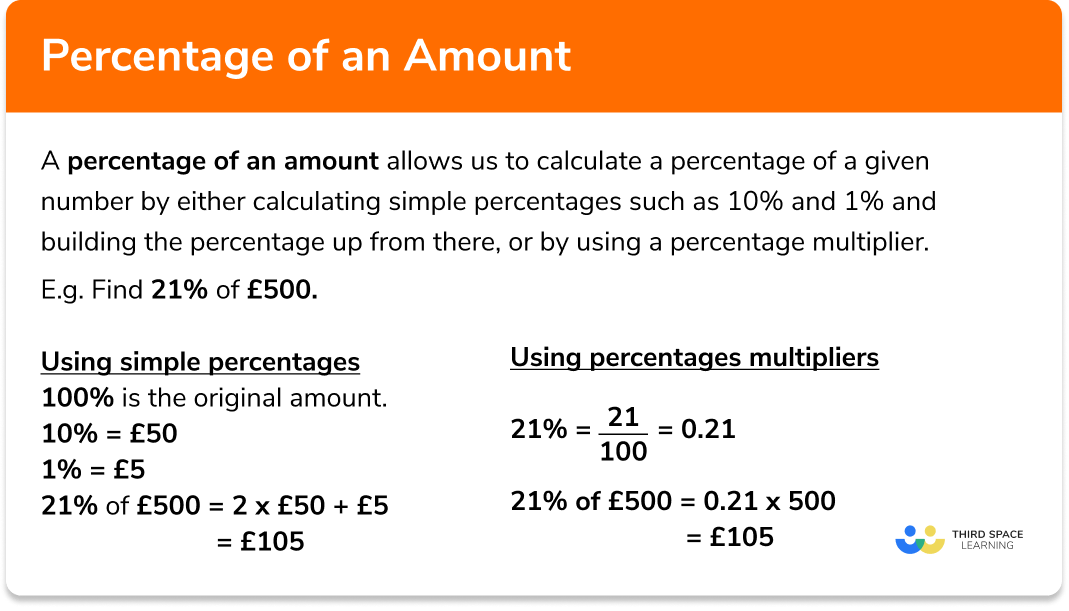
This is the most common use case: finding what a specific portion of a total represents. For example, if you are planning to allocate 20% of your $5,000 monthly income to investments, the calculator determines that $1,000 should be moved to your brokerage account. This functionality is the bedrock of “envelope budgeting” and other allocation-based financial strategies.
Reverse Percentage Calculations
Reverse calculations are often overlooked but are incredibly useful for tax and discount scenarios. If you know that a product costs $107 after a 7% sales tax, a reverse calculator can help you find the original price before tax ($100). For business owners, this is vital for understanding “back-out” taxes or determining the original cost of goods before a markup was applied.
Markup vs. Margin Calculations
In a business finance context, the distinction between markup and margin is critical. A percentage calculator specifically designed for business will allow a user to calculate the margin (the percentage of the selling price that is profit) versus the markup (the percentage added to the cost price). Misunderstanding these two concepts is a common reason why new side hustles fail to reach profitability.
Real-World Scenarios: Maximizing the Utility of Percentage Tools
To truly appreciate the value of a percentage calculator, one must look at its application across the spectrum of personal finance. From the grocery store to the boardroom, these tools provide clarity.
Navigating Interest Rates and Debt
Credit cards, mortgages, and personal loans are all defined by annual percentage rates (APR). When a consumer uses a calculator to find the monthly interest on a $10,000 credit card balance at 24% APR, they realize they are paying $200 a month just in interest. This realization often serves as a catalyst for debt consolidation or more aggressive repayment strategies. The tool transforms an abstract “rate” into a concrete dollar amount, which is a powerful psychological motivator.
Optimizing Investment Portfolios
Investors use percentage calculators to rebalance their portfolios. If an investor’s target allocation is 60% stocks and 40% bonds, but a market rally has pushed stocks to 70%, the calculator helps determine exactly how much needs to be sold and reinvested into bonds to return to the target. This disciplined approach to “buying low and selling high” is simplified by having an accurate tool to run the numbers.
Tax Planning and Compliance
Calculating tax liabilities is perhaps the most stressful financial task for many. Whether it’s estimating quarterly self-employment taxes (often around 15.3% for FICA plus income tax) or determining the capital gains tax on a sold asset, a calculator provides a clear picture of what must be set aside. This prevents the “tax season shock” and ensures that individuals maintain adequate liquidity to meet their obligations to the government.
Strategic Shopping and Consumer Savings
On a micro-level, finding the percentage of a number helps in everyday consumerism. Is a “Buy One, Get One 50% Off” deal better than a flat 30% discount on two items? A quick calculation reveals the truth. By consistently using a percentage calculator for purchasing decisions, consumers can save hundreds, if not thousands, of dollars annually, which can then be redirected toward productive investments.
Financial Accuracy in Entrepreneurship and Side Hustles
For those pursuing online income or running a small business, the percentage calculator is a daily-use tool. In entrepreneurship, the “gut feeling” is no match for the hard percentage.
Calculating Client Retainers and Commissions
Freelancers often work on a commission basis or must account for platform fees. If a platform takes a 20% cut of a $2,000 project, the freelancer needs to know they will only net $1,600. Furthermore, they must calculate what percentage of that $1,600 needs to be put toward overhead and taxes to determine if the project is actually worth their time.
Determining Break-Even Points
Every business owner needs to know their break-even point. This involves calculating the percentage of margin on each unit sold against fixed costs. If a product has a 40% profit margin and fixed costs are $4,000 a month, the owner can use a calculator to determine exactly how many units must be sold to cover costs. This data-driven approach to business management reduces risk and informs scaling strategies.
Scalability and Growth Projections
When a side hustle begins to grow, percentages become the primary metric for success. An entrepreneur might look at “Month-over-Month (MoM)” or “Year-over-Year (YoY)” growth percentages. If a digital store’s traffic increased by 15% but conversions only increased by 2%, the calculator highlights a specific problem in the sales funnel. Identifying these percentage-based discrepancies allows for targeted improvements.
The Psychological and Strategic Value of Percentage Precision
Beyond the raw math, the act of using a percentage calculator has a profound impact on one’s financial psychology. It shifts the mindset from passive consumption to active management.
Overcoming “Percentage Blindness”
Many people suffer from what economists call “money illusion” or “percentage blindness,” where they fail to see the real impact of small percentage changes. A 1% increase in an investment fee might seem negligible, but over 30 years, it can deplete a retirement fund by a third. By using a calculator to project these percentages over time, individuals become more vigilant about the “small” numbers that have “big” consequences.
Building a Data-Driven Budget
A successful budget is essentially a collection of percentages. The 50/30/20 rule (50% needs, 30% wants, 20% savings) is a popular framework. A percentage calculator allows a user to take their fluctuating monthly income and immediately apply these ratios. This creates a structured environment where money is assigned a job before it is even spent, leading to higher rates of financial success and lower stress.
The Foundation of Long-Term Financial Independence
Ultimately, finding the percentage of a number is about control. Wealth is built through the mastery of ratios: the ratio of income to expenses, the ratio of debt to assets, and the ratio of risk to reward. The humble percentage calculator is the gateway to this mastery. It provides the clarity needed to navigate the complexities of modern finance, ensuring that every dollar is accounted for and every financial decision is backed by the certainty of mathematics.
In conclusion, while the technology behind a percentage calculator may seem simple, its impact on personal and business finance is monumental. By integrating this tool into your daily financial routine, you transition from guessing to knowing. In the world of money, knowledge isn’t just power—it is the very foundation of prosperity. Whether you are a seasoned investor or someone just starting their financial journey, mastering the percentage is the first step toward a more secure and calculated future.
aViewFromTheCave is a participant in the Amazon Services LLC Associates Program, an affiliate advertising program designed to provide a means for sites to earn advertising fees by advertising and linking to Amazon.com. Amazon, the Amazon logo, AmazonSupply, and the AmazonSupply logo are trademarks of Amazon.com, Inc. or its affiliates. As an Amazon Associate we earn affiliate commissions from qualifying purchases.