
In the intricate world of finance, numbers tell a story, and percentages are the crucial narrative device that brings clarity, comparison, and context to those figures. Whether you’re managing personal savings, evaluating investment opportunities, analyzing business performance, or simply trying to understand a discount, the ability to swiftly and accurately calculate a percent of two numbers is an indispensable skill. It’s not merely a mathematical exercise; it’s a fundamental financial literacy tool that empowers better decision-making, fosters deeper understanding, and ultimately leads to greater financial control. This article will demystify the process, explain its profound relevance in the money landscape, and equip you with the knowledge to apply this powerful concept across all facets of your financial life.
The Core Mechanics: Understanding Percentage Calculation
At its heart, a percentage is simply a way of expressing a part of a whole as a fraction of 100. The word “percent” literally means “per hundred.” This universal language allows for easy comparison between different quantities, regardless of their absolute values. Mastering the core calculation is the first step toward unlocking its financial potential.
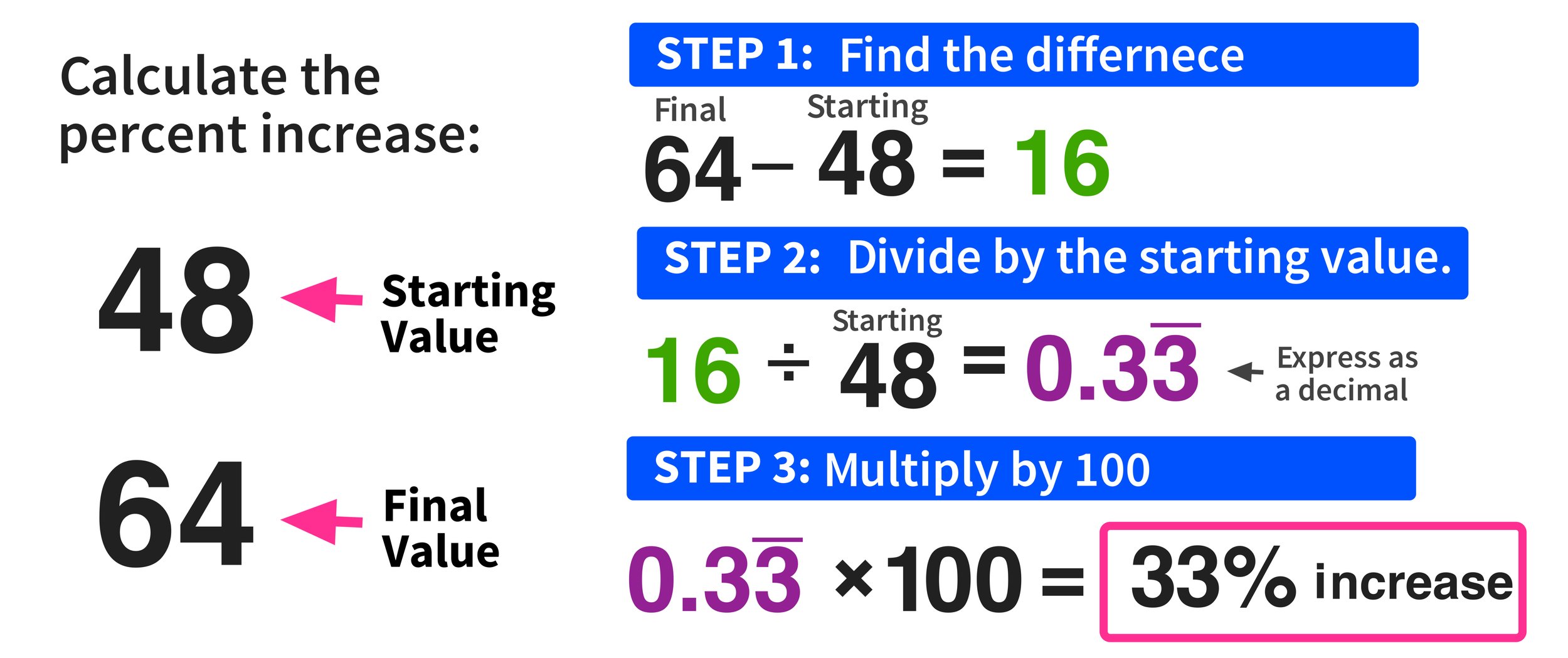
The Basic Formula: Part/Whole * 100
The most common scenario for finding a percent of two numbers involves determining what percentage one number (the “part”) is of another number (the “whole” or “total”). The formula is straightforward:
Percentage = (Part / Whole) * 100
Let’s break down each component:
-
Part: This is the specific quantity or amount you are interested in expressing as a percentage.
-
Whole: This is the total or original amount against which the “part” is being compared. It serves as the base for your calculation.
-
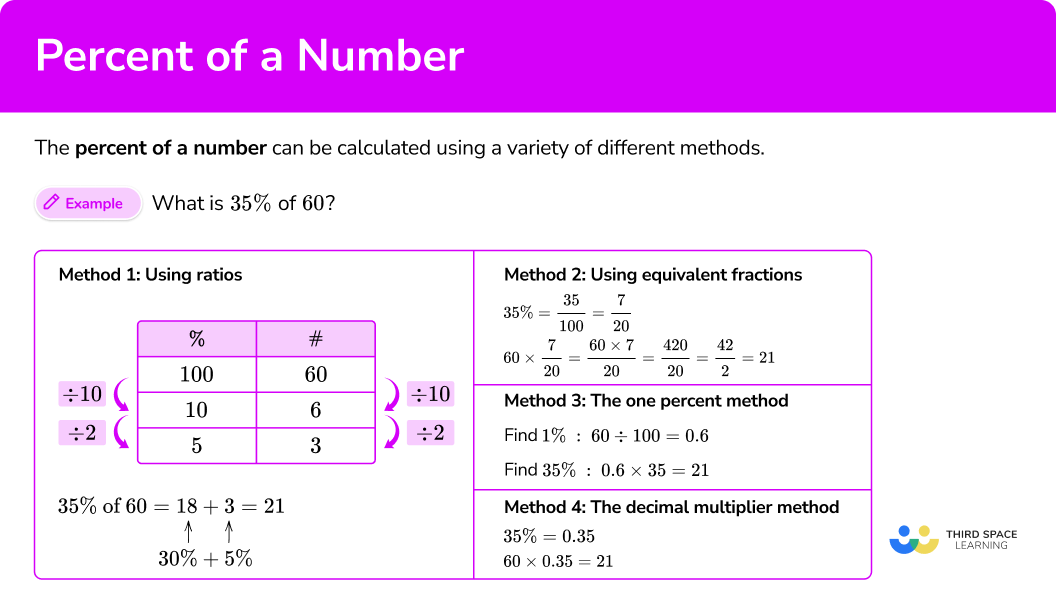
Dividing Part by Whole: This step converts the relationship into a decimal. For instance, if you have 25 out of 100, dividing 25 by 100 gives you 0.25.
-
Multiplying by 100: This final step converts the decimal into its percentage form. 0.25 multiplied by 100 yields 25%.
Understanding which number is the “part” and which is the “whole” is critical for accurate results. Misidentifying these can lead to wildly incorrect percentages and, consequently, flawed financial conclusions.
Practical Example: Calculating a Discount
Imagine you’re shopping and see an item originally priced at $200 now on sale for $150. You want to know what percentage discount you’re receiving.
-
Identify the numbers: Original price (Whole) = $200. Sale price = $150.
-
Determine the “Part”: The discount amount is the “part” in this case. Discount = Original Price – Sale Price = $200 – $150 = $50.
-
Apply the formula:
Percentage Discount = ($50 / $200) * 100
Percentage Discount = 0.25 * 100
Percentage Discount = 25%
You’re getting a 25% discount. This simple calculation helps you quickly assess the value of a sale, compare offers, and make informed purchasing decisions.
Expressing One Number as a Percentage of Another
Another common application is simply expressing how much of a total one component represents. For example, if a company has total sales of $500,000, and $125,000 of those sales came from a specific product line, you can find the percentage contribution:
-
Identify the numbers: Specific product sales (Part) = $125,000. Total Sales (Whole) = $500,000.
-
Apply the formula:
Percentage Contribution = ($125,000 / $500,000) * 100
Percentage Contribution = 0.25 * 100
Percentage Contribution = 25%
This means that product line contributed 25% to the company’s total sales, offering valuable insight into its performance and importance.
Percentages in Personal Finance: Mastering Your Money
For individuals, percentages are not abstract concepts but practical tools for managing and growing personal wealth. They provide the necessary framework for understanding where your money goes, how it grows, and how effectively you’re achieving your financial aspirations.
Budgeting and Expense Analysis
A well-structured budget is the cornerstone of personal finance, and percentages are its lifeblood. By expressing expenses as a percentage of your income, you gain a clear picture of your spending habits and can identify areas for improvement.
- Example: If your monthly net income is $4,000, and your rent is $1,200, your rent consumes ($1,200 / $4,000) * 100 = 30% of your income. Similarly, if you spend $600 on groceries, that’s ($600 / $4,000) * 100 = 15%. This granular view helps you adhere to budgeting rules of thumb (like the 50/30/20 rule) and ensures your spending aligns with your financial priorities.
Understanding Loan Interest and Savings Growth
Percentages are the universal language of interest. Whether you’re paying interest on a loan or earning interest on savings, understanding the percentage rate is paramount.
-
Loan Interest: A loan with a 5% annual interest rate means you’ll pay 5% of the outstanding principal balance in interest over a year (though often compounded more frequently). If you borrow $10,000 at 5%, your annual interest cost is $500. Knowing this allows you to compare loan offers effectively and understand the true cost of borrowing.
-
Savings Growth: Conversely, a savings account offering 2% annual interest means your principal balance will grow by 2% over a year. If you have $5,000 in savings, you’ll earn $100 in interest (before taxes) over that period. This knowledge helps you evaluate the effectiveness of different savings vehicles and project wealth accumulation.

Tracking Personal Financial Goals
From saving for a down payment to building an emergency fund, percentages offer a tangible way to track progress toward your financial goals.
- Example: If your goal is to save $30,000 for a down payment, and you’ve currently saved $10,000, you are ($10,000 / $30,000) * 100 = 33.33% of the way there. This provides motivation and helps you adjust your savings rate if you’re falling behind or ahead of schedule.
Business and Investment Applications: Driving Growth and Profit
In the corporate world and investment arena, percentages transform raw financial data into actionable insights, enabling strategic decisions, performance evaluation, and risk assessment.
Calculating Profit Margins and Markups
For businesses, understanding profit is existential. Percentages provide a standardized way to measure profitability and pricing strategies.
-
Gross Profit Margin: This tells a company how much profit it makes from each sale after accounting for the direct costs of goods sold (COGS). Formula: ((Revenue – COGS) / Revenue) * 100. A company with $1,000,000 in revenue and $600,000 in COGS has a gross profit margin of (($1,000,000 – $600,000) / $1,000,000) * 100 = 40%. This percentage is vital for assessing operational efficiency and competitive pricing.
-
Markup: This is the percentage added to the cost of a product to determine its selling price. If an item costs $50 to produce and sells for $75, the markup is (($75 – $50) / $50) * 100 = 50%. Businesses use markup percentages to ensure they cover costs and achieve desired profit levels.
Analyzing Return on Investment (ROI)
For investors, ROI is arguably the most critical percentage. It measures the profitability of an investment relative to its cost, providing a clear metric for evaluating investment performance.
-
Formula: ((Current Value of Investment – Original Cost of Investment) / Original Cost of Investment) * 100.
-
Example: If you invested $10,000 in a stock that is now worth $12,500, your ROI is (($12,500 – $10,000) / $10,000) * 100 = 25%. This allows investors to compare different investment opportunities and identify those that offer the best returns for the capital deployed. A higher ROI generally indicates a more efficient and profitable investment.
Understanding Financial Ratios and Performance Metrics
Many key financial ratios, which provide deep insights into a company’s health and performance, are expressed as percentages.
-
Debt-to-Equity Ratio: While often shown as a decimal, it can be easily understood as a percentage. It indicates how much debt a company is using to finance its assets relative to the value of shareholders’ equity.
-
Operating Expense Ratio: This calculates operating expenses as a percentage of revenue, revealing how efficiently a company manages its day-to-day operations.
-
Dividend Yield: This is the annual dividend per share expressed as a percentage of the stock’s current price, crucial for income-focused investors.
These percentages allow analysts and investors to compare companies within the same industry, track performance over time, and identify potential red flags or opportunities.
Common Pitfalls and Advanced Considerations
While the basic calculation of percentages is straightforward, their application in finance often requires careful consideration to avoid misinterpretation and errors.
The Importance of the “Base” or “Whole”
One of the most frequent mistakes is incorrectly identifying the “whole” or the “base” number in a percentage calculation. A percentage gain from $100 to $120 (a 20% increase) is very different from a 20% loss from $120 (which would be a $24 loss, bringing it to $96, not back to $100). Always be clear about what constitutes the base number you are calculating the percentage of.
Percentage Change vs. Percentage Point Change
It’s crucial to distinguish between a “percentage change” and a “percentage point change,” especially when discussing rates. If an interest rate increases from 4% to 5%, this is a 1 percentage point increase. However, the percentage change in the rate itself is ((5-4)/4) * 100 = 25%. Conflating these two can lead to significant misunderstandings in financial discussions.
Leveraging Financial Tools for Accuracy
While mental math is useful, for complex or critical financial calculations, always rely on accurate tools.
-
Calculators: Standard and scientific calculators have a percentage function (%).
-
Spreadsheets (Excel, Google Sheets): These are invaluable. Entering
=(Part/Whole)*100in a cell will give you the percentage, and you can format the cell as a percentage to display it automatically. -
Online Converters/Financial Calculators: Many websites offer specialized calculators for mortgage payments, investment returns, or currency conversions, often relying on percentage logic.
These tools minimize human error and allow for quick, precise computations, freeing you to focus on the interpretation and decision-making aspect.
Conclusion: The Power of Percentages in Your Financial Journey
The ability to find a percent of two numbers transcends a mere arithmetic skill; it is a vital component of financial literacy that empowers individuals and businesses alike. From personal budgeting and understanding the true cost of debt to analyzing investment returns and evaluating corporate performance, percentages provide unparalleled clarity and insight. They transform raw data into comparable, actionable information, enabling you to make informed decisions that shape your financial future. By mastering this fundamental concept, you unlock a powerful lens through which to view, manage, and ultimately grow your money, navigating the complex financial landscape with confidence and competence. Embrace the power of percentages, and take a significant step toward achieving your financial goals.
aViewFromTheCave is a participant in the Amazon Services LLC Associates Program, an affiliate advertising program designed to provide a means for sites to earn advertising fees by advertising and linking to Amazon.com. Amazon, the Amazon logo, AmazonSupply, and the AmazonSupply logo are trademarks of Amazon.com, Inc. or its affiliates. As an Amazon Associate we earn affiliate commissions from qualifying purchases.