
In the intricate world of personal and business finance, your bank account number serves as a critical identifier, a unique sequence of digits that distinguishes your specific account from millions of others. While frequently used in transactions and financial setup, it’s not always information we keep top of mind, readily accessible in our memory. Yet, there are numerous scenarios where knowing this number becomes essential – from setting up direct deposit for your paycheck to facilitating wire transfers, paying bills, or even linking new financial tools.
Understanding where to locate your bank account number is not just a matter of convenience; it’s a fundamental aspect of managing your financial life effectively and securely. This article delves into the various reliable methods available to locate this vital piece of information, ensuring you can access it whenever the need arises, alongside crucial considerations for its security.
Understanding Your Bank Account Number and Its Importance
Before diving into the “how-to,” it’s beneficial to grasp precisely what a bank account number represents and why it holds such significance in your financial dealings.
What is a Bank Account Number?
At its core, a bank account number is a unique string of numbers assigned by your financial institution to identify your individual checking, savings, or other deposit account. This number is distinct from your debit card number, which identifies a specific card linked to your account, and your bank’s routing number, which identifies your specific financial institution in a transaction. Think of the routing number as the “street address” of your bank and your account number as the “house number” within that bank. Typically, account numbers can range from 8 to 12 digits, though this can vary by institution.
It’s a digital fingerprint for your money, ensuring that funds sent to or from your account go to the correct destination. Unlike a debit card number, which you use for point-of-sale transactions, your account number is primarily for electronic funds transfers and setting up direct financial relationships.
Why Do You Need Your Bank Account Number?
The instances requiring your bank account number are diverse and critical to everyday financial operations. Here are some of the most common reasons:
- Setting Up Direct Deposit: Whether it’s for your salary, government benefits, or tax refunds, employers and agencies require your account number (and routing number) to directly deposit funds into your bank account, streamlining the payment process and ensuring timely access to your money.
- Automated Payments and Bill Pay: To set up recurring payments for utilities, mortgage, loans, or other services directly from your bank account, providers will often ask for your account and routing numbers. This ensures payments are made on time, avoiding late fees.
- Receiving Wire Transfers or Electronic Funds Transfers (EFTs): If you’re receiving money from another individual or business, especially for larger sums or international transfers, your account number is indispensable for ensuring the funds reach you securely.
- Linking Financial Accounts: When connecting your bank account to external financial services such as investment platforms, peer-to-peer payment apps (like PayPal or Venmo), or budgeting tools, your bank account number is often a required piece of information for verification and transaction purposes.
- Tax Purposes: For receiving tax refunds directly from tax authorities or making tax payments electronically, your bank account number is a key detail.
- Emergency Situations: In cases where your debit card is lost or stolen, or you’re locked out of online banking, your account number might be needed to access your funds or initiate transactions through alternative bank channels.
Recognizing these use cases underscores the practical importance of knowing how to quickly and securely locate your bank account number.
Common and Accessible Methods to Locate Your Account Number
Fortunately, banks provide several straightforward and secure avenues for you to find your account number. Most of these methods leverage resources you likely already have at hand.
Checking Your Physical Checks or Deposit Slips
One of the most traditional and often quickest ways to find your bank account number is by looking at a physical check from your checking account or a deposit slip.
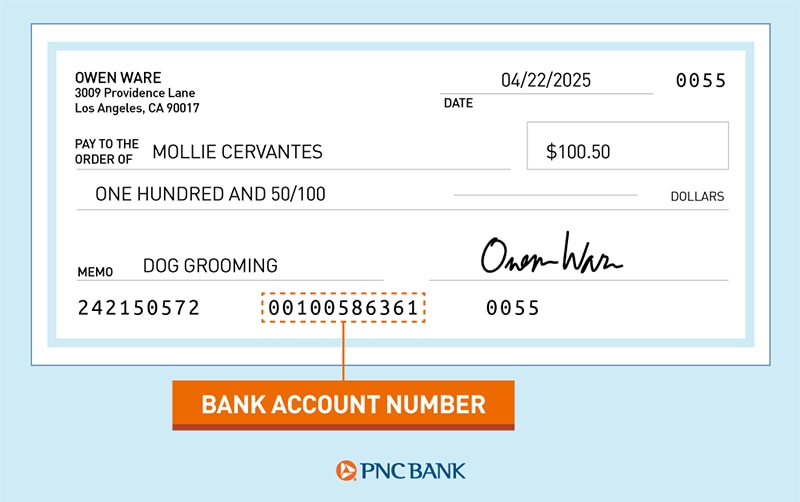
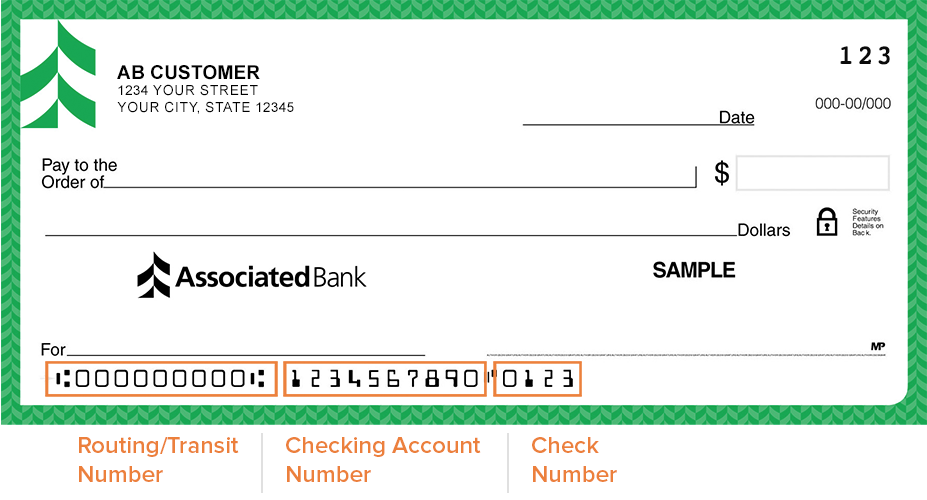
- On a Check: If you have a personal checkbook, take out a blank check. At the bottom of the check, you’ll find three sets of numbers printed in magnetic ink (MICR line). From left to right, these typically represent:
- Routing Number: The nine-digit number on the far left, identifying your bank.
- Account Number: The next set of numbers to the right of the routing number. This is your specific account number. Its length can vary.
- Check Number: The last set of numbers, which simply identifies that specific check.
It’s crucial to correctly distinguish between the routing number and the account number, as they are often adjacent.
- On a Deposit Slip: Similar to checks, deposit slips also feature your routing number and account number at the bottom. The order is usually the same, making them a reliable source. If you have a savings account that doesn’t issue checks, deposit slips for that account will also contain its specific number.
This method is quick and doesn’t require internet access, making it highly convenient if you have these items readily available.
Logging into Your Online Banking Portal
In today’s digital age, online banking portals have become the primary hub for managing finances, and they are an excellent resource for finding your account number. This is often the most convenient and secure method for many users.
- Step-by-Step Guide:
- Access Your Bank’s Website: Go to your bank’s official website and log in using your secure username and password.
- Navigate to Account Details: Once logged in, look for a section like “Account Summary,” “My Accounts,” or “Account Details.” Click on the specific account (e.g., “Checking Account”) for which you need the number.
- Locate the Account Number: Your account number will typically be displayed prominently on this page. Sometimes, for security reasons, banks might only show the last few digits of the account number, with an option to “Show Full Account Number” or “View Account Details” requiring an additional verification step (like entering a one-time password or security question answer).
- Check Statements Section: If it’s not immediately visible, look for a “Statements” or “Documents” section. You can usually download past electronic statements, which will contain your full account number.
Online banking offers instant access and the peace of mind of secure, authenticated retrieval. Just ensure you are on your bank’s legitimate website to avoid phishing scams.
Reviewing Your Bank Statements
Whether you receive paper statements in the mail or access them electronically, bank statements are a definitive source for your account number.
- Paper Statements: If you receive monthly paper statements, your full bank account number is usually printed prominently near the top of the statement, often next to your name and address, or within the “Account Summary” section.
- Electronic Statements: As mentioned, electronic statements can be accessed through your online banking portal. Navigate to the “Statements” or “eDocuments” section, select the desired statement (e.g., last month’s), and download or view it. The account number will be in the same location as on a paper statement.
Bank statements offer a comprehensive record of your transactions and account details, making them a reliable archive for your account number. Be sure to keep physical statements in a secure location and shred them before disposal.
Direct Bank Interaction: When Other Methods Fall Short
While the digital and paper methods are generally sufficient, there might be times when you need to contact your bank directly. This is particularly useful if you’re unable to access online banking, don’t have checks, or have more complex inquiries.

Calling Your Bank’s Customer Service
Reaching out to your bank’s customer service department is a reliable way to obtain your account number.
- Process: Call the customer service number listed on your bank’s official website, the back of your debit card, or a recent bank statement.
- Security Verification: Be prepared for a thorough identity verification process. The representative will ask for personal details such as your full name, address, date of birth, the last four digits of your Social Security Number, and possibly answers to security questions you’ve set up. This is crucial to prevent unauthorized access to your account information.
- What to Have Ready: Have your government-issued ID (like a driver’s license) and your debit card number handy, as these might be used for verification.
- Typical Wait Times: Be aware that wait times can vary, especially during peak hours.
Speaking directly with a bank representative ensures you receive accurate information and provides an opportunity to address any other account-related questions you might have.
Visiting a Local Bank Branch
For those who prefer face-to-face interaction or if online/phone methods are inaccessible, visiting a physical bank branch is an excellent option.
- In-Person Verification: At the branch, you’ll need to present a valid government-issued photo ID (e.g., driver’s license, passport) to a teller or personal banker. They may also ask for your debit card or other account-related information for verification.
- Assistance: A bank employee can securely look up your account details and provide you with your account number. They can also print a mini-statement or a temporary check that displays the number.
- Best For: This method is particularly useful if you’ve forgotten your online banking credentials, are experiencing technical difficulties, or prefer the added security of in-person assistance. It’s also suitable for setting up new services or addressing more complex financial needs.
Both calling and visiting a branch guarantee access to your account number, albeit with the necessity of robust identity verification to protect your financial security.
Alternative and Less Common Avenues
Beyond the most common methods, a few other situations or resources might contain your bank account number. These are often secondary sources but can be helpful if primary options are unavailable.
Using Mobile Banking Apps
Most banks offer sophisticated mobile banking apps that mirror the functionality of their online portals.
- Streamlined Access: Log into your bank’s official mobile app using your credentials (which may include biometric authentication like fingerprint or face ID).
- Navigation: Similar to online banking, navigate to the account details page for your specific account. Your account number will usually be displayed there, sometimes partially masked until you explicitly request to view the full number.
- Convenience: Mobile apps provide on-the-go access, making it very convenient to retrieve your account number anytime, anywhere, provided you have your device and internet access.
Old Account Opening Documents or Welcome Kits
When you first opened your bank account, you likely received a packet of documents, often referred to as a “welcome kit.”
- Initial Records: These documents frequently include a summary of your account details, terms and conditions, and sometimes even a voided check or temporary deposit slips. Your account number would be prominently displayed on these initial records.
- Archived Information: If you keep a financial archive, checking these original documents can be a quick way to find the number, assuming they are well-preserved and accessible.
Looking at Past Direct Deposit Forms or Payment Confirmations
In certain situations, previous financial records you’ve filled out or received might contain your account number.
- Employer HR Portals: If you’ve previously set up direct deposit with an employer, their HR portal or payroll system might have a record of your bank account number (often masked, but sometimes the full number).
- Payment Confirmation Emails/Letters: Some services you pay via direct debit might include a masked version of your account number in confirmation emails or letters, though it’s rare for the full number to be shown for security reasons. This method is less reliable for the full number but might offer a hint or the last few digits.
These alternative methods serve as backup options, reinforcing the idea that your account number is usually documented in multiple places.
Security Considerations and Best Practices
Finding your bank account number is just one part of the equation; protecting it is equally, if not more, important. Your bank account number, especially when combined with your routing number and other personal details, can be used to access your funds or commit financial fraud.
Protecting Your Account Number
- Treat it as Sensitive Information: Never share your full bank account number indiscriminately. It’s not public information and should be guarded.
- Beware of Phishing Scams: Be highly suspicious of unsolicited emails, texts, or phone calls asking for your bank account number. Banks will rarely ask for this information via unsecure channels. Always verify the source.
- Only Share with Trusted Parties: Only provide your account number to legitimate entities that genuinely require it, such as your employer for direct deposit, a verified bill payee, or your bank’s official customer service channels.
- Shred Old Documents: Before discarding old checks, deposit slips, or bank statements, ensure they are thoroughly shredded to prevent fraudsters from retrieving your financial information.
- Secure Online Access: Use strong, unique passwords for your online banking. Enable two-factor authentication (2FA) wherever possible. Avoid accessing your bank account on public Wi-Fi networks.
What to Do If You Can’t Find It (and it’s Urgent)
If you’re in an urgent situation and none of the above methods are yielding your account number, immediately contact your bank’s customer service or visit a branch. They are equipped to handle such emergencies and can guide you through the necessary steps after verifying your identity.
When Not to Share Your Account Number
- Unsolicited Requests: If someone contacts you out of the blue claiming to be from your bank or a government agency and asks for your account number, it’s almost certainly a scam.
- Verification of Identity via Email/Text: Legitimate institutions will not ask for sensitive information like your full account number via email or text message for identity verification.
- Unsecured Websites: Never enter your account number on a website that doesn’t have “https://” in the URL and a padlock icon, indicating a secure connection.
Your bank account number is a key to your financial world. Knowing how to locate it efficiently and, more importantly, understanding the protocols for its secure handling are fundamental skills for robust personal finance management. By utilizing the various methods discussed and adhering to best security practices, you can ensure seamless financial operations while keeping your assets safe.
aViewFromTheCave is a participant in the Amazon Services LLC Associates Program, an affiliate advertising program designed to provide a means for sites to earn advertising fees by advertising and linking to Amazon.com. Amazon, the Amazon logo, AmazonSupply, and the AmazonSupply logo are trademarks of Amazon.com, Inc. or its affiliates. As an Amazon Associate we earn affiliate commissions from qualifying purchases.