
Launching a Limited Liability Company (LLC) is a significant milestone for any entrepreneur, but the path to profitability is rarely instantaneous. It is common for a business to spend its first year—or even several subsequent years—developing products, conducting market research, or building a brand without generating a single dollar in revenue. However, a lack of income does not equate to a lack of responsibility in the eyes of the Internal Revenue Service (IRS) and state taxing authorities.
For many business owners, the question of “how to file taxes for an LLC with no income” is met with the assumption that if there is no money coming in, there is nothing to report. This is a dangerous misconception that can lead to stiff penalties, the loss of “good standing” with the state, and even the personal liability of the owners. Understanding your filing obligations is essential to protecting your business entity and setting a solid financial foundation for future growth.
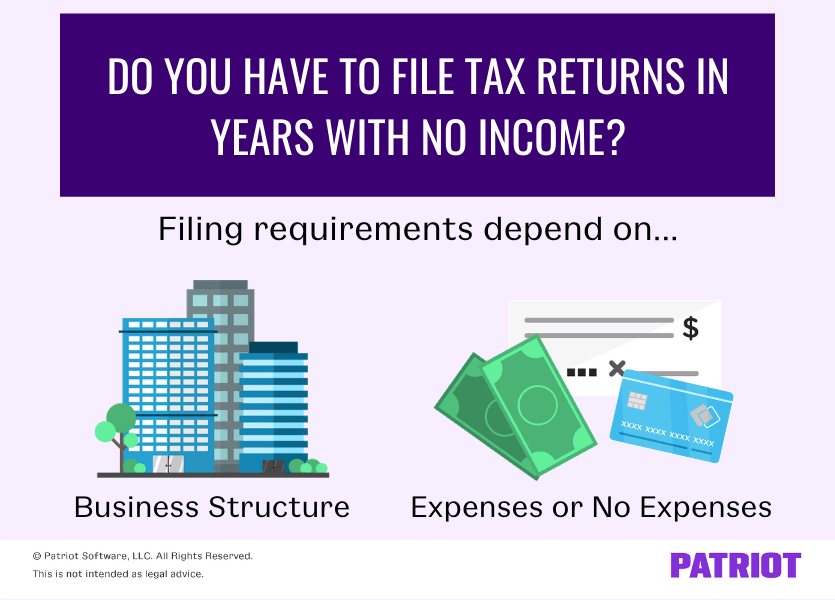
Understanding the Federal Obligation for Inactive Entities
The federal tax filing requirements for an LLC are primarily determined by how the entity is classified for tax purposes. By default, the IRS does not recognize an “LLC” as a separate taxing category; instead, it treats it as a corporation, a partnership, or as part of the owner’s personal tax return.
The Concept of the Disregarded Entity
If you are the sole owner of an LLC, the IRS classifies you as a “disregarded entity” for tax purposes. This means that, for federal income tax, the business and the owner are treated as one and the same. If your single-member LLC (SMLLC) had no income and no expenses during the tax year, you generally do not have a federal requirement to file a separate business tax return.
However, if your LLC incurred expenses—such as domain renewals, legal fees, or marketing costs—you may still want to file Schedule C (Form 1040) to report a loss. Reporting these expenses can be beneficial because they may offset other income you earned from employment or other investments, potentially lowering your overall tax liability.
Why the IRS Cares About Your $0 Income
While a truly inactive single-member LLC might stay under the radar, the IRS maintains a rigorous interest in any entity that is registered and active. Filing even when income is zero serves as a “placeholder” that informs the IRS the business still exists but is not yet profitable. More importantly, it maintains a consistent paper trail. If you suddenly report $200,000 in income next year after three years of silence, it may trigger a closer look at your books. Consistent filing demonstrates professional transparency and compliance.
Filing Requirements Based on LLC Tax Election
The complexity of filing increases significantly once you move beyond the single-member “disregarded entity” status. The structure of your LLC dictates which forms must be submitted by the annual deadline.
Multi-Member LLCs and Form 1065
If your LLC has two or more members, it is automatically classified as a partnership by the IRS. Unlike a single-member LLC, a partnership must file Form 1065 (U.S. Return of Partnership Income) regardless of whether the business earned income or incurred expenses.
This is an informational return. The partnership itself does not pay income tax; instead, it “passes through” profits or losses to the individual partners. Each partner receives a Schedule K-1, which they use to report their share of the business’s financial activity on their personal returns. Even if all values on Form 1065 are zero, the form must be filed. Failure to file Form 1065 on time can result in severe penalties, often exceeding $200 per month, per partner, for every month the return is late.
LLCs Taxed as S-Corporations or C-Corporations
Some LLC owners elect to be taxed as an S-Corp or a C-Corp to take advantage of specific tax strategies or fringe benefits. If your LLC has made an election to be treated as a corporation, you are legally required to file a corporate tax return every year, regardless of income levels.
For an S-Corp, you must file Form 1120-S. Similar to a partnership, this is an informational return that generates a K-1 for shareholders. For a C-Corp, you must file Form 1120. In both cases, the IRS expects a return to be filed as long as the corporation is legally active. Neglecting these filings can lead to the IRS terminating your S-Corp status or levying significant corporate-level penalties.
Navigating State Taxes and Franchise Fees
While federal obligations are largely tied to income and structure, state obligations are often tied to the mere existence of the LLC. Even if your business has zero income and zero federal filing requirement, you likely still owe your state of formation a fee or a specific “franchise tax.”
The Hidden Costs of a “Dormant” LLC
Many entrepreneurs are surprised to find that “no income” does not mean “no cost.” States like California, for example, require a minimum franchise tax of $800 per year for the privilege of doing business in the state, even if the LLC is inactive. Delaware requires an annual franchise tax and a filing fee.
If you fail to pay these fees or file the required state tax forms, the state may change your business status to “not in good standing.” Eventually, the state can administratively dissolve your LLC. If this happens, you lose the limited liability protection the entity provides, potentially exposing your personal assets to business-related lawsuits or debts.
Annual Reports and Compliance
Most states require an “Annual Report” or “Biennial Statement.” This is not necessarily a tax document, but a compliance document that confirms the LLC’s address, registered agent, and management structure. These reports almost always carry a filing fee. In the context of a zero-income LLC, these fees are considered operating expenses. Keeping your LLC compliant at the state level is arguably more critical than the federal level when income is zero, as the state is much quicker to revoke your legal business status for non-payment.
Leveraging Deductions and Net Operating Losses (NOL)
One of the primary reasons to file taxes for an LLC with no income is to capture expenses that can be used to your advantage in the future. Business finance is as much about managing losses as it is about managing gains.
Capitalizing Startup Costs
The IRS allows businesses to deduct a certain amount of startup and organizational costs. Generally, you can deduct up to $5,000 in startup costs and $5,000 in organizational costs in the year your business finally begins active operations. However, if your LLC hasn’t “started” operations yet—meaning it is still in the preparatory phase—these costs may need to be capitalized and amortized over 15 years. By filing your taxes during the zero-income years, you establish the date and nature of these expenses, making it much easier to claim them once the revenue starts flowing.
Carrying Losses Forward to Future Tax Years
If your LLC is active but simply didn’t make a profit, you may have a Net Operating Loss (NOL). Under current tax laws, a business can often carry these losses forward to future tax years.
Imagine your LLC spends $10,000 on software development and marketing in Year 1 but earns $0. In Year 2, you earn $50,000 in profit. By properly filing and documenting the $10,000 loss in Year 1, you may be able to apply that loss against your Year 2 income, reducing your taxable profit to $40,000. If you do not file in Year 1, you lose the official record of that loss, and the IRS may disallow the deduction when you try to claim it later.
Consequences of Failing to File
The risks of ignoring your tax obligations far outweigh the time or cost required to file a “zero return.” From financial penalties to legal vulnerabilities, the fallout can be devastating for a small business.
Financial Penalties and Interest
The IRS is particularly aggressive regarding partnership and corporate filing deadlines. As mentioned, the penalty for a late partnership return is calculated per partner, per month. For a small three-member LLC, a few months of negligence can result in thousands of dollars in fines—all for a business that hasn’t even made its first sale. Late filing fees for corporations are similarly punitive. Even if no tax is owed, the late-filing penalty itself is a debt that the government will collect.

Maintaining the “Corporate Veil”
The primary reason most people form an LLC is to create a “corporate veil” that separates personal assets from business liabilities. However, this protection is not absolute. To maintain it, you must treat the LLC as a separate legal and financial entity.
If a creditor or a legal adversary can show that you have ignored the formal requirements of running a business—such as failing to file tax returns or pay state fees—they may attempt to “pierce the corporate veil.” They can argue that the LLC is a “sham” or an “alter ego” of the owner. If they succeed, your personal bank accounts, home, and assets could be at risk. Filing your taxes, even with zero income, is a vital piece of evidence that you are operating a legitimate, separate business entity.
In conclusion, filing taxes for an LLC with no income is not just a bureaucratic chore; it is a strategic business move. Whether it is a single-member LLC reporting a loss on a Schedule C or a partnership filing an informational Form 1065, compliance ensures you avoid penalties, maintain legal protections, and preserve valuable tax deductions for the day your business turns a profit. When in doubt, consulting with a tax professional can provide the specific guidance needed to ensure your “dormant” LLC remains a viable vehicle for your future entrepreneurial success.
aViewFromTheCave is a participant in the Amazon Services LLC Associates Program, an affiliate advertising program designed to provide a means for sites to earn advertising fees by advertising and linking to Amazon.com. Amazon, the Amazon logo, AmazonSupply, and the AmazonSupply logo are trademarks of Amazon.com, Inc. or its affiliates. As an Amazon Associate we earn affiliate commissions from qualifying purchases.