
Navigating the complexities of state taxes can often feel more daunting than filing federal returns, particularly in a state with unique regulations like Pennsylvania. Pennsylvania is one of the few states in the U.S. that utilizes a flat tax system, which simplifies the math but introduces specific nuances regarding what is and is not taxable. Whether you are a long-time resident, a new arrival, or someone working across state lines, understanding how to file PA state taxes efficiently is a vital component of your overall personal finance strategy.

This guide provides a professional deep dive into the Pennsylvania Department of Revenue’s requirements, the various filing methods available to taxpayers, and the strategies you can use to maximize your deductions and ensure compliance.
Navigating the Pennsylvania Department of Revenue Requirements
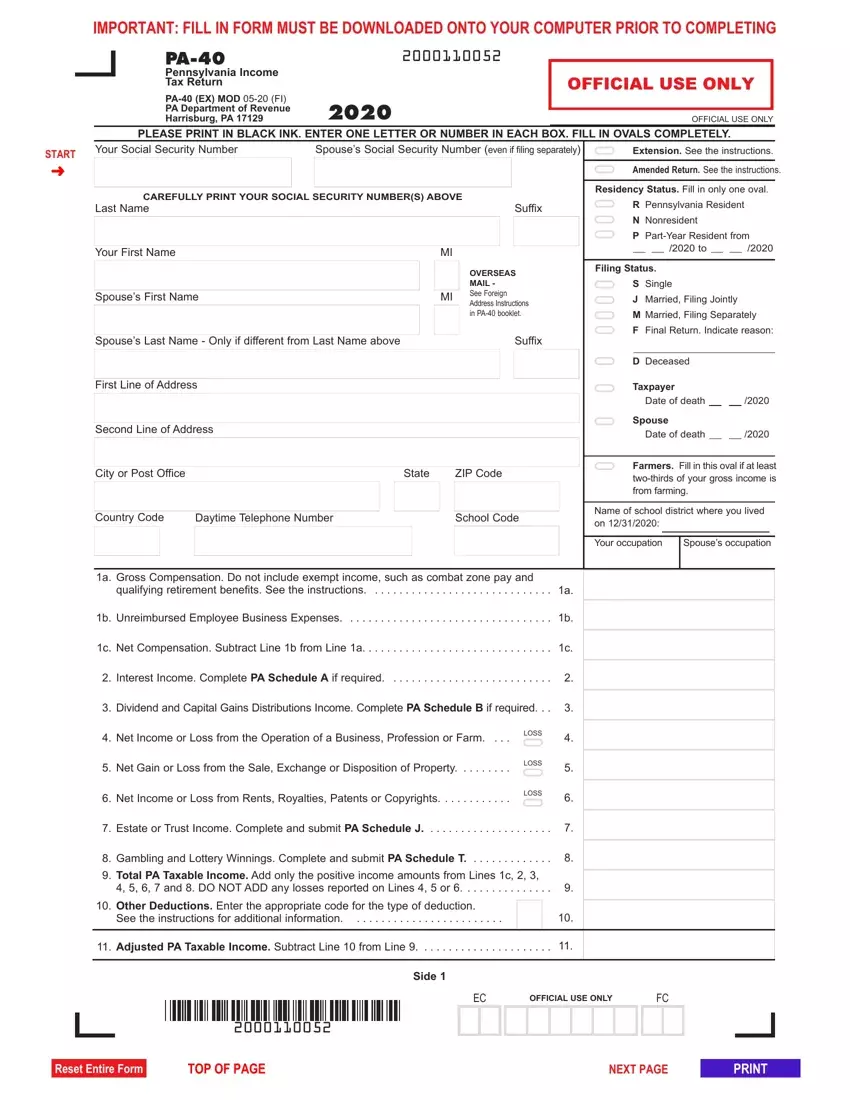
Pennsylvania’s tax system is governed by the Department of Revenue, and its primary instrument for individual taxation is the PA-40 Personal Income Tax Return. Unlike the federal government, which uses progressive tax brackets, Pennsylvania imposes a flat rate of 3.07% on all taxable income. While this might seem straightforward, the definitions of “taxable income” in the Commonwealth can differ significantly from federal standards.
Determining Residency Status
The first step in filing is identifying your residency status, as this determines how much of your income is subject to the 3.07% rate.
-
Full-Year Residents: If you maintained a permanent home in Pennsylvania and spent more than 183 days in the state, you are taxed on all income earned, regardless of where it was sourced.
-
Part-Year Residents: If you moved into or out of Pennsylvania during the tax year, you are only taxed on income earned while living in the state, plus any income sourced from Pennsylvania while living elsewhere.
-
Non-Residents: If you live in another state but earn income within Pennsylvania (such as through rental property or a job located in the state), you must file a PA-40 to report that specific income.
A critical aspect of Pennsylvania residency is the state’s reciprocity agreements. Pennsylvania has agreements with six states: Indiana, Maryland, New Jersey, Ohio, Virginia, and West Virginia. If you live in one of these states but work in PA, your employer should withhold taxes for your home state instead of Pennsylvania, potentially sparing you from filing a PA return altogether for W-2 wages.
The Flat Tax Advantage and Taxable Income
The flat tax rate of 3.07% is one of the lowest in the nation among states that levy an income tax. However, the Commonwealth does not offer a standard deduction or personal exemptions, which are staples of the federal return. Instead, Pennsylvania categorizes income into eight distinct classes:
-
Compensation (Wages, salaries, bonuses)
-
Interest
-
Dividends
-
Net profits from a business, profession, or farm
-
Net gains from the sale or disposition of property
-
Rents, royalties, patents, and copyrights
-
Estate or trust income
-
Gambling and lottery winnings
It is important to note that Pennsylvania does not tax Social Security benefits or most public and private pension distributions for individuals who have reached the age of retirement. This makes the state a financially attractive location for retirees.
Filing Methods: Digital vs. Manual
The Pennsylvania Department of Revenue has made significant strides in modernizing the filing process. Choosing the right method depends on your comfort level with technology and the complexity of your financial situation.
Leveraging the myPATH Portal
The most direct and cost-effective way to file PA state taxes is through myPATH (Pennsylvania Tax Hub). This is a free, state-run online portal that allows taxpayers to file their PA-40, make payments, and track their refund status.
Using myPATH is highly recommended for those with straightforward returns. The system is designed to catch common errors and ensures that the information reaches the Department of Revenue instantly. Unlike federal filing through some commercial softwares, myPATH is entirely free for all Pennsylvania taxpayers, regardless of income level.
Third-Party Tax Software
For individuals who prefer an integrated approach, popular software like TurboTax, H&R Block, and FreeTaxUSA are compatible with Pennsylvania’s systems. These platforms are particularly useful if you have complex investments, rental properties, or small business income, as they can automatically port data from your federal return to your state return. However, be aware that most commercial software charges an additional fee to file state returns, even if the federal filing is free.
Filing by Mail
While the state encourages electronic filing, you can still file a paper return. You will need to download Form PA-40 and any necessary schedules (such as Schedule UE for business expenses or Schedule SP for tax forgiveness) from the Department of Revenue’s website. Paper returns generally take significantly longer to process—often eight to twelve weeks compared to the one to two weeks for electronic returns.
Maximizing Deductions and the Tax Forgiveness Program
Because Pennsylvania does not have a standard deduction, taxpayers must look toward specific credits and “tax forgiveness” to reduce their liability. This is an essential part of financial planning for low-to-moderate-income households.
The PA Tax Forgiveness Credit (Schedule SP)
Tax Forgiveness is one of Pennsylvania’s most significant tax benefits. It allows eligible individuals and families to reduce or eliminate their state tax liability. Eligibility is based on “unresected income,” which includes both taxable and non-taxable income sources.

If your income falls below a certain threshold based on your filing status and the number of dependents, you may receive a 10% to 100% credit against your tax due. For a family with children, this can result in hundreds or even thousands of dollars in savings. To claim this, you must complete Schedule SP, which is filed along with your PA-40.
Unreimbursed Business Expenses (Schedule UE)
Pennsylvania is unique in that it allows employees to deduct certain unreimbursed business expenses, a deduction that was largely eliminated at the federal level by the Tax Cuts and Jobs Act of 2017.
To qualify for a deduction on Schedule UE, the expense must be:
-
Directly related to your profession.
-
Actually incurred.
-
Reasonable and necessary.
-
Unreimbursed by your employer.
Common deductions include union dues, specialized work clothing (uniforms that cannot be worn for everyday use), small tools, and certain travel expenses. Because the Department of Revenue scrutinizes Schedule UE closely, it is vital to maintain meticulous records and receipts.
Savings for Education and Health
Pennsylvania offers tax incentives for those prioritizing long-term financial goals:
-
529 Plans: Contributions to a Pennsylvania 529 College and Career Savings Program or any other state’s 529 plan are deductible from your taxable income up to $18,000 per beneficiary per year (for 2024).
-
PA ABLE Accounts: Similar to 529 plans, contributions to ABLE accounts for individuals with disabilities provide significant tax advantages.
-
Health Savings Accounts (HSAs): While PA does not mirror the federal deduction for HSA contributions exactly, it does not tax the interest earned within the account or the distributions used for medical expenses.
A Comprehensive Walkthrough of Form PA-40
When you are ready to file, the process follows a logical flow. Success lies in preparation and the accurate categorization of your financial data.
Gathering Essential Documentation
Before starting your return, ensure you have the following:
-
W-2s and 1099s: These report your compensation, interest, dividends, and other income.
-
Federal Form 1040: You will need your federal adjusted gross income (AGI) and other figures to cross-reference.
-
County and School District Codes: Pennsylvania taxes are often tied to your specific municipality. You must know your five-digit Resident School District Code to ensure your local taxes are credited correctly.
-
Records of Estimated Payments: If you are self-employed or have significant non-wage income, you may have made quarterly estimated payments that must be credited on your return.
Reporting Income and Calculating Tax Liability
On Form PA-40, you will list your income by class. Pennsylvania requires you to report the “gross” amount of compensation before federal deductions like 401(k) contributions are taken out. This is a common point of confusion; unlike the federal government, Pennsylvania taxes 401(k) contributions at the time of the contribution rather than at the time of withdrawal.
Once your total taxable income is calculated, you multiply it by 0.0307. From this total, you subtract any taxes already withheld by your employer, any estimated payments made, and any credits like Tax Forgiveness.
Deadlines, Extensions, and Financial Management
Staying on the right side of the Department of Revenue requires a keen eye on the calendar. Failure to meet deadlines can lead to unnecessary penalties that erode your personal wealth.
Key Calendar Dates
The deadline to file your PA-40 is typically April 15th, mirroring the federal deadline. If April 15th falls on a weekend or a holiday, the deadline moves to the next business day.
If you cannot file by the deadline, you can request an extension. It is important to remember that an extension to file is not an extension to pay. If you expect to owe taxes, you should estimate the amount and pay it by the April 15th deadline to avoid interest and late-payment penalties.
Managing Underpayments and Penalties
Pennsylvania imposes penalties for both late filing and late payment. The interest rate is set annually and is charged on the unpaid tax balance from the date the tax was due until the date of payment. If you realize you have made a mistake on a previous return, you should file Form PA-40X (Amended PA Personal Income Tax Return) as soon as possible to mitigate potential interest charges.
Integrating State Taxes into Your Overall Financial Plan
Filing your PA state taxes should not be viewed as an isolated task. Instead, it should be integrated into your broader financial strategy. For example, if you consistently receive a large state refund, you may be over-withholding, essentially giving the state an interest-free loan. Adjusting your PA-4 (the state equivalent of a W-4) can put more money in your paycheck each month, which could be better served in an interest-bearing investment account.
Furthermore, remember that your PA state tax return is often the basis for your Local Earned Income Tax (EIT). In Pennsylvania, most residents are subject to a local tax (often 1% to 2%) that is collected by a different agency (like Berkheimer or Keystone Collections Group). Ensuring your PA-40 is accurate ensures that your local filings, which are typically due on the same day, are also correct.
By understanding the flat-tax structure, utilizing tools like myPATH, and maximizing specific credits like Tax Forgiveness, Pennsylvania residents can navigate tax season with confidence and precision. Tax compliance is not just about following the law; it is about managing your financial resources effectively to secure your long-term prosperity.
aViewFromTheCave is a participant in the Amazon Services LLC Associates Program, an affiliate advertising program designed to provide a means for sites to earn advertising fees by advertising and linking to Amazon.com. Amazon, the Amazon logo, AmazonSupply, and the AmazonSupply logo are trademarks of Amazon.com, Inc. or its affiliates. As an Amazon Associate we earn affiliate commissions from qualifying purchases.