
Navigating the world of taxes can often feel like deciphering a complex code, filled with acronyms, deadlines, and seemingly endless forms. For many, the instinct is to outsource this annual ritual to a professional. However, with the right approach and understanding, filing your own taxes can be a remarkably empowering and financially astute decision. It offers not only a potential cost saving but also a deeper insight into your personal financial health and obligations. This comprehensive guide aims to demystify the process, providing you with the knowledge and confidence to take control of your tax filing journey.
Understanding Your Tax Filing Obligations
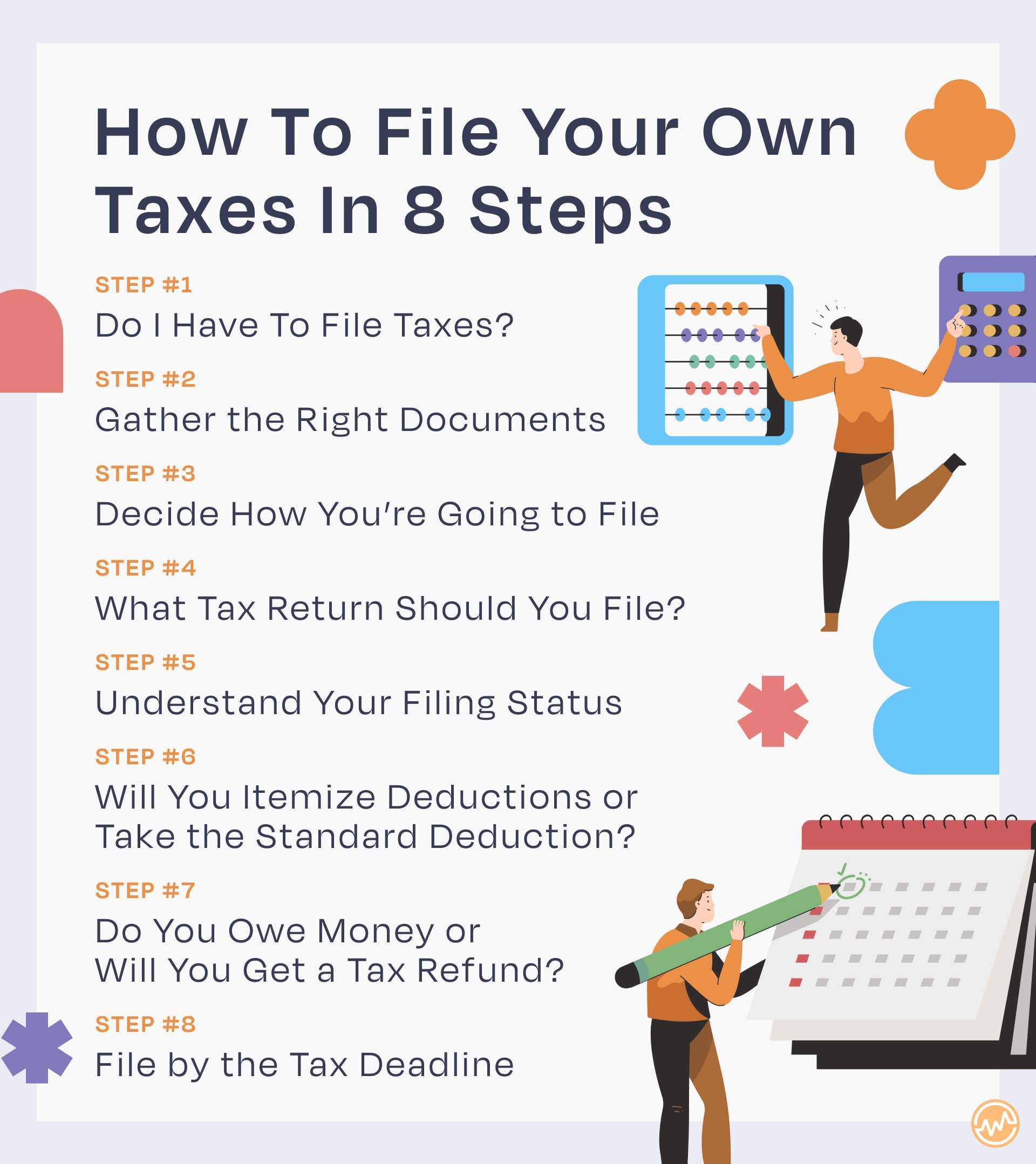
Before you even begin gathering documents, it’s crucial to understand the fundamental principles of tax filing. Knowing whether you need to file, when to file, and under what status can prevent future headaches and potential penalties.
Who Needs to File?
Not everyone is required to file a federal income tax return. The IRS sets specific thresholds based on your gross income, filing status, and age. Generally, if your gross income (all income you receive in the form of money, goods, property, and services that is not exempt from tax) is above a certain amount, you must file. For instance, single individuals under 65 usually need to file if their gross income exceeds the standard deduction for their filing status. However, even if your income is below the filing threshold, you might still want to file to receive a refund of withheld income tax or to claim refundable tax credits, such as the Earned Income Tax Credit or the Additional Child Tax Credit. Understanding these thresholds is the first step towards determining your obligation. Furthermore, self-employed individuals often have different filing requirements, usually needing to file if their net earnings from self-employment are $400 or more, regardless of overall gross income.
Key Deadlines and Penalties
The most critical deadline for most individual taxpayers is April 15th of each year. If April 15th falls on a weekend or holiday, the deadline is typically shifted to the next business day. For those who cannot meet this deadline, an extension can be filed, which generally grants an additional six months to submit your return. However, an extension to file is not an extension to pay. If you owe taxes, you must still pay an estimate by the original April 15th deadline to avoid penalties and interest. Failure to file on time can result in a failure-to-file penalty, which is usually 5% of the unpaid taxes for each month or part of a month that a tax return is late, capped at 25%. Similarly, failure to pay on time incurs a failure-to-pay penalty, typically 0.5% of the unpaid taxes for each month or part of a month the taxes remain unpaid, also capped at 25%. Understanding and adhering to these deadlines is paramount to a smooth tax season.
Different Filing Statuses Explained
Your filing status determines your standard deduction amount, the tax rates that apply to your income, and certain credits you can claim. There are five primary filing statuses:
- Single: For individuals who are unmarried, divorced, or legally separated according to state law on December 31st of the tax year.
- Married Filing Jointly: For married couples who choose to file a single return together. This status often offers the lowest tax liability for couples.
- Married Filing Separately: For married couples who choose to file separate returns. This can sometimes be beneficial in specific situations, such as when one spouse has significant medical expenses.
- Head of Household: For unmarried individuals who pay more than half the cost of keeping up a home for themselves and a qualifying person (e.g., a dependent child). This status offers a higher standard deduction than Single.
- Qualifying Widow(er) with Dependent Child: For individuals whose spouse died during one of the two previous tax years and who have a dependent child. This status allows the taxpayer to use the married filing jointly tax rates for two years after the year of their spouse’s death.
Choosing the correct filing status is crucial for accurate tax calculation and maximizing potential tax benefits.
Gathering Your Essential Documents and Information
The success of filing your own taxes hinges on thorough preparation. Before you even open a tax form or software, you need to collect all relevant financial documents. Being organized at this stage will save you considerable time and reduce the likelihood of errors.
Income Statements (W-2s, 1099s)
Your primary income documents will be your W-2s and various 1099 forms. A W-2, Wage and Tax Statement, is issued by your employer and reports your annual wages and the amount of taxes withheld from your paycheck. You should receive a W-2 from each employer you worked for during the tax year. 1099 forms report other types of income:
- 1099-NEC (Nonemployee Compensation): For independent contractors or self-employed individuals who received payments for services.
- 1099-MISC (Miscellaneous Income): For various other income types, like rent payments or prizes.
- 1099-INT (Interest Income): From banks, credit unions, or other financial institutions.
- 1099-DIV (Dividends and Distributions): From stocks and mutual funds.
- 1099-R (Distributions from Pensions, Annuities, Retirement or Profit-Sharing Plans, IRAs, Insurance Contracts, etc.): For retirement plan withdrawals.
- 1099-B (Proceeds From Broker and Barter Exchange Transactions): For sales of stocks, bonds, and other securities.
Ensure you have all relevant income statements, typically arriving by the end of January, as these form the backbone of your tax return.
Deduction and Credit Documentation
Beyond income, many taxpayers qualify for deductions and credits that can significantly reduce their taxable income or directly lower their tax bill. These require specific documentation:
- Mortgage Interest (Form 1098): If you own a home and pay mortgage interest.
- Student Loan Interest (Form 1098-E): For interest paid on qualified student loans.
- Tuition and Fees (Form 1098-T): For educational expenses that may qualify for credits.
- Charitable Contributions: Receipts or acknowledgment letters for donations to qualified organizations. For cash contributions over $250 or non-cash contributions, specific IRS rules apply.
- Medical Expense Records: If your unreimbursed medical expenses exceed 7.5% of your Adjusted Gross Income (AGI).
- Child Care Expenses: Provider’s name, address, and taxpayer identification number for the Child and Dependent Care Credit.
- Retirement Contributions: Records of contributions to IRAs or other retirement accounts.
Compile all receipts, statements, and forms related to potential deductions and credits. Overlooking these can mean overpaying your taxes.
Personal Information and Prior Year’s Returns
You’ll also need basic personal information for yourself, your spouse (if applicable), and any dependents, including Social Security Numbers (SSNs) or Individual Taxpayer Identification Numbers (ITINs), and dates of birth. It’s also highly advisable to have a copy of your previous year’s tax return. This serves multiple purposes: it provides a quick reference for certain information that carries over (like your AGI), helps you identify deductions or credits you might have claimed before, and is sometimes required by tax software for identity verification. Having this readily available makes the current year’s filing much smoother.
Choosing the Right Filing Method
Once your documents are in order, the next decision is how you’ll actually prepare and submit your return. The method you choose can impact ease of use, cost, and the level of support you receive.
Paper Filing: Pros and Cons

While increasingly less common, paper filing remains an option.
Pros:
- No Computer Needed: Ideal for those without internet access or who prefer a tangible record.
- Direct Control: You physically fill out the forms, which can provide a sense of direct control and understanding.
- No Software Costs: You only need to purchase the forms or print them from the IRS website.
Cons: - Time-Consuming: Requires manual calculations and form filling, increasing the chance of errors.
- Slower Processing: Refunds take significantly longer to receive compared to e-filing.
- Higher Risk of Errors: Manual entry can easily lead to mathematical mistakes or overlooked sections.
- No Guided Assistance: You’re solely responsible for interpreting instructions and ensuring compliance.
Paper filing involves printing out the relevant IRS forms from IRS.gov, filling them out carefully, and mailing them to the appropriate IRS address. This method is generally recommended only for very simple returns or for those who are highly uncomfortable with digital solutions.
Online Tax Software: A Comprehensive Guide
For most taxpayers, online tax software is the most popular and efficient method. These platforms guide you step-by-step through the process, performing calculations and flagging potential issues.
Free vs. Paid Options:
- Free Options (e.g., IRS Free File, FreeTaxUSA, TurboTax Free Edition):
- IRS Free File: A partnership between the IRS and tax software companies. If your Adjusted Gross Income (AGI) is below a certain threshold (which changes annually), you can use participating software for free. If your income is above the threshold, you can use Free File Fillable Forms, which provides electronic forms but no guided assistance.
- Other “Free” Versions: Many commercial tax software providers offer free versions for simple returns (e.g., W-2 income only, standard deduction). Be mindful of what constitutes a “simple” return, as adding forms for investments or self-employment often triggers an upgrade to a paid version.
- Paid Options (e.g., TurboTax, H&R Block, TaxAct, TaxSlayer):
- These services cater to more complex tax situations, offering comprehensive support for various income types, deductions, and credits. They typically come in different tiers (Deluxe, Premier, Self-Employed), with pricing increasing based on the complexity of features and access to expert advice.
- They provide robust error checking, often integrate with financial institutions to import data, and offer clear explanations for each step.
When choosing, consider your tax situation’s complexity, your comfort level with technology, and your budget. Reviews and comparisons of different software can help you make an informed decision.
When to Consider Professional Assistance
While filing your own taxes is achievable for many, there are situations where hiring a tax professional (like a Certified Public Accountant (CPA) or an Enrolled Agent (EA)) is a wise investment:
- Complex Financial Situations: If you own a business, have significant investments, rental properties, foreign income, or have experienced major life changes (marriage, divorce, birth of a child, home purchase/sale) that complicate your taxes.
- Audit Concerns: If you’ve received an audit notice or believe you might be subject to one.
- Tax Planning Needs: If you want advice on how to minimize future tax liabilities or plan for retirement.
- Lack of Time or Confidence: If you simply don’t have the time to dedicate to tax preparation or feel overwhelmed by the process.
A good tax professional can not only ensure accuracy but also identify deductions and credits you might have missed, potentially saving you more than their fee.
Navigating the Filing Process Step-by-Step
Regardless of whether you choose software or paper forms, the actual process of entering information follows a logical progression. Understanding this flow can make the task less daunting.
Inputting Your Income
The first major section of any tax return involves reporting all your income. This is where your W-2s and 1099s come into play.
- W-2 Income: You’ll enter the information precisely as it appears on your W-2 form: wages, federal tax withheld, state tax withheld, and any other boxes.
- 1099 Income: For each 1099 form, you’ll input the relevant figures. If you have 1099-NEC income, you’ll also need to report associated business expenses (covered in the next section) to calculate your net self-employment income.
- Other Income: Don’t forget any other sources of income, such as unemployment benefits (Form 1099-G), gambling winnings (Form W2-G), or alimony received (for divorce agreements finalized before 2019). Tax software makes this relatively straightforward by prompting you for each potential income source. On paper, you’d locate the corresponding lines on Form 1040 and any necessary schedules (e.g., Schedule B for interest/dividends, Schedule C for self-employment).
Claiming Deductions and Credits
After reporting all income, the next critical step is to identify and claim all eligible deductions and credits.
- Deductions: These reduce your taxable income. You’ll choose between taking the standard deduction (a fixed amount based on your filing status) or itemizing deductions (listing out specific expenses like mortgage interest, state and local taxes, charitable contributions, and medical expenses). You should choose whichever results in a lower taxable income. Tax software will typically help you compare these automatically.
- Credits: These directly reduce the amount of tax you owe, dollar-for-dollar. They are often more valuable than deductions. Common credits include the Child Tax Credit, Earned Income Tax Credit, education credits (American Opportunity Tax Credit, Lifetime Learning Credit), and dependent care credits. Each credit has specific eligibility requirements.
Accurate documentation for all claimed deductions and credits is vital. The software will guide you through questions to determine your eligibility for various deductions and credits, and you’ll input the corresponding amounts from your compiled records.
Reviewing for Accuracy and E-filing
Before submitting your return, a thorough review is non-negotiable.
- Check for Typos: Even a small numerical error can lead to discrepancies.
- Verify Personal Information: Ensure all SSNs, dates of birth, and addresses are correct.
- Review All Forms and Schedules: Make sure all relevant income and deduction documents have been entered.
- Compare to Prior Year (if applicable): Look for significant, unexplained changes in income or deductions that might indicate an error.
Tax software provides an excellent advantage here by running its own error checks and often providing a summary of your return before submission. Once you’re confident in the accuracy, you can proceed to e-file (electronic filing). E-filing is faster, more secure, and results in quicker refund processing compared to paper filing. You’ll usually need your Adjusted Gross Income (AGI) from the previous year for identity verification when e-filing.
Understanding Your Refund or Payment Due
Once you’ve completed your return, the software or your calculations will show you one of two outcomes:
- A Refund: This means you’ve overpaid your taxes throughout the year (e.g., too much was withheld from your paychecks). You can usually choose to have your refund direct-deposited into your bank account, which is the fastest option, or receive a paper check.
- Taxes Due: This means you owe the government more money. This can happen if not enough tax was withheld from your pay, or if you had significant income not subject to withholding (like self-employment income). You’ll typically have several payment options, including direct debit from your bank account, credit/debit card, or mailing a check. Remember, if you file an extension, the payment is still due by April 15th.
Post-Filing Best Practices and Future Planning
Filing your return isn’t the absolute end of your tax responsibilities. A few best practices can ensure smooth sailing in case of follow-ups and set you up for greater financial efficiency in the coming years.
What to Do After You File
Once your return is submitted and accepted by the IRS (you’ll receive confirmation if you e-file), you should:
- Save a Copy: Keep a digital and/or physical copy of your complete filed return, including all schedules and worksheets, for your records.
- Track Your Refund: If you’re expecting a refund, you can track its status using the IRS “Where’s My Refund?” tool, usually within 24-48 hours after e-filing.
- Respond to Notices Promptly: If you receive any correspondence from the IRS or your state tax authority, read it carefully and respond within the specified timeframe. Do not ignore IRS notices. Most can be resolved quickly with proper documentation.
Keeping Organized Records for the Future
Maintaining meticulous records throughout the year is perhaps the most crucial ongoing best practice.
- Dedicated File: Create a dedicated physical or digital folder for tax documents. As soon as you receive a W-2, 1099, 1098, or any receipt for a potential deduction/credit, place it in this folder.
- Digital vs. Physical: Consider scanning all physical documents to create digital backups. Cloud storage can be an excellent way to ensure these records are safe and accessible.
- Retention Period: The IRS generally recommends keeping tax records for at least three years from the date you filed your original return or two years from the date you paid the tax, whichever is later. For certain situations (e.g., underreporting income significantly), the period can extend to six years. For property records, keep them until the period of limitations expires for the year in which you dispose of the property.
Estimated Taxes and Tax Planning Tips
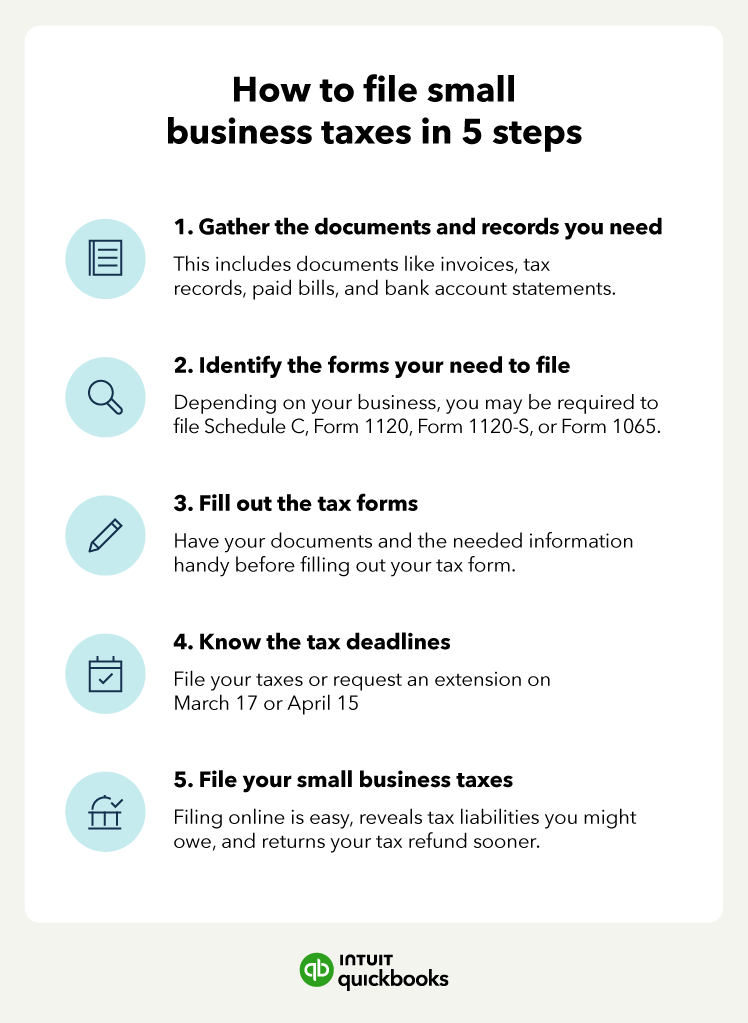
For self-employed individuals, freelancers, or those with significant income not subject to withholding, paying estimated taxes throughout the year is a requirement to avoid penalties. These are typically paid quarterly.
For everyone, proactive tax planning can yield substantial benefits:
- Adjust Withholding: Review your W-4 form with your employer annually. Adjusting your withholding can help you avoid a large refund (meaning you’ve given the government an interest-free loan) or a large tax bill.
- Maximize Retirement Contributions: Contributions to 401(k)s and traditional IRAs are often tax-deductible, reducing your taxable income.
- Utilize Tax-Advantaged Accounts: Explore Health Savings Accounts (HSAs) or Flexible Spending Accounts (FSAs) for eligible medical expenses.
- Capitalize on Credits and Deductions: Be aware of life events that might trigger new credits or deductions (e.g., having a child, pursuing higher education, buying a home).
By understanding your obligations, meticulously organizing your documents, choosing the right filing method, and embracing continuous record-keeping and planning, filing for your own taxes transforms from a dreaded annual chore into an insightful exercise in personal financial management. It’s an investment in your financial literacy and ultimately, your economic well-being.