
Filing taxes is more than a mandatory bureaucratic hurdle; it is a critical component of a healthy personal finance strategy. As we navigate the requirements for the 2023 tax year (filed in 2024), understanding the nuances of the tax code can be the difference between a significant refund and an unexpected liability. For many, the complexity of tax law leads to “tax anxiety,” yet with the right preparation and knowledge of current financial tools, the process becomes a streamlined exercise in wealth management.
The 2023 tax year brought several adjustments to tax brackets and standard deductions to account for inflation, alongside specific changes to credits that could impact your bottom line. Whether you are a traditional W-2 employee, a freelancer navigating the gig economy, or a seasoned investor, this guide provides a roadmap to filing your 2023 taxes with precision and strategic foresight.

Essential Preparation: Organizing Your Financial Documentation
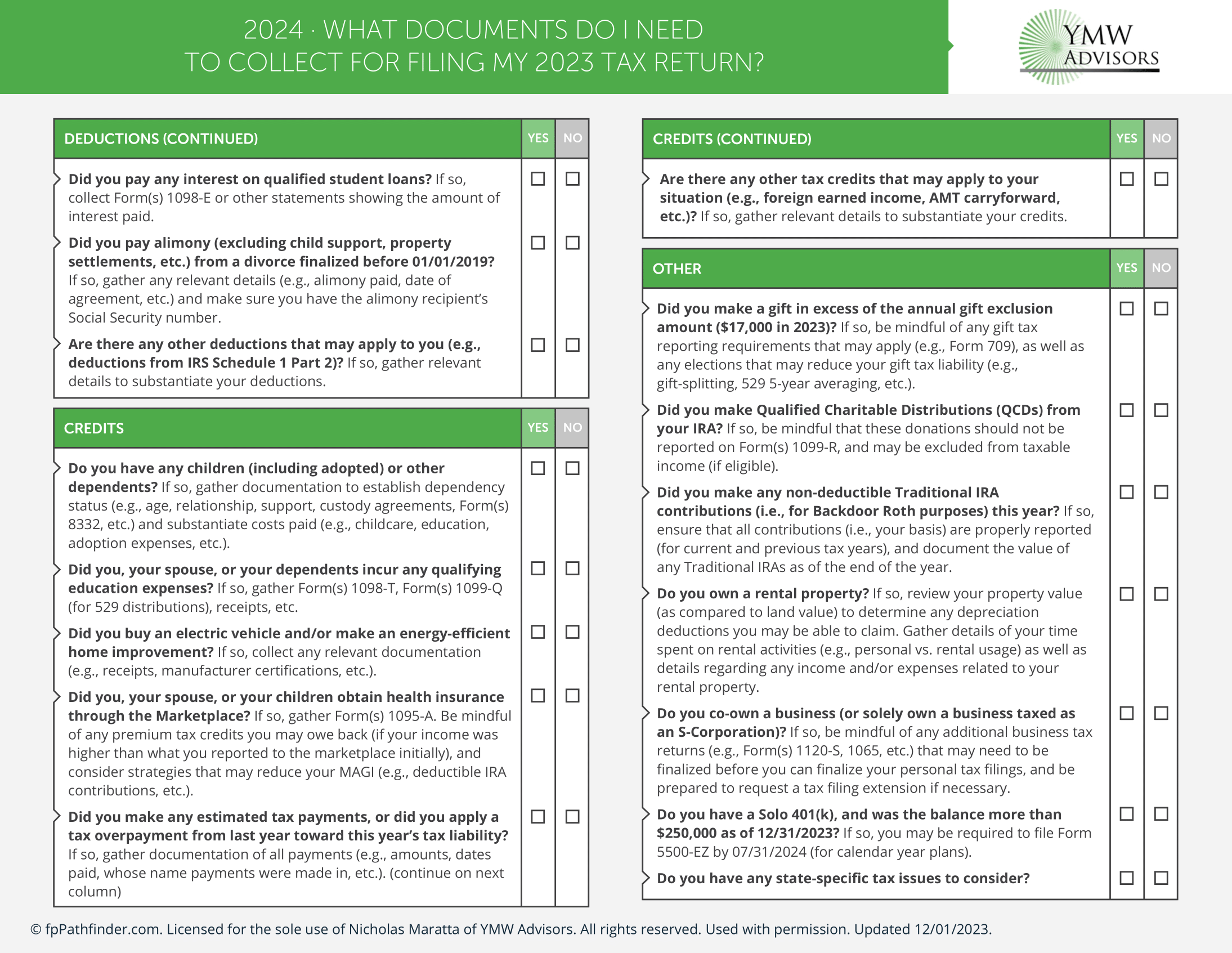
The foundation of a successful tax filing lies in the quality of your documentation. Before opening any software or meeting with a CPA, you must gather a comprehensive snapshot of your financial life from January 1 to December 31, 2023. Missing a single document can lead to an amendment later, which often triggers delays or audits.
Income Documentation: W-2s, 1099s, and Beyond
Your first step is compiling all sources of income. For traditional employees, the W-2 is the primary document. However, in an era of diversified income streams, many taxpayers will also receive various 1099 forms.
- 1099-NEC: For non-employee compensation (freelancing).
- 1099-K: If you received payments via third-party processors like PayPal or Venmo for goods and services.
- 1099-INT and 1099-DIV: For interest and dividends earned on savings and brokerage accounts.
- 1099-B: For capital gains or losses from the sale of stocks or cryptocurrencies.
Adjustments and Expense Tracking
To lower your Adjusted Gross Income (AGI), you must identify “above-the-line” deductions. These are particularly valuable because they reduce your taxable income regardless of whether you itemize. Key documents to look for include records of contributions to a traditional IRA, Health Savings Account (HSA) contributions, and records of student loan interest paid. For small business owners and freelancers, maintaining a meticulous ledger of business expenses—ranging from home office utilities to professional software subscriptions—is paramount to ensuring you aren’t paying more than your fair share.
Navigating Filing Status and Deduction Strategies
One of the most consequential decisions you will make on your 2023 tax return is choosing your filing status and determining whether to take the standard deduction or to itemize. For the 2023 tax year, the IRS increased standard deduction amounts significantly to help taxpayers keep up with the rising cost of living.
Choosing the Right Filing Status
Your filing status determines your tax rates and your standard deduction amount. While many people fall clearly into “Single” or “Married Filing Jointly,” others may qualify for “Head of Household.” This status offers a more favorable tax rate and a higher standard deduction than filing as Single, provided you are unmarried and pay more than half the cost of keeping up a home for a qualifying person. If you experienced a life change in 2023, such as a marriage or a divorce, your status as of December 31 dictates how you file for the entire year.
The Standard Deduction vs. Itemized Deductions
For the 2023 tax year, the standard deduction rose to $13,850 for single filers and $27,700 for married couples filing jointly. Because these amounts are relatively high, the vast majority of Americans find that the standard deduction provides a greater tax benefit than itemizing.
However, itemizing remains the superior choice for those with significant deductible expenses that exceed the standard threshold. This typically includes:
- State and local taxes (SALT) up to $10,000.
- Mortgage interest on the first $750,000 of mortgage debt.
- Unreimbursed medical and dental expenses that exceed 7.5% of your AGI.
- Substantial charitable contributions to qualified organizations.
Doing a “mock-up” of both methods is a wise financial move to ensure you aren’t leaving money on the table.

Maximizing Modern Financial Tools and the IRS Free File Program
In the modern financial landscape, the days of filling out paper forms by hand are largely over. Leveraging technology not only reduces the risk of mathematical errors but also ensures that you are prompted to look for credits and deductions you might otherwise overlook.
Leveraging Tax Software and FinTech
The market for tax preparation software has become highly sophisticated. Leading platforms offer features like “automated import,” which allows the software to pull data directly from your employer’s payroll system or your brokerage accounts. This minimizes data entry errors and ensures that complex transactions, such as wash sales in stock trading, are handled correctly. For those with relatively simple tax situations, many of these platforms offer free versions, though users should be wary of “up-selling” for features they may not actually need.
The IRS Free File Program
A significant but often underutilized resource is the IRS Free File program. This is a public-private partnership between the IRS and several tax-prep software providers. For the 2023 filing season, if your Adjusted Gross Income was $79,000 or less, you are eligible to use professional-grade software to file your federal return for free. This is an excellent financial tool for middle-to-low-income earners to access high-quality tax prep without the hefty price tag often associated with commercial products.
Key Credits and Legislative Changes for 2023
Each tax year is influenced by legislative shifts, and 2023 is no exception. Understanding these changes is vital for maximizing your refund. Credits are particularly powerful because they provide a dollar-for-dollar reduction of your tax bill, whereas deductions only reduce the amount of income that is taxed.
Clean Energy and EV Tax Credits
One of the most significant areas of change for 2023 involves “green” incentives. The Inflation Reduction Act expanded credits for energy-efficient home improvements. If you installed solar panels, energy-efficient windows, or a high-efficiency heat pump in 2023, you may be eligible for the Energy Efficient Home Improvement Credit. Furthermore, the rules for Electric Vehicle (EV) credits were refined. Depending on the vehicle’s final assembly location and battery component sourcing, you could qualify for a credit of up to $7,500 for a new EV or $4,000 for a used one, provided you fall under certain income thresholds.
The Child Tax Credit and Education Incentives
While the temporary pandemic-era expansions to the Child Tax Credit (CTC) have expired, the credit remains a staple for families. For 2023, the credit is $2,000 per qualifying child under age 17. Additionally, students or parents paying for higher education should look closely at the American Opportunity Tax Credit (AOTC) and the Lifetime Learning Credit (LLC). These credits can help offset the cost of tuition, books, and equipment, provided you have the Form 1098-T from the educational institution.
Post-Filing Strategy: Managing Your Refund or Liability
Once the “Submit” button is pressed, the financial work is not yet finished. What you do with your tax outcome is just as important as the filing itself. A tax refund should not be viewed as a “windfall,” but rather as a strategic asset that was previously an interest-free loan to the government.
Optimizing Your Refund and Investing in the Future
If you receive a refund, consider its highest and best use within your financial plan. High-interest debt, such as credit card balances, should be the first priority, as the “return” on paying off a 20% APR card is immediate and guaranteed. If you are debt-free, the refund can bolster an emergency fund or be contributed to a Roth IRA for the 2024 tax year. By moving the money into a tax-advantaged investment account, you turn a past tax event into a future wealth-building engine.
Adjusting Withholdings for 2024
If you ended up with a massive refund or, conversely, a large tax bill that incurred penalties, your withholdings are likely misaligned. The goal of efficient tax planning is to get as close to a $0 balance as possible. Using the IRS Tax Withholding Estimator, you can determine how to adjust your W-4 form with your employer. By fine-tuning your withholdings, you can increase your monthly take-home pay throughout 2024, giving you more liquidity to invest or cover daily expenses, rather than waiting for a lump sum the following year.
Filing your 2023 taxes is a reflection of your financial journey over the past year. By approaching the task with organization, utilizing the latest financial technology, and staying informed on legislative changes, you transform a chore into a strategic opportunity to optimize your personal net worth.
aViewFromTheCave is a participant in the Amazon Services LLC Associates Program, an affiliate advertising program designed to provide a means for sites to earn advertising fees by advertising and linking to Amazon.com. Amazon, the Amazon logo, AmazonSupply, and the AmazonSupply logo are trademarks of Amazon.com, Inc. or its affiliates. As an Amazon Associate we earn affiliate commissions from qualifying purchases.