
Tax season is often viewed through a lens of administrative burden, yet for the financially savvy individual, it represents a critical moment for wealth assessment and strategic planning. Filing your 2023 tax return is not merely a legal obligation; it is an opportunity to audit your financial health, maximize your liquidity through deductions, and set the stage for your 2024 investment goals. With several adjustments to tax brackets, standard deductions, and specific credits resulting from legislative shifts, navigating the 2023 tax landscape requires a blend of meticulous organization and forward-thinking financial strategy.
Preparation and Documentation: The Foundation of Financial Accuracy
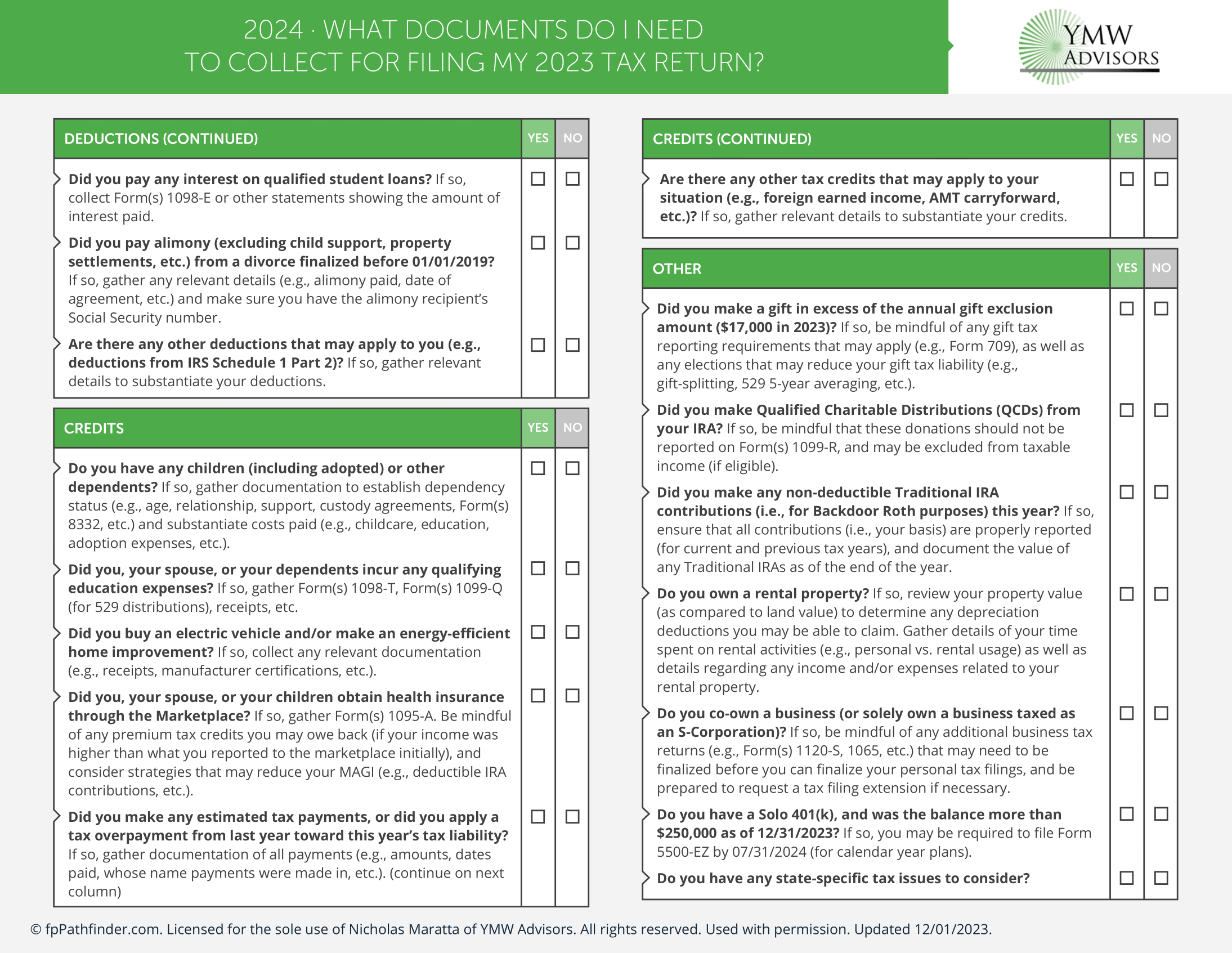
Before engaging with any software or consultant, the quality of your tax return depends entirely on the integrity of your data. For the 2023 tax year, the IRS has maintained strict reporting requirements, and being proactive with documentation is the most effective way to avoid audits and maximize your return.
Organizing Income Statements and the 1099 Shift
The most fundamental step is the aggregation of all income sources. For traditional employees, the W-2 remains the gold standard. However, the modern economy has seen a massive surge in 1099 reporting. Whether you are receiving 1099-INT for interest earned in high-yield savings accounts—which saw significant gains in 2023 due to rising interest rates—or 1099-DIV for investment portfolios, these documents must be cross-referenced with your personal records.
It is particularly important to note the status of 1099-K reporting for third-party payment processors. While the IRS delayed the implementation of the lower $600 threshold for the 2023 tax year, maintaining the $20,000 and 200-transaction limit, taxpayers should still report all business income regardless of whether a form was generated. This transparency is vital for those managing side hustles or small business ventures as part of their broader financial portfolio.
Tracking Deductions and Itemization Logic
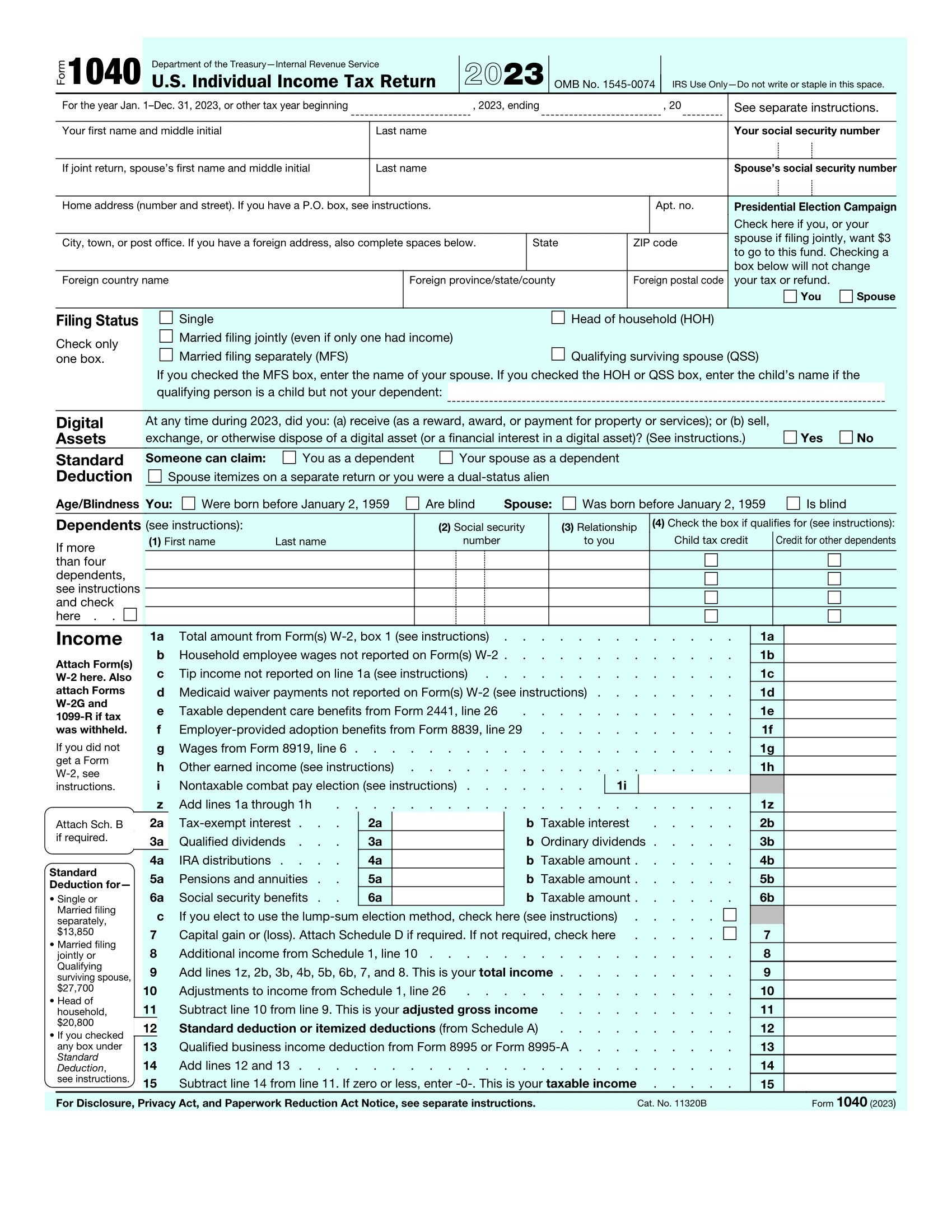
Deciding whether to take the standard deduction or to itemize is a pivotal financial decision. For 2023, the standard deduction rose significantly to $13,850 for single filers and $27,700 for married couples filing jointly. This “inflation adjustment” means that for many, itemizing no longer provides a superior tax benefit.
However, if your deductible expenses—including mortgage interest, state and local taxes (SALT) up to $10,000, and significant charitable contributions—exceed the standard threshold, itemization becomes a powerful tool for reducing taxable income. Strategic charitable giving, such as contributing appreciated securities rather than cash, can provide a double benefit: a deduction for the fair market value and the avoidance of capital gains taxes.
Retirement Contributions and Tax Impact
The 2023 tax year offers unique windows for reducing your tax liability through retirement accounts. Contributions to a traditional 401(k) or 403(b) directly reduce your adjusted gross income (AGI). Furthermore, taxpayers have until the filing deadline in April 2024 to contribute to a Traditional or Roth IRA for the 2023 tax year. For those in higher tax brackets, maximizing these contributions is one of the most effective ways to lower the current year’s tax bill while simultaneously fueling long-term compound growth.
Choosing the Right Filing Method and Financial Tools
The “how” of filing is just as important as the “what.” The financial technology landscape has expanded, offering a variety of tools that range from automated DIY software to high-touch professional advisory services.
IRS Free File and Low-Cost Digital Solutions
For taxpayers with an adjusted gross income of $79,000 or less, the IRS Free File program offers access to top-tier tax preparation software at no cost. This is an underutilized financial tool that can save hundreds of dollars in filing fees. For those above this threshold, digital platforms like TurboTax, H&R Block, and FreeTaxUSA offer varying levels of automation. When choosing a software, focus on its ability to handle “Schedule C” income or complex investment reporting if you have a diverse portfolio. The goal is to use a tool that minimizes human error through direct imports from brokerage accounts.
The IRS Direct File Pilot Program
A significant development for the 2023 filing season is the introduction of the IRS Direct File pilot. Available to eligible taxpayers in 12 participating states, this direct-to-government filing system represents a shift toward a more integrated digital infrastructure. While limited in scope for its first year—focusing primarily on simple returns with W-2 income and standard deductions—it signals a future where tax filing is integrated more seamlessly into the public digital experience.
When to Seek Professional Financial Guidance
While software is efficient, complex financial lives often require the nuance of a Certified Public Accountant (CPA) or a tax strategist. If you have dealt with the sale of a business, complex cryptocurrency transactions, foreign assets, or intricate estate planning in 2023, a professional can provide “tax alpha”—the value added through strategic positioning that exceeds the cost of their services. A professional does not just fill out forms; they interpret tax law to protect your assets and identify opportunities for future tax mitigation.
Navigating Key Tax Changes and Credits for 2023
Tax laws are not static, and 2023 saw the refinement of several credits that can significantly impact your bottom line. Understanding these can be the difference between a balance due and a substantial refund.
Education and Family-Related Credits
The Child Tax Credit (CTC) and the Earned Income Tax Credit (EITC) remain central pillars for family-based tax relief. For 2023, the CTC is worth up to $2,000 per qualifying child. Additionally, the American Opportunity Tax Credit (AOTC) and the Lifetime Learning Credit (LLC) provide essential relief for those investing in higher education. These credits are particularly valuable because they are a dollar-for-dollar reduction of your tax liability, rather than a deduction which only reduces the income being taxed.
Clean Energy and EV Incentives
The 2023 tax year is the first full year where many provisions of the Inflation Reduction Act come into play. This includes significant tax credits for residential energy improvements—such as solar panels, heat pumps, and high-efficiency windows. Furthermore, the Clean Vehicle Credit provides up to $7,500 for the purchase of a qualifying new electric vehicle. From a money management perspective, these credits represent a “subsidy” for capital improvements that increase the value of your primary residence or reduce long-term transportation costs.
Tax-Loss Harvesting and the $3,000 Rule
For investors, 2023 was a year of recovery, but it likely still contained periods of volatility. Tax-loss harvesting allows you to use investment losses to offset capital gains. If your losses exceed your gains, you can use up to $3,000 of excess loss to offset “ordinary” income, such as your salary. This is a critical tactic for rebalancing a portfolio without incurring a massive tax hit. Understanding how to carry forward excess losses into future years is a hallmark of sophisticated personal finance.
Strategic Planning for the Ensuing Financial Year
Filing your 2023 return should serve as the “kick-off” for your 2024 financial strategy. The data gleaned from your 1040 form provides a roadmap for where your money is going and how much the government is claiming.
Adjusting Withholdings for Optimized Cash Flow
One of the most common mistakes in personal finance is viewing a large tax refund as a “bonus.” In reality, a large refund is an interest-free loan you have given to the government. If you received a significant refund for 2023, consider adjusting your W-4 withholdings for 2024. By bringing that money back into your monthly paycheck, you can redirect it toward high-interest debt repayment, monthly brokerage contributions, or high-yield savings, allowing your money to earn interest for you rather than the Treasury.
The Role of Health Savings Accounts (HSAs)
As you finalize your 2023 taxes, evaluate your use of Health Savings Accounts. HSAs offer a unique “triple tax advantage”: contributions are tax-deductible (or pre-tax via payroll), the growth is tax-free, and withdrawals for qualified medical expenses are tax-free. If you have not maximized your HSA for 2023, you have until the April filing deadline to do so. For many, the HSA is not just a medical account but a “stealth IRA” that plays a vital role in long-term wealth accumulation.

Quarterly Estimated Payments for Entrepreneurs
For those whose 2023 return revealed a significant tax “underpayment” penalty, the lesson for 2024 is the implementation of a quarterly estimated tax schedule. High-net-worth individuals and business owners must stay ahead of the “pay-as-you-go” system. Using your 2023 return as a baseline, you can calculate 100% (or 110% for higher incomes) of your prior year’s tax to meet the “safe harbor” requirements, ensuring that you avoid penalties while keeping as much capital as possible working in your business or investments throughout the year.
Filing your 2023 tax return is the process of closing one financial chapter and beginning the next. By approaching this season with a focus on meticulous documentation, the right technological tools, and a strategic understanding of credits and deductions, you transform a yearly chore into a powerful exercise in wealth management and financial clarity.
aViewFromTheCave is a participant in the Amazon Services LLC Associates Program, an affiliate advertising program designed to provide a means for sites to earn advertising fees by advertising and linking to Amazon.com. Amazon, the Amazon logo, AmazonSupply, and the AmazonSupply logo are trademarks of Amazon.com, Inc. or its affiliates. As an Amazon Associate we earn affiliate commissions from qualifying purchases.