
In the world of finance, numbers are the raw data, but percentages are the storytellers. Whether you are tracking the growth of a retirement portfolio, measuring the success of a side hustle, or evaluating a company’s year-over-year revenue, understanding how to figure the percentage increase between two numbers is a fundamental skill. It transforms static figures into actionable insights, allowing investors and business owners to compare performance across different scales and timeframes.
Percentage increase is more than just a mathematical exercise; it is a metric of momentum. For a personal investor, it represents the rate of return on capital. For a business owner, it signifies the scaling efficiency of an operation. By mastering this calculation, you move beyond looking at what you have to understanding how fast you are moving toward your financial goals.
The Fundamental Formula for Financial Growth
At its core, calculating a percentage increase is a three-step process that compares a new value to an original value. In the context of money, this often involves comparing a current balance to a previous balance or a current price to a historical purchase price.
The Basic Mathematical Steps
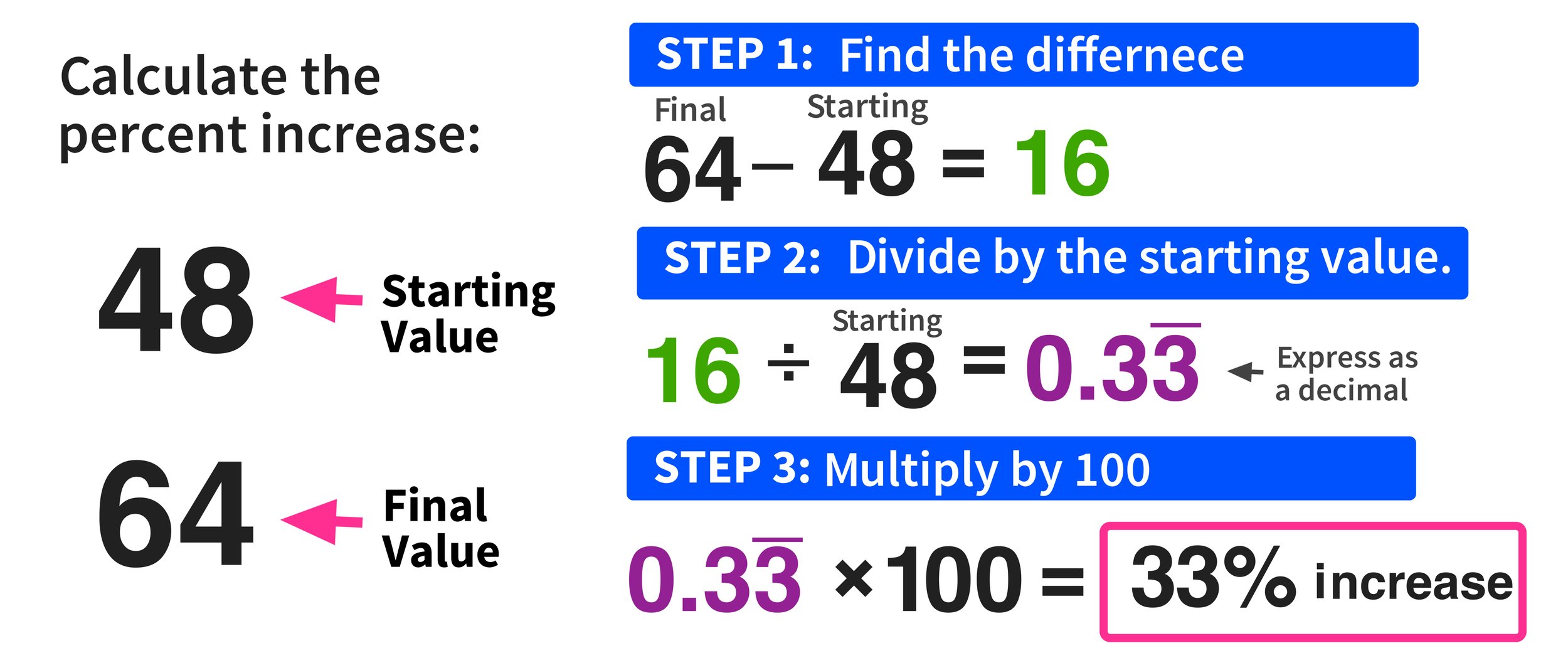
To find the percentage increase, you must first determine the absolute difference between the two numbers and then relate that difference back to the starting point. The formula is expressed as:
((New Value – Original Value) / Original Value) x 100 = Percentage Increase
- Subtract: Subtract the original number from the new number. This gives you the “absolute increase” or the raw profit/gain.
- Divide: Divide that absolute increase by the original number. This produces a decimal representing the growth relative to the starting point.
- Multiply: Multiply the result by 100 to convert the decimal into a percentage.
Real-World Example: Stock Price Gains
Imagine you purchased shares of a diversified index fund at $150 per share. One year later, the price of that fund has risen to $180. To find your percentage gain, you would apply the formula:
- Step 1: $180 – $150 = $30 (The absolute gain per share).
- Step 2: $30 / $150 = 0.2.
- Step 3: 0.2 x 100 = 20%.
In this scenario, your investment has seen a 20% increase. This percentage is crucial because it allows you to compare the performance of this index fund against other benchmarks, such as high-yield savings accounts (which might offer 4-5%) or other individual stocks, regardless of their share price.
Why Percentage Increase Matters in Personal Finance
In personal finance, the absolute dollar amount of a gain often masks the true efficiency of an investment. If one person makes $1,000 on a $10,000 investment and another makes $1,000 on a $100,000 investment, their bank accounts both grew by the same amount, but their financial performance is vastly different.
Tracking Savings and Investment Progress
Percentage increase is the primary tool for measuring “Return on Investment” (ROI). It levels the playing field between different asset classes. When you look at your net worth over time, calculating the percentage increase month-over-month or year-over-year helps you identify if your wealth-building strategies are accelerating or stagnating.
If your total assets grew from $50,000 to $60,000 over a year, that is a 20% increase. If they grew from $500,000 to $510,000, that is only a 2% increase. While both represent a $10,000 gain, the 20% growth indicates a much more aggressive and successful wealth-building phase. Understanding this helps you manage expectations and adjust your risk tolerance as your portfolio grows larger.
Measuring Inflation’s Impact on Purchasing Power
One of the most critical applications of percentage increase in personal finance is understanding real vs. nominal gains. Inflation is essentially a percentage increase in the cost of living. If the Consumer Price Index (CPI) shows a 5% increase in prices over a year, and your salary increases by 3% in that same period, your “real” income has actually decreased.
By calculating the percentage increase of your expenses and comparing it to the percentage increase of your income, you can determine your “real” financial trajectory. If your income percentage increase does not outpace the inflation percentage increase, you are effectively losing purchasing power, even if your paycheck looks bigger than it did last year.
Calculating Percentage Increase for Business and Side Hustles
For entrepreneurs and those managing side hustles, percentage increase is a Vital Sign. It is the metric used to report growth to stakeholders, plan budgets, and determine if a business model is sustainable.
Analyzing Revenue and Profit Margins
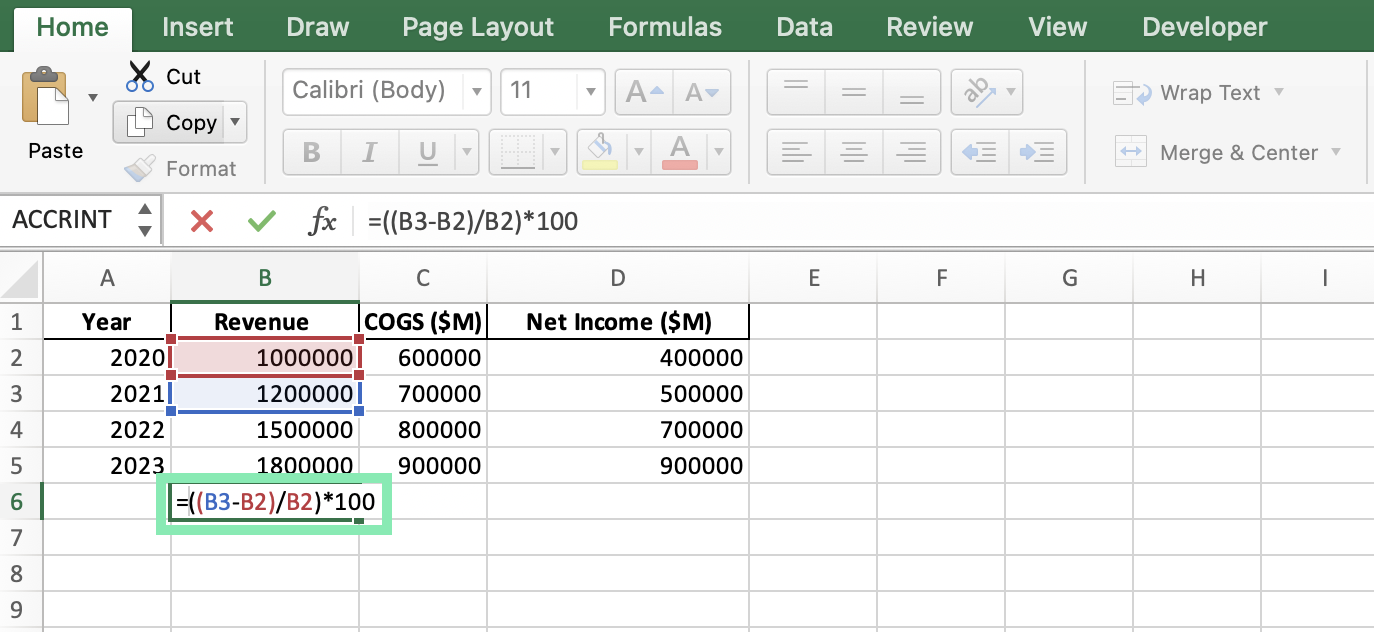
Revenue growth is almost always discussed in percentages. A “10% month-over-month growth” is a standard benchmark for high-performing startups. To calculate this, a business owner takes the revenue from the current month, subtracts the revenue from the previous month, and divides by the previous month’s total.
However, revenue is only half the story. Savvy business owners also calculate the percentage increase in their profit margins. If your revenue increases by 50% but your expenses increase by 70%, your business is becoming less efficient as it scales. By calculating the percentage change in both categories, you can pinpoint where your capital is being deployed effectively and where costs are spiraling out of control.
Assessing Marketing ROI and Customer Growth
In the digital economy, side hustles often rely on lead generation and conversion rates. If you spend $200 on ads and generate 10 sales, and then spend $400 to generate 15 sales, has your performance improved?
- Initial sales: 10
- New sales: 15
- Percentage increase in sales: ((15 – 10) / 10) x 100 = 50%.
- Initial spend: $200
- New spend: $400
- Percentage increase in spend: ((400 – 200) / 200) x 100 = 100%.
In this case, your spending increased by 100%, but your sales only increased by 50%. The percentage calculation reveals that your marketing efficiency is actually decreasing, signaling that you need to optimize your strategy before spending more capital.
Advanced Applications: Compound Growth and Volatility
While simple percentage increase measures the change between two points in time, financial professionals often look deeper into how those percentages behave over longer periods or during market fluctuations.
The Difference Between Simple Increase and CAGR
When evaluating an investment over several years, a simple percentage increase can be misleading. If an investment goes from $1,000 to $2,000 over five years, that is a 100% total increase. However, this does not mean it grew by 20% each year.
To understand the steady rate at which an investment would have grown if it had grown at a steady rate, we use the Compound Annual Growth Rate (CAGR). This is a more complex version of the percentage increase formula that accounts for the effect of compounding. While the simple percentage increase tells you where you ended up, the CAGR tells you the average annual “velocity” of your money.
Understanding Volatility and the Math of Recovery
Percentage increase has a tricky relationship with percentage decrease, a concept known as “volatility drag.” This is a crucial lesson for anyone involved in investing or business finance.
If a $10,000 portfolio drops by 50%, it is now worth $5,000. To get back to the original $10,000, you do not need a 50% increase; you need a 100% increase.
- $5,000 + (50% of $5,000) = $7,500.
- $5,000 + (100% of $5,000) = $10,000.
This mathematical reality highlights why protecting against large percentage losses is often more important than chasing large percentage gains. It also demonstrates why understanding the base (the “Original Value” in our formula) is so vital. As the base gets smaller, the percentage increase required to return to the original state grows exponentially.
Digital Tools and Automation for Financial Calculations
While the manual formula is essential for understanding the underlying logic, modern financial management relies heavily on digital tools to track these percentages automatically.
Using Spreadsheets for Large Datasets
For managing a budget or a business ledger, Microsoft Excel and Google Sheets are the gold standard. To calculate percentage increase automatically across hundreds of rows of data, you can use a simple cell formula.
If your “Original Value” is in cell A2 and your “New Value” is in cell B2, the formula would be:
=(B2-A2)/A2
After entering this, you simply format the cell as a percentage. This allows you to track monthly expenses, stock price fluctuations, or inventory costs in real-time, providing a high-level view of your financial trends without manual calculation errors.

Financial Apps and Portfolio Trackers
Most modern brokerage and banking apps provide these calculations for you. When you open an investment app and see a “Total Return” percentage, the software is performing this exact calculation: comparing your current balance plus dividends against the total “basis” or capital you invested.
However, relying solely on automated apps can be dangerous if you don’t understand how they handle inflows and outflows. For instance, if you deposit more money into an account, a simple app might show your balance increased (a percentage increase), but that isn’t the same as an investment gain. Understanding the manual formula for percentage increase allows you to audit these tools and ensure you are measuring true performance rather than just account growth due to deposits.
By mastering the ability to figure the percentage increase between two numbers, you equip yourself with the primary tool of financial analysis. It allows you to cut through the noise of raw numbers and see the underlying health and trajectory of your personal and professional finances. Whether you are aiming for a raise, scaling a business, or building a portfolio, the percentage is your most honest indicator of success.
aViewFromTheCave is a participant in the Amazon Services LLC Associates Program, an affiliate advertising program designed to provide a means for sites to earn advertising fees by advertising and linking to Amazon.com. Amazon, the Amazon logo, AmazonSupply, and the AmazonSupply logo are trademarks of Amazon.com, Inc. or its affiliates. As an Amazon Associate we earn affiliate commissions from qualifying purchases.