
Understanding your yearly salary is more than just knowing a number on your pay stub; it’s the cornerstone of sound financial planning, budgeting, and career growth. In an increasingly complex world of compensation packages, deciphering your total annual income can feel like navigating a labyrinth. However, gaining clarity on this crucial figure empowers you to make informed decisions about everything from daily spending to long-term investments, negotiate confidently, and set realistic financial goals. This comprehensive guide will break down the components of your compensation, provide a clear methodology for calculating your total yearly earnings, and illustrate why this knowledge is indispensable for your financial well-being.
Deconstructing Your Compensation: Beyond the Base Pay
Many individuals mistakenly equate their yearly salary with their base pay, overlooking the myriad other components that contribute to their total annual compensation. A holistic understanding requires dissecting all elements that convert into monetary value over the course of a year.
Understanding Gross vs. Net Salary
The fundamental distinction lies between gross and net salary. Your gross salary is the total amount of money you earn before any deductions are taken out. This is the figure typically discussed during salary negotiations and the one we primarily focus on when calculating your yearly income. In contrast, your net salary (or take-home pay) is what remains after all taxes, benefits, and other deductions have been subtracted. While net pay is critical for budgeting your disposable income, gross pay provides the truer representation of your total earnings from an employer.
Base Salary: The Foundation of Your Earnings
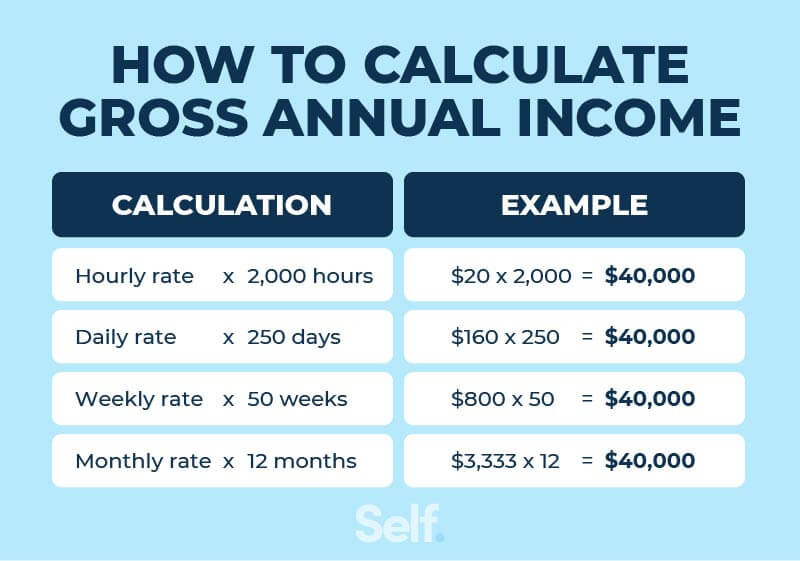
Your base salary is the fixed amount of money you receive for performing your job duties, typically expressed as an annual figure, an hourly rate, or a weekly/bi-weekly wage. For most salaried employees, this is the easiest component to ascertain and forms the bedrock of your yearly income calculation. If you’re paid an hourly rate, your base annual salary is calculated by multiplying your hourly rate by the number of hours you work per week, and then by 52 weeks in a year. For example, $25/hour * 40 hours/week * 52 weeks = $52,000 annual base salary.
Variable Compensation: Bonuses, Commissions, and Overtime
Beyond the fixed base, many roles include variable compensation elements that can significantly boost your yearly earnings.
- Bonuses are often tied to individual, team, or company performance and can be paid annually, semi-annually, or quarterly. While not guaranteed, understanding the typical bonus structure and historical payouts can help you project this income.
- Commissions are common in sales roles, where earnings are directly linked to sales volume or revenue generated. These can be highly variable, so it’s wise to look at an average over the past year or two to estimate your annual take.
- Overtime Pay refers to additional wages for hours worked beyond a standard workweek, usually at a higher rate (e.g., time-and-a-half). While often sporadic, consistent overtime can add substantially to your total. When calculating, consider your average overtime hours per week or month over the past year.
Equity Compensation: Stock Options and RSUs
Especially prevalent in the tech sector and startups, equity compensation allows employees to own a piece of the company.
- Stock Options give you the right to buy company stock at a predetermined price (the grant price) within a specific timeframe. The value is realized when you exercise the options and sell the shares at a higher market price.
- Restricted Stock Units (RSUs) are a promise from your employer to give you company shares once certain conditions (vesting schedule) are met. Once vested, they are typically taxed as ordinary income.
Valuing equity compensation for a yearly salary figure requires understanding vesting schedules, current stock prices, and potential tax implications, which can be complex. Often, the value of vested RSUs in a given year or the expected gain from exercising and selling options is added to your total compensation estimate.
Other Cash Equivalents: Stipends, Allowances, and Perks
Some employers offer additional benefits that, while not part of your base salary, are effectively cash equivalents or reduce your personal expenses, thus increasing your effective yearly income. These can include:
- Stipends for professional development, wellness, or remote work setups.
- Allowances for travel, mobile phone, or internet services.
- Taxable Perks such as company car usage or certain housing benefits.
While some may be non-taxable benefits, those that are considered taxable income by the IRS should be included in your gross annual earnings.
Calculating Your Total Annual Income: A Practical Guide
Once you’ve identified all potential income streams, the next step is to consolidate them into a comprehensive yearly salary figure. The methodology will vary slightly depending on your employment type and the regularity of your income.
Step-by-Step Calculation for Salaried Employees
For those with a fixed annual salary, the calculation is straightforward: your stated annual salary is your base. To this, you’ll add any projected annual bonuses, commissions, and the estimated value of vested equity compensation or taxable stipends.
- Example: Base Salary $70,000 + Estimated Annual Bonus $5,000 + Vested RSU Value $3,000 = $78,000 Total Yearly Salary.
If you’re paid hourly, first convert your hourly wage to an annual base, then add the other components. Remember to use gross figures before any deductions.
Projecting for Freelancers and Gig Workers
For independent contractors, freelancers, and gig economy workers, calculating a yearly salary requires more careful projection due to income variability.
- Average Monthly Income: Review your income statements, invoices, or bank records for the past 6-12 months. Calculate your average monthly gross income.
- Annualize the Average: Multiply your average monthly income by 12 to get an estimated annual gross income.
- Account for Business Expenses: Crucially, for self-employed individuals, your “salary” is effectively your net profit after deducting business expenses (e.g., software subscriptions, office supplies, marketing costs, professional development). Subtract these annual expenses from your gross income projection to arrive at a more accurate personal income figure.
- Buffer for Irregularity: It’s often wise to be conservative with projections, accounting for potential dry spells or unexpected costs.
Accounting for Irregular Income Sources
Many individuals supplement their primary income with other sources. These must also be factored into your total yearly financial picture, though they might not strictly be considered part of your “salary.”
- Side Hustles: Income from a part-time venture, consulting, or selling goods. Track these separately and add them to your total annual earnings.
- Investment Income: Dividends from stocks, interest from savings accounts, capital gains from selling assets. While not “salary,” these are part of your gross income for tax purposes and contribute to your overall financial strength.
- Rental Income: If you own property and rent it out, the net income (after expenses like mortgage interest, maintenance, and property taxes) contributes to your total yearly earnings.
For irregular sources, averaging past performance over a year is usually the best approach to projection.

The Impact of Deductions and Pre-Tax Contributions
While we focus on gross salary for the total yearly figure, it’s vital to understand how deductions affect your take-home pay. Many deductions are pre-tax, meaning they reduce your taxable income. These include:
- 401(k) or 403(b) Contributions: Retirement savings.
- Health Savings Accounts (HSAs) or Flexible Spending Accounts (FSAs): Funds for healthcare expenses.
- Health Insurance Premiums: Your share of the cost.
- Commuter Benefits: Funds for public transit or parking.
These deductions reduce your net pay but do not reduce your gross yearly salary. In fact, employer contributions to your 401(k) or HSA are often part of your total compensation package and should be considered part of your overall earnings, even if they aren’t directly deposited into your bank account.
The Broader Financial Picture: Why Your Yearly Salary Matters
Knowing your yearly salary is not just an academic exercise; it’s a powerful tool that drives every facet of your financial life. This single figure underpins your ability to plan, save, and invest effectively.
Budgeting and Financial Planning
Your yearly salary is the bedrock of your personal budget. It dictates how much you can realistically allocate to housing, food, transportation, entertainment, and essential bills each month. Without an accurate understanding of your income, any budgeting effort becomes an exercise in guesswork, making it difficult to live within your means or identify areas for savings. A clear income figure allows you to create a sustainable spending plan and track your financial health proactively.
Debt Management and Savings Goals
Whether you’re tackling credit card debt, student loans, or aiming for a down payment on a house, your yearly salary directly influences your capacity to achieve these goals. Knowing your income enables you to set aggressive yet achievable debt repayment schedules and determine how much you can comfortably contribute to savings each month. It helps you assess how quickly you can reach milestones like building an emergency fund or saving for a major purchase.
Retirement Planning and Investment Strategy
Long-term financial security, particularly retirement, hinges on your ability to save and invest consistently. Your yearly salary determines how much you can reasonably contribute to retirement accounts like 401(k)s, IRAs, or brokerage accounts. It also influences the type of investment strategy you can pursue, as higher incomes often allow for more diversified portfolios and a greater capacity for risk if desired. Understanding your earning potential helps you project your future wealth and make adjustments to your saving rate as needed.
Negotiation Power and Career Advancement
Beyond personal finance, a precise understanding of your yearly salary and its components provides invaluable leverage in your career. When considering new job opportunities or negotiating a raise, knowing your current total compensation allows you to articulate your value and demand appropriate remuneration. It also helps you evaluate job offers accurately, comparing not just base pay but the entire package, including bonuses, equity, and benefits, against your current earnings and market rates. This knowledge empowers you to make strategic career decisions that align with your financial aspirations.
Tools and Resources for Salary Insights
Fortunately, you don’t have to piece together your salary puzzle entirely on your own. Several tools and resources can help you track, calculate, and compare your yearly earnings.
Pay Stubs and Tax Documents: The Primary Sources
Your pay stubs are the most immediate and accurate reflection of your earnings and deductions over a specific pay period. Regularly reviewing them helps you understand your gross pay, pre-tax deductions, and net pay. At the end of the year, your W-2 (for employees) or 1099 (for independent contractors) forms provide a comprehensive summary of your annual gross income for tax purposes, serving as the ultimate verification of your yearly earnings from each source. Keep these documents organized and accessible.
Online Salary Aggregators and Market Data
To understand how your salary compares to others in similar roles, industries, and geographic locations, online salary aggregators are invaluable.
- Glassdoor, LinkedIn Salary, Payscale, and Salary.com allow you to research average salaries based on job title, experience, location, and company size. These platforms often provide a breakdown of base pay, bonuses, and other compensation components, giving you crucial market insights for negotiation or career planning.
- Industry-Specific Surveys: Many professional organizations publish annual salary surveys relevant to their niche, offering even more granular data.
Financial Planning Software and Spreadsheets
To track and project your income and expenses, leveraging financial tools can be incredibly beneficial.
- Personal Finance Software like Mint, YNAB (You Need A Budget), or Personal Capital can link to your bank accounts and automatically categorize transactions, helping you see where your money comes from and goes. Many allow you to set income goals and track progress.
- Custom Spreadsheets (e.g., in Excel or Google Sheets) offer ultimate flexibility. You can create a detailed ledger to log all income sources, project future earnings, and perform “what-if” scenarios for variable compensation.
Consulting with Financial Advisors
For complex compensation structures, significant investment income, or intricate tax implications, a certified financial advisor can provide personalized guidance. They can help you accurately calculate your total annual income, optimize your tax strategy, and integrate your earnings into a holistic financial plan that aligns with your long-term goals. Their expertise can be particularly valuable when dealing with equity compensation, business income, or planning for retirement.

Conclusion
Figuring out your yearly salary is a foundational exercise in personal finance. It moves beyond a superficial number to reveal the true scope of your financial resources, empowering you to make strategic decisions across your financial life. By systematically deconstructing your compensation, accurately calculating all income streams, and utilizing available tools and resources, you gain unparalleled clarity. This knowledge not only facilitates better budgeting, debt management, and investment strategies but also strengthens your position in career negotiations, ultimately putting you firmly in control of your financial destiny. Take the time to understand your true yearly earnings – it’s an investment in your future that pays dividends year after year.
aViewFromTheCave is a participant in the Amazon Services LLC Associates Program, an affiliate advertising program designed to provide a means for sites to earn advertising fees by advertising and linking to Amazon.com. Amazon, the Amazon logo, AmazonSupply, and the AmazonSupply logo are trademarks of Amazon.com, Inc. or its affiliates. As an Amazon Associate we earn affiliate commissions from qualifying purchases.