
Understanding percentages is not just a mathematical skill; it’s a fundamental financial literacy tool essential for navigating personal finance, investing, and business operations. From understanding discounts and sales tax to interpreting interest rates, investment returns, and profit margins, percentages are woven into the fabric of nearly every financial decision we make. Mastering how to figure out a percentage of a number, or the percentage relationship between numbers, empowers individuals and businesses alike to make informed choices, optimize strategies, and gain a clearer picture of their financial health.
This comprehensive guide will demystify the world of percentages, breaking down the core concepts, practical applications, and common pitfalls within the realm of money. Whether you’re budgeting your household expenses, evaluating investment opportunities, or analyzing business performance, a solid grasp of percentages is indispensable.

The Core Concept: What is a Percentage?
At its heart, a percentage is simply a way of expressing a number or ratio as a fraction of 100. The word “percentage” derives from “per cent,” meaning “per hundred” or “out of one hundred.” When you see a number followed by the percent symbol (%), it signifies that the number represents a portion of a whole, with that whole being conceptualized as 100 parts. For instance, 25% means 25 out of 100, or 25/100, which simplifies to 1/4.
Defining the Basics: Parts Per Hundred
The beauty of percentages lies in their ability to standardize comparisons. Instead of comparing fractions with different denominators (e.g., 3/5 vs. 7/10), percentages convert everything to a common denominator of 100. This makes it incredibly easy to see relative proportions at a glance. A percentage can range from 0% (nothing) to 100% (the entire whole), and even exceed 100% when discussing growth or an amount that is more than the original whole.
Why Percentages Matter in Finance
In the financial world, percentages are ubiquitous. They provide a standardized and intuitive way to express relationships and changes that directly impact our wallets. Consider these common scenarios:
- Discounts and Sales Tax: When a store offers “20% off” or charges “8% sales tax,” you’re dealing directly with percentages that affect the final price you pay.
- Interest Rates: Whether it’s the interest you earn on savings or the interest you pay on a loan or credit card, these are almost always expressed as annual percentage rates (APRs).
- Investment Returns: The performance of your stocks, bonds, or mutual funds is typically communicated as a percentage gain or loss over a period.
- Budgeting: Financial advisors often recommend allocating specific percentages of your income to different categories like savings, housing, and discretionary spending.
- Inflation: The rate at which prices rise, eroding purchasing power, is measured as a percentage.
- Profit Margins: Businesses use percentages to understand how much profit they make relative to their revenue or costs.
Without understanding percentages, navigating these financial landscapes would be akin to sailing without a compass. They offer clarity, enabling comparison and informed decision-making.
Fundamental Percentage Calculations for Everyday Finance
While the concept is simple, the practical application requires understanding a few core calculation methods. Mastering these will equip you to tackle most financial percentage scenarios.
Calculating a Percentage of a Number (e.g., Discounts, Taxes)
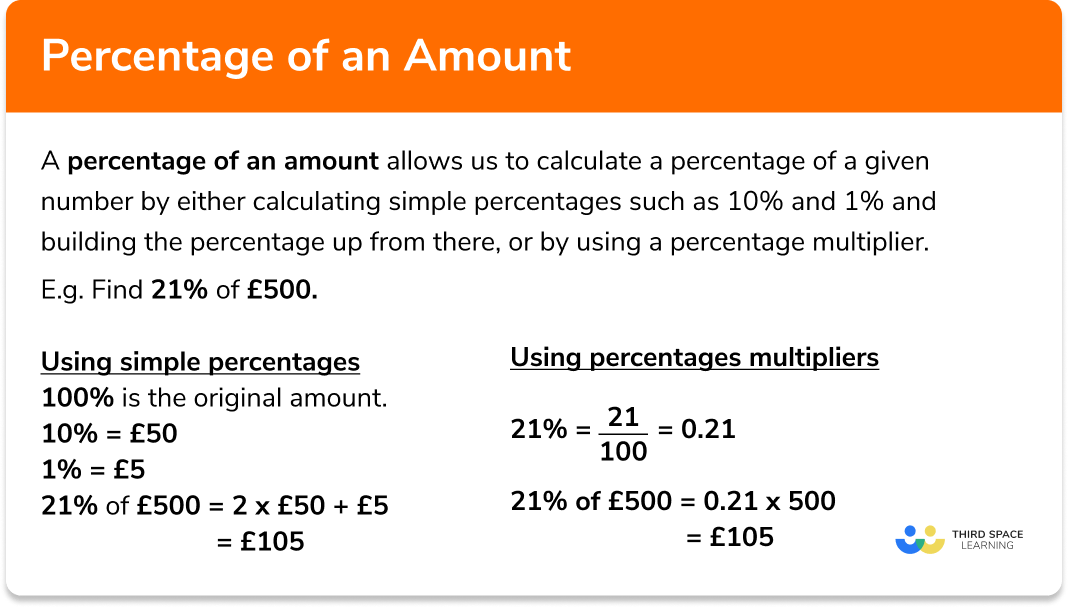
This is perhaps the most common percentage calculation. You have a whole amount, and you need to find a specific percentage of that amount.
Formula: (Percentage / 100) * Whole Amount
Example 1: Calculating a Discount
You want to buy a jacket that costs $150, and it’s on sale for 30% off.
- Convert the percentage to a decimal: 30 / 100 = 0.30
- Multiply the decimal by the whole amount: 0.30 * $150 = $45
So, the discount amount is $45. The final price would be $150 – $45 = $105.
Example 2: Calculating Sales Tax
Your total bill for groceries is $80, and the sales tax rate is 7%.
- Convert the percentage to a decimal: 7 / 100 = 0.07
- Multiply the decimal by the whole amount: 0.07 * $80 = $5.60
The sales tax amount is $5.60. Your total payment would be $80 + $5.60 = $85.60.
Finding the Percentage One Number is of Another (e.g., Profit Margins, Budget Allocation)
This calculation helps you understand what proportion one value represents in relation to a larger whole.
Formula: (Part / Whole) * 100
Example 1: Calculating Expense as a Percentage of Income
Your monthly income is $4,000, and you spend $1,200 on rent. What percentage of your income goes to rent?
- Divide the part by the whole: $1,200 / $4,000 = 0.30
- Multiply by 100 to express as a percentage: 0.30 * 100 = 30%
30% of your income goes to rent.
Example 2: Calculating Gross Profit Margin
A business sells a product for $200 (revenue) that cost $120 to produce (cost of goods sold). The gross profit is $80 ($200 – $120). What is the gross profit margin?
- Divide the profit (part) by the revenue (whole): $80 / $200 = 0.40
- Multiply by 100: 0.40 * 100 = 40%
The gross profit margin is 40%.
Calculating Percentage Increase or Decrease (e.g., Investment Growth, Inflation)
This calculation is vital for tracking changes over time, whether it’s the growth of an investment, a change in salary, or the rate of inflation.
Formula: ((New Value – Old Value) / Old Value) * 100
Example 1: Investment Growth
You invested $5,000, and it grew to $5,750 over a year. What is the percentage increase?
- Find the difference: $5,750 – $5,000 = $750
- Divide the difference by the old value: $750 / $5,000 = 0.15
- Multiply by 100: 0.15 * 100 = 15%
Your investment saw a 15% increase.
Example 2: Price Decrease
A car was priced at $25,000 last year and is now $22,500. What is the percentage decrease?
- Find the difference: $22,500 – $25,000 = -$2,500
- Divide the difference by the old value: -$2,500 / $25,000 = -0.10
- Multiply by 100: -0.10 * 100 = -10%
The car’s price decreased by 10%. (Note: A negative result indicates a decrease).
Advanced Applications of Percentages in Financial Decision-Making
Beyond basic calculations, percentages form the backbone of more complex financial analyses and planning strategies.
Understanding Interest Rates and Loans
Interest rates are almost always expressed as percentages and dictate the cost of borrowing or the return on savings.
- Simple Interest: Calculated only on the principal amount. If you borrow $1,000 at 5% simple interest for 2 years, the interest is ($1,000 * 0.05 * 2) = $100.
- Compound Interest: The magic of finance, where interest is calculated on the initial principal and also on the accumulated interest from previous periods. This is why small percentage returns over long periods can lead to substantial wealth growth. Understanding the annual percentage rate (APR) on credit cards or loans, and how it compounds, is crucial for managing debt.
Analyzing Investment Returns and Risk
- Return on Investment (ROI): A key metric to evaluate the efficiency of an investment, calculated as ((Net Profit from Investment – Cost of Investment) / Cost of Investment) * 100.
- Portfolio Allocation: Investors often diversify by allocating specific percentages of their portfolio to different asset classes (e.g., 60% stocks, 30% bonds, 10% cash) to manage risk and return.
- Expense Ratios: In mutual funds or exchange-traded funds (ETFs), the expense ratio is a percentage representing the annual fees charged to investors. Even small percentages can significantly impact long-term returns.
Budgeting and Financial Planning
Many popular budgeting frameworks rely heavily on percentages to simplify financial management.
- The 50/30/20 Rule: A common guideline suggesting 50% of after-tax income for needs, 30% for wants, and 20% for savings and debt repayment. These percentages provide a quick and easy way to monitor financial health.
- Tracking Spending: By categorizing expenses and viewing them as a percentage of your total income, you can quickly identify areas where you might be overspending or where adjustments are needed to meet savings goals.
Business Finance and Profitability
For businesses, percentages are vital for assessing performance and making strategic decisions.
- Gross Profit Margin, Operating Profit Margin, Net Profit Margin: These percentages reveal how much profit a company makes relative to its sales at different stages of its operations. They are crucial for competitive analysis and operational efficiency.
- Sales Growth Percentage: Measures the increase or decrease in sales revenue over a period, indicating market penetration and business expansion.
- Break-Even Analysis: While not a direct percentage calculation, it often involves understanding cost structures and revenue generation in terms of percentages to determine the sales volume needed to cover all expenses.
Tools and Resources for Percentage Calculations
While a foundational understanding is key, various tools can simplify and accelerate percentage calculations, especially for complex financial scenarios.
Manual Calculation and Mental Math
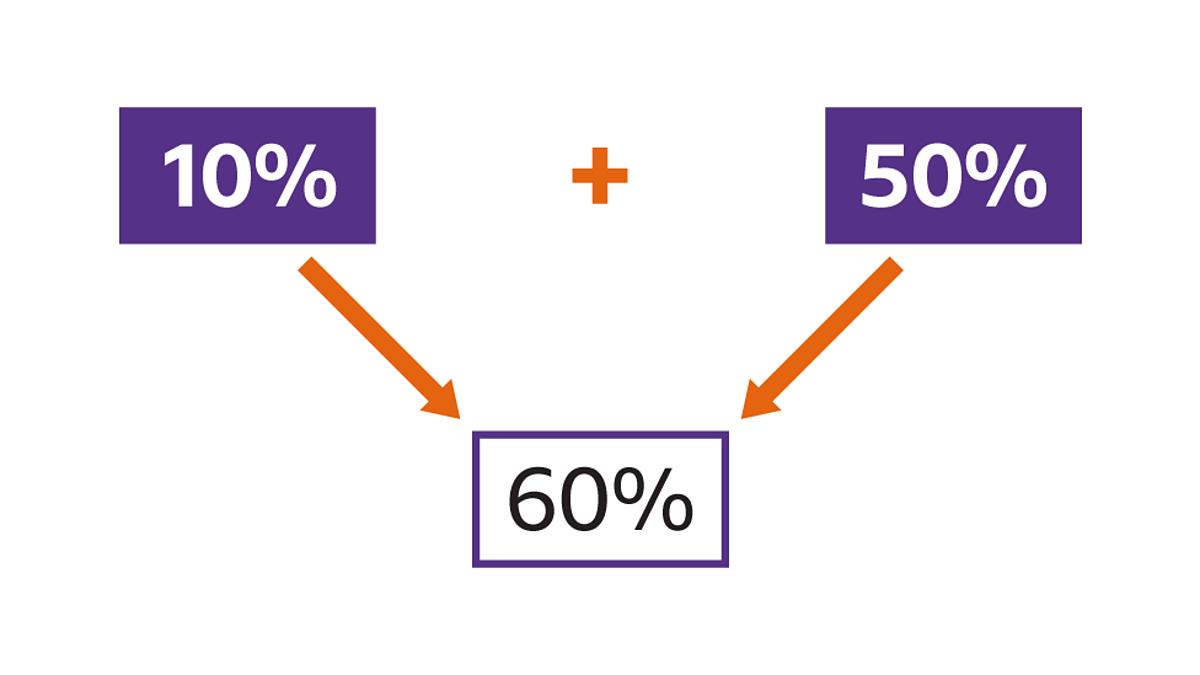
Developing the ability to quickly estimate percentages mentally or with pen and paper is invaluable. For simple percentages like 10%, 25%, or 50%, try to break down the calculation. For example, 10% of $200 is $20 (just move the decimal one place to the left). 25% is simply dividing by 4. This skill builds intuition and confidence.
Calculators and Spreadsheets
- Standard Calculators: Any basic calculator can perform the necessary multiplication and division. Simply convert the percentage to a decimal (e.g., 25% becomes 0.25) and proceed with the calculation.
- Excel/Google Sheets: Spreadsheets are powerful tools for financial calculations involving percentages.
- To calculate a percentage of a number:
=A1*B1where A1 contains the whole number and B1 contains the percentage as a decimal (e.g., 0.25) or simply=A1*25%. - To find what percentage one number is of another:
=(A1/B1)*100or format the cell with the division result as a percentage (e.g.,=A1/B1formatted as “Percentage”). - To calculate percentage change:
=((New_Value - Old_Value) / Old_Value)*100.
- To calculate a percentage of a number:
Online Financial Calculators and Apps
For more specialized financial tasks, dedicated online calculators and apps are incredibly useful:
- Loan Calculators: Help estimate monthly payments, total interest paid, and amortization schedules based on interest rates (percentages).
- Mortgage Calculators: Similar to loan calculators but tailored for home loans.
- Investment Return Calculators: Project potential investment growth over time, factoring in compounding interest rates.
- Budgeting Apps: Many personal finance apps automatically categorize spending and present it as percentages of your income, helping you stick to your financial plan.
Common Pitfalls and How to Avoid Them
Even with a solid understanding, certain nuances can lead to misinterpretations or errors when dealing with percentages in finance.
Misinterpreting the Base (The “Of What?”)
Always be clear about what the percentage is of. A “20% increase in sales” is different if it’s 20% of last month’s sales versus 20% of a baseline sales target. In financial reports, ensure you understand the denominator being used for percentage calculations to avoid comparing apples and oranges.
Percentage Points vs. Percentage Change
This is a critical distinction, especially when discussing interest rates or growth rates.
- Percentage Points: Refers to the absolute difference between two percentages. If an interest rate increases from 2% to 3%, that’s an increase of 1 percentage point.
- Percentage Change: Refers to the relative change. An increase from 2% to 3% is a ((3-2)/2)*100 = 50% *percentage change*. This difference is often confused, leading to significant misinterpretations of financial news or data.
Rounding Errors and Precision
In finance, precision matters. Rounding percentages prematurely or to too few decimal places can lead to significant discrepancies, especially when dealing with large sums or long-term calculations like compound interest. For example, a difference of 0.1% on a multi-million dollar investment can represent thousands of dollars. Always use sufficient precision in your calculations, especially when using spreadsheets, and only round at the final step if necessary for presentation.
Mastering percentages is more than just arithmetic; it’s a gateway to greater financial literacy and control. By understanding how to calculate percentages, apply them in various financial contexts, and avoid common pitfalls, you equip yourself with a powerful tool for informed decision-making, enabling you to manage your money, plan for the future, and achieve your financial aspirations with confidence and clarity. Practice these calculations regularly, and you’ll soon find percentages to be an intuitive and invaluable part of your financial toolkit.
aViewFromTheCave is a participant in the Amazon Services LLC Associates Program, an affiliate advertising program designed to provide a means for sites to earn advertising fees by advertising and linking to Amazon.com. Amazon, the Amazon logo, AmazonSupply, and the AmazonSupply logo are trademarks of Amazon.com, Inc. or its affiliates. As an Amazon Associate we earn affiliate commissions from qualifying purchases.