
In the intricate world of personal finance, investing, and business, percentages are more than just mathematical concepts; they are the fundamental language that underpins countless decisions, analyses, and outcomes. From calculating interest on a savings account to understanding the impact of inflation on your purchasing power, or deciphering the returns on an investment portfolio, a solid grasp of how to figure out percentages is not merely useful—it is absolutely indispensable for financial literacy and success. This guide aims to demystify percentages, transforming a potentially intimidating mathematical operation into a powerful financial tool, exclusively framed within the domain of money management and wealth creation.

The Indispensable Role of Percentages in Personal Finance
Percentages serve as the universal currency of comparison in finance. They standardize values, making it easier to weigh different options, track growth, and assess risk, regardless of the absolute numbers involved. Understanding them is the first step towards making informed financial choices.
What Exactly is a Percentage?
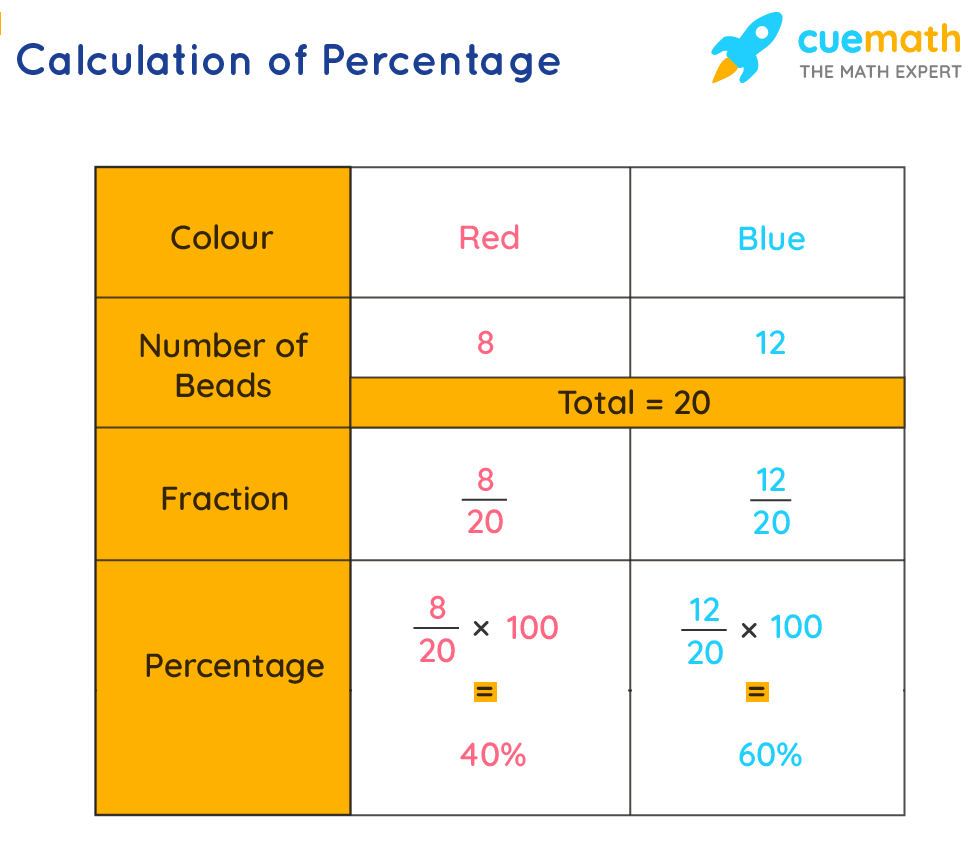
At its core, a percentage represents a fraction of a whole, expressed as a number out of 100. The term “percent” literally means “per one hundred.” So, 50% means 50 out of 100, or 1/2; 25% means 25 out of 100, or 1/4, and so on. In financial contexts, this simple definition expands to convey proportions of change, rates of return, discounts, and allocations. For instance, an interest rate of 3% means you earn $3 for every $100 saved or pay $3 for every $100 borrowed annually. It’s a standardized way to communicate proportions without needing to know the total amount beforehand, allowing for easy comparison.
Why Financial Fluency in Percentages Matters
Without a firm grasp of percentages, navigating financial decisions can feel like sailing without a compass. How do you objectively compare two investment opportunities if one offers a fixed dollar return and the other a percentage? How do you assess the true cost of a loan if you only look at the monthly payment and not the Annual Percentage Rate (APR)? Percentages provide the framework for these comparisons. They empower individuals to:
- Evaluate Returns: Understand the actual growth of investments (e.g., stock gains, bond yields).
- Assess Costs: Fully comprehend loan interest, credit card rates, and service fees.
- Budget Effectively: Allocate income, track spending categories, and identify areas for savings.
- Analyze Performance: Compare the performance of different assets, portfolios, or even businesses over time.
- Understand Economic Indicators: Interpret inflation rates, unemployment figures, and economic growth.
In essence, financial fluency in percentages translates directly into better decision-making and a stronger financial position.
Everyday Scenarios Where Percentages Dominate
Percentages are ubiquitous in our financial lives, even when we don’t consciously acknowledge them.
- Shopping: Sales, discounts (e.g., “20% off”), sales tax, cash-back rewards.
- Banking: Interest rates on savings accounts, checking account fees, loan interest, credit card APRs.
- Investing: Stock market gains/losses, dividend yields, expense ratios of mutual funds, portfolio allocation.
- Employment: Salary increases, commission rates, payroll deductions for taxes and benefits.
- Budgeting: Allocating a percentage of income to housing, food, savings, and entertainment.
Recognizing these daily encounters helps solidify the practical importance of knowing how to calculate and interpret percentages.
Mastering Core Percentage Calculations for Financial Success
While the applications are diverse, the underlying calculations for percentages are relatively straightforward. Mastering these foundational techniques will serve as your bedrock for all financial analyses.
Calculating a Percentage of a Number
This is perhaps the most common percentage calculation. It involves finding a part of a whole based on a given percentage.
Formula: Part = Percentage (as a decimal) × Whole
To convert a percentage to a decimal, divide it by 100. For example, 25% becomes 0.25.
Example in Finance: You want to calculate the 15% discount on an item priced at $200.
- Discount Amount = 0.15 × $200 = $30.
- The final price would be $200 – $30 = $170.
Another Example: You earn a 3% commission on sales of $5,000. - Commission = 0.03 × $5,000 = $150.
Determining Percentage Change
Percentage change is crucial for evaluating growth, decline, and volatility in investments, income, or expenses over time.
Formula: Percentage Change = ((New Value - Old Value) / Old Value) × 100
A positive result indicates an increase, while a negative result indicates a decrease.
Example in Finance: Your investment portfolio grew from $10,000 to $12,000 in one year.
- Percentage Change = (($12,000 – $10,000) / $10,000) × 100
- Percentage Change = ($2,000 / $10,000) × 100 = 0.20 × 100 = 20% growth.
Example of a Decrease: Your stock dropped from $50 per share to $45 per share. - Percentage Change = (($45 – $50) / $50) × 100
- Percentage Change = (-$5 / $50) × 100 = -0.10 × 100 = -10% decrease.
Understanding Basis Points and Their Financial Significance
In the world of finance, particularly for interest rates, bond yields, and fund fees, you’ll often encounter “basis points” (bps) instead of percentages. One basis point is equal to one-hundredth of a percentage point (0.01%).
Conversion: 100 basis points = 1%
So, if an interest rate changes by 50 basis points, it means it has changed by 0.50%.
Example in Finance: A central bank raises its key interest rate by 25 basis points.
- This means the rate increased by 0.25%. If the previous rate was 2.00%, the new rate is 2.25%.
Basis points allow for more precise measurement of small changes in financial instruments where even tiny shifts can have significant monetary impact.
Reversing Percentages: Finding the Original Amount
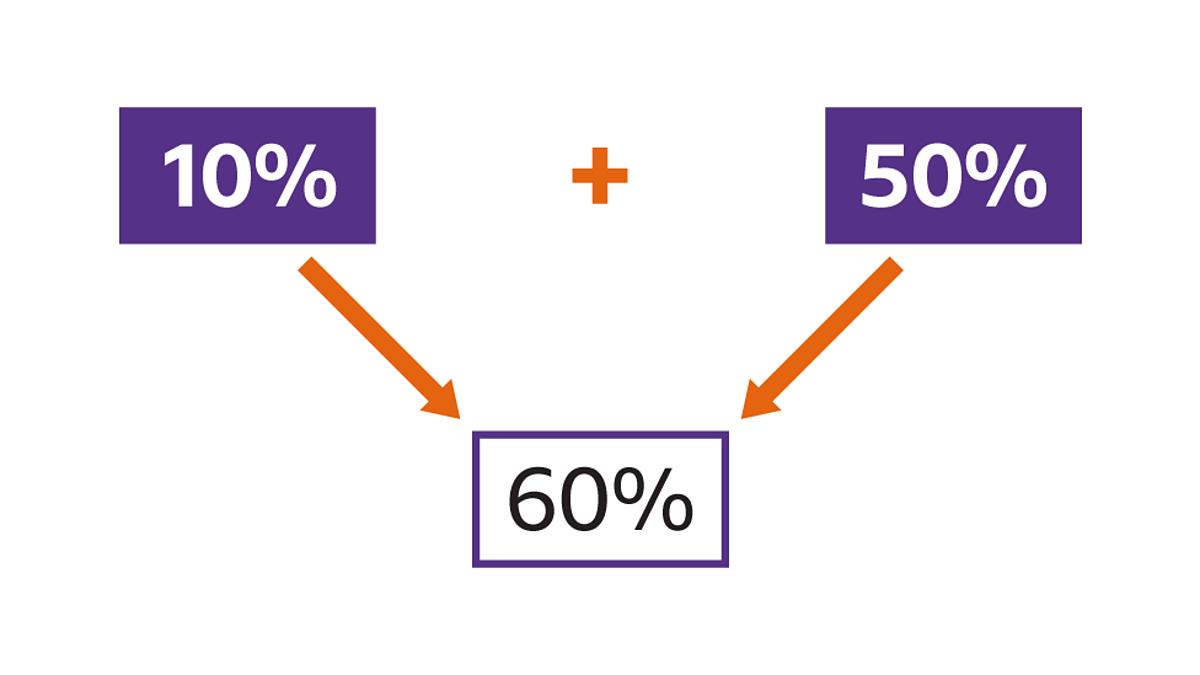
Sometimes you know the final amount after a percentage change and need to work backward to find the original amount. This is common with sales tax, tips, or understanding original pricing before a discount.
Formula (after a percentage increase): Original Amount = Final Amount / (1 + Percentage Increase as a decimal)
Formula (after a percentage decrease/discount): Original Amount = Final Amount / (1 - Percentage Decrease as a decimal)
Example in Finance (Increase): You paid $106 for a service, which included a 6% sales tax. What was the price before tax?
- Original Amount = $106 / (1 + 0.06) = $106 / 1.06 = $100.
Example in Finance (Decrease): You bought an item for $80 after a 20% discount. What was the original price? - Original Amount = $80 / (1 – 0.20) = $80 / 0.80 = $100.
Applying Percentages Across Key Financial Domains
The theoretical understanding of percentage calculations truly shines when applied to real-world financial scenarios. Here, we delve into how percentages are critical in various aspects of money management.
Saving and Investing: Compounding Returns and Growth Rates
Percentages are at the heart of wealth accumulation.
- Interest Rates: Savings accounts, CDs, and bonds offer interest as a percentage of your principal. Understanding whether interest is compounded annually, semi-annually, or monthly, and its respective percentage rate, directly impacts your earnings.
- Investment Returns: Stock market gains, mutual fund performance, and real estate appreciation are almost always quoted as percentage returns. A “10% annual return” tells you exactly how much your capital grew relative to its starting value.
- Compounding: The magic of compound interest (earning interest on your interest) is a powerful percentage phenomenon. A small annual percentage return, compounded over decades, can lead to substantial wealth. For example, the “Rule of 72” (a quick way to estimate how long it takes for an investment to double) relies on percentages:
Years to Double = 72 / Annual Percentage Rate. - Expense Ratios: Mutual funds and ETFs charge annual fees expressed as a percentage of your total investment. Even a seemingly small 0.50% expense ratio can significantly erode your long-term returns.
Debt Management: Interest Rates, APR, and Loan Repayments
Percentages define the cost of borrowing.
- Interest Rates: Mortgages, car loans, and personal loans all come with an interest rate, expressed as a percentage, determining how much you pay for the privilege of borrowing.
- Annual Percentage Rate (APR): This is a critical metric, especially for credit cards and mortgages. APR reflects the true annual cost of a loan, including interest and other fees, providing a standardized percentage for comparison across different lenders. A higher APR means a more expensive loan.
- Minimum Payments: While a dollar amount, the minimum payment on a credit card is often a small percentage (e.g., 2-3%) of your outstanding balance, meaning it takes a very long time to pay off debt if you only make the minimum.
- Debt-to-Income Ratio: Lenders often assess your creditworthiness using your debt-to-income ratio, a percentage comparing your monthly debt payments to your gross monthly income. A lower percentage is generally more favorable.
Budgeting and Spending: Allocations, Discounts, and Sales Tax
Effective budgeting relies heavily on percentage allocation and understanding transactional percentages.
- Budget Allocation: Many financial advisors recommend allocating specific percentages of your net income to different categories, such as the 50/30/20 rule (50% for needs, 30% for wants, 20% for savings/debt repayment). This percentage-based approach makes budgeting flexible and scalable.
- Discounts and Sales: As discussed, calculating discounts (e.g., “30% off”) is essential for smart shopping. Understanding the final price after a discount helps you know how much you’re actually saving.
- Sales Tax: Sales tax, added as a percentage to most purchases, can significantly impact your total spending. Being able to quickly estimate the final cost, including tax, helps you stay within budget.
Taxes and Income: Income Tax Brackets, Capital Gains, and Deductions
The world of taxation is almost entirely percentage-based.
- Income Tax Brackets: Your income is taxed at different percentage rates depending on which bracket it falls into. Understanding these marginal rates helps in tax planning.
- Capital Gains Tax: Profits from the sale of investments (like stocks or real estate) are often subject to capital gains tax, calculated as a percentage of the gain.
- Payroll Deductions: Various deductions from your gross pay, such as for Social Security, Medicare, and retirement contributions, are typically calculated as percentages.
- Tax Deductions and Credits: While deductions reduce your taxable income and credits reduce your tax bill directly, their impact can be understood in terms of the percentage of savings they provide on your overall tax liability.
Leveraging Tools and Avoiding Common Financial Percentage Pitfalls
While the calculations are fundamental, modern tools can simplify the process, and an awareness of common errors can prevent costly mistakes.
Utilizing Calculators and Spreadsheets for Accuracy
For complex or repetitive calculations, relying on technology is smart.
- Basic Calculators: Most smartphones and dedicated calculators have a percentage button, simplifying “x% of Y” or “Y + x%” calculations.
- Spreadsheets (Excel, Google Sheets): These are invaluable for financial analysis. You can set up formulas to automatically calculate percentages for budgeting, investment tracking, loan amortization, and more. For example, if you have a column for original price and another for discount percentage, a third column can instantly calculate the discounted price.
- Online Financial Calculators: Numerous websites offer specialized calculators for mortgage payments, compound interest, retirement planning, and APR comparisons, all of which heavily rely on percentage inputs and outputs.
Common Misconceptions and Errors in Financial Percentage Calculations
Even experienced individuals can make mistakes if not careful.
- Confusing Basis Points with Percentage Points: A 1% increase is not the same as a 1 basis point increase. One is 100 times the other.
- Incorrect Base Value: When calculating percentage change, always ensure you’re dividing by the original or old value. A common mistake is to divide by the new value.
- Averaging Percentages: You cannot simply average percentages to get a meaningful aggregate. For instance, if an investment loses 50% one year and gains 50% the next, you haven’t broken even. You need to calculate the actual total return.
- Ignoring Compounding Frequency: A 5% annual interest rate compounded monthly will yield slightly more than 5% compounded annually. Understanding compounding period is critical for true comparisons.
- Misinterpreting “Percentage Points”: An increase “from 2% to 3%” is an increase of 1 percentage point, but a 50% percentage increase (because 1 is 50% of 2). Clarifying this distinction is vital.
Building a Habit of Percentage-Savvy Decision-Making
Ultimately, mastering percentages isn’t just about calculations; it’s about fostering a mindset of financial vigilance.
- Question Everything: When presented with a financial figure, ask: “What percentage does this represent?” or “What is the percentage change?”
- Compare and Contrast: Use percentages to compare offers (e.g., credit card APRs, investment returns).
- Project and Plan: Employ percentages to forecast future financial scenarios, such as the growth of your retirement savings or the impact of inflation.
- Review and Adjust: Regularly review your budget, investment performance, and debt levels using percentage metrics to make necessary adjustments.
In conclusion, knowing how to figure out percent is a cornerstone of financial literacy. It’s the lens through which we evaluate opportunities, understand risks, and make prudent decisions about our money. By embracing these calculations and applying them consistently, you empower yourself to navigate the complexities of the financial world with confidence, paving the way for greater financial security and success.
aViewFromTheCave is a participant in the Amazon Services LLC Associates Program, an affiliate advertising program designed to provide a means for sites to earn advertising fees by advertising and linking to Amazon.com. Amazon, the Amazon logo, AmazonSupply, and the AmazonSupply logo are trademarks of Amazon.com, Inc. or its affiliates. As an Amazon Associate we earn affiliate commissions from qualifying purchases.