
Purchasing a car is one of the most significant financial decisions many individuals make, often second only to buying a home. While the excitement of a new vehicle can be intoxicating, approaching the process with a clear understanding of your financial obligations is paramount. The monthly car payment, a figure that will recur in your budget for several years, is a critical component to grasp before you even set foot on a dealership lot. Failing to accurately calculate and budget for this payment can lead to financial strain, stress, and even repossession.
This comprehensive guide will demystify the process of figuring out your monthly car payment, breaking down the variables involved, exploring various calculation methods, and highlighting additional costs often overlooked. Our aim is to equip you with the knowledge to make an informed, confident, and sustainable decision when financing your next vehicle.
Understanding the Core Components of Your Car Loan
At its heart, a car loan is a form of installment credit, and its monthly payment is determined by a few key variables. Understanding each of these components is the first step towards an accurate calculation.
The Vehicle’s Purchase Price
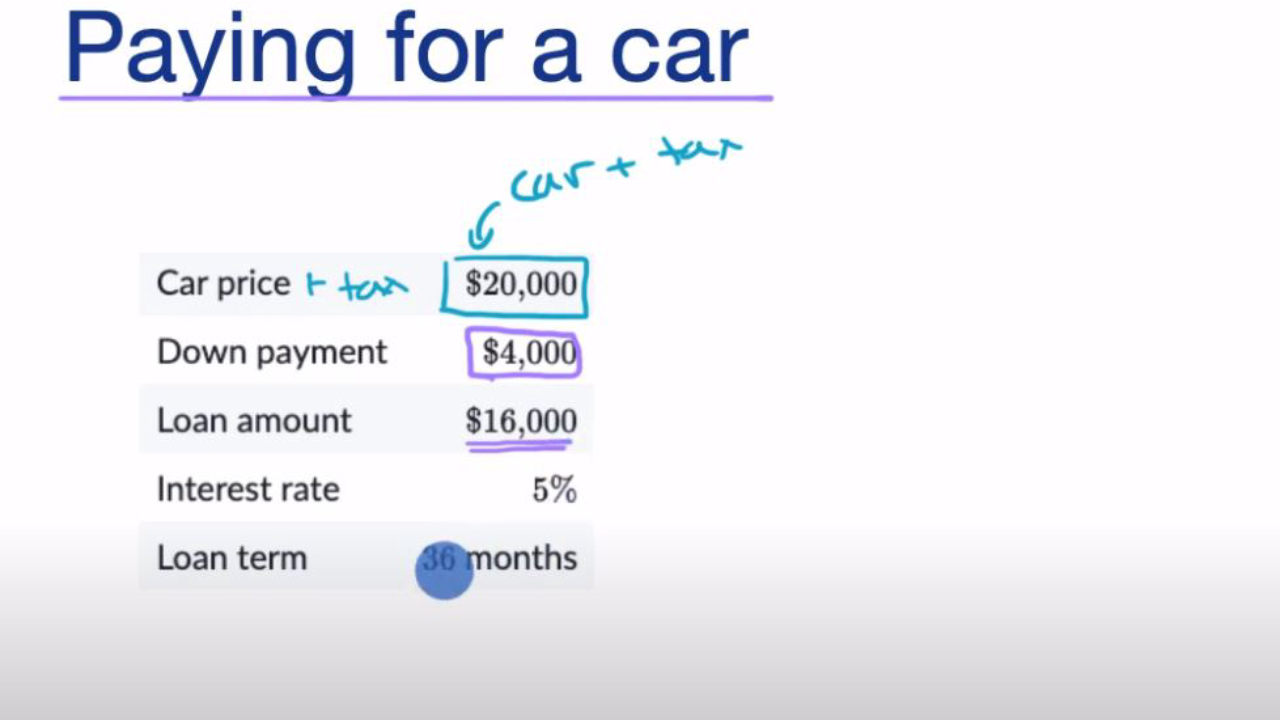
This is the starting point for your loan. It’s not just the sticker price (MSRP) of the car but the negotiated price you agree upon with the dealer, plus any additional taxes, registration fees, documentation fees, and potentially extended warranties or other add-ons that are rolled into the total financed amount. Remember, every extra dollar added to this total will increase your monthly payment. Being a savvy negotiator on the car’s price directly impacts the principal amount of your loan.
Down Payment
A down payment is the amount of money you pay upfront, reducing the total amount you need to borrow. The larger your down payment, the smaller your principal loan amount will be. This directly translates to lower monthly payments and less interest paid over the life of the loan. While it might seem challenging to save up a significant down payment, its impact on your long-term financial health is substantial. Many financial experts recommend a minimum of 10% to 20% down, especially for new cars, to help offset rapid depreciation.
Trade-in Value
If you’re trading in your current vehicle, its agreed-upon value will act much like a down payment. The dealer will typically deduct the trade-in value from the purchase price of the new car, reducing the amount you need to finance. Be sure to negotiate your trade-in value separately from the new car’s price to ensure you’re getting a fair deal on both ends of the transaction. Any existing loan balance on your trade-in will also be factored in; if you owe more than the car is worth (negative equity), that difference may be rolled into your new loan, increasing your principal.
Interest Rate (APR)
The Annual Percentage Rate (APR) is the cost of borrowing money, expressed as a yearly percentage. This is perhaps the most significant factor influencing your monthly payment after the principal amount. A higher APR means you’ll pay more in interest over time, leading to higher monthly payments. Your credit score is the primary determinant of the interest rate you’ll be offered. Borrowers with excellent credit (typically 720+) qualify for the lowest rates, while those with lower scores will face higher rates. It’s crucial to shop around for the best APR, comparing offers from multiple lenders (banks, credit unions, and the dealership’s finance department).
Loan Term (Length of Loan)
The loan term, or the length of time you have to repay the loan, is typically expressed in months (e.g., 36, 48, 60, 72, or even 84 months). A longer loan term will result in lower monthly payments because the principal is spread out over more installments. However, a longer term also means you’ll pay significantly more interest over the life of the loan, and your car will depreciate further before it’s paid off, increasing your risk of negative equity. Conversely, a shorter term means higher monthly payments but less total interest paid and faster equity building. Balancing affordability with total cost is key here.
The Formula and Tools for Calculation
Once you understand the core components, you can begin to calculate your potential monthly payment. While complex formulas exist, several user-friendly tools simplify the process.
The Manual Formula Explained (for the mathematically inclined)
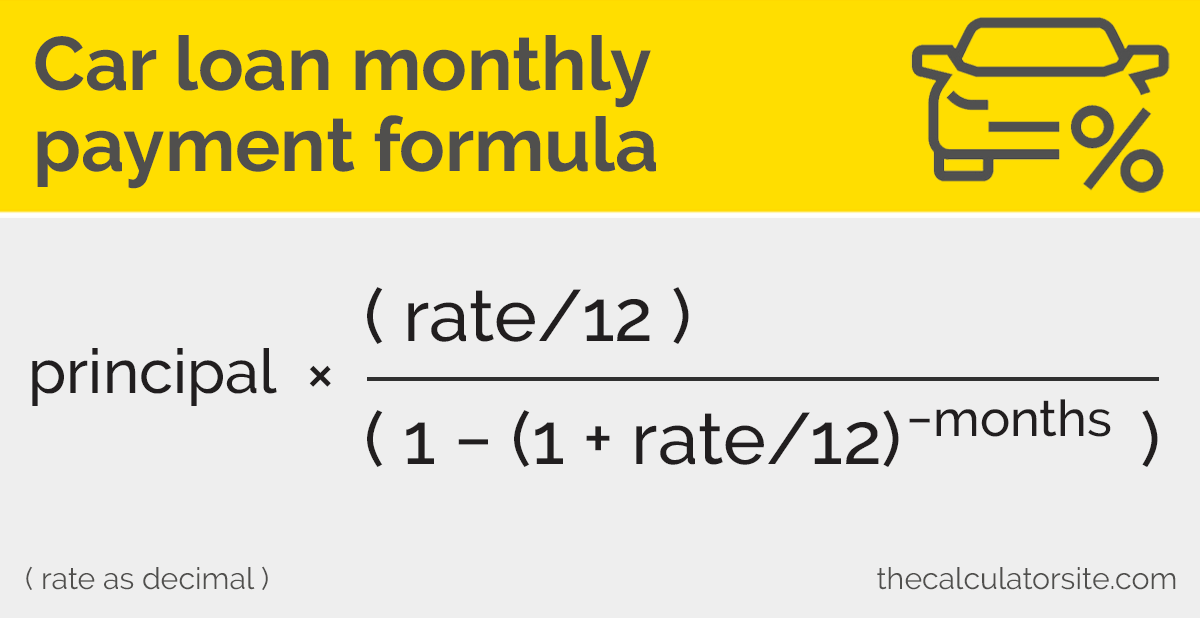
The standard formula for calculating a fixed monthly loan payment is:
$M = P [ i(1 + i)^n ] / [ (1 + i)^n – 1]$
Where:
- M = Monthly Payment
- P = Principal Loan Amount (Vehicle Price – Down Payment – Trade-in Equity)
- i = Monthly Interest Rate (Annual APR divided by 12)
- n = Number of Months (Loan Term)
For example, if you finance $25,000 (P) at an APR of 4.5% (i = 0.045/12 = 0.00375) for 60 months (n):
$M = 25000 [ 0.00375(1 + 0.00375)^{60} ] / [ (1 + 0.00375)^{60} – 1]$
This calculation, while accurate, can be cumbersome.
Online Car Loan Calculators
Fortunately, numerous online car loan calculators make this process instantaneous. Websites for banks, credit unions, and automotive portals typically offer these free tools. You simply input the principal amount, interest rate (APR), and loan term, and the calculator provides an estimated monthly payment. Many advanced calculators also allow you to factor in down payments, trade-ins, sales tax, and other fees, giving you a more comprehensive estimate. This is often the quickest and most practical method for preliminary budgeting.
Dealership Finance Departments
When you’re at the dealership, their finance department will certainly calculate your monthly payment for you. While convenient, it’s important to remember that they are also a sales entity. Always arrive with your own calculations and pre-approved financing in hand. This allows you to verify their figures and ensures you aren’t pressured into a deal that includes hidden fees or unfavorable terms.
Bank/Credit Union Pre-approval
A powerful strategy is to get pre-approved for a car loan from your bank or credit union before you go car shopping. Pre-approval gives you a clear understanding of the maximum amount you can borrow, your eligible interest rate, and consequently, your estimated monthly payment. This transforms you into a cash buyer in the eyes of the dealership, giving you significant leverage in negotiations and allowing you to compare the dealer’s financing offer against a known, competitive benchmark.
Beyond the Monthly Payment: Other Costs to Consider

Focusing solely on the monthly car payment can be a costly mistake. A true understanding of vehicle affordability requires considering all associated costs of ownership.
Car Insurance
This is a non-negotiable expense for car owners. Your insurance premium will vary widely based on factors such as your age, driving record, location, the make and model of the car, and the coverage you choose. Before finalizing a car purchase, obtain insurance quotes for the specific vehicle you’re considering. A higher-end or performance car might have a manageable loan payment but an exorbitantly high insurance premium.
Fuel Costs
Estimate your monthly fuel expenses based on your typical driving habits and the car’s fuel efficiency. A vehicle with lower MPG will cost significantly more to fuel up each month. You can estimate this by multiplying your average weekly mileage by the current gas price per gallon, then dividing by the car’s estimated MPG, and finally multiplying by four weeks.
Maintenance and Repairs
All cars require regular maintenance (oil changes, tire rotations, brake inspections, etc.) to keep them running smoothly. Beyond routine service, unexpected repairs can arise, especially as a vehicle ages. Budgeting a monthly amount for maintenance and an emergency fund for repairs is a wise financial practice. Newer cars often come with warranties that cover some repairs, but consumables and routine services are typically excluded.
Registration, Taxes, and Fees
While some taxes and fees are included in the initial financing, others are recurring. Annual vehicle registration renewals, state inspection fees, and potentially property taxes on the vehicle (depending on your state) are ongoing costs that need to be factored into your annual or monthly budget.
Parking and Tolls
If your daily commute or lifestyle involves frequent tolls or paid parking, these seemingly small expenses can add up quickly over the course of a month or year. Don’t overlook these in your overall car ownership budget.
Strategies to Optimize Your Monthly Payment
Once you have a handle on the various components, you can employ strategies to make your monthly payment more manageable and financially sound.
Increase Your Down Payment
As discussed, a larger down payment directly reduces the principal, leading to lower monthly payments and less interest paid over the loan’s lifetime. If you can save more, do so.
Improve Your Credit Score
Before you even apply for a car loan, work on improving your credit score. Pay bills on time, reduce existing debt, and check your credit report for errors. A better credit score can shave points off your APR, saving you thousands over the loan term.
Negotiate the Car Price
Don’t settle for the sticker price. Research market values and be prepared to negotiate the vehicle’s purchase price. Every dollar you save on the purchase price is a dollar less you need to finance.
Choose a Shorter Loan Term (if affordable)
While a longer term offers lower monthly payments, a shorter term (e.g., 48 or 60 months instead of 72 or 84) will save you substantial amounts in total interest. If your budget allows for the higher monthly payment, opting for a shorter term is almost always financially advantageous.
Shop Around for Financing
Never take the first financing offer, especially from a dealership. Apply for pre-approval from multiple banks and credit unions. This competition will often lead to better rates and terms.
Consider a More Affordable Vehicle
The most straightforward way to lower your monthly payment is to choose a less expensive car. It’s easy to get caught up in wanting the latest features or a luxury model, but aligning your vehicle choice with your true financial capacity is critical for long-term financial health.
The Importance of Budgeting and Affordability
Calculating the monthly payment is just one piece of the puzzle; determining if that payment is truly affordable within your overall budget is the critical final step.
The 20/4/10 Rule
A commonly cited guideline for car purchases is the “20/4/10 rule”:
- 20% Down Payment: Aim for at least 20% down to reduce your principal and prevent immediate negative equity.
- 4-Year Loan Term: Finance the car for no more than four years (48 months) to minimize interest paid and accelerate equity building.
- 10% of Gross Income: Your total monthly car expenses (payment + insurance + fuel + maintenance) should not exceed 10% of your gross (pre-tax) monthly income. This rule provides a comprehensive framework for assessing affordability.
Holistic Financial Planning
A car payment is not an isolated expense. It needs to fit comfortably within your entire financial picture, alongside housing, utilities, food, savings, debt repayment, and other discretionary spending. Use a detailed monthly budget to see how a potential car payment impacts your cash flow and ability to meet other financial goals.
Avoiding Payment Shock
Ensure the payment you’re comfortable with on paper translates into real-world affordability. If the payment feels tight or leaves no room for unexpected expenses, it’s likely too high. A sustainable car payment is one that allows you to live comfortably, save for the future, and enjoy your new vehicle without financial stress.
Conclusion
Figuring out your monthly car payment is more than just plugging numbers into a calculator; it’s a critical exercise in personal finance and responsible decision-making. By thoroughly understanding the principal amount, interest rate, loan term, and all associated costs of car ownership, you empower yourself to negotiate effectively, secure favorable financing, and ultimately, make a vehicle purchase that enhances your life rather than becoming a financial burden. Approach the car buying process with diligence, foresight, and a clear financial strategy, and you’ll drive away with confidence, knowing you’ve made a wise investment.
aViewFromTheCave is a participant in the Amazon Services LLC Associates Program, an affiliate advertising program designed to provide a means for sites to earn advertising fees by advertising and linking to Amazon.com. Amazon, the Amazon logo, AmazonSupply, and the AmazonSupply logo are trademarks of Amazon.com, Inc. or its affiliates. As an Amazon Associate we earn affiliate commissions from qualifying purchases.