
Understanding how to calculate loan payments is a fundamental skill in personal finance, empowering individuals and businesses to make informed decisions, manage debt effectively, and plan for a secure financial future. Whether you’re considering a mortgage, an auto loan, a personal loan, or a student loan, deciphering the mechanics of repayment is crucial. This article will demystify the process, exploring the core components of any loan, walking through manual calculation methods, highlighting the convenience of digital tools, and discussing vital considerations beyond the monthly figure. By the end, you’ll be equipped with the knowledge and strategies to confidently figure out and manage your loan payments.

Understanding the Core Components of a Loan
Before delving into calculations, it’s essential to grasp the foundational elements that collectively determine your loan payments. These components are universal across nearly all types of debt and understanding each one is the first step toward financial literacy.
Principal Amount
The principal amount is the initial sum of money you borrow from a lender. It’s the face value of the loan before any interest or fees are added. For example, if you take out a $300,000 mortgage, $300,000 is your principal. Your payments will be structured to gradually pay back this principal amount, alongside the interest accrued. A larger principal inherently leads to higher payments, assuming all other factors remain constant, as there is more money to pay back over the chosen term. Managing the principal is often about minimizing what you borrow to keep your overall debt burden manageable.
Interest Rate
The interest rate is arguably the most critical factor influencing your loan payment and the total cost of the loan. It’s expressed as a percentage and represents the cost of borrowing money. Lenders charge interest as compensation for the risk and opportunity cost of lending funds. Interest rates can be fixed, meaning they remain constant throughout the loan term, providing predictability in payments. Alternatively, they can be variable, fluctuating based on an underlying index (like the prime rate), which introduces uncertainty but can sometimes offer lower initial payments. The Annual Percentage Rate (APR) is a more comprehensive measure than the nominal interest rate, as it includes certain fees and charges associated with the loan, giving a truer picture of the total borrowing cost. Even a slight difference in the interest rate can significantly alter your monthly payments and the total interest paid over the life of the loan.
Loan Term (Duration)
The loan term refers to the length of time over which you agree to repay the loan. Common terms include 15 or 30 years for mortgages, 3 to 7 years for auto loans, and various durations for personal and student loans. The loan term has a direct and inverse relationship with your monthly payment: a longer loan term typically results in lower monthly payments, but it also means you’ll pay more in total interest over the life of the loan. Conversely, a shorter loan term will have higher monthly payments, but you’ll pay significantly less in total interest and become debt-free sooner. Choosing the right loan term involves balancing affordability with the desire to minimize the overall cost of borrowing.
Amortization
Amortization is the process of paying off debt over time through a series of regular, equal payments. Each payment consists of both principal and interest. In the early stages of an amortizing loan, a larger portion of your payment goes towards interest, and a smaller portion goes towards the principal. As the loan matures, the proportion shifts, with more of each payment allocated to reducing the principal. This systematic reduction of the loan balance until it reaches zero is visualized in an amortization schedule, which details how each payment is applied and the remaining balance after each payment. Understanding amortization is key to knowing why your initial payments might seem to make little dent in your principal balance.
Manual Calculation Methods: Demystifying the Math
While digital tools have made calculating loan payments incredibly easy, understanding the underlying mathematical formulas provides invaluable insight into how your payments are structured. It strips away the mystery and empowers you to critically assess loan offers.
Simple Interest vs. Compound Interest
Before diving into formulas, it’s crucial to distinguish between simple and compound interest. Simple interest is calculated only on the principal amount, which is common for very short-term loans or specific types of investments. However, most consumer loans—mortgages, auto loans, personal loans—use compound interest. Compound interest is calculated on the principal amount and on the accumulated interest from previous periods. This means “interest on interest” is charged, which is why your total interest paid can grow substantially over longer loan terms. The standard loan payment formula accounts for this compounding effect.
The Loan Payment Formula Explained
The most common formula for calculating a fixed-rate, fully amortizing loan payment is:
PMT = [ P * r * (1 + r)^n ] / [ (1 + r)^n – 1]
Let’s break down each variable:
- PMT: Your monthly loan payment.
- P: The principal loan amount (the initial sum borrowed).
- r: The monthly interest rate. This is not the annual interest rate. You must divide the annual interest rate by 12 (for monthly payments). For example, if the annual rate is 6%, then
r = 0.06 / 12 = 0.005. - n: The total number of payments (loan term in years multiplied by 12). For example, a 30-year loan has
n = 30 * 12 = 360payments.
Example Calculation (Simplified):
Suppose you borrow $100,000 at an annual interest rate of 5% for 10 years.
- P = $100,000
- r = 0.05 / 12 = 0.00416667
- n = 10 * 12 = 120
Plugging these into the formula:
PMT = [ 100,000 * 0.00416667 * (1 + 0.00416667)^120 ] / [ (1 + 0.00416667)^120 – 1]
PMT = [ 416.667 * (1.00416667)^120 ] / [ (1.00416667)^120 – 1]
PMT = [ 416.667 * 1.647009 ] / [ 1.647009 – 1]
PMT = 686.257 / 0.647009
PMT ≈ $1,060.67
This manual calculation, while demanding, reveals the interplay of principal, rate, and term, showing precisely how each factor contributes to your monthly obligation.
Creating an Amortization Schedule
Once you have the monthly payment, you can manually create an amortization schedule. This table breaks down each payment, showing how much goes towards interest, how much reduces the principal, and the remaining loan balance.
| Payment No. | Starting Balance | Payment | Interest Paid | Principal Paid | Ending Balance |
|---|---|---|---|---|---|
| 1 | $100,000.00 | $1,060.67 | $416.67 | $644.00 | $99,356.00 |
| 2 | $99,356.00 | $1,060.67 | $414.00 | $646.67 | $98,709.33 |
- Interest Paid:
Starting Balance * monthly interest rate (r) - Principal Paid:
Payment - Interest Paid - Ending Balance:
Starting Balance - Principal Paid
Building an amortization schedule, even for just a few periods, provides a clear visual understanding of how your debt is being paid down over time and the significant proportion of interest paid early in the loan’s life.
Leveraging Digital Tools for Accuracy and Ease
While manual calculations are excellent for understanding the mechanics, digital tools offer unparalleled speed, accuracy, and convenience for figuring out loan payments in real-world scenarios.

Online Loan Calculators
The internet is replete with free online loan calculators, provided by banks, financial institutions, and independent finance websites. These tools simplify the process to just a few inputs: the principal amount, interest rate, and loan term. Within seconds, they output the monthly payment, total interest paid, and often a full amortization schedule.
- Types: Specific calculators exist for mortgages, auto loans, personal loans, and student loans, often including fields for down payments, fees, and property taxes/insurance for a more comprehensive picture.
- Benefits: Their primary advantages are speed and accuracy. They also allow for quick scenario planning, letting you instantly see how changing the interest rate, term, or principal affects your monthly payment. This is invaluable for comparing different loan offers.
Spreadsheet Software (Excel/Google Sheets)
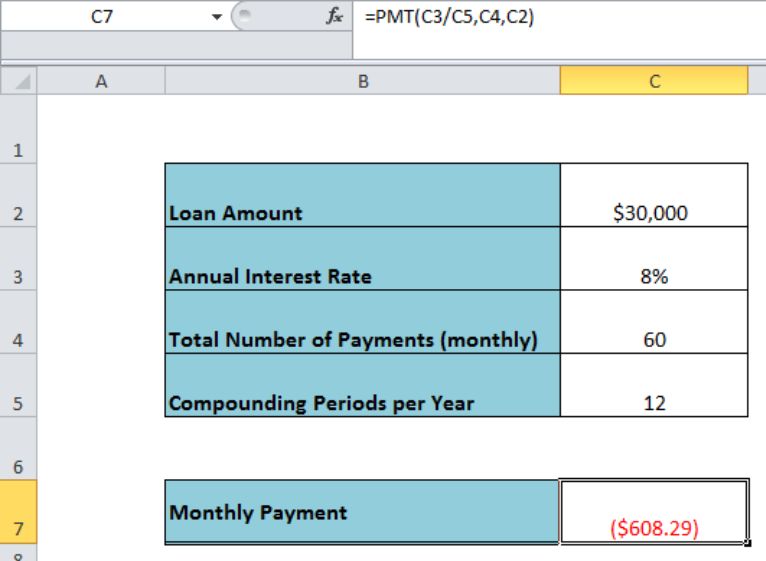
For those who prefer a more customized and detailed approach, spreadsheet software like Microsoft Excel or Google Sheets is incredibly powerful. The built-in PMT function allows you to calculate loan payments with ease.
The syntax for the PMT function is:
=PMT(rate, nper, pv, [fv], [type])
- rate: The interest rate per period (e.g.,
0.05/12for a 5% annual rate paid monthly). - nper: The total number of payment periods (e.g.,
30*12for a 30-year loan with monthly payments). - pv: The present value, or the principal amount of the loan.
- fv (optional): The future value, or a cash balance you want to attain after the last payment (defaults to 0, which is standard for a fully amortized loan).
- type (optional): Indicates when payments are due (0 for end of period, 1 for beginning of period; defaults to 0).
Setting up an amortization table in Excel is also straightforward, using formulas that reference the loan details. This allows for dynamic adjustments, where changing a single input (like the interest rate) instantly updates the entire schedule. Spreadsheets are ideal for sophisticated “what-if” analyses and for managing multiple loans simultaneously.
Financial Planning Apps and Software
Beyond simple calculators, many modern financial planning apps and software solutions integrate robust loan payment and management features. Tools like Mint, Personal Capital, or dedicated budgeting apps allow you to link your loan accounts, track your balances, view payment schedules, and even project the impact of extra payments. These apps provide a holistic view of your financial health, showing how loan payments fit into your overall budget, savings, and investment goals. They often offer visual dashboards that make it easier to stay on top of your debt and progress towards financial freedom.
Beyond the Monthly Payment: What Else to Consider
While calculating the monthly payment is a primary concern, a truly insightful approach to loan management extends beyond this single figure. Several other factors significantly impact the true cost and implications of your borrowing.
Total Cost of the Loan
Focusing solely on the monthly payment can be misleading. A lower monthly payment often comes with a longer loan term, which means you’ll end up paying significantly more in total interest over the life of the loan. Always calculate the total amount you will repay by multiplying your monthly payment by the total number of payments (Total Cost = Monthly Payment x Number of Payments). Then, subtract the principal to see the total interest paid (Total Interest = Total Cost - Principal). This figure provides a far more accurate representation of the true cost of borrowing and helps you compare different loan options more effectively. For example, a 30-year mortgage will have lower monthly payments than a 15-year mortgage for the same principal, but the total interest paid will be substantially higher.
Prepayment Penalties and Options
Some loan agreements include prepayment penalties, which are fees charged by the lender if you pay off your loan early or make substantial extra payments that significantly reduce the loan term. While less common on standard consumer loans like auto loans, they can sometimes appear in personal loans or certain types of mortgages. It’s crucial to check your loan agreement for any such clauses before planning to accelerate your payments. Conversely, many loans allow you to make extra payments without penalty, which is a powerful strategy to save on interest and pay off debt faster. Understanding these terms can help you make strategic decisions about debt acceleration.
Impact on Your Credit Score
Your ability to consistently make loan payments on time is a major determinant of your credit score. Payment history accounts for the largest portion of your FICO score. Late payments or defaults can severely damage your credit, making it harder and more expensive to borrow money in the future. Conversely, responsible loan management, characterized by on-time, full payments, helps build and maintain a strong credit score, opening doors to better interest rates and financial products. Regularly monitoring your credit report and score is a good practice to ensure your loan payments are positively impacting your financial standing.
Refinancing Opportunities
Refinancing involves taking out a new loan to pay off an existing one, often to secure a lower interest rate, change the loan term, or convert a variable-rate loan to a fixed-rate one. If interest rates have dropped since you took out your original loan, or if your credit score has improved, refinancing could potentially save you a substantial amount of money over the life of the loan by reducing your monthly payments or total interest paid. However, refinancing usually involves closing costs and fees, so it’s essential to calculate whether the savings outweigh these upfront expenses. It’s a strategic move that should be considered when market conditions are favorable or your financial situation has improved.
Strategic Approaches to Managing Loan Payments
Once you understand how to figure out loan payments and the factors that influence them, the next step is to develop strategic approaches to manage them effectively, minimize costs, and achieve financial freedom.
Budgeting for Loan Payments
Integrating loan payments into your overall financial budget is paramount. Your budget should clearly allocate funds for each loan payment, ensuring that these obligations are met consistently and on time. Treat loan payments as non-negotiable fixed expenses. Use a budgeting app, spreadsheet, or pen and paper to track your income and expenses, ensuring you have sufficient cash flow to cover your payments without straining other essential areas of your finances. A well-structured budget prevents missed payments, reduces financial stress, and provides a clear picture of your disposable income.
Accelerating Debt Repayment
For many, the goal isn’t just to make payments, but to get out of debt faster. There are several popular strategies for accelerating debt repayment:
- Debt Snowball Method: Focus on paying off the smallest loan first while making minimum payments on others. Once the smallest is paid, roll that payment amount into the next smallest loan. This method offers psychological wins that keep you motivated.
- Debt Avalanche Method: Prioritize paying off the loan with the highest interest rate first, while making minimum payments on others. This method saves the most money on interest over time, as it targets the most expensive debt first.
- Making Extra Payments: Even small, consistent extra payments can make a significant difference. If you receive a bonus, tax refund, or any unexpected income, consider applying it directly to your loan principal.
Communicating with Lenders
Life happens, and sometimes you might anticipate difficulty making a payment. It’s always better to be proactive and communicate with your lender before you miss a payment. Many lenders offer options like deferment, forbearance, or temporary payment reductions for borrowers facing genuine financial hardship. Ignoring the problem will only lead to late fees, negative credit impacts, and increased stress. Open communication can often lead to a workable solution that protects your financial standing.
The Power of Small Extra Payments
The impact of even slightly increasing your monthly payment can be profound. For example, on a 30-year mortgage, adding just an extra $50 to $100 per month can shave years off your loan term and save thousands of dollars in interest. This is because any extra principal payment directly reduces the amount on which future interest is calculated. Consider rounding up your payment to the nearest hundred or making one extra principal payment per year. These seemingly small adjustments leverage the power of amortization in your favor, significantly reducing the total cost of your loan over its lifetime.
Conclusion
Mastering the art of figuring out loan payments is more than just crunching numbers; it’s about gaining control over a significant aspect of your financial life. By understanding the core components of a loan, familiarizing yourself with calculation methods, leveraging modern digital tools, and considering the broader implications beyond the monthly sum, you empower yourself to make smarter borrowing decisions. Strategic management, proactive budgeting, and a clear vision for debt repayment are the cornerstones of minimizing interest costs and achieving financial freedom. Take the time to understand your loans, and you’ll be well on your way to a more secure and prosperous financial future.
aViewFromTheCave is a participant in the Amazon Services LLC Associates Program, an affiliate advertising program designed to provide a means for sites to earn advertising fees by advertising and linking to Amazon.com. Amazon, the Amazon logo, AmazonSupply, and the AmazonSupply logo are trademarks of Amazon.com, Inc. or its affiliates. As an Amazon Associate we earn affiliate commissions from qualifying purchases.