
Understanding the financial intricacies of a car loan is a cornerstone of responsible personal finance. For many, a car represents one of the largest purchases they’ll make after a home, and the interest rate attached to its financing can dramatically impact the total cost of ownership. Yet, surprisingly, a significant number of car owners are unsure of the exact interest rate they’re paying. This lack of awareness can lead to missed opportunities for savings, suboptimal budgeting, and a general lack of control over one’s financial future.
Knowing your car loan interest rate isn’t merely about understanding a single number; it’s about gaining insight into how much you’re truly paying for the privilege of borrowing money, how efficiently your payments are being utilized, and when strategic financial moves like refinancing might be beneficial. This comprehensive guide will demystify car loan interest rates, equipping you with the knowledge and tools to confidently identify and understand this critical component of your auto financing. From delving into the fundamentals of interest to exploring practical methods for calculation and the broader implications of this knowledge, we’ll ensure you’re well-versed in navigating the landscape of car loan financing.
Understanding the Fundamentals of Car Loan Interest
Before you can pinpoint your specific interest rate, it’s essential to grasp what interest is, how it functions in the context of a car loan, and the various factors that coalesce to determine the rate you’re offered. This foundational understanding empowers you to not only locate your rate but also to comprehend its significance and potential impact on your financial well-being.
What is an Interest Rate?
At its most basic, an interest rate is the cost of borrowing money, expressed as a percentage of the principal amount borrowed. When you take out a car loan, the lender (bank, credit union, or dealership) provides you with the funds to purchase the vehicle, and in return, you agree to pay back the principal amount plus an additional charge – the interest. This interest compensates the lender for the risk they take in lending you money and for the opportunity cost of not using those funds elsewhere.
Car loans typically employ simple interest, meaning the interest is calculated based on the original principal amount of the loan, or more commonly, on the declining balance of the principal. Each month, a portion of your payment goes towards covering the accrued interest for that period, and the remainder reduces the principal. As the principal balance decreases over time, the amount of interest accrued each month also typically falls, assuming a fixed interest rate. This differs from compound interest, where interest is calculated on both the initial principal and the accumulated interest from previous periods, which is more common with credit cards or certain investment vehicles. Understanding this distinction is crucial for comprehending how your payments are distributed and how your total cost of borrowing accumulates.
Key Factors Influencing Your Interest Rate
The interest rate you qualify for on a car loan is not arbitrary; it’s a carefully calculated figure based on a range of risk factors assessed by lenders. Being aware of these influencing elements can shed light on why your rate is what it is, and what steps you might take to secure a more favorable rate in the future.
- Credit Score: This is arguably the most significant determinant. Lenders use your credit score (e.g., FICO score) as a snapshot of your creditworthiness. A higher score indicates a lower risk of default, generally translating to lower interest rates. Conversely, a lower score suggests a higher risk, leading to higher rates to compensate the lender.
- Loan Term: The length of your repayment period plays a crucial role. Shorter loan terms (e.g., 36 or 48 months) typically come with lower interest rates because the lender’s money is tied up for a shorter period, reducing their risk. Longer terms (e.g., 72 or 84 months) usually carry higher rates due to increased risk over time and the prolonged exposure of the lender’s capital.
- Down Payment: A larger down payment reduces the amount you need to borrow, which lowers the lender’s risk exposure. This often results in a more attractive interest rate, as you have a greater equity stake in the vehicle from the outset.
- Vehicle Type and Age: New cars generally qualify for lower interest rates than used cars. Lenders perceive new cars as having a more predictable value and lower likelihood of immediate mechanical issues. Used cars, especially older models, present higher risks due to potential depreciation and maintenance costs, often leading to higher rates.
- Market Conditions: Broader economic factors, such as the Federal Reserve’s benchmark interest rates, inflation, and the overall economic outlook, can influence prevailing car loan rates across the market. When general interest rates rise, so too do car loan rates.
- Lender Type: Different types of lenders have varying risk appetites and business models. Credit unions often offer highly competitive rates to their members, while large banks, smaller local banks, and dealership financing arms (captive lenders) will each have their own rate structures. Shopping around among different lender types is often key to securing the best rate.
Methods for Finding Your Current Car Loan Interest Rate
Once you understand the fundamentals, the next logical step is to pinpoint the exact interest rate on your existing car loan. Fortunately, there are several straightforward and reliable methods to do this, ranging from reviewing official documents to direct communication with your lender.
Reviewing Your Loan Documents
The most accurate and definitive source for your car loan interest rate is your original loan documentation. When you signed the papers for your car, you would have received a stack of documents detailing every aspect of your loan agreement.
- Loan Agreement/Promissory Note: This is the core document outlining the terms and conditions of your loan. Somewhere within this legally binding contract, you will find the stated interest rate.
- Truth-in-Lending Disclosure (TILD): This specific document, mandated by federal law, provides a clear summary of the loan’s costs. It explicitly states the Annual Percentage Rate (APR), which is often the most critical figure. The APR represents the true annual cost of borrowing, encompassing not only the nominal interest rate but also most loan fees (such as origination fees, if applicable, though less common with car loans than mortgages). While the nominal interest rate is the percentage applied to your principal, the APR gives you a more comprehensive understanding of the total cost over the year. Always prioritize finding the APR, as it paints the fuller financial picture.
- Welcome Packet/Statements: If you can’t locate the original agreement, your lender’s initial welcome packet or subsequent monthly statements might also display your interest rate or APR.
Keep these documents in a safe place, as they are invaluable for any future financial review or decision-making regarding your car loan.
Contacting Your Lender
If your loan documents are elusive or you simply prefer a direct confirmation, reaching out to your lender is a reliable alternative. Most lenders offer multiple channels for customer service, making it relatively easy to obtain this information.
- Customer Service Hotline: Call the customer service number provided on your monthly statement or on the lender’s official website. Be prepared to verify your identity with account numbers, your social security number, or other personal details. Clearly state that you need to know your current interest rate and, ideally, your APR.
- Online Portal/Mobile App: Many financial institutions provide online portals or mobile applications where you can manage your loan. After logging in, navigate to your loan details section. You’ll often find your interest rate, APR, remaining balance, and an amortization schedule displayed prominently. This is often the quickest and most convenient method.
- Branch Visit: If your lender has physical branches, you can visit in person. Bring a valid ID and your account information. A loan officer or customer service representative can look up your details and provide the necessary information. This can be particularly useful if you have additional questions or need clarification.
When you contact your lender, don’t just ask for the “interest rate.” Specify that you want to know your “Annual Percentage Rate (APR)” to ensure you get the all-encompassing cost, not just the nominal rate, which might exclude certain fees.
Using Online Loan Calculators (with Existing Loan Details)
While online calculators are primarily used for estimating future loan payments, some advanced tools can work backward to help you approximate your interest rate if you have specific details about your existing loan.
- How They Work: These calculators typically require you to input your original loan amount (principal), the total number of payments you’ve made or the remaining number of payments, your exact monthly payment, and the total loan term. With these inputs, the calculator uses financial algorithms to solve for the unknown variable, which in this case, would be the interest rate.
- Caveats: While useful for approximation, these calculators might not be perfectly accurate. They typically solve for a simple interest rate and may not account for specific fees or nuances included in your lender’s APR calculation. For instance, if your loan had upfront fees rolled into the principal that aren’t immediately obvious, the calculator’s result might be slightly off. However, for a quick and reasonably close estimate, they can be quite helpful. Look for calculators that specifically offer an “APR” calculation, or those designed to help you reverse-engineer the rate. Always cross-reference with your official documents or lender confirmation for the most precise figure.
Calculating Your Interest Rate Manually (Approximate Methods)
While checking documents or contacting your lender provides the most accurate rate, understanding how to approximate your interest rate manually can be empowering. It gives you a deeper insight into the mechanics of your loan and can serve as a sanity check. Exact manual calculation of an interest rate requires complex financial formulas, but approximate methods using spreadsheets can get you very close.
Basic Estimation (Monthly Payment Approach)

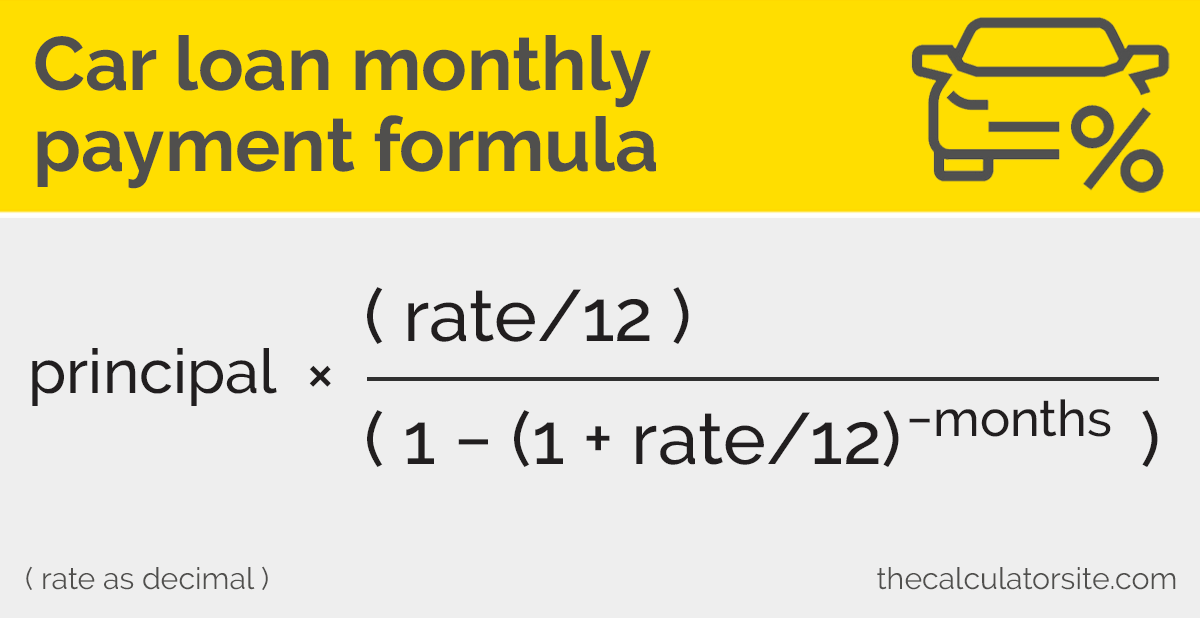
For a quick, rough estimate, you can work backward from your monthly payment, principal, and loan term, although this method is less precise without specific tools. The core idea is that your monthly payment is composed of a principal repayment component and an interest component. Over the life of the loan, the total amount paid (monthly payment * number of payments) minus the original principal will give you the total interest paid.
If you know:
- Original Loan Principal (P)
- Total Number of Payments (n)
- Monthly Payment (PMT)
You can use financial formulas, but for most people, trial and error with an online loan calculator is easier. Enter your principal, loan term, and monthly payment, and adjust the interest rate until the calculated monthly payment matches yours. This gives you a decent approximation. This process essentially simulates an amortization schedule, which is a table detailing each loan payment, showing how much goes towards interest and how much towards principal, and the remaining balance.
Spreadsheet Software (Excel/Google Sheets)
For a more precise manual calculation that approximates the lender’s nominal interest rate, spreadsheet programs like Microsoft Excel or Google Sheets offer powerful financial functions. These functions handle the complex algebra for you.
The most relevant function here is RATE. This function calculates the interest rate per period of an annuity. For a car loan, which is typically a fixed-payment loan (an annuity), it’s ideal.
To use the RATE function, you’ll need:
nper(Number of periods): The total number of payments for the loan. If your loan is 60 months,nper = 60.pmt(Payment made each period): Your fixed monthly payment amount.pv(Present value): The total amount borrowed (the principal). Enter this as a negative number because it represents money you received (an outflow from the lender to you).
Example:
Suppose you borrowed $25,000 (PV = -25000) for a car, and your monthly payment is $460 (PMT = 460) over 60 months (NPER = 60).
In Excel/Google Sheets, you would enter:
=RATE(60, 460, -25000)
The result will be the monthly interest rate. To get the annual nominal interest rate, you would multiply this by 12. For instance, if RATE returns 0.005 (0.5%), the annual rate would be 0.005 * 12 = 0.06, or 6%.
Why Manual Calculation Can Be Tricky
While spreadsheets provide a robust approximation, manual calculation can still be tricky for a few reasons:
- APR vs. Nominal Rate: The
RATEfunction typically calculates the nominal interest rate, not the Annual Percentage Rate (APR). The APR includes other fees besides just the interest, so the rate you calculate in a spreadsheet might be slightly lower than the APR stated by your lender. Matching the exact APR manually would require knowing all included fees and incorporating them into a more complex calculation, which is beyond the scope of simple spreadsheet functions for most users. - Exact Figures Required: The accuracy of your spreadsheet calculation depends entirely on the precision of your inputs. Any rounding of your principal, payment, or term can lead to a slightly incorrect result.
- Beginning vs. End of Period Payments: Most car loans assume payments are made at the end of the period. If your loan had unusual payment scheduling, it could affect the calculation.
For these reasons, while manual methods are excellent for understanding and approximating, they should always be confirmed with official loan documents or direct communication with your lender for the most accurate figures.
Why Knowing Your Interest Rate Matters Beyond Just the Number
Understanding your car loan interest rate isn’t just an exercise in financial literacy; it’s a powerful tool for informed decision-making that can save you significant money and enhance your overall financial health. The number itself is merely a starting point; its true value lies in how you leverage that knowledge.
Evaluating Refinancing Opportunities
One of the most compelling reasons to know your car loan interest rate is to assess potential refinancing opportunities. If your credit score has improved significantly since you took out the original loan, or if prevailing market interest rates have dropped, you might be eligible for a new loan with a lower interest rate.
By knowing your current rate, you can compare it directly to potential new offers. A difference of even 1-2 percentage points can translate into hundreds or even thousands of dollars in savings over the life of the loan. A lower interest rate means more of your monthly payment goes towards reducing the principal, allowing you to pay off the loan faster or reduce your monthly expenditure. Without knowing your current rate, it’s impossible to quantify the benefit of refinancing, leaving potential savings on the table.
Budgeting and Financial Planning
Your car loan interest rate is a critical component of your personal budget. It helps you understand the true cost of your vehicle and how much of your hard-earned money is going towards interest versus principal.
- True Cost of Ownership: A higher interest rate means a larger portion of your monthly payment is “lost” to interest, increasing the total cost of the car beyond its sticker price. Knowing this helps you make more realistic financial projections.
- Cash Flow Management: For budgeting purposes, it’s not just the monthly payment that matters, but also how that payment is structured. If you have a high interest rate, you might want to adjust your budget to prioritize extra payments to principal, or to explore refinancing options to free up cash flow for other financial goals.
- Future Planning: Understanding your current rate influences future financial decisions, such as whether to take on additional debt, save for other large purchases, or accelerate debt repayment. It provides clarity on how quickly your car loan principal is actually decreasing.
Negotiating Future Loans
Knowledge is power, especially when it comes to financial negotiations. If you’re in the market for another car loan in the future, knowing your current and past interest rates provides invaluable context.
- Benchmarking: Your current rate serves as a benchmark. When you’re pre-approved for a new loan, you’ll know if the offered rate is competitive, better, or worse than what you’ve had historically. This insight allows you to confidently negotiate for a better deal.
- Empowerment: Lenders often present a single rate, but if you understand how rates are determined and what a fair rate for someone with your credit profile should be, you can push back and request a lower offer. Being informed demonstrates financial savviness and can put you in a stronger bargaining position, potentially saving you thousands on future vehicle purchases.
Accelerated Payoff Strategies
Finally, being acutely aware of your interest rate can be a powerful motivator for accelerated payoff strategies. If you see a high interest rate, you’ll understand that every extra dollar you put towards the principal significantly reduces the total interest you’ll pay over the life of the loan.
- Interest Savings: By making extra payments or rounding up your monthly payment, the additional funds directly reduce your principal balance. Because interest is calculated on the remaining principal, a lower principal balance immediately results in less interest accruing in subsequent periods.
- Financial Freedom: Paying off your car loan early frees up cash flow and reduces your overall debt burden, leading to greater financial flexibility and peace of mind. Knowing your interest rate helps you visualize these savings and makes the effort feel more tangible and rewarding.
In conclusion, your car loan interest rate is far more than a simple percentage. It’s a critical financial indicator that, when understood and leveraged correctly, can unlock significant savings, empower better financial decisions, and accelerate your journey towards financial freedom. By taking the time to figure out and understand this number, you equip yourself with an essential tool for navigating the complexities of personal finance with confidence and control.
aViewFromTheCave is a participant in the Amazon Services LLC Associates Program, an affiliate advertising program designed to provide a means for sites to earn advertising fees by advertising and linking to Amazon.com. Amazon, the Amazon logo, AmazonSupply, and the AmazonSupply logo are trademarks of Amazon.com, Inc. or its affiliates. As an Amazon Associate we earn affiliate commissions from qualifying purchases.