
Understanding the financial landscape of your car loan is paramount to informed decision-making, and perhaps no single factor is as critical as the interest rate. For many, a car loan represents one of the largest debts outside of a mortgage, yet the precise mechanism and cost of that debt can often feel obscured. Whether you’re considering a new purchase, assessing your current loan, or exploring refinancing options, knowing how to accurately determine your car loan’s interest rate empowers you to manage your finances effectively, avoid overpayment, and secure better deals.
This guide will demystify the process, providing you with the knowledge and tools to confidently figure out the interest rate on your car loan. We’ll delve into what constitutes an interest rate, the factors that shape it, practical methods for its calculation, and why this piece of financial data holds such significant weight in your personal finance journey.
Understanding Car Loan Interest Rates
Before we dive into calculations, it’s essential to have a clear understanding of what an interest rate is and the various elements that influence it. This foundational knowledge will make the subsequent steps much more comprehensible.
What is an Interest Rate?
At its core, an interest rate is the cost of borrowing money, expressed as a percentage of the principal (the original amount borrowed). When you take out a car loan, the lender charges you interest as compensation for the risk they take in lending you money and for the time value of that money. This percentage is typically presented as an Annual Percentage Rate (APR). While the terms “interest rate” and “APR” are often used interchangeably, it’s crucial to note that APR is a broader measure, encompassing not just the interest rate but also other fees associated with the loan, such as origination fees or certain closing costs. For the purpose of figuring out the pure cost of borrowing, we’re primarily concerned with the core interest rate. However, when comparing loan offers, always compare APRs for a true apples-to-apples comparison of total cost.
Factors Influencing Your Car Loan Interest Rate
Several key variables coalesce to determine the interest rate you’re offered on a car loan. Understanding these can help you anticipate rates and strategize for better terms.
- Credit Score: This is arguably the most significant determinant. Lenders use your credit score to assess your creditworthiness and the likelihood of you repaying the loan. A higher credit score (typically 700+) indicates lower risk, translating to lower interest rates. Conversely, a lower score suggests higher risk, leading to higher rates to compensate the lender.
- Loan Term: The length of your repayment period plays a critical role. Shorter loan terms (e.g., 36 or 48 months) generally come with lower interest rates because the lender’s money is at risk for a shorter period. Longer terms (e.g., 60 or 72 months) typically have higher rates, though they offer lower monthly payments.
- Down Payment: A substantial down payment reduces the amount you need to borrow, thereby lowering the lender’s risk. This reduced risk often translates into a more favorable interest rate. It also helps you avoid being “upside down” on your loan (owing more than the car is worth).
- Vehicle Type (New vs. Used): New cars often qualify for lower interest rates, particularly promotional rates from manufacturers (subvented rates). Used cars, especially older models, can sometimes carry higher rates due to perceived higher risk of mechanical issues and faster depreciation, though this isn’t always the case with certified pre-owned vehicles.
- Market Conditions: Broader economic factors, such as the Federal Reserve’s interest rate policies and the overall health of the economy, can influence prevailing car loan rates. When benchmark rates are low, car loan rates tend to follow suit.
- Lender Type: Different lenders have different risk appetites and pricing structures. Banks, credit unions, and captive finance companies (through dealerships) all offer car loans, and shopping around can reveal significant rate differences. Credit unions, for example, are often known for competitive rates due to their non-profit structure.
Methods for Calculating Your Car Loan Interest Rate
The most straightforward way to ascertain your car loan interest rate is to consult your loan documents. However, if these aren’t readily available or if you’re trying to calculate a hypothetical rate, other methods come into play.
Using Your Loan Documents
This is the easiest and most accurate method. Your original loan agreement, monthly statements, or online account portal for your lender will explicitly state your interest rate and APR. Look for sections detailing the loan terms, typically labeled “Interest Rate,” “Annual Percentage Rate (APR),” or “Finance Charge.” This information is legally required to be disclosed to you, making it the primary source for verification.
Manual Calculation (If Only Payment Details Are Known)
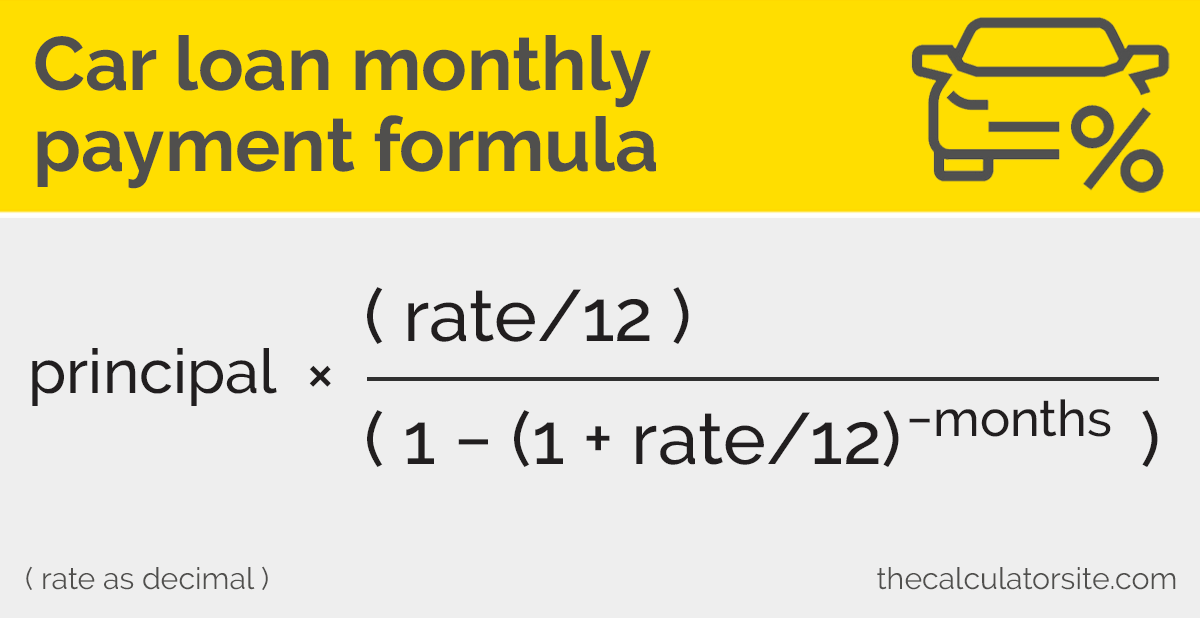
If you only know your principal loan amount, the number of payments, and your monthly payment, calculating the exact interest rate manually can be complex. The standard formula for calculating loan payments is:
$P = frac{PV cdot r cdot (1 + r)^n}{(1 + r)^n – 1}$
Where:
- $P$ = Monthly Payment
- $PV$ = Present Value or Principal Loan Amount
- $r$ = Monthly Interest Rate (this is what we’re trying to find)
- $n$ = Total Number of Payments (Loan Term in Months)
Solving for ‘r’ in this equation requires advanced algebra, often involving iterative methods (trial and error) or financial calculators with built-in functions. It’s not something most people can do with a standard calculator. For practical purposes, a simpler, though less precise, approximation might be attempted by focusing on the total interest paid over the life of the loan. However, this won’t give you the exact rate.
For example, if you know the total amount paid ($P times n$) and the principal ($PV$), the difference is the total interest. Dividing the total interest by the principal over the loan term gives a very rough estimate, but it doesn’t account for the compounding nature of interest or the declining principal balance over time. Due to its complexity, manual calculation is generally discouraged in favor of more accessible and accurate methods.
Leveraging Online Loan Calculators
This is the most practical and widely recommended method for calculating your interest rate if you don’t have direct access to the rate but have other loan details. Many financial websites, bank portals, and credit union sites offer free car loan calculators.
Here’s how they generally work:
- Input Known Variables: You’ll typically be asked to input:
- Loan Amount (Principal): The total amount borrowed.
- Loan Term (in months): The total duration of the loan.
- Monthly Payment: Your fixed payment amount.
- Solve for Rate: The calculator uses the complex financial formula mentioned above to solve for the monthly interest rate, which it then annualizes and displays as an annual interest rate or APR.
Some advanced calculators might allow you to input the current outstanding balance, remaining term, and current payment to determine the rate on an existing loan. This is particularly useful if you’ve made extra payments or are considering refinancing. Always ensure you’re using a reputable source for these calculators, such as major bank websites, credit union sites, or well-known financial planning platforms.
Why Knowing Your Interest Rate Matters
Understanding your car loan interest rate isn’t just about financial literacy; it’s a critical component of effective personal financial management, impacting your budget, financial flexibility, and long-term wealth building.
Empowering Financial Decisions

Knowing your interest rate provides clarity and empowers you to make smarter financial choices.
- Budgeting: An accurate interest rate allows for precise budgeting. You know exactly how much of your monthly payment goes towards interest (the cost of borrowing) versus principal (reducing your debt). This insight is vital for cash flow management.
- Comparing Loan Offers: When shopping for a car, knowing your current rate (or a target rate) allows you to critically evaluate new loan offers. You can quickly discern whether a proposed loan is genuinely better or if the dealership is simply extending the term to lower monthly payments while charging a higher overall interest cost.
- Refinancing Opportunities: If market rates have dropped, your credit score has improved, or you initially received a high-interest loan, knowing your current rate is the first step in assessing refinancing opportunities. A lower refinanced rate can save you thousands over the life of the loan.
Avoiding Overpayment
The cumulative effect of interest rates over several years is substantial. A seemingly small difference in interest rate can translate into hundreds or even thousands of dollars in extra payments.
- Total Cost of Loan: Your interest rate directly dictates the total amount of interest you’ll pay over the life of the loan. A higher rate means a significantly higher total cost, even if the monthly payment difference appears minimal due to extended terms.
- Impact of Small Differences: For example, on a $30,000 car loan over 60 months, a 5% interest rate results in approximately $3,950 in total interest. At 7%, that jumps to nearly $5,700—an $1,750 difference. Understanding this impact encourages diligence in securing the best possible rate.
Negotiating Power
Armed with knowledge about interest rates, you approach negotiations from a position of strength.
- Dealership Negotiations: When purchasing a vehicle, dealerships often present financing options. If you’ve already secured pre-approval from an independent lender (bank, credit union) with a known interest rate, you can use that as leverage. The dealership might be willing to match or even beat that rate to secure your business, especially if they have incentives from their own finance partners.
- Confidence in Decisions: Knowing what constitutes a “good” or “bad” interest rate for your credit profile and the current market prevents you from being swayed by unfavorable terms. It allows you to confidently walk away from bad deals or push for better ones.
Practical Steps to Determine Your Interest Rate
Let’s outline a clear, actionable plan to figure out your car loan interest rate.
1. Gather Essential Loan Information
Before you do anything else, compile all the relevant data about your loan.
- Original Loan Amount (Principal): The total sum you initially borrowed for the car.
- Original Loan Term (in months): How many months you agreed to repay the loan over.
- Your Monthly Payment: The exact amount you pay each month.
- Current Outstanding Principal Balance (if applicable): If you’re trying to figure the rate on an existing loan for refinancing, this is crucial.
- Number of Payments Remaining (if applicable): Also vital for existing loan calculations.
2. Choose Your Calculation Method
Prioritize the easiest and most accurate method first, then move to alternatives if necessary.
- Check Loan Documents First: This is always your primary source. Dig out your original loan agreement, review recent monthly statements, or log into your lender’s online portal. The interest rate or APR will be clearly stated.
- Use an Online Calculator: If loan documents are unavailable or you’re planning a hypothetical loan, an online loan calculator is your best friend. Input the principal, term, and monthly payment, and it will compute the interest rate. Ensure you use a reputable financial institution’s calculator for accuracy.
- Consult Your Lender: If all else fails, a quick call to your loan provider can get you the information directly. Be prepared to verify your identity.
3. Verify and Understand the Result
Once you have a figure, take a moment to understand what it represents.
- Annual vs. Monthly Rate: Most online calculators will provide an annual interest rate. If you’re doing manual calculations or using a financial calculator, ensure you understand if the result is a monthly rate (which needs to be multiplied by 12 to get the annual rate) or an annual rate.
- APR vs. Interest Rate: Clarify whether the figure you’ve obtained is the simple interest rate or the Annual Percentage Rate (APR). While often close for car loans, remember APR includes some additional fees, offering a slightly higher but more comprehensive picture of the loan’s cost.
Strategies for Securing a Better Car Loan Interest Rate
Beyond simply figuring out your current rate, proactively working to improve your rate for future loans or refinancing is a smart financial move.
Improve Your Credit Score
This is a long-term strategy but yields the most significant results. Pay all your bills on time, keep your credit utilization low, and regularly review your credit report for errors. A higher credit score signals lower risk to lenders, directly resulting in better interest rates.
Shop Around for Lenders
Never accept the first financing offer you receive, especially from a dealership. Apply for pre-approval with several different lenders – banks, credit unions, and online lenders. Compare their offered APRs, not just the monthly payments. This competitive approach can uncover significantly better rates.
Make a Larger Down Payment
Putting more money down upfront reduces the amount you need to borrow, thus decreasing the lender’s risk and often leading to a lower interest rate. It also lessens the overall interest you’ll pay and helps you build equity faster.
Opt for a Shorter Loan Term
While a shorter term means higher monthly payments, it typically comes with a lower interest rate. If your budget allows, choosing a 36- or 48-month loan over a 60- or 72-month loan can save you a substantial amount in interest over the life of the loan.
Consider Refinancing
If your credit score has improved since you took out your original loan, or if current market rates are lower than what you’re currently paying, refinancing could be a smart move. Research and apply with various lenders to see if you can secure a lower interest rate, which can reduce your monthly payments or the total interest paid over the remaining term.
Conclusion
Knowing how to figure out the interest rate on your car loan is more than just a numerical exercise; it’s a fundamental aspect of financial empowerment. By understanding what drives your interest rate, utilizing accessible tools to calculate it, and recognizing its profound impact on your financial health, you gain the confidence to make informed decisions. This knowledge allows you to budget more effectively, compare loan offers wisely, identify opportunities for savings through refinancing, and negotiate from a position of strength. Take control of your car financing today by taking the time to understand this critical piece of your financial puzzle.
aViewFromTheCave is a participant in the Amazon Services LLC Associates Program, an affiliate advertising program designed to provide a means for sites to earn advertising fees by advertising and linking to Amazon.com. Amazon, the Amazon logo, AmazonSupply, and the AmazonSupply logo are trademarks of Amazon.com, Inc. or its affiliates. As an Amazon Associate we earn affiliate commissions from qualifying purchases.