
Navigating the world of car financing can often feel like deciphering a complex code, with “interest” being one of the most significant and frequently misunderstood variables. For most people, a car loan represents one of the largest debts they’ll take on outside of a mortgage. Understanding how interest is calculated, what factors influence it, and how to verify these figures is not just an academic exercise; it’s a critical financial skill that can save you thousands of dollars over the life of your loan. This article will demystify car loan interest, providing you with the knowledge and tools to confidently understand, calculate, and ultimately minimize this substantial cost.
Understanding Car Loan Interest: The Basics
Before diving into calculations, it’s essential to grasp the fundamental concepts that underpin all car loans. Interest isn’t just an arbitrary fee; it’s the cost of borrowing money, a payment to the lender for the use of their capital. Grasping these foundational elements is the first step toward becoming an informed borrower.
What is Interest? The Cost of Borrowing
At its core, interest is the charge levied by a lender for the privilege of using their money. Think of it as a rental fee for capital. When you take out a car loan, the bank or financial institution is essentially renting you the funds to purchase your vehicle, and interest is what you pay for that rental service. This cost is typically expressed as an annual percentage rate (APR) and is applied to the outstanding principal balance of your loan. The higher the interest rate, the more expensive it is to borrow, and the more you’ll pay over the loan’s duration.
Types of Interest: Simple vs. Compound
While many types of loans, particularly credit cards and some mortgages, utilize compound interest, car loans almost exclusively use simple interest. This is a crucial distinction.
- Simple Interest: Simple interest is calculated only on the principal amount borrowed. Each payment you make goes partly towards the interest accrued since your last payment and partly towards reducing the principal. As the principal balance decreases with each payment, the amount of interest you pay in subsequent periods also decreases. This is why the early payments on a car loan often consist of a larger proportion of interest, while later payments allocate more towards the principal.
- Compound Interest: Compound interest, on the other hand, is calculated on the principal amount and on the accumulated interest from previous periods. This “interest on interest” effect can lead to a much larger overall cost over time, but thankfully, it’s not typical for car loans.
Understanding that car loans typically use simple interest simplifies the calculation process significantly and provides more predictable payment structures.
Key Loan Terms: Principal, Interest Rate, Loan Term
To accurately figure out your car loan interest, you need to be familiar with three core terms:
- Principal: This is the initial amount of money you borrowed to buy the car, minus any down payment or trade-in value. If a car costs $30,000 and you put $5,000 down, your principal loan amount is $25,000. It’s the base sum upon which interest is calculated.
- Interest Rate (APR): The Annual Percentage Rate (APR) is the yearly cost of the loan, expressed as a percentage. It includes not just the interest rate but often other fees associated with the loan, giving you a more comprehensive view of the annual cost. For car loans, this is usually a fixed rate for the duration of the loan.
- Loan Term: This refers to the length of time you have to repay the loan, typically expressed in months (e.g., 36, 48, 60, 72, or even 84 months). A longer loan term means lower monthly payments but generally results in paying significantly more interest over the life of the loan. Conversely, a shorter term means higher monthly payments but less total interest paid.
The Formula for Calculating Simple Interest
Once you understand the basic terminology, calculating car loan interest becomes a straightforward application of a simple formula. While lenders provide amortization schedules, knowing how to do a basic calculation empowers you to verify figures and anticipate costs.
The Standard Simple Interest Formula
The most fundamental way to calculate simple interest for a single period is:
I = P x R x T
Where:
- I = Interest amount
- P = Principal amount (the amount borrowed or the outstanding balance)
- R = Annual interest rate (expressed as a decimal, e.g., 5% = 0.05)
- T = Time period (in years or a fraction of a year)
For a car loan, where payments are made monthly, this formula is adapted to calculate the interest portion of each monthly payment.
Applying the Formula to Car Loans: Monthly Payments and Amortization
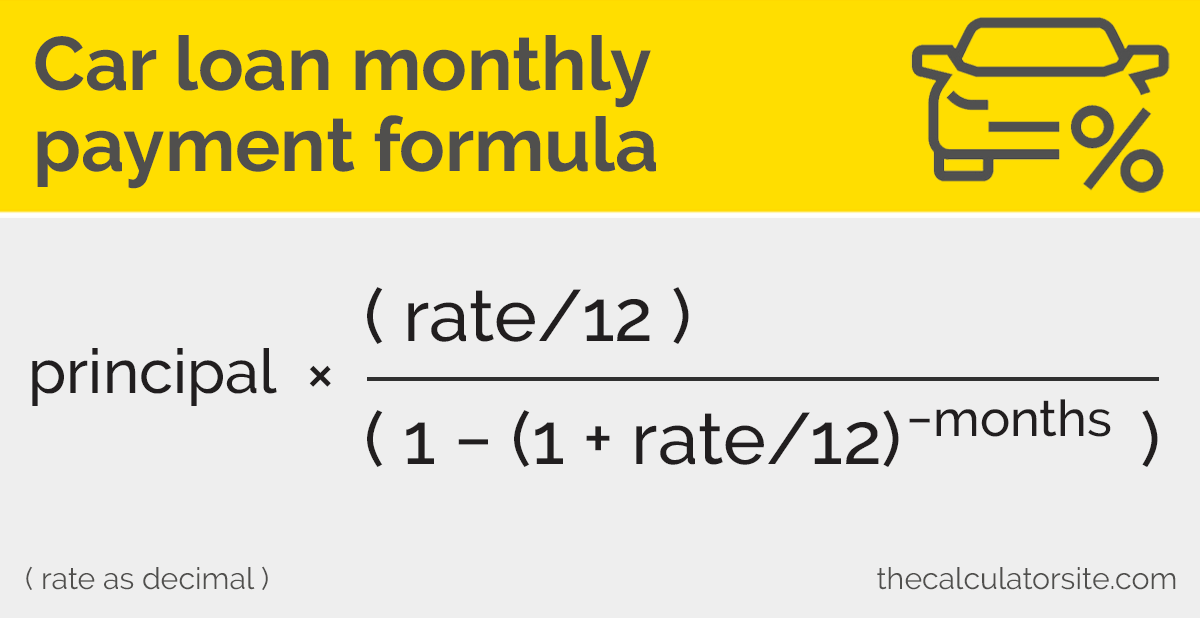
To calculate the interest for a single month’s payment, you would use:
Monthly Interest = (Outstanding Principal Balance) x (Annual Interest Rate / 12)
Let’s illustrate with an example:
Suppose you have an outstanding principal balance of $20,000 and an annual interest rate of 6% (0.06).
Monthly Interest = $20,000 x (0.06 / 12)
Monthly Interest = $20,000 x 0.005
Monthly Interest = $100
So, for that particular month, $100 of your payment would go towards interest. If your total monthly payment is $375, then $275 ($375 – $100) would go towards reducing your principal balance. In the next month, your outstanding principal balance would be $19,725 ($20,000 – $275), and the interest calculation would be based on this new, lower principal. This process is known as amortization.
Beyond the Basic Formula: Understanding Amortization Schedules
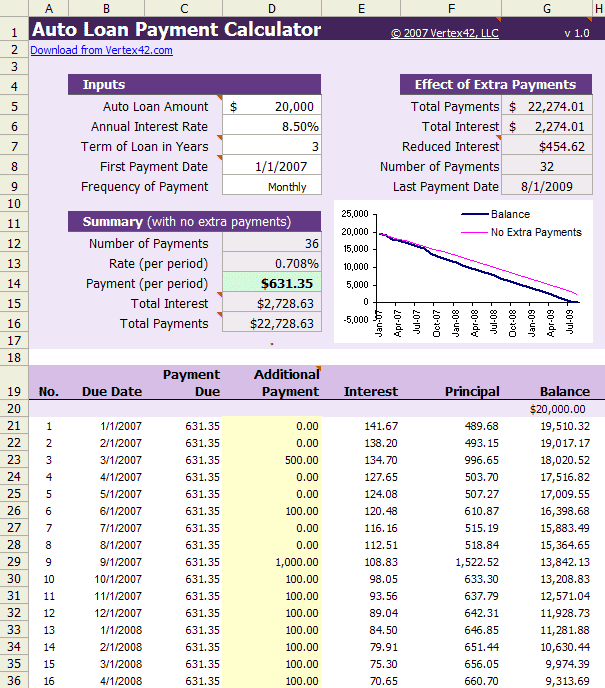
While the monthly interest calculation is simple, calculating the total interest paid over the entire life of a loan or determining exact monthly payments requires a more sophisticated approach, often solved using an amortization calculator or specific financial formulas. An amortization schedule is a table that details each payment made over the life of the loan, showing how much goes towards interest and how much towards the principal, and what the remaining balance is after each payment.
This schedule clearly illustrates the “front-loading” of interest on car loans. In the early months, a larger portion of your payment goes towards interest because the outstanding principal is higher. As the principal balance decreases, a progressively larger portion of your payment is applied to the principal. Lenders are required to provide these schedules upon request, and they are an invaluable tool for understanding your payment breakdown.
Factors Influencing Your Car Loan Interest Rate
Your interest rate is the single most significant determinant of how much you’ll ultimately pay for your car loan. Many factors contribute to the rate a lender offers you, and understanding these can help you secure a more favorable deal.
Credit Score: The Primary Driver
Your credit score is arguably the most critical factor influencing your interest rate. Lenders use credit scores (like FICO scores) to assess your creditworthiness and the likelihood of you repaying the loan. A higher credit score (generally above 700) indicates a lower risk to the lender, resulting in a lower interest rate. Conversely, a lower credit score signals higher risk, leading to higher interest rates to compensate the lender for that increased risk. Building and maintaining a good credit history is paramount for securing competitive financing.
Loan Term: Shorter vs. Longer Loans
The length of your loan term directly impacts your interest rate.
- Shorter Loan Terms (e.g., 36 or 48 months): Typically come with lower interest rates. Lenders perceive less risk over a shorter period, and you’re paying off the principal faster. While monthly payments are higher, the total interest paid over the life of the loan is significantly less.
- Longer Loan Terms (e.g., 72 or 84 months): Often have higher interest rates. Lenders face greater risk over extended periods, and there’s a higher chance of economic changes or life events affecting your ability to pay. Though monthly payments are lower, you’ll pay considerably more in total interest.
Down Payment: Reducing the Principal
A larger down payment has a dual benefit. Firstly, it reduces the principal amount you need to borrow, directly lowering the total interest you’ll pay regardless of the rate. Secondly, it can also help you qualify for a lower interest rate. A significant down payment signals to lenders that you are financially stable and committed to the purchase, reducing their risk exposure and potentially earning you a better rate.
Lender Type: Banks, Credit Unions, Dealerships
Where you get your loan can also influence the rate.
- Banks: Traditional banks offer competitive rates, especially to customers with good credit.
- Credit Unions: Often known for offering some of the lowest interest rates due to their non-profit nature and member-focused approach.
- Dealership Financing: While convenient, dealership financing (often through captive finance companies like Toyota Financial Services or Ford Credit) can sometimes have higher rates, though they may offer promotional rates (e.g., 0% APR for qualified buyers) to move inventory. It’s always wise to get pre-approved elsewhere before visiting a dealership.
Vehicle Type and Age: New vs. Used
The type and age of the vehicle can also play a role.
- New Cars: Generally qualify for lower interest rates because they hold their value better initially, making them less risky collateral for the lender.
- Used Cars: Often come with slightly higher interest rates because they depreciate faster and present a higher risk of mechanical issues, which could impact resale value if the lender needs to repossess.
Practical Steps to Calculate and Verify Interest
Armed with an understanding of interest basics and influencing factors, you can now take practical steps to calculate and verify the interest on your own car loan. This proactive approach ensures transparency and helps you make informed financial decisions.
Gathering Your Loan Information
Before you can calculate anything, you need accurate data. Collect the following details from your loan agreement or potential lender:
- Principal Loan Amount: The total amount you are borrowing.
- Annual Interest Rate (APR): Ensure it’s the stated annual rate.
- Loan Term: The total number of months for the loan.
- Monthly Payment (if already set): This helps in reverse-engineering or verifying calculations.
Using Online Calculators
For quick and accurate calculations, online car loan calculators are invaluable financial tools. Many reputable financial websites (like Bankrate, NerdWallet, or consumer financial protection sites) offer free calculators where you can input your principal, interest rate, and loan term. These calculators will instantly provide:
- Your estimated monthly payment.
- The total interest paid over the life of the loan.
- Often, an amortization schedule showing the breakdown of principal and interest for each payment.
These tools are excellent for comparing different loan scenarios (e.g., how a longer term affects total interest) and verifying figures provided by lenders.
Reviewing Your Loan Agreement
Once you finalize a loan, thoroughly review your official loan agreement. This document is legally binding and will clearly state:
- Your principal balance.
- Your official APR.
- The total number of payments.
- Your exact monthly payment.
- The total amount of interest you will pay over the life of the loan.
Compare these figures to any calculations you’ve made or estimates you received. If there are discrepancies, don’t hesitate to ask your lender for clarification before signing.
Understanding Your Monthly Payment Breakdown
As discussed with amortization, your monthly payment isn’t static in its allocation. Over time, the portion going towards interest decreases, and the portion going towards principal increases. If you’re several months or years into your loan, you can request an updated amortization schedule or check your online loan portal to see exactly how your most recent payments were distributed. This helps you understand your current principal balance and how much interest you’re still accruing.
Strategies for Minimizing Car Loan Interest Costs
Understanding how interest is figured is only half the battle. The other half involves actively seeking ways to reduce the amount you pay. By implementing smart strategies, you can significantly cut down on the total cost of your car loan.
Improving Your Credit Score
As the primary factor influencing your interest rate, improving your credit score is the most impactful step you can take. Before applying for a car loan:
- Pay bills on time: Payment history is the biggest component of your credit score.
- Reduce existing debt: Lowering your credit utilization ratio can boost your score.
- Check for errors on your credit report: Dispute any inaccuracies that could be dragging your score down.
Even a slight improvement in your credit score can translate into a lower interest rate and substantial savings.
Making a Larger Down Payment
A larger down payment reduces the principal amount you need to borrow, directly decreasing the total interest paid. If you borrow less, there’s simply less money for interest to accrue on. Additionally, a substantial down payment can signal to lenders that you are a lower-risk borrower, potentially helping you qualify for a better interest rate to begin with. Aim for at least 10-20% of the car’s purchase price if possible.
Choosing a Shorter Loan Term
While longer loan terms offer lower monthly payments, they come at the cost of significantly more total interest paid and often a higher interest rate. If your budget allows, opt for the shortest loan term you can comfortably afford. A 48-month loan will almost always result in less total interest than a 72-month loan for the same principal and interest rate. Calculate the total cost of both options to see the long-term savings.
Refinancing Your Car Loan
If you’ve improved your credit score since you first took out your loan, or if interest rates have dropped, you might be a good candidate for refinancing. Refinancing involves taking out a new loan, often with a lower interest rate, to pay off your existing car loan. This can significantly reduce your monthly payments and the total interest you pay over the remaining term. It’s especially beneficial if your initial loan had a high rate due to a less-than-perfect credit score.

Making Extra Payments
Even small extra payments can make a big difference. Since car loan interest is calculated on your outstanding principal balance, any additional money you pay directly reduces that principal. This means less interest will accrue in subsequent periods. Consider:
- Rounding up your monthly payment: If your payment is $350, pay $375.
- Making bi-weekly payments: Instead of one payment a month, pay half every two weeks. This results in 13 full payments per year instead of 12, effectively adding an extra payment annually.
- Applying tax refunds or bonuses: Use unexpected windfalls to make a lump sum payment towards your principal.
Always ensure that any extra payments are applied directly to the principal balance, not just pre-paying future interest. Confirm this with your lender.
In conclusion, understanding how to figure interest on a car loan is a crucial aspect of personal financial literacy. By knowing the basics of simple interest, leveraging formulas and online tools, and proactively implementing strategies to minimize costs, you can take control of your car financing and ensure you’re getting the best possible deal. Informed borrowers are empowered borrowers, capable of making decisions that save money and contribute to their overall financial well-being.
aViewFromTheCave is a participant in the Amazon Services LLC Associates Program, an affiliate advertising program designed to provide a means for sites to earn advertising fees by advertising and linking to Amazon.com. Amazon, the Amazon logo, AmazonSupply, and the AmazonSupply logo are trademarks of Amazon.com, Inc. or its affiliates. As an Amazon Associate we earn affiliate commissions from qualifying purchases.