
Interest, in its simplest form, is the cost of borrowing money or the reward for lending it. While simple interest is a straightforward calculation, compound interest introduces a dynamic element where interest earned (or charged) also begins to earn (or be charged) interest itself. When this compounding happens daily, its effects can be profoundly powerful, subtly reshaping the trajectory of your savings, investments, or debt over time. Understanding how to calculate daily compound interest isn’t just an academic exercise; it’s a fundamental skill for anyone looking to optimize their personal finances, evaluate investment opportunities, or manage business capital effectively. This guide will demystify the process, providing you with the tools and insights to harness the power of daily compounding.

Understanding the Power of Compounding
The concept of compound interest has been famously dubbed the “eighth wonder of the world” by Albert Einstein, and for good reason. Its ability to generate exponential growth (or debt) over time makes it a critical component of financial literacy.
What is Compound Interest?
At its core, compound interest is interest on interest. Instead of calculating interest solely on the initial principal amount, compound interest calculates interest on the principal plus any accumulated interest from previous periods. This creates a snowball effect: the longer money compounds, the faster it grows because the base on which interest is earned continually expands.
The Difference Daily Compounding Makes
While interest can compound annually, semi-annually, quarterly, or monthly, daily compounding represents the highest practical frequency. The more frequently interest is compounded, the more significant its impact. With daily compounding, interest is calculated and added to the principal every single day. This means that each subsequent day’s interest calculation is based on a slightly larger sum than the day before. While the difference between daily and monthly compounding might seem negligible over a short period, over years or decades, these tiny daily increments can accumulate into a substantial difference, particularly for large sums or long investment horizons.
Why Daily Compounding is Significant
For savers and investors, daily compounding means faster growth. Every day, your money is working harder for you, generating more earnings that then go on to generate even more earnings. For borrowers, however, daily compounding can be a double-edged sword. While it might lead to higher interest charges on loans, understanding how it works empowers you to make informed decisions, seeking out lower daily compounding rates or prioritizing debt repayment to mitigate its effects. It highlights the importance of not just the interest rate, but also the compounding frequency, when comparing financial products.
The Formula for Daily Compound Interest
Calculating daily compound interest might seem intimidating at first glance, but it relies on a universal financial formula. Once you understand its components, you’ll be able to apply it with ease.
Deconstructing the Formula
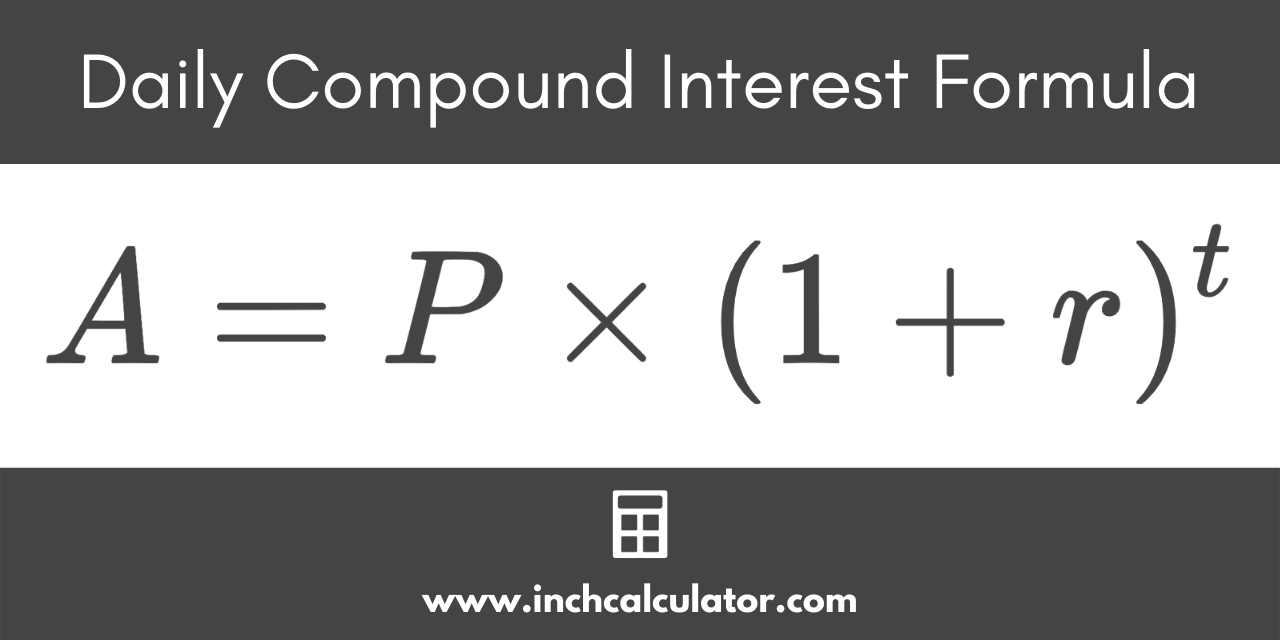
The standard formula for compound interest is:
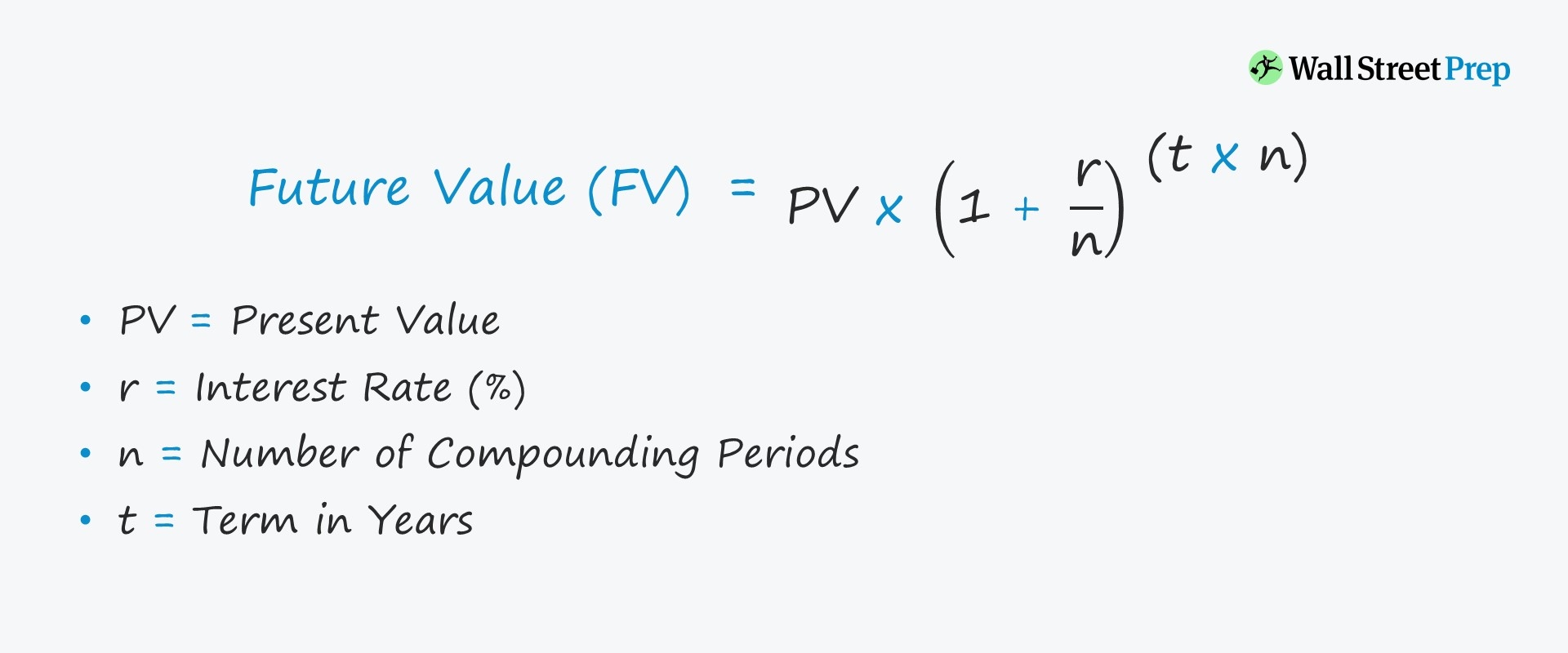
A = P (1 + r/n)^(nt)
Where:
-
A = The future value of the investment/loan, including interest (the amount you’ll have at the end).
-
P = The principal investment amount (the initial deposit or loan amount).
-
r = The annual interest rate (as a decimal).
-
n = The number of times that interest is compounded per year.
-
t = The number of years the money is invested or borrowed for.
For daily compounding, the key variable is ‘n’. Since there are 365 days in a year (we typically ignore leap years for simplicity in these calculations), n will be 365.
Defining Each Variable
Let’s break down each element further to ensure clarity:
-
A (Future Value): This is your ultimate goal. If you’re saving, it’s how much you’ll accumulate. If it’s a loan, it’s the total amount you’ll owe.
-
P (Principal): The starting point of your financial journey. It’s the initial sum you’re putting in or taking out.
-
r (Annual Interest Rate): Always expressed as a decimal. If a bank offers an annual rate of 5%, you’ll use 0.05 in the formula. Remember to convert percentages by dividing by 100.
-
n (Compounding Frequency): This is where daily compounding shines. For daily, n=365. For monthly, n=12. For quarterly, n=4, and so on. The higher ‘n’, the more frequently interest is added.
-
t (Time in Years): The duration for which the investment or loan will run. Ensure this is always in years. If you have 6 months, it’s 0.5 years. If it’s 36 months, it’s 3 years.
Step-by-Step Calculation Example
Let’s put the formula into action with a practical example:
Imagine you deposit $10,000 into a savings account that offers an annual interest rate of 3%, compounded daily. You want to know how much money you will have after 5 years.
-
Identify your variables:
-
P = $10,000
-
r = 3% = 0.03
-
n = 365 (compounded daily)
-
t = 5 years
-
-
Plug the values into the formula:
A = $10,000 * (1 + 0.03/365)^(365 * 5)
-
Perform the calculation inside the parentheses first:
0.03 / 365 ≈ 0.00008219
1 + 0.00008219 = 1.00008219
-
Calculate the exponent:
365 * 5 = 1825
-
Raise the value in the parentheses to the power of the exponent:
(1.00008219)^1825 ≈ 1.161829
-
Multiply by the principal:
A = $10,000 * 1.161829
A ≈ $11,618.29
After 5 years, your initial $10,000 will have grown to approximately $11,618.29 with daily compounding. For comparison, if this were simple interest, you would earn $10,000 * 0.03 * 5 = $1,500, resulting in $11,500. The extra $118.29 is the power of daily compounding at work.
Practical Applications and Real-World Scenarios
Understanding daily compound interest isn’t just about formulas; it’s about applying this knowledge to make smarter financial decisions across various aspects of your life.
Savings Accounts and High-Yield Options
For savers, high-yield savings accounts that compound interest daily can significantly boost your earnings. Even a small difference in the annual percentage yield (APY) combined with daily compounding can lead to thousands of extra dollars over time compared to accounts that compound less frequently or offer lower rates. When comparing savings products, always look beyond the headline interest rate to the compounding frequency and the resulting APY.
Loans and Debt Management (Credit Cards, Personal Loans)
The flip side of compounding applies to debt. Many credit cards and personal loans accrue interest daily, even if statements are generated monthly. This means if you carry a balance, the interest charged today will contribute to the principal for tomorrow’s interest calculation. Understanding this mechanism underscores the urgency of paying off high-interest debt, as the daily compounding can make it difficult to get ahead if only minimum payments are made. Conversely, fixed-rate loans with less frequent compounding can sometimes be more predictable.
Investment Strategies and Retirement Planning
In the realm of investments, daily compounding is a cornerstone of long-term wealth creation. Investment vehicles like mutual funds, ETFs, and even certain bonds can benefit from compounding returns. Reinvesting dividends or capital gains allows your earnings to compound, accelerating the growth of your investment portfolio. For retirement planning, the earlier you start, the more time your investments have to compound daily, turning modest contributions into substantial nest eggs. This is why financial advisors often stress the importance of starting to save for retirement in your 20s.
Business Finance and Working Capital
Businesses also grapple with daily compounding. Companies with significant cash reserves might seek high-yield business savings accounts or short-term investments that compound daily to maximize liquidity and returns on idle cash. On the debt side, managing lines of credit or short-term business loans that compound daily requires careful cash flow management to minimize interest expenses. Understanding the daily interest accrual helps businesses forecast expenses and optimize their working capital strategies.
Tools and Resources for Calculation
While manual calculations are great for understanding the mechanics, a range of tools can simplify figuring daily compound interest, especially for more complex scenarios or forecasting.
Online Compound Interest Calculators
The internet is replete with free, user-friendly compound interest calculators. Most financial websites, banks, and investment platforms offer these tools. You simply input your principal, interest rate, compounding frequency (select daily), and time horizon, and the calculator instantly provides the future value. These are excellent for quick estimates and comparing different scenarios.
Spreadsheet Software (Excel/Google Sheets) for Custom Models
For those who prefer a hands-on approach or need to model more intricate financial scenarios (e.g., adding regular contributions, varying interest rates), spreadsheet software like Microsoft Excel or Google Sheets is invaluable. You can easily set up a table that tracks daily interest accrual, principal balance, and contributions over time.
A basic formula in Excel might look like this: =FV(rate/n, n*t, -pmt, -pv, type), where FV is the future value function. For daily compounding, rate would be the annual rate, n would be 365, t would be the number of years. For scenarios without regular payments, you’d focus on the principal (pv) and interest rate. Setting up a day-by-day table offers granular control and visualizes the daily growth vividly.
Financial Apps and Software
Many personal finance apps and investment platforms now incorporate sophisticated calculators and projections that account for daily compounding. These tools often integrate with your actual accounts, providing real-time insights into how your savings and investments are growing or how your debt is accumulating. Investment management software frequently uses daily compounding models to project portfolio growth under various market conditions.
Maximizing Your Financial Growth with Daily Compounding
Armed with the knowledge of how daily compounding works, you can strategically apply it to your financial decisions, tilting the scales in your favor.
Starting Early and Being Consistent
The single most powerful factor in harnessing daily compounding for wealth creation is time. The longer your money has to compound, the more significant the “snowball effect.” Starting to save and invest early, even with modest amounts, allows the daily interest to work its magic over decades. Consistency in contributions further amplifies this, turning regular deposits into a powerful force for growth. Even small, consistent contributions that compound daily can outperform large, sporadic ones over the long haul.
Understanding APR vs. APY
When evaluating financial products, it’s crucial to differentiate between Annual Percentage Rate (APR) and Annual Percentage Yield (APY).
-
APR is the annual rate of interest without taking compounding into account. It’s often used for loans, but can also be quoted for savings accounts.
-
APY (or Effective Annual Rate) does account for the effect of compounding. It represents the actual annual rate of return earned on an investment, or the actual annual rate paid on a loan, taking into account the effect of compounding over the year.
For savings accounts, always look for the APY, especially if interest is compounded daily, as it will give you a more accurate picture of your actual earnings. A savings account with a 2.95% APR compounded daily will have a slightly higher APY (e.g., 2.99%) than an account with a 2.95% APR compounded annually. For loans, comparing APYs (or effective rates) is also critical to understand the true cost.
The Impact of Fees and Taxes
While daily compounding can be a powerful ally, its effects can be eroded by fees and taxes. High management fees on investments, transaction fees, or penalties can eat into your compounded gains. Similarly, interest earned on savings or investments is often taxable income, which reduces your net growth. Understanding these factors and incorporating them into your financial planning is essential. Seeking tax-advantaged accounts like IRAs or 401(k)s, where growth can compound tax-deferred or tax-free, can further enhance the power of daily compounding.
Regular Review and Adjustment
Financial circumstances and market conditions are rarely static. Regularly reviewing your savings accounts, investment portfolios, and debt obligations is vital. Are you still getting a competitive interest rate that compounds daily? Are there better options available? Rebalancing your investment portfolio periodically ensures it remains aligned with your financial goals and risk tolerance, maximizing the benefits of daily compounding within your chosen strategy. This proactive approach ensures you’re always making the most informed decisions to optimize your financial future.
In conclusion, daily compound interest is more than just a mathematical concept; it’s a dynamic force that can dramatically impact your financial well-being. By understanding how to figure it, recognizing its applications, and utilizing available tools, you empower yourself to make intelligent financial choices that accelerate your wealth accumulation and efficiently manage your debt. Embrace the power of daily compounding, and watch your financial future grow.
aViewFromTheCave is a participant in the Amazon Services LLC Associates Program, an affiliate advertising program designed to provide a means for sites to earn advertising fees by advertising and linking to Amazon.com. Amazon, the Amazon logo, AmazonSupply, and the AmazonSupply logo are trademarks of Amazon.com, Inc. or its affiliates. As an Amazon Associate we earn affiliate commissions from qualifying purchases.