
In the dynamic world of finance, both personal and business, numbers tell a story. While raw figures like “$100 more profit” or “$50 less in expenses” provide a snapshot, they often lack the crucial context needed for meaningful analysis. This is where the concept of “increase percentage” becomes an indispensable tool. Far more than a mere mathematical exercise, understanding how to calculate and interpret percentage increases is fundamental to making informed decisions, tracking progress, and identifying trends in everything from investment growth and salary raises to revenue spikes and budgeting shifts.
Whether you’re a budding investor scrutinizing portfolio returns, a small business owner evaluating quarterly sales, or an individual tracking the rise in household expenses, the ability to accurately figure an increase percentage empowers you with a deeper, more actionable understanding of financial change. It transforms abstract numbers into relatable insights, allowing you to benchmark performance, set realistic goals, and proactively adjust your financial strategies. This article will demystify the process, explore its vast applications within the money niche, and equip you with the knowledge to confidently wield this powerful financial metric.
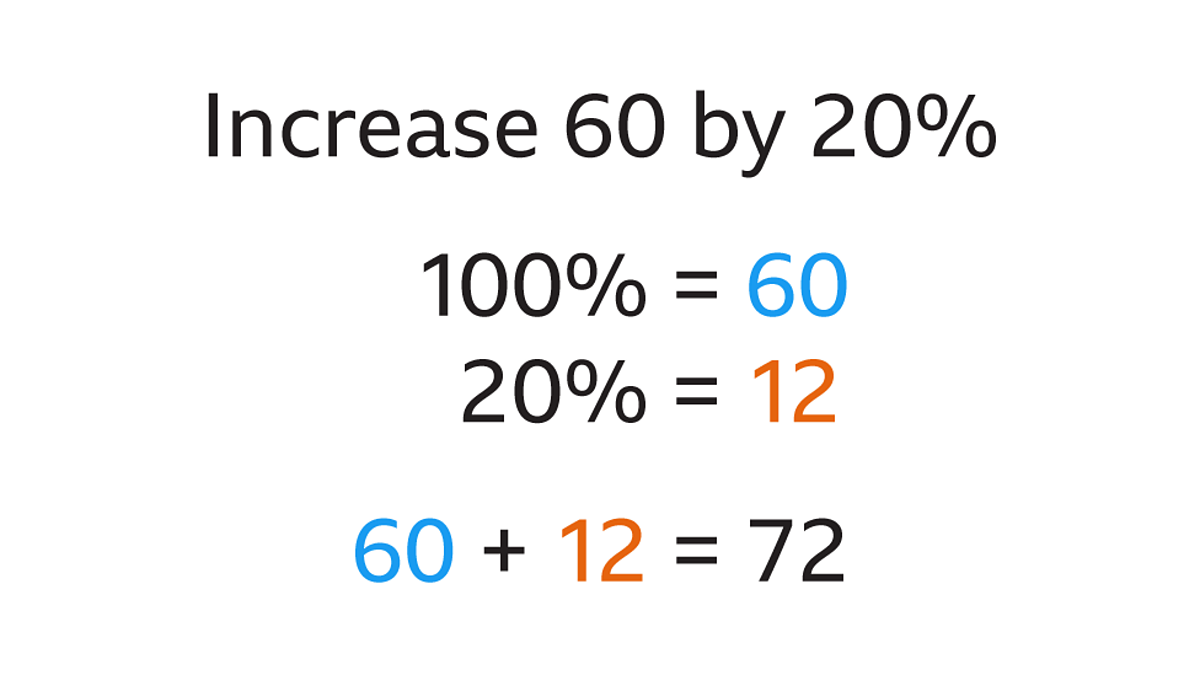
The Core Formula: Unpacking the Basics of Percentage Growth
At its heart, calculating an increase percentage is a straightforward process, yet its simplicity belies its profound utility. It quantifies the relative change between two values over time, expressing that change as a proportion of the original amount. This relative perspective is crucial because it allows for comparisons that absolute numbers cannot provide. For instance, a $100 increase might be negligible for a million-dollar company but transformative for a small startup.
Defining “Increase Percentage”
An increase percentage represents the extent to which a quantity has grown, expressed as a fraction of its initial value, and then multiplied by 100 to convert it into a percentage. It answers the question: “By what percentage has X grown from its starting point?” The outcome provides a standardized way to measure growth, making it universally applicable across diverse financial scenarios. It’s a key performance indicator that helps us understand not just how much something has changed, but how significant that change is in proportion to its original state.
The Simple Step-by-Step Formula
The formula for calculating an increase percentage is elegant in its simplicity:
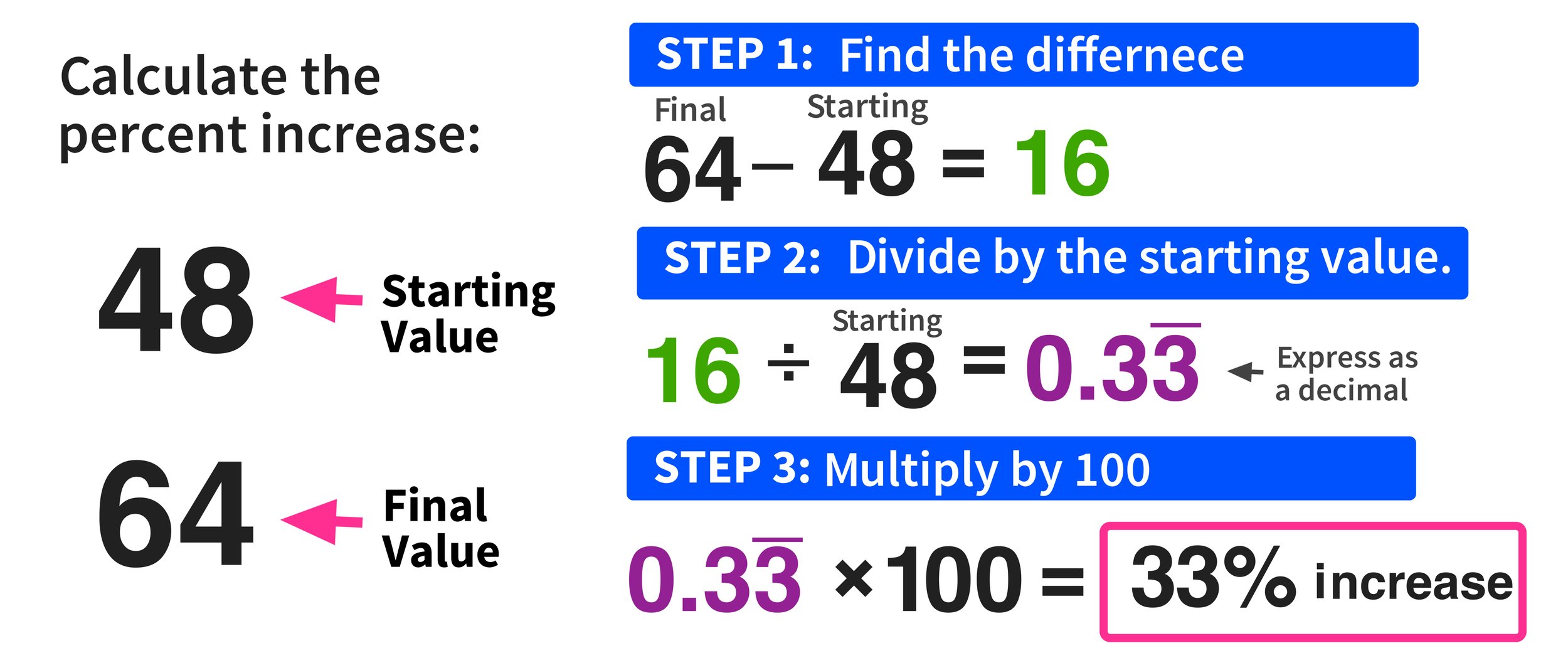
Increase Percentage = ((New Value – Old Value) / Old Value) * 100
Let’s break down each component:
- New Value: This is the current, higher value after the increase has occurred.
- Old Value (or Original Value): This is the starting value before the increase. This is also known as the “base value” and is critical as it determines the scale of the percentage.
- New Value – Old Value: This step calculates the absolute amount of the increase.
- Divide by Old Value: This step normalizes the absolute increase by relating it to the starting point. The result is a decimal representing the proportionate increase.
- Multiply by 100: This converts the decimal into a percentage, making it easier to read and interpret.
Practical Example: A Personal Savings Scenario
Imagine you started the year with $5,000 in your savings account (Old Value). By the end of the year, diligent saving and interest accumulation brought your balance to $5,350 (New Value). To figure out the increase percentage in your savings:
- Calculate the absolute increase: $5,350 (New Value) – $5,000 (Old Value) = $350
- Divide by the Old Value: $350 / $5,000 = 0.07
- Multiply by 100: 0.07 * 100 = 7%
So, your savings increased by 7% over the year. This 7% figure immediately tells you how well your savings performed relative to its starting point, allowing you to compare it with inflation rates, other investment options, or your personal financial goals.
Applications in Personal Finance: Tracking Your Wealth Growth
For individuals striving for financial independence, mastering the calculation of increase percentage is akin to having a personal financial compass. It provides the essential metrics needed to navigate the complexities of personal wealth management, enabling you to track progress, make informed decisions, and stay motivated on your financial journey.
Investment Growth: Stocks, Funds, and Real Estate
Perhaps one of the most common applications of increase percentage in personal finance is in evaluating investment performance. Whether you’re tracking the growth of your stock portfolio, the returns on a mutual fund, or the appreciation of a real estate asset, percentage increase is the standard language.
- Simple Returns: If you invested $10,000 in a stock and it grew to $11,500 in a year, that’s a 15% increase (($11,500 – $10,000) / $10,000 * 100). This figure is critical for comparing different investment opportunities and assessing the effectiveness of your investment strategy.
- Compound Annual Growth Rate (CAGR): For investments over multiple periods, CAGR provides a smoothed, annualized increase percentage, factoring in compounding returns. While slightly more complex, it’s essentially an average annual increase percentage and offers a clearer picture of long-term performance than simple returns over fluctuating periods. Understanding these growth percentages is fundamental to achieving your retirement goals, saving for a down payment, or funding other significant life events.
Budgeting and Expense Tracking: Identifying Spending Trends
Budgeting is not just about knowing how much money comes in and goes out; it’s about understanding the changes in those figures. Increase percentage helps you pinpoint where your money is going and how your spending habits are evolving.
- Category-Specific Increases: Has your grocery bill increased by 10% this month compared to last? Has your entertainment budget swelled by 25%? Calculating the increase percentage for different expense categories helps you identify areas where spending might be creeping up, allowing you to adjust and regain control.
- Income vs. Expense Growth: Comparing the percentage increase in your income to the percentage increase in your total expenses provides a crucial indicator of your financial health. Ideally, your income growth percentage should outpace your expense growth percentage to improve your savings rate and overall financial standing.
Salary and Income Evolution: Benchmarking Your Career Progress
Your career journey is often marked by financial milestones, and tracking your income’s percentage increase is a powerful way to benchmark your professional growth and negotiate effectively.
- Tracking Raises: If your salary went from $60,000 to $63,000, that’s a 5% increase. Knowing this percentage helps you assess if your compensation is keeping pace with inflation, industry standards, or your own expectations.
- Diversified Income Streams: For those with side hustles or online income, calculating the percentage increase in revenue from each stream helps you identify which ventures are growing most rapidly and where to focus your efforts for maximum financial gain. This data is invaluable for strategic career planning and income diversification.
Business Finance: Metrics for Growth and Performance
In the corporate world, the ability to accurately calculate and interpret increase percentages is not just useful; it’s absolutely critical for strategic planning, operational efficiency, and investor relations. Business leaders, analysts, and stakeholders rely heavily on these metrics to gauge performance, identify opportunities, and mitigate risks.
Revenue and Sales Growth: The Top Line Indicator
Perhaps the most fundamental measure of a business’s expansion is its revenue and sales growth. An increase percentage in these areas signifies market penetration, customer acquisition, and overall business health.
- Quarter-over-Quarter (QoQ) / Year-over-Year (YoY) Growth: Companies frequently report their revenue increase percentages compared to the previous quarter or year. A 15% YoY increase in revenue, for example, signals healthy expansion and market acceptance of products or services.
- Product Line Performance: Calculating the percentage increase in sales for individual products or services helps businesses identify top performers, assess the impact of marketing campaigns, and make informed decisions about resource allocation for future development and promotion.
Profit Margins: Understanding Efficiency Improvements

While revenue growth is essential, it’s profit that truly fuels a business. Increase percentages in profit margins (gross, operating, and net) indicate a company’s efficiency in managing costs relative to its sales.
- Gross Profit Margin Increase: An increase in gross profit percentage suggests better pricing strategies or more efficient production. For instance, if gross profit increased from 30% to 35% of revenue, it means the cost of goods sold is decreasing relative to sales prices, boosting profitability per unit.
- Net Profit Margin Growth: An increase in net profit percentage signifies that a larger portion of every dollar of revenue is translating into actual profit after all expenses, taxes, and interest are accounted for. This is a powerful indicator of overall operational excellence and financial stability.
Operating Costs: Identifying Areas for Optimization
Conversely, tracking increases in operating costs is vital for identifying inefficiencies and areas for potential cost reduction. While some cost increases are necessary for growth, others can erode profitability.
- Expense Category Analysis: Is your marketing budget increasing by 20% while sales only grew by 5%? Is administrative overhead up by 12% without a corresponding increase in productivity? By calculating percentage increases for various expense categories (rent, utilities, salaries, supplies), businesses can pinpoint specific areas where costs might be spiraling out of control.
- Cost of Goods Sold (COGS) Trends: An unexpected increase in the percentage of COGS relative to revenue might signal supply chain issues, rising raw material costs, or production inefficiencies that need immediate attention to maintain healthy profit margins.
Customer Acquisition & Retention: Measuring Market Penetration
Beyond purely financial metrics, increase percentages are invaluable for evaluating market penetration and customer engagement strategies.
- Customer Base Growth: The percentage increase in your customer count indicates the effectiveness of your sales and marketing efforts. A strong increase suggests successful acquisition strategies.
- Retention Rate Improvement: While not a direct “increase percentage” in the same way, the percentage change (ideally an increase) in customer retention rates highlights how well a business is satisfying existing customers and building loyalty, which is often more cost-effective than acquiring new ones.
Common Pitfalls and Nuances in Percentage Calculation
While the formula for increase percentage is straightforward, its application and interpretation can sometimes be fraught with subtle complexities. Understanding these nuances is crucial to avoid misinterpretations and ensure that the insights derived are truly accurate and actionable, particularly in financial contexts where precision is paramount.
Beware of Base Value Changes
The “Old Value” or base value is the anchor of your percentage calculation. Any misidentification or manipulation of this base can lead to significantly misleading results.
- Starting from Zero: You cannot calculate a percentage increase from a base value of zero, as division by zero is undefined. If a company went from 0 customers to 100, the absolute increase is 100, but a percentage increase cannot be accurately applied in the standard formula. Instead, one would state the absolute number of new customers.
- Inconsistent Base Periods: When comparing multiple percentage increases, ensure the base periods are consistent. Comparing a quarterly increase to an annual increase, for example, without proper annualization, will lead to skewed conclusions. Always clarify the time frame over which the increase is measured.
The Impact of Percentage Points vs. Percentage Change
This is a common point of confusion, especially when discussing interest rates, market share, or survey results.
- Percentage Change (or Percentage Increase): This is what we’ve been discussing – the relative change in a value. If an interest rate went from 5% to 6%, the absolute increase is 1 percentage point.
- Percentage Points: This refers to the absolute difference between two percentages.
- Using the interest rate example: If an interest rate increased from 5% to 6%, it’s an increase of 1 percentage point.
- However, if you calculate the percentage change (increase) in the interest rate itself: (($6% – $5%) / $5%) * 100 = (0.01 / 0.05) * 100 = 20%.
- So, the interest rate increased by 1 percentage point, but that represents a 20% increase of the interest rate. Distinguishing these is vital for clear communication, particularly in financial reporting and policy discussions.
Annualized vs. Period-Specific Increases
The time dimension is critical when interpreting increase percentages. An increase of 2% might seem small, but if it’s over a day, it’s astronomical when annualized. Conversely, an increase of 10% over five years is modest when annualized.
- Annualization: When comparing growth rates over different periods, it’s often necessary to annualize them to provide a consistent basis for comparison. For example, a 1% monthly increase isn’t 12% annually; it’s closer to 12.68% due to compounding (if applicable, or a simple 12% if non-compounding and linear). Understanding the difference between a period-specific increase and an annualized rate (like CAGR for investments) prevents misjudgment of performance over varying timeframes.
- Interpreting Short-Term Volatility: A large percentage increase over a very short period might be an anomaly rather than a sustainable trend. Always consider the context and duration when evaluating the significance of an increase percentage.
Leveraging Financial Tools for Seamless Calculation
While understanding the manual calculation is foundational, modern financial life benefits immensely from tools that automate and streamline the process. Leveraging these resources not only saves time but also minimizes the risk of human error, allowing you to focus on analysis rather than computation.
Spreadsheet Software (Excel, Google Sheets): Formulas and Functions
For most personal and small business financial analysis, spreadsheet software like Microsoft Excel or Google Sheets is an invaluable asset. They offer powerful functions for calculating percentage increases with ease.
- Basic Formula Application: You can directly input the formula:
=(New_Value_Cell - Old_Value_Cell) / Old_Value_Cell. For example, if your old value is in cell A2 and your new value is in B2, the formula would be=(B2-A2)/A2. - Formatting as Percentage: Once the formula is entered, simply select the cell containing the result and apply the “Percentage” number format. The software will automatically multiply by 100 and add the percent symbol.
- Relative References: Spreadsheets shine when you need to calculate percentage increases for a series of data. By using relative cell references, you can drag the formula down a column, and it will automatically adjust to calculate the increase for each corresponding row of new and old values, making trend analysis incredibly efficient.
Online Calculators and Apps
For quick, one-off calculations or specific financial scenarios, a plethora of online calculators and dedicated mobile apps are available.
- General Percentage Increase Calculators: A simple search for “percentage increase calculator” will yield numerous free tools where you can input the old and new values to instantly get the percentage increase.
- Specialized Financial Calculators: Many financial websites (e.g., investment platforms, budgeting sites) offer specialized calculators for investment returns, salary increases, or loan payment changes, often integrating percentage increase calculations into their features. These are useful for specific planning needs without setting up a full spreadsheet.
Financial Planning Software
For a holistic view of your financial health, integrated financial planning software (like Mint, Personal Capital, or professional financial advisor platforms) often include built-in analytics that display percentage increases across various accounts and categories.
- Automated Tracking: These platforms can automatically pull data from your bank accounts, investment portfolios, and credit cards, and then present trends such as the percentage growth of your net worth, investment portfolio, or changes in spending categories over time.
- Visual Dashboards: Many offer intuitive dashboards with charts and graphs that visually represent percentage increases, making it easy to spot trends and assess your financial trajectory at a glance without any manual calculation on your part. This integrated approach simplifies financial management and empowers users with constant, real-time insights into their money’s performance.
Conclusion
The ability to accurately figure an increase percentage is a foundational skill in the world of money. It transcends simple arithmetic, becoming a powerful lens through which to view, understand, and influence financial narratives. From the intimate sphere of personal savings and budgeting to the expansive landscape of business revenue and profit, percentage increases provide the critical context that absolute numbers alone cannot.
By understanding the core formula, recognizing its diverse applications in both personal and business finance, and being mindful of the common pitfalls and nuances in its interpretation, you gain a significant advantage. Furthermore, embracing the technological tools available, from robust spreadsheets to intuitive online calculators, ensures that these vital calculations are not only accurate but also effortlessly integrated into your financial analysis.
Ultimately, mastering “how to figure increase percentage” isn’t just about crunching numbers; it’s about empowering yourself with clarity. It allows you to make informed decisions, set realistic goals, benchmark your progress effectively, and confidently navigate the ever-changing financial currents. Armed with this knowledge, you are better equipped to grow your wealth, optimize your business, and achieve lasting financial success.
aViewFromTheCave is a participant in the Amazon Services LLC Associates Program, an affiliate advertising program designed to provide a means for sites to earn advertising fees by advertising and linking to Amazon.com. Amazon, the Amazon logo, AmazonSupply, and the AmazonSupply logo are trademarks of Amazon.com, Inc. or its affiliates. As an Amazon Associate we earn affiliate commissions from qualifying purchases.