
Purchasing a car is a significant financial decision for most individuals. Beyond the excitement of choosing a make and model, the practical reality of how to finance it often becomes a pivotal point in the process. Understanding how car loan payments are calculated isn’t just about knowing what you’ll owe each month; it’s about empowering yourself to make informed choices, negotiate effectively, and ultimately, secure a deal that aligns with your financial well-being. Without a clear grasp of the underlying mechanics, you risk agreeing to terms that could burden your budget for years.
This comprehensive guide will demystify car loan payments, breaking down the components that contribute to your monthly bill, exploring various calculation methods, and providing strategies to optimize your financial commitment. By the end, you’ll possess the knowledge to approach your next car purchase with confidence and control.
Deconstructing the Elements of a Car Loan
To accurately figure out your car loan payments, you must first understand the fundamental components that lenders use to determine your monthly obligation. Each element plays a crucial role in the overall cost and structure of your loan.
The Principal: The Amount You Borrow
The principal is the core amount of money you are borrowing from the lender to purchase the car. This isn’t necessarily the car’s sticker price. Instead, it’s the agreed-upon sale price of the vehicle minus any down payment you make, plus any taxes, fees, and possibly the value of a trade-in vehicle. A smaller principal amount directly translates to lower monthly payments and less interest paid over the life of the loan. Therefore, one of the most effective ways to reduce your payment starts with minimizing this initial borrowing figure.
The Interest Rate (APR): Cost of Borrowing
The interest rate, often expressed as an Annual Percentage Rate (APR), is essentially the cost of borrowing money. It’s the fee the lender charges you for providing the funds. The APR significantly impacts your monthly payment and the total cost of the loan over time. A higher APR means you’ll pay more in interest, leading to larger monthly payments. Factors influencing your APR include your creditworthiness, the loan term, the economy’s prevailing interest rates, and even the type of vehicle you’re buying. Shopping around for the best APR is critical, as even a small difference can save you hundreds or thousands of dollars.
The Loan Term: Duration Dictates Debt
The loan term refers to the length of time, typically expressed in months, over which you agree to repay the loan. Common terms range from 36 to 84 months. While a longer loan term will result in lower monthly payments, it comes with a significant trade-off: you’ll pay more interest over the life of the loan. This is because the principal takes longer to pay down, giving interest more time to accrue. Conversely, a shorter loan term means higher monthly payments but less interest paid overall. Striking the right balance between affordability and minimizing total interest is a key consideration.
Down Payment and Trade-in: Reducing Your Principal
A down payment is a lump sum of money you pay upfront towards the purchase of the vehicle. Similarly, if you trade in an old vehicle, its agreed-upon value is deducted from the car’s sale price. Both a substantial down payment and a valuable trade-in directly reduce the principal amount you need to finance. This not only lowers your monthly payments but also decreases the total amount of interest you’ll accrue throughout the loan term, making them powerful tools for financial optimization.
Practical Methods for Calculating Your Payment
Once you understand the fundamental components, the next step is to actually calculate what your monthly car loan payment will be. While the exact formula can seem daunting, there are several accessible methods to arrive at an accurate figure.
Manual Calculation: Understanding the Formula
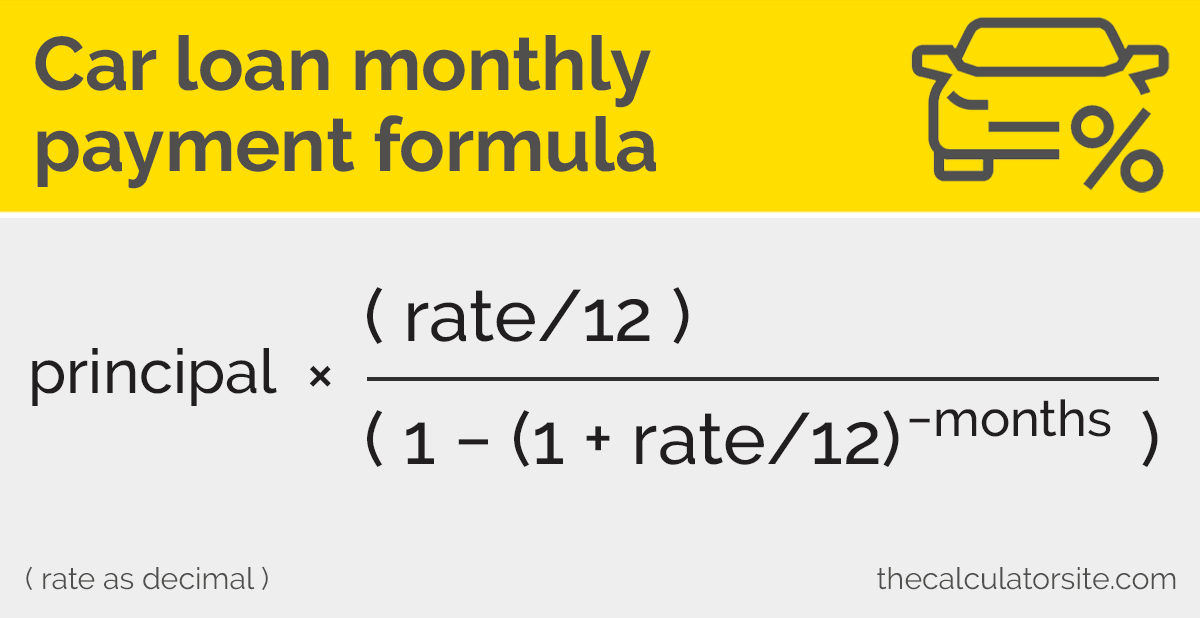
For those who like to see the numbers work, the standard loan payment formula is a powerful tool. It’s often referred to as the amortization formula:
M = P [ i(1 + i)^n ] / [ (1 + i)^n – 1]
Where:
-
M = Monthly Payment
-
P = Principal Loan Amount (the amount you borrow)
-
i = Monthly Interest Rate (Annual Rate / 12)
-
n = Total Number of Payments (Loan Term in years * 12)
Let’s illustrate with an example:
-
Car Price: $30,000
-
Down Payment: $5,000
-
Principal (P): $25,000
-
APR: 6% (so monthly interest rate
i= 0.06 / 12 = 0.005) -
Loan Term: 60 months (n = 60)
Plugging these values into the formula would give you the precise monthly payment. While not everyone will perform this calculation manually, understanding the variables involved helps you grasp how each factor influences the outcome.
Leveraging Online Loan Calculators
For most people, the easiest and most practical way to figure out car loan payments is by using an online loan calculator. Almost every bank, credit union, and automotive finance website offers these tools. You simply input the principal loan amount, the interest rate (APR), and the loan term, and the calculator instantly provides your estimated monthly payment.
The benefits of using online calculators are manifold:
-
Speed and Convenience: Get instant results without complex math.
-
Scenario Planning: Easily adjust variables (down payment, term, APR) to see how they impact your payment, allowing you to compare different scenarios quickly.
-
Accuracy: Reputable calculators use the correct amortization formulas.
When using these tools, be sure to account for all relevant factors, including any trade-in value, taxes, and fees, to ensure your principal amount is as accurate as possible.
Decoding the Amortization Schedule
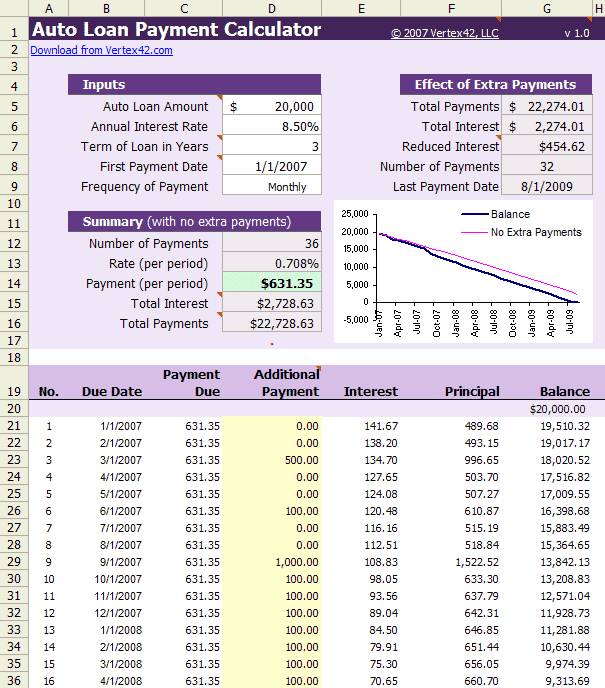
An amortization schedule is a table detailing each payment made on an amortizing loan (like a car loan), showing the portion applied to interest and the portion applied to the principal. It also shows the remaining balance after each payment.
Understanding an amortization schedule reveals:
-
Interest vs. Principal Allocation: In the early stages of a loan, a larger portion of your payment goes towards interest. As the loan matures, more of each payment chips away at the principal.
-
Total Cost: It clearly outlines the total interest you will pay over the life of the loan.
-
Impact of Extra Payments: By reviewing the schedule, you can see how making additional principal payments could significantly reduce the total interest paid and shorten the loan term.
Many online calculators can generate a full amortization schedule, offering transparent insight into your loan’s progression.
Key Factors Influencing Your Monthly Outlay
While the basic loan components are universal, several external and internal factors can significantly sway the actual payment you receive from a lender. Being aware of these influences can give you an edge in securing a more favorable deal.
Your Credit Score: A Powerful Determinant
Your credit score is arguably the most critical factor influencing the interest rate you’ll be offered. Lenders use your credit score to assess your creditworthiness and the likelihood of you repaying the loan. A higher credit score (typically 700+) indicates a lower risk, translating to lower interest rates and, consequently, lower monthly payments. Conversely, a lower credit score will result in higher interest rates, as lenders perceive a greater risk. It’s highly advisable to check your credit score before applying for a car loan and, if necessary, take steps to improve it.
Lender Choice: Banks, Credit Unions, or Dealerships?
Where you secure your financing can have a substantial impact on your APR and overall loan terms.
-
Banks: Often offer competitive rates, especially for customers with good credit. They have a wide range of loan products.
-
Credit Unions: Member-owned financial institutions known for offering some of the lowest interest rates due to their non-profit status. They often have more flexible lending criteria.
-
Dealerships: Offer convenient financing, sometimes with special promotional rates (e.g., 0% APR), but these are usually reserved for highly qualified buyers. Dealerships also act as intermediaries, potentially marking up interest rates from their partner lenders. It’s always best to get pre-approved elsewhere before visiting the dealership.
Hidden Costs: Taxes, Fees, and Optional Add-ons
The price you negotiate for the car isn’t the only amount that will be financed. Several additional costs can be rolled into your loan, increasing the principal and thus your monthly payment. These include:
-
Sales Tax: Varies by state and can be a significant addition.
-
Registration and Licensing Fees: Mandatory fees to get your car legally on the road.
-
Documentation Fees (Doc Fees): Administrative fees charged by dealerships, which can sometimes be negotiated.
-
Optional Add-ons: Extended warranties, GAP insurance, paint protection, and other extras often sold by dealerships. While some might be valuable, others significantly inflate your loan amount and payment without providing equivalent value. Be judicious about what you accept.
The Impact of Negotiation and Car Price
Ultimately, the starting point for your loan payment is the negotiated price of the car itself. Every dollar you save on the purchase price is a dollar less you have to borrow, directly reducing both your principal and the total interest paid. Don’t overlook the power of negotiation. Research market values, be prepared to walk away, and consider purchasing at the end of the month or quarter when dealerships are eager to meet sales quotas. A lower car price is the most direct way to a lower payment.
Strategies for Optimizing and Reducing Your Payments
Armed with knowledge about loan components and influencing factors, you can proactively employ strategies to reduce your monthly payments and save money over the long term.
Increasing Your Down Payment
This is one of the most straightforward and effective methods. By putting down more money upfront, you reduce the principal amount you need to borrow. As seen in the formulas, a smaller principal directly leads to lower monthly payments and less interest paid over the life of the loan. Aim for at least a 10-20% down payment if possible, as it also helps prevent being “upside down” (owing more than the car is worth) early in the loan.
Adjusting the Loan Term: Short vs. Long
Carefully consider the loan term that suits your financial situation.
-
Shorter Term (e.g., 36 or 48 months): Results in higher monthly payments but significantly less interest paid overall. You pay off the car faster, building equity sooner.
-
Longer Term (e.g., 72 or 84 months): Lowers your monthly payments, making the car more “affordable” in the short term. However, you’ll pay substantially more in interest over the life of the loan, and the car will depreciate faster than you pay it off, potentially leaving you underwater.
Choose the shortest term you can comfortably afford to minimize total costs.
Boosting Your Credit Score Before You Buy
Improving your credit score even by a few points can open doors to significantly lower interest rates. Before you start car shopping:
-
Pay Bills On Time: Payment history is the biggest factor in your score.
-
Reduce Debt: Lowering credit card balances improves your credit utilization ratio.
-
Review Your Credit Report: Check for errors and dispute any inaccuracies.
Even a three to six-month effort to improve your credit can result in thousands of dollars saved on interest over the life of a car loan.
Considering a Refinance for Existing Loans
If you already have a car loan and your financial situation or credit score has improved since you first financed the vehicle, refinancing could be a smart move. Refinancing involves taking out a new loan, usually with a lower interest rate or a more favorable term, to pay off your existing car loan. This can result in:
-
Lower Monthly Payments: If you secure a lower APR or extend the loan term.
-
Reduced Total Interest: If you get a lower APR, especially if you keep the same or a shorter term.
-
Shorter Loan Term: If you can afford higher payments, you might refinance to a shorter term to pay it off faster and save on interest.
Always compare the new loan’s total cost, including any fees, against your current loan to ensure it’s a beneficial move.
Beyond the Monthly Figure: The Holistic Cost of Car Ownership
While figuring out your monthly car loan payment is essential, it’s crucial to understand that it’s only one piece of the larger financial puzzle of car ownership. A truly informed decision accounts for the total cost of owning and operating a vehicle.
Depreciation and Resale Value
Cars begin to depreciate the moment they are driven off the lot. Depreciation is the reduction in a car’s value over time, and it’s often the single largest “cost” of car ownership, even though it’s not a direct monthly payment. Understanding a vehicle’s depreciation rate is important, especially if you plan to trade it in or sell it within a few years. Cars with better resale value tend to have lower overall ownership costs. This factor directly impacts your ability to sell or trade-in without being upside down on your loan.
Insurance Premiums and Maintenance Expenses
Don’t forget to budget for ongoing operational costs.
-
Insurance: Car insurance is mandatory and can vary dramatically based on the vehicle type, your driving record, age, location, and chosen coverage. Get insurance quotes for specific models before finalizing your purchase to avoid surprises.
-
Maintenance: All cars require regular maintenance (oil changes, tire rotations, brake service, etc.) and eventual repairs. Newer cars usually come with warranties that cover major issues, but general upkeep is always your responsibility. Older or luxury vehicles typically have higher maintenance costs.
These costs are often overlooked when calculating affordability but are a critical part of your monthly budget.
Fuel Costs and Long-Term Budgeting
Fuel prices fluctuate, but they remain a consistent and significant expense for drivers. Consider the fuel efficiency (MPG) of the vehicle you’re interested in, especially if you have a long daily commute. Factor in your estimated annual mileage to project your yearly fuel costs.
Incorporating all these elements – loan payment, insurance, maintenance, fuel, and depreciation – into your long-term budget provides a comprehensive picture of what a car truly costs. This holistic view enables you to make a decision that is sustainable and aligns with your broader financial goals.

Empowering Your Car Purchase
Figuring out car loan payments might seem complex at first, but by breaking it down into its core components and understanding the influencing factors, you gain immense financial clarity. Remember that the journey begins with knowing the principal, understanding the interest rate, and selecting a manageable loan term. Leverage online calculators for quick estimations, and delve into amortization schedules for deeper insights.
More importantly, empower yourself through strategic actions: save for a substantial down payment, strive for an excellent credit score, negotiate the car’s price rigorously, and be discerning about additional costs. Always consider pre-approval from multiple lenders before stepping into a dealership. Finally, look beyond just the monthly payment and budget for the true, holistic cost of car ownership, including insurance, maintenance, and depreciation.
With this knowledge, you’re not just buying a car; you’re making a calculated and confident financial decision that will serve you well for years to come. Drive smart, not just with power, but with financial wisdom.
aViewFromTheCave is a participant in the Amazon Services LLC Associates Program, an affiliate advertising program designed to provide a means for sites to earn advertising fees by advertising and linking to Amazon.com. Amazon, the Amazon logo, AmazonSupply, and the AmazonSupply logo are trademarks of Amazon.com, Inc. or its affiliates. As an Amazon Associate we earn affiliate commissions from qualifying purchases.