
Accurately estimating annual income is a foundational skill for robust financial planning, whether you’re an individual managing household finances, a freelancer navigating fluctuating earnings, or a small business owner projecting future growth. It’s more than just knowing your salary; it involves a comprehensive understanding of all income streams, potential variables, and future considerations. This guide delves into practical methodologies, essential tools, and strategic insights to help you arrive at a reliable annual income estimate, empowering smarter financial decisions.
Why Estimating Annual Income Matters
Understanding your annual income is the bedrock of sound financial health. It provides clarity, reduces uncertainty, and enables proactive rather than reactive financial management. Without a clear picture, you risk overspending, under-saving, and missing critical financial opportunities.
Personal Budgeting and Financial Planning
At its core, an annual income estimate allows you to create and stick to a realistic budget. Knowing what you expect to earn over 12 months helps you allocate funds for expenses, savings, and investments. It dictates how much you can comfortably spend on housing, transportation, food, and entertainment, preventing financial strain and promoting fiscal discipline. For long-term planning, it informs decisions about retirement savings, down payments on major purchases, and educational funding.
Loan Applications and Creditworthiness
Financial institutions, landlords, and lenders heavily rely on your declared annual income when assessing loan applications, mortgage eligibility, or rental agreements. A well-substantiated income estimate demonstrates your ability to meet financial obligations, directly impacting your creditworthiness and the terms of any credit you might receive. Providing a clear, documented estimate can significantly streamline approval processes and potentially secure more favorable rates.
Tax Planning and Obligations
Tax season can be less daunting when you have an accurate income estimate. This knowledge allows you to anticipate your tax liability, plan for deductions, and adjust withholdings throughout the year, potentially avoiding a large tax bill or ensuring a more accurate refund. For self-employed individuals and business owners, estimating income is crucial for calculating estimated quarterly taxes, preventing penalties, and optimizing tax strategies.
Setting Financial Goals
Whether your goal is to save for a down payment, pay off debt, invest for retirement, or fund a significant life event, a realistic income estimate is essential. It helps you determine how much you can reasonably allocate towards these goals each month or year, providing a timeline for achievement and keeping your financial aspirations grounded in reality. It transforms vague wishes into actionable plans.
Methods for Estimating Fixed Income
Estimating fixed income is generally straightforward, but it still requires attention to detail, especially when accounting for all components beyond the basic salary. This method applies primarily to salaried employees, pensioners, and those with predictable, recurring income streams.
Salaried Employment
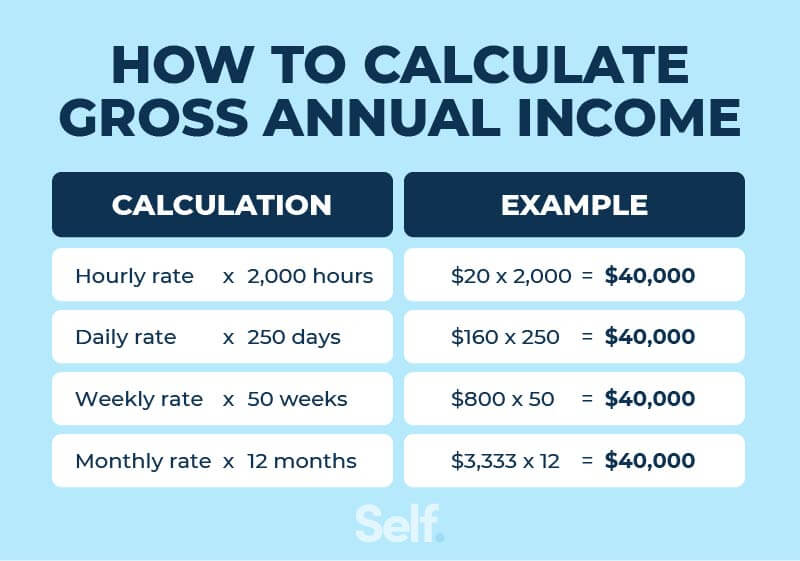
For full-time or part-time employees with a consistent salary, the estimation process is relatively simple. Take your gross monthly salary and multiply it by 12. If you are paid bi-weekly, multiply your bi-weekly gross pay by 26 (the number of pay periods in a year). If you are paid weekly, multiply your gross weekly pay by 52. Always use your gross income (before taxes and deductions) when calculating your annual estimate, as this is the figure typically used for loan applications and financial assessments.
Pension and Retirement Income
Individuals receiving pensions, Social Security benefits, or other fixed retirement income can use a similar approach. Sum up the gross monthly amounts from all retirement sources and multiply by 12. These incomes are often stable, making their annual estimation highly accurate. Be mindful of any cost-of-living adjustments (COLAs) that might apply annually.
Rental Income and Other Predictable Sources
If you own rental properties, estimate your annual gross rental income by multiplying the monthly rent by 12 for each property. Remember to consider potential vacancy rates if your properties are not consistently occupied. Other predictable sources might include alimony, child support, or annuities. For these, multiply the regular payment by the number of periods in a year.
Accounting for Bonuses and Benefits
This is where fixed income estimation can become more nuanced.
-
Bonuses: If your employer offers an annual bonus, consider its history. Is it guaranteed? Is it a fixed amount or a percentage of your salary? If it’s consistent, include the gross bonus amount in your annual estimate. If it’s variable or performance-based, use a conservative estimate based on past performance or omit it from your primary estimate and treat it as a potential windfall.
-
Commissions: For roles with a base salary plus commission, treat the base as fixed income and the commission as variable (see the next section). If commissions are consistently high and predictable, you might include a conservative average based on historical data.
-
Other Benefits: While not always direct cash income, certain benefits like employer contributions to retirement accounts (401k matching), health savings accounts (HSAs), or stock options can be significant components of your total compensation package. While not usually included in “annual income” for loan purposes, they are crucial for understanding your total financial package and long-term wealth accumulation.
Methods for Estimating Variable Income
Estimating variable income is more complex but absolutely essential for freelancers, business owners, sales professionals, and gig economy workers. It requires a blend of historical data, trend analysis, and realistic projections.
Freelancers and Contractors: The Historical Average Approach
For freelancers or contractors, the most reliable method is to look at your past income.
-
Gather Data: Collect all income records (invoices, bank statements, payment confirmations) for the past 12-24 months.
-
Calculate Monthly Average: Sum up your total income for this period and divide by the number of months.
-
Project Annually: Multiply the monthly average by 12.
-
Consider Trends: Adjust this average based on any recent changes in your client base, rates, or market demand. Are you taking on more projects? Have you raised your rates? Are there seasonal fluctuations?
It’s often wise to use a conservative average, especially if your income has been inconsistent.
Commission-Based Sales: Projecting Future Earnings

Sales professionals relying heavily on commissions face a unique challenge.
-
Base Salary: Start with your fixed base salary (if any) as a guaranteed minimum.
-
Historical Commission Averages: Review your commission earnings over the past year. Calculate a monthly or quarterly average.
-
Sales Pipeline & Quotas: Factor in your current sales pipeline, projected deal closures, and sales quotas. How realistic are you to meet or exceed these?
-
Market Conditions & Performance: Consider market trends, product performance, and your individual sales efficiency. Are you in a growth phase or facing headwinds?
It’s generally prudent to estimate commission income conservatively, perhaps at 80-90% of your historical average, especially if future performance is uncertain.
Small Business Owners: Profit & Loss Statements
For small business owners, annual income is derived from the business’s profitability.
-
Review P&L Statements: Analyze your Profit & Loss (P&L) statements for the past 1-3 years. This will show your revenue, cost of goods sold, operating expenses, and ultimately, net profit.
-
Owner’s Draw/Salary: Your personal income from the business typically comes from an owner’s draw or a salary.
-
Project Future Performance: Based on historical trends, current market conditions, sales forecasts, and planned investments, project your business’s net profit for the upcoming year. Your annual income will then be your projected owner’s draw or salary from that profit.
-
Conservative Estimate: It is always best to be conservative when projecting business income, accounting for unforeseen expenses or dips in sales.
Gig Economy and Irregular Income: Moving Averages and Trends
Individuals juggling multiple gig-economy jobs (ridesharing, food delivery, freelancing platforms) or other irregular income sources can use a moving average.
-
Track Everything: Meticulously track all income earned from each gig.
-
Calculate Monthly Averages: Average your income over the past 3-6 months.
-
Identify Trends: Look for patterns – are you earning more or less each month? Are there peak seasons or slow periods?
-
Project: Use the average, adjusted for identified trends, to project your annual income. Consider potential changes in platform policies, demand, or personal availability. A wider data set (e.g., 12 months) generally leads to a more accurate estimate.
The “Worst-Case” and “Best-Case” Scenarios
When dealing with variable income, it’s highly beneficial to establish a range rather than a single number.
-
Worst-Case Scenario: What is the minimum you realistically expect to earn if things go poorly (e.g., fewer clients, lower sales, unexpected expenses)? This floor helps with budgeting for essential needs.
-
Best-Case Scenario: What is the maximum you could earn if everything aligns perfectly (e.g., landing big clients, exceeding sales targets, robust market)? This ceiling helps in setting ambitious but achievable savings goals.
Your primary estimate should typically fall somewhere between these two, leaning towards a realistic, slightly conservative figure.
Leveraging Financial Tools and Technology
In today’s digital age, numerous tools can simplify and enhance the accuracy of your income estimation, moving beyond manual calculations to dynamic tracking and forecasting.
Spreadsheet Applications (Excel, Google Sheets)
Spreadsheets are powerful, versatile tools for income tracking and estimation.
-
Customization: You can create personalized templates to record all income sources, categorize variable earnings, and automatically calculate monthly and annual totals.
-
Formulas: Utilize formulas (e.g., SUM, AVERAGE, SUMIF) to aggregate data, calculate averages over specific periods, and project future income based on historical data.
-
Scenario Planning: Easily create different tabs or sections for worst-case, best-case, and most-likely scenarios, allowing for dynamic adjustments.
-
Visualization: Generate charts and graphs to visualize income trends, making it easier to spot patterns and make informed projections.
Personal Finance Apps and Budgeting Software
Many popular personal finance apps offer robust income tracking features.
-
Automated Sync: Apps like Mint, YNAB (You Need A Budget), Personal Capital, or Simplifi can link directly to your bank accounts and credit cards, automatically categorizing transactions and providing real-time insights into your income and spending.
-
Income Tracking: They often have dedicated sections for tracking paychecks, freelance payments, and other deposits, allowing you to view your total income over various periods (monthly, quarterly, annually).
-
Budget Integration: By integrating income and expenses, these apps help you see how your estimated income aligns with your actual spending and savings goals.
-
Forecasting Tools: Some advanced apps offer basic forecasting features, helping you project future income based on historical averages and planned changes.
Accounting Software for Businesses
For small business owners, dedicated accounting software is indispensable.
-
Comprehensive Financial Reporting: Software like QuickBooks, Xero, or FreshBooks provides detailed Profit & Loss (P&L) statements, balance sheets, and cash flow reports, which are critical for understanding business profitability.
-
Automated Tracking: It automates the tracking of invoices, expenses, and payments, ensuring all income streams are accurately recorded.
-
Payroll Integration: If you pay yourself a salary from your business, these tools can manage payroll, simplifying the calculation of your annual income from the business.
-
Tax Preparation: The detailed reports generated by accounting software greatly simplify tax preparation, ensuring accurate reporting of business income.
Online Calculators and Financial Planners
Various free online tools can assist with specific aspects of income estimation.
-
Salary Calculators: Websites often have tools to estimate your net pay based on gross income, withholdings, and deductions, which can help in understanding your take-home pay versus gross annual income.
-
Retirement Planners: These tools can project future retirement income based on your current savings, contributions, and expected returns.
-
Freelance Income Estimators: Some platforms offer calculators specifically designed for freelancers to estimate annual income based on hourly rates, project volume, and expenses. While these are good starting points, they should be refined with your personal data.
Refining Your Estimate and Future Planning
An annual income estimate is not a static figure; it’s a dynamic projection that benefits from regular review and adjustment. Life changes, market conditions evolve, and new opportunities arise, all of which can impact your earning potential.
Regular Review and Adjustment
Make it a habit to review your annual income estimate at least quarterly, if not monthly, especially if you have variable income.
-
Compare Actual vs. Estimated: Track your actual income against your estimate. If there’s a significant variance, investigate why. Is your business performing better or worse than expected? Did you take on more freelance work?
-
Identify Trends: Look for consistent upward or downward trends. Are your monthly earnings growing, stagnating, or declining?
-
Make Adjustments: Based on your review, adjust your projection for the remainder of the year. This ensures your financial plans remain realistic and responsive to your current situation.
Incorporating Future Changes (Raises, New Ventures)
Anticipate and integrate known or highly probable future income changes into your estimate.
-
Expected Raises: If you have an upcoming performance review with an expected raise, factor in the new salary for the relevant portion of the year.
-
New Job or Promotion: If you’re switching jobs or getting a promotion, update your estimate with the new salary and benefits package.
-
New Business Ventures or Side Hustles: If you’re launching a new side hustle or business, start with a conservative estimate, but plan to refine it as initial income streams materialize.
-
Market Shifts: Be aware of broader economic conditions that could impact your industry or job security.
The Importance of Contingency Planning
For those with variable income, a contingency fund is paramount. While your income estimate helps you budget for regular expenses, a financial cushion ensures you can weather periods of lower earnings. Aim for 3-6 months (or more for highly variable income) of living expenses saved in an easily accessible account. This acts as a buffer against income dips, unexpected business slowdowns, or client losses.

Using Estimates for Long-Term Financial Projections
Once you have a solid grasp of your annual income, you can leverage this information for long-term financial planning.
-
Retirement Planning: Project your future income trajectory to determine how much you can contribute to retirement accounts annually and how those savings will grow over time.
-
Investment Goals: Use your estimated disposable income to set ambitious but achievable investment goals, whether for stocks, real estate, or other assets.
-
Debt Repayment Strategies: A clear income picture allows you to aggressively tackle debt with a structured repayment plan.
-
Major Life Events: Planning for a home purchase, education costs, or starting a family all benefit from accurate long-term income projections.
By consistently estimating, tracking, and refining your annual income, you transform financial management from a guessing game into a strategic, empowering process. It equips you with the confidence and clarity to make informed decisions, navigate financial challenges, and ultimately, achieve your most ambitious financial goals.
aViewFromTheCave is a participant in the Amazon Services LLC Associates Program, an affiliate advertising program designed to provide a means for sites to earn advertising fees by advertising and linking to Amazon.com. Amazon, the Amazon logo, AmazonSupply, and the AmazonSupply logo are trademarks of Amazon.com, Inc. or its affiliates. As an Amazon Associate we earn affiliate commissions from qualifying purchases.