
Investing in the share market can seem like a daunting endeavor for newcomers, often shrouded in complex terminology and perceived high risks. However, with the right knowledge, strategic approach, and a disciplined mindset, it offers a powerful avenue for wealth creation and achieving long-term financial goals. This comprehensive guide aims to demystify the process, providing a clear roadmap for individuals looking to embark on their investment journey in the share market, focusing on practical steps and crucial considerations for success.
Understanding the Fundamentals of Share Market Investing
Before diving into the mechanics of buying and selling shares, it’s paramount to grasp the foundational concepts that underpin the share market. A solid understanding of these basics will not only build confidence but also equip you to make more informed decisions.
What is the Share Market?
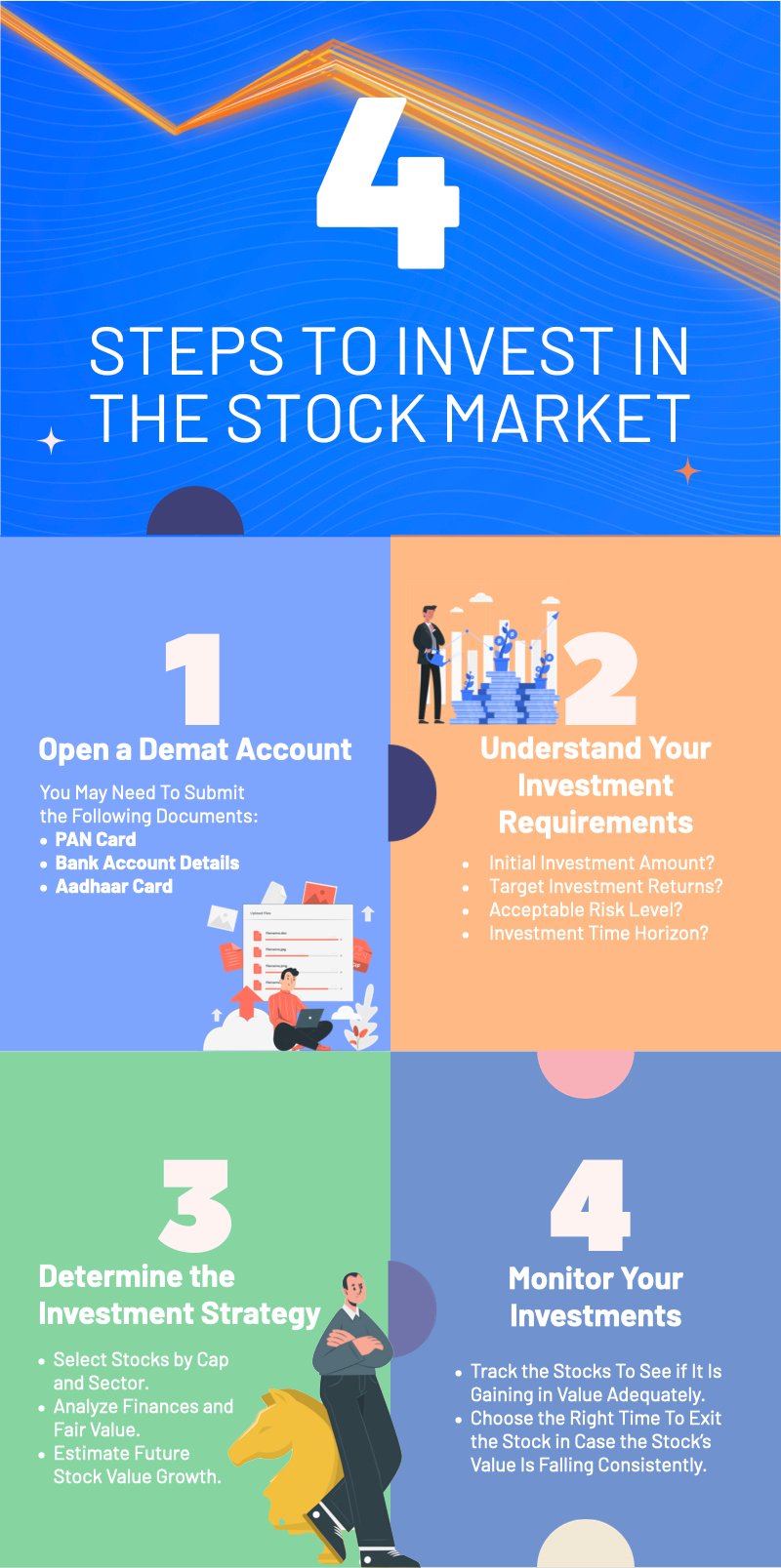
At its core, the share market, also known as the stock market, is a platform where shares of publicly listed companies are bought and sold. A share represents a unit of ownership in a company. When you buy a share, you become a part-owner of that company. Companies issue shares to raise capital for expansion, operations, or debt repayment. Investors, in turn, buy these shares hoping their value will increase over time, allowing them to sell at a profit, or to receive dividends (a portion of the company’s profits distributed to shareholders).
The market itself is a dynamic ecosystem influenced by a myriad of factors, including company performance, economic indicators, geopolitical events, and investor sentiment. Major stock exchanges, such as the New York Stock Exchange (NYSE), NASDAQ, London Stock Exchange (LSE), or the Bombay Stock Exchange (BSE), facilitate these transactions, connecting buyers and sellers through brokers.
Why Invest in Shares?
The primary allure of share market investing lies in its potential for capital appreciation and dividend income. Historically, equities have outperformed many other asset classes over the long term, offering a hedge against inflation and significant wealth accumulation opportunities.
- Capital Appreciation: The most common reason to invest. As a company grows, becomes more profitable, or its prospects improve, the demand for its shares can increase, driving up their market price. Selling these shares at a higher price than what you bought them for results in capital gains.
- Dividend Income: Many mature and profitable companies distribute a portion of their earnings to shareholders in the form of dividends. This provides a regular income stream, which can be particularly attractive for investors seeking passive income or who choose to reinvest these dividends to compound their returns.
- Liquidity: Shares of publicly traded companies are generally quite liquid, meaning they can be bought or sold relatively easily and quickly during market hours.
- Diversification: Investing in shares allows you to diversify your portfolio across various sectors and industries, reducing reliance on a single asset class or business.
- Ownership and Influence: While a small individual investor typically holds negligible voting power, owning shares does grant you certain rights, including the ability to vote on company matters at annual general meetings.
Inherent Risks and Rewards
While the rewards can be substantial, it’s crucial to approach share market investing with a clear understanding of the associated risks. No investment is entirely risk-free, and shares are particularly susceptible to market volatility.
- Market Risk: The value of your investments can fluctuate significantly due to overall market movements, economic downturns, or global events. A bear market can lead to widespread declines in share prices, regardless of individual company performance.
- Company-Specific Risk (Idiosyncratic Risk): An individual company’s performance can suffer due to poor management, competitive pressures, industry disruptions, or negative news, leading to a fall in its share price.
- Liquidity Risk: While generally liquid, some small-cap or less popular stocks might have lower trading volumes, making it harder to sell them quickly at a desired price.
- Inflation Risk: The purchasing power of your investment returns can be eroded by inflation if your gains do not outpace the rate of inflation.
The key to navigating these risks lies in comprehensive research, diversification, a long-term perspective, and investing only what you can afford to lose. The potential rewards often outweigh the risks for those who adopt a disciplined and well-informed strategy.
Essential Steps to Begin Your Investment Journey
Embarking on your share market investment journey requires a structured approach. Haphazard decisions can lead to losses, while a systematic process increases your chances of success.
Define Your Financial Goals and Risk Tolerance
Before placing your first trade, clarify why you are investing and how much risk you are comfortable taking.
- Financial Goals: Are you saving for retirement, a down payment on a house, your children’s education, or simply aiming for general wealth growth? Your goals will influence your investment horizon (short-term vs. long-term) and the types of assets you choose. For example, long-term goals might accommodate higher-risk, higher-reward investments, while short-term goals might demand more conservative approaches.
- Risk Tolerance: This is your psychological comfort level with potential losses. An aggressive investor might be willing to risk significant capital for higher returns, while a conservative investor might prioritize capital preservation over maximizing gains. Factors like age, income stability, existing savings, and financial dependents all play a role in determining your appropriate risk level. Understanding this helps you select suitable investment products and strategies.
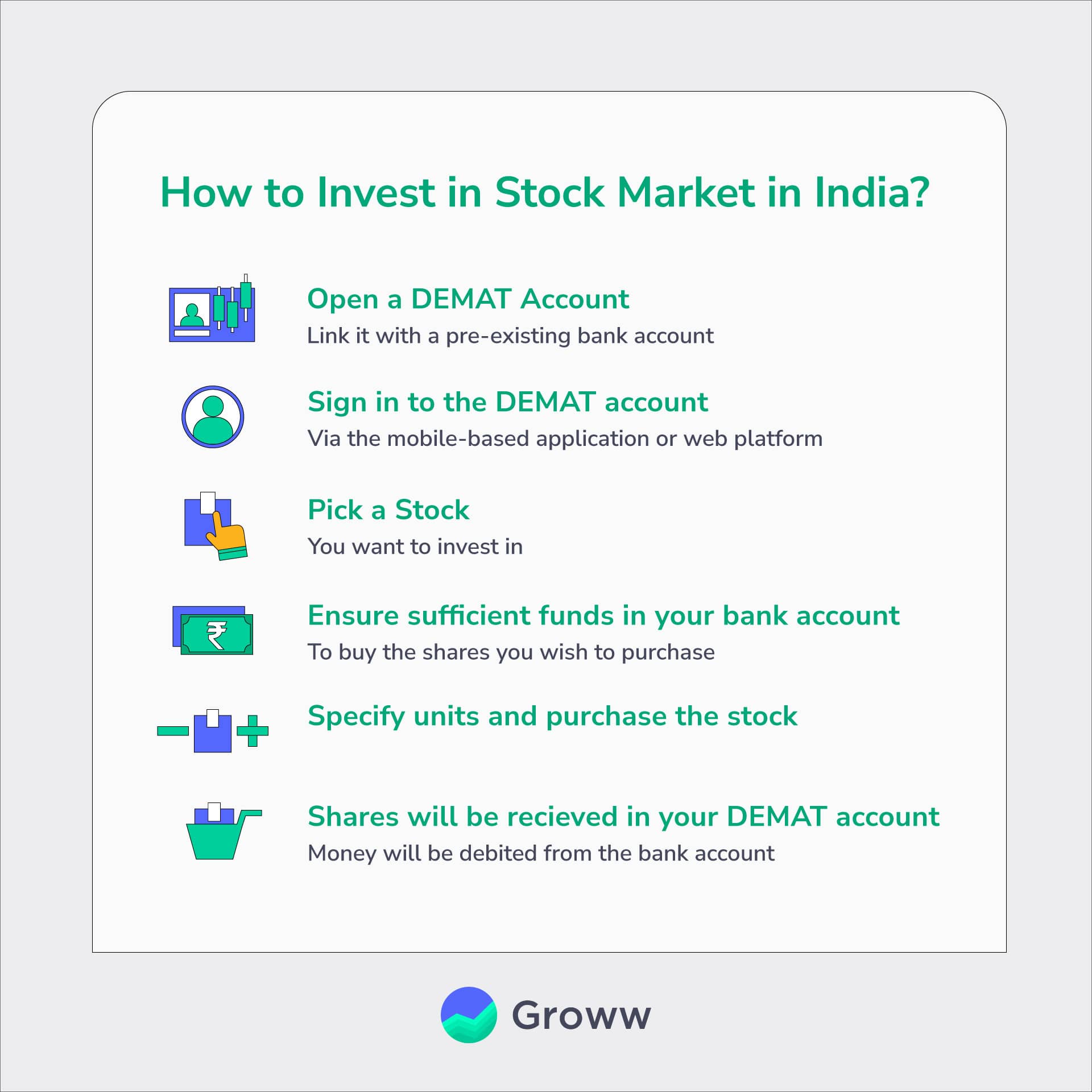
Open a Demat and Trading Account
To invest in the Indian share market, you need two primary accounts:
- Demat Account (Dematerialized Account): This account holds your shares and other securities in electronic form. It’s like a digital locker for your investments, replacing physical share certificates.
- Trading Account: This account facilitates the buying and selling of shares on the stock exchange. It’s the interface through which you place your orders.
These accounts are typically opened with a registered stockbroker (also known as a brokerage firm). Many brokers offer a “3-in-1” account, combining a Demat, Trading, and Savings Bank account for seamless transactions. The process usually involves submitting KYC (Know Your Customer) documents such as identity proof, address proof, and bank account details. It’s advisable to compare different brokers based on their fees (brokerage charges, annual maintenance charges), trading platforms, customer service, and research tools before making a choice.
Conduct Thorough Research and Analysis
This is arguably the most critical step in successful investing. Never invest based on tips, rumors, or herd mentality. Due diligence is essential.
- Fundamental Analysis: This involves evaluating a company’s intrinsic value by examining its financial statements (balance sheet, income statement, cash flow statement), management quality, industry position, competitive advantages, future growth prospects, and economic moat. Key metrics to look at include Earnings Per Share (EPS), Price-to-Earnings (P/E) ratio, Return on Equity (ROE), debt-to-equity ratio, and revenue growth.
- Technical Analysis: This approach involves studying past market data, primarily price and volume charts, to identify patterns and predict future price movements. Technical analysts use various indicators, such as moving averages, Relative Strength Index (RSI), and MACD, to inform their trading decisions. While more common for short-term trading, understanding basic technical indicators can complement fundamental analysis.
- Sector and Industry Analysis: Understanding the broader sector and industry in which a company operates is vital. Favorable industry trends, regulatory changes, and competitive landscape can significantly impact a company’s prospects.
Utilize resources like financial news portals, company annual reports, broker research reports, and independent financial analysis websites to gather information.
Develop an Investment Strategy
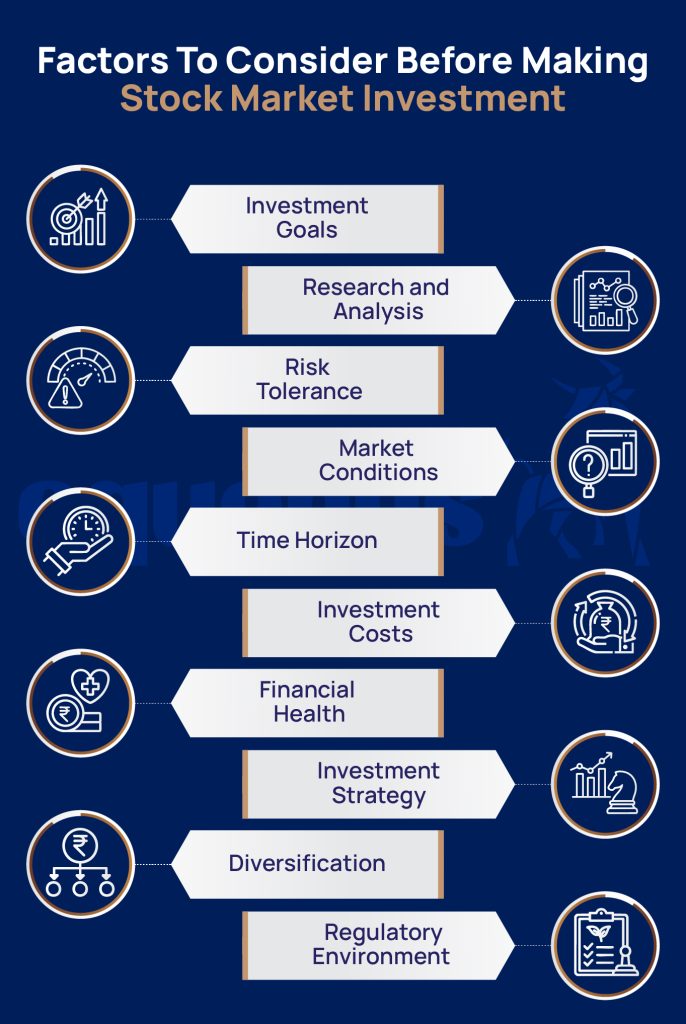
Based on your goals, risk tolerance, and research, formulate a clear investment strategy. This acts as your guiding principle.
- Growth Investing: Focuses on companies expected to grow at an above-average rate, often reinvesting their earnings back into the business rather than paying dividends. These stocks typically have higher P/E ratios and can be more volatile.
- Value Investing: Involves identifying companies whose shares are trading below their intrinsic value, often due to temporary market pessimism. Value investors seek out “bargains” and patiently wait for the market to recognize the true worth of the company.
- Dividend Investing: Prioritizes companies with a history of consistent dividend payments, suitable for investors seeking regular income.
- Index Investing (ETFs/Mutual Funds): For those who prefer a less hands-on approach, investing in Exchange Traded Funds (ETFs) or mutual funds that track a specific market index (e.g., Nifty 50, Sensex) offers instant diversification and professional management.
You can combine elements of these strategies or adapt them as your knowledge and market conditions evolve. The most important aspect is consistency and discipline in adhering to your chosen strategy.
Navigating the Market: Strategies and Best Practices
Successful share market investing is an ongoing process that extends beyond initial research and strategy formulation. It involves continuous monitoring, adaptation, and adherence to sound investment principles.
Diversification: The Golden Rule
Diversification is the bedrock of risk management in investing. It means spreading your investments across various assets, industries, and geographies to reduce the impact of poor performance by any single investment.
- Across Companies: Don’t put all your capital into one or two stocks, no matter how promising they seem.
- Across Sectors: Invest in companies from different economic sectors (e.g., technology, finance, healthcare, consumer goods) to mitigate sector-specific risks.
- Across Asset Classes: While this article focuses on shares, true diversification often extends to other asset classes like bonds, real estate, and gold, depending on your overall financial plan.
- Geographic Diversification: Consider investing in international markets to reduce exposure to the economic risks of a single country.
The goal is that if one investment performs poorly, the positive performance of others can offset those losses, leading to a more stable overall portfolio return.
Long-Term vs. Short-Term Investing
Your chosen investment horizon significantly influences your strategy and potential returns.
- Long-Term Investing: This approach involves holding investments for several years, often five years or more. It aims to benefit from the compounding effect of returns and ride out short-term market fluctuations. Long-term investors typically focus on fundamental analysis, investing in quality companies with strong growth prospects. This strategy often involves less frequent trading and lower transaction costs.
- Short-Term Investing (Trading): This involves buying and selling shares over short periods – from minutes (day trading) to weeks or months (swing trading). Short-term traders primarily rely on technical analysis and market sentiment to profit from price volatility. This approach is significantly riskier, requires intense market monitoring, and can incur higher transaction costs. It’s generally not recommended for beginners.
For most individual investors, especially those new to the market, a long-term investment philosophy is generally more prudent and sustainable. It allows market cycles to play out and leverages the power of compounding.
Continuous Learning and Monitoring
The share market is dynamic, constantly evolving with new information, economic shifts, and technological advancements. Therefore, your investment journey should involve continuous learning and regular monitoring of your portfolio.
- Stay Informed: Keep abreast of economic news, industry trends, and company-specific developments. Follow reputable financial news sources and analyst reports.
- Review Your Portfolio: Periodically (e.g., quarterly or annually) review your portfolio’s performance against your goals. Assess if the underlying rationale for your investments still holds true.
- Rebalance When Necessary: Over time, some investments may grow disproportionately, altering your desired asset allocation. Rebalancing involves selling some of your overperforming assets and buying more of your underperforming ones to bring your portfolio back to your target allocation. This helps manage risk and lock in gains.
- Adapt Your Strategy: As your financial situation changes (e.g., age, income, family responsibilities) or market conditions shift, be prepared to adapt your investment strategy.
Common Pitfalls to Avoid and Tips for Success
The path to successful share market investing is often littered with common mistakes. Recognizing and avoiding these can save you significant capital and emotional distress.
Beware of Emotional Trading
One of the biggest adversaries of successful investing is human emotion. Fear and greed often drive irrational decisions.
- Fear: During market downturns, fear can lead investors to panic sell their holdings at a loss, missing out on the subsequent recovery.
- Greed: During bull markets, greed can encourage investors to chase “hot” stocks, overpay for assets, or take on excessive risk in pursuit of quick, outsized returns.
Stick to your predefined investment strategy and goals. Use stop-loss orders to limit potential losses on individual stocks, and resist the urge to react impulsively to market noise. A disciplined, rational approach is paramount.
Don’t Put All Your Eggs in One Basket
Reiterating the importance of diversification, concentrating all your capital into a single stock or a very narrow set of investments is an incredibly risky strategy. While it might lead to spectacular gains if that one bet pays off, the downside risk of losing a significant portion of your capital is equally high. A well-diversified portfolio helps cushion the blow if one investment performs poorly.
Seek Professional Guidance (When Needed)
While self-directed investing is empowering, there are times when professional advice can be invaluable.
- Financial Advisors: For comprehensive financial planning that goes beyond just share market investments, including retirement planning, tax optimization, and estate planning, a certified financial advisor can provide personalized guidance.
- Investment Advisors/Portfolio Managers: If you lack the time, expertise, or inclination to actively manage your portfolio, professional investment advisors or portfolio managers can manage your investments for a fee.
- Learning Resources: Even if you choose to self-manage, leveraging educational resources from reputable financial institutions, online courses, and books can significantly enhance your knowledge and decision-making capabilities.
Investing in the share market requires patience, continuous learning, and a disciplined approach. It is not a get-rich-quick scheme but a powerful tool for long-term wealth creation. By understanding the fundamentals, meticulously planning your strategy, diligently researching your investments, and managing your emotions, you can navigate the complexities of the share market effectively and work towards achieving your financial aspirations.
aViewFromTheCave is a participant in the Amazon Services LLC Associates Program, an affiliate advertising program designed to provide a means for sites to earn advertising fees by advertising and linking to Amazon.com. Amazon, the Amazon logo, AmazonSupply, and the AmazonSupply logo are trademarks of Amazon.com, Inc. or its affiliates. As an Amazon Associate we earn affiliate commissions from qualifying purchases.