
A business plan is more than a simple roadmap for operations; it is a critical financial document designed to secure capital, attract investors, and ensure the long-term viability of an enterprise. At the heart of every successful business plan lies a comprehensive market analysis. This section does not merely describe what you sell; it validates the financial opportunity by proving there is sufficient demand, a manageable level of competition, and a sustainable path to profitability.
To perform a market analysis that satisfies seasoned investors and financial institutions, you must move beyond surface-level observations. You need a data-driven deep dive into the economic environment of your industry. This guide outlines the essential steps to conducting a market analysis that transforms a business idea into a bankable financial strategy.
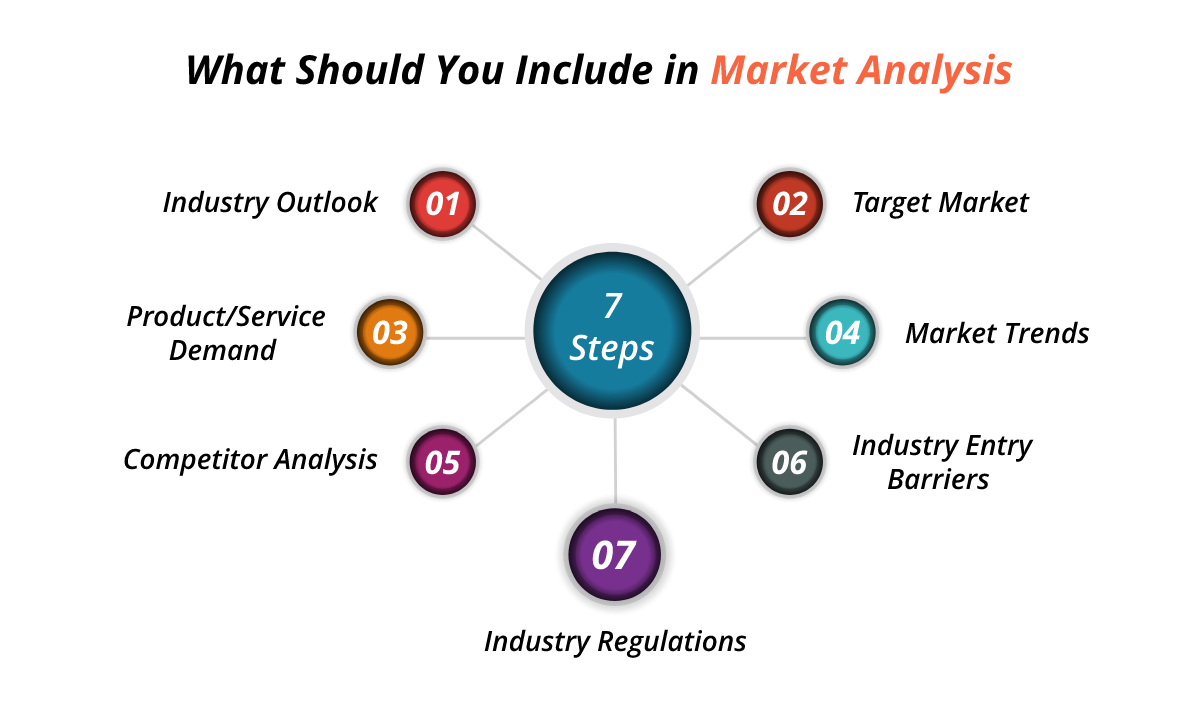
Understanding Your Market Landscape and Customer Demographics
The first objective of a market analysis is to define exactly who will be paying for your products or services. From a business finance perspective, knowing your customer is the primary factor in determining your Customer Acquisition Cost (CAC) and Lifetime Value (LTV)—two metrics that dictate whether a business is scalable.
Defining Your Ideal Customer Profile (ICP)
Generic descriptions like “adults aged 18-65” are insufficient for a professional business plan. Investors look for a precise Ideal Customer Profile. This involves segmenting the market based on demographics (age, income level, education), geographics (location-based density), and psychographics (buying habits, values, and pain points).
For instance, if you are launching a high-end fintech app, your ICP might be urban professionals aged 25-40 with an annual income exceeding $80,000 who prioritize mobile-first investment solutions. By narrowing the focus, you demonstrate to lenders that your marketing budget will be deployed efficiently, targeting only the highest-converting segments.
Quantifying the Opportunity: TAM, SAM, and SOM
To provide a realistic financial outlook, you must quantify the market size using the TAM, SAM, and SOM framework. This is perhaps the most scrutinized part of a market analysis in the “Money” niche.
-
TAM (Total Addressable Market): This represents the total global demand for your product category. If everyone who could use your product did use it, how much revenue would that generate annually?
-
SAM (Serviceable Addressable Market): This is the portion of the TAM that fits within your geographical and technological reach. It represents the actual market size you can realistically target with your current business model.
-
SOM (Serviceable Obtainable Market): This is the most critical figure for a business plan. It is the percentage of the SAM that you can realistically capture within the first three to five years. This number must be backed by your marketing and sales capacity.
Lenders use these figures to determine if the “ceiling” for your business is high enough to justify the initial investment and the associated risks.
Competitive Intelligence: Mapping the Financial Battlefield
No business operates in a vacuum. A rigorous market analysis must account for the existing players who currently hold the market share you intend to capture. In financial terms, this is about understanding the barriers to entry and the pricing power of your rivals.
Identifying Direct and Indirect Competitors
Direct competitors offer a product similar to yours. Indirect competitors solve the same problem but in a different way. For example, a high-end gym competes directly with other fitness clubs, but indirectly with home workout apps and outdoor sports leagues.
In your analysis, create a competitive matrix. List your top five competitors and evaluate their strengths, weaknesses, and market positioning. This allows you to identify “market gaps”—underserved areas where your business can achieve higher margins because the competition is either too expensive, too slow, or technologically outdated.
Evaluating Competitor Pricing and Profit Margins
From a business finance standpoint, you need to understand the “price floor” and the “price ceiling” set by the market. If your competitors are selling a product for $100 with a 40% gross margin, and your cost to produce it is $90, your business model is likely unsustainable.
Investigate how competitors bundle their services, whether they use subscription models, and how often they offer discounts. This helps you formulate a pricing strategy that is competitive yet protective of your bottom line. Investors want to see that you aren’t just undercutting prices—which can lead to a “race to the bottom”—but that you are offering superior value that justifies your price point.
Analyzing Market Trends and Economic Indicators
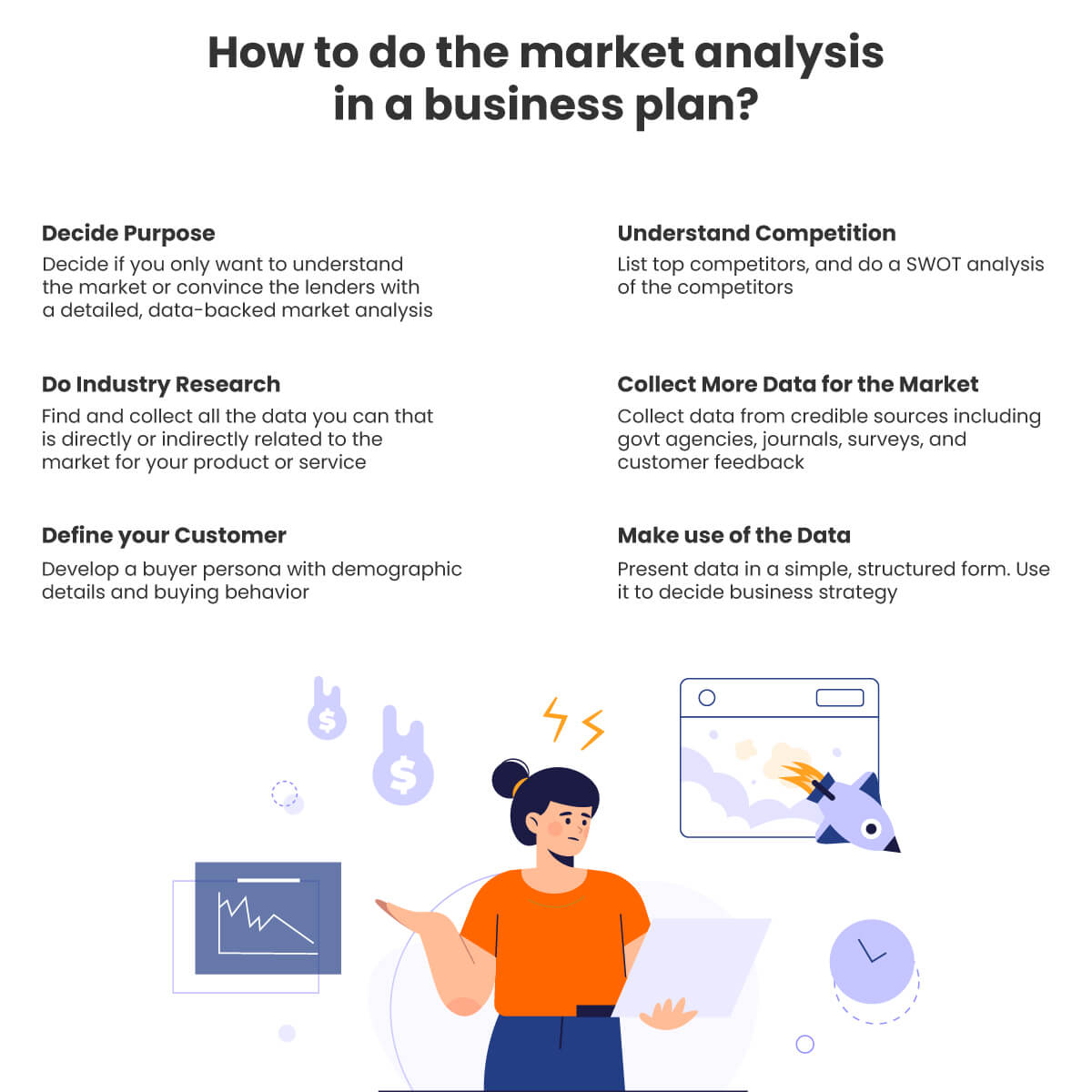
A static view of the market is dangerous. Markets are fluid, influenced by shifting consumer behaviors, technological disruptions, and macroeconomic cycles. A sophisticated business plan anticipates these changes through a trend analysis.
Identifying Growth Drivers and Industry Shifts
What is pushing the industry forward? Is it a shift toward sustainability? A move toward automation? Or perhaps a change in federal interest rates that affects consumer borrowing power?
For example, a business in the residential solar industry must analyze trends in government tax credits and utility pricing. If subsidies are expected to expire, the market analysis must account for a potential dip in demand or a need for a shift in financing options for customers. By addressing these trends, you prove that your business is built for the future, not just the present.
Regulatory and Socio-Economic Impact
Legislation can create or destroy markets overnight. Your analysis should cover any impending regulations, licensing requirements, or trade policies that could impact your operational costs.
Furthermore, consider the broader economic climate. In a high-inflation environment, luxury goods may see a decrease in volume, while discount retailers may see an uptick. Aligning your revenue projections with these broader economic realities adds a layer of financial sophistication to your plan that builds trust with creditors.
Conducting a Robust SWOT Analysis
The SWOT (Strengths, Weaknesses, Opportunities, Threats) analysis is the bridge between your market research and your operational strategy. It forces you to look objectively at how your internal capabilities stack up against the external environment.
Internal Factors: Strengths and Weaknesses
In the context of business finance, strengths might include a proprietary technology that lowers production costs or a highly experienced management team with a history of successful exits. Weaknesses might include a lack of established brand equity or a high debt-to-equity ratio in the startup phase.
By identifying these early, you can explain in your business plan how you intend to leverage your strengths to gain market share and what specific steps you will take to mitigate your weaknesses (e.g., hiring a CFO or outsourcing logistics).
External Factors: Opportunities and Threats
Opportunities are external factors you can exploit for financial gain, such as a competitor going out of business or an emerging market niche. Threats are external risks, such as a sudden increase in raw material costs or a new market entrant with deep pockets.
A thorough market analysis doesn’t shy away from threats. Instead, it quantifies them. For instance, if there is a threat of rising interest rates, you might explain how your business maintains a high cash reserve to remain resilient. This level of risk assessment is exactly what investors look for when deciding where to allocate capital.
Integrating Market Analysis into Your Financial Projections
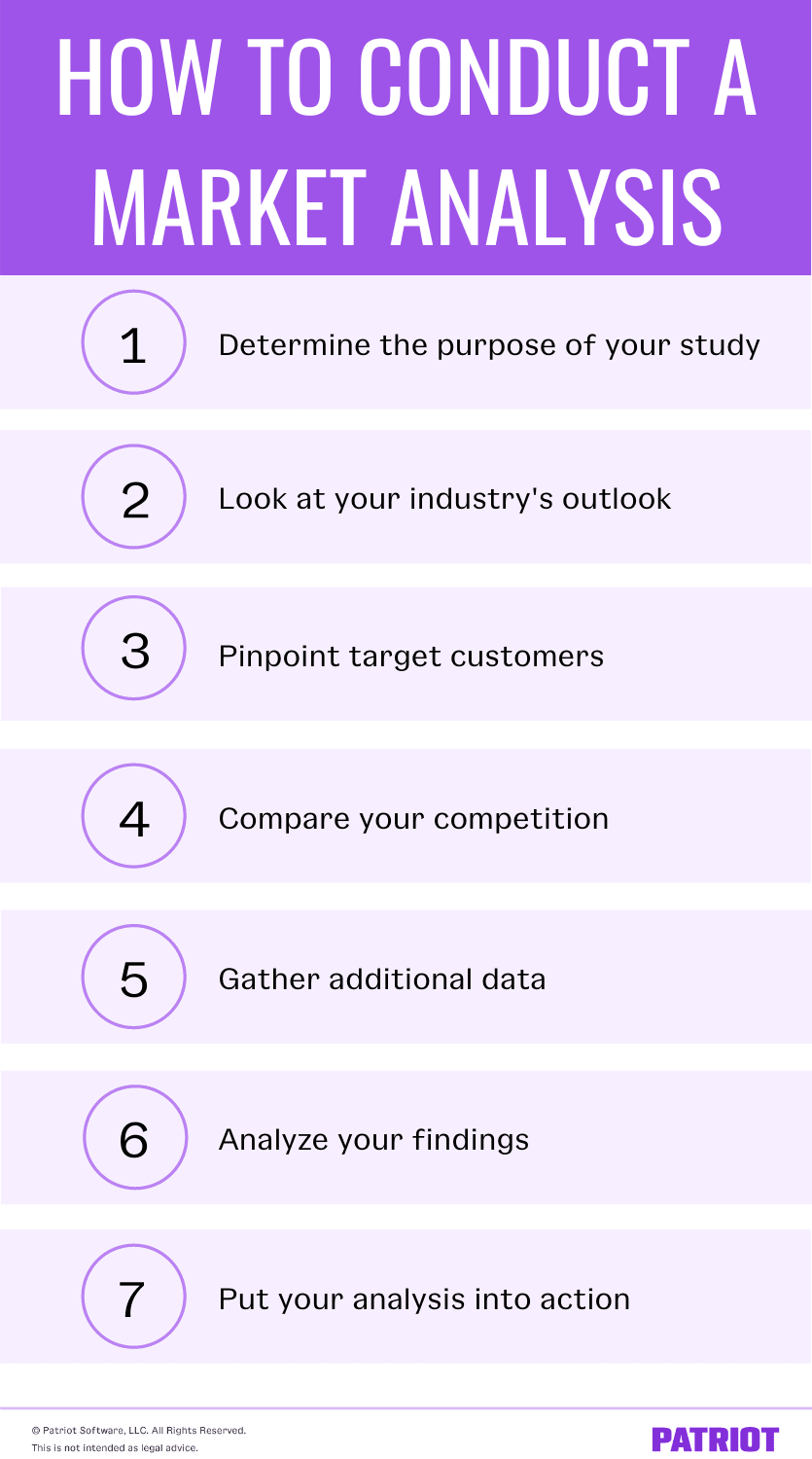
The final and most important step of a market analysis is translating your findings into cold, hard numbers. The data you have gathered should dictate your sales forecast, your expense budget, and your eventual break-even analysis.
Setting Realistic Revenue Targets
Your SOM (Serviceable Obtainable Market) should be the basis for your Year 1 and Year 2 revenue targets. If your market analysis shows a total available market of $10 million and your SOM is 5%, your revenue projection should not exceed $500,000 unless you can justify an aggressive growth strategy. Overly optimistic numbers without market backing are the quickest way to lose credibility with a bank or venture capitalist.
Validating Your Unit Economics
Every data point in your market analysis should help validate your unit economics. If your research shows that the average cost to acquire a customer in your industry via digital ads is $50, and your product sells for $75 with a $30 COGS (Cost of Goods Sold), your business is losing money on every sale.
Your market analysis should provide the evidence needed to show that your Lifetime Value (LTV) far exceeds your Customer Acquisition Cost (CAC). For example, “While our initial CAC is $50, our market research indicates a 90% retention rate in this sector, leading to an LTV of $450 over three years.” This makes the financial case for the business undeniable.
In conclusion, a market analysis for a business plan is not just a descriptive exercise. It is a strategic tool used to prove the financial viability of a venture. By accurately sizing the market, analyzing the competition, anticipating trends, and performing a rigorous SWOT analysis, you create a foundation upon which a profitable and sustainable business can be built. For any entrepreneur seeking to master the “money” side of their business, this analysis is the most critical investment of time they can make.
aViewFromTheCave is a participant in the Amazon Services LLC Associates Program, an affiliate advertising program designed to provide a means for sites to earn advertising fees by advertising and linking to Amazon.com. Amazon, the Amazon logo, AmazonSupply, and the AmazonSupply logo are trademarks of Amazon.com, Inc. or its affiliates. As an Amazon Associate we earn affiliate commissions from qualifying purchases.