
In the dynamic landscape of business, a well-crafted proposal is far more than just a document – it is a potent instrument of persuasion, a strategic blueprint, and often, the linchpin that connects your aspirations with tangible opportunities. Whether you’re seeking investment, pitching a new service to a potential client, or outlining a joint venture, your business proposal serves as your professional ambassador, articulating your value, addressing specific needs, and ultimately, prompting a desired action. It’s a formalized argument, meticulously constructed to convince a recipient that your idea, product, or service is the optimal solution for their challenge or the most lucrative path for their investment.

Many entrepreneurs and seasoned professionals alike underestimate the power and complexity of a truly effective business proposal. They may view it as a mere formality, a template to be filled, rather than a living, breathing document that requires deep understanding, strategic thinking, and meticulous execution. This oversight can be costly, leading to missed opportunities, wasted effort, and an inability to convert promising leads into profitable partnerships. A compelling proposal is not just about what you say, but how you say it, to whom you say it, and the underlying financial and strategic rationale that supports every claim.
This comprehensive guide delves into the art and science of creating winning business proposals. We will explore the foundational elements, the strategic considerations, and the practical steps necessary to construct a document that not only informs but also inspires confidence and drives decisive action. By mastering the intricacies of proposal writing, you position yourself, your business, and your financial objectives for greater success.
Understanding the Essence of a Business Proposal
Before penning the first word, it’s crucial to grasp the fundamental purpose and context of your business proposal. It’s not a generic sales pitch, nor is it merely an informational brochure. It is a targeted, persuasive document designed to achieve a specific outcome, whether that’s securing funding, closing a deal, or initiating a partnership.
Defining Your Objective
Every successful business proposal begins with a clear, concise objective. What do you want the recipient to do after reading your proposal? Is it to invest capital, purchase your service, approve a project, or enter a strategic alliance? Your objective must be singular and unambiguous, as it will inform every section and argument within your proposal. Without a defined objective, your proposal risks becoming an unfocused collection of ideas, failing to guide the reader towards a desired conclusion. This objective is intrinsically linked to financial gain, problem-solving, or mutual benefit, forming the core of your business finance strategy in this context.
Identifying Your Audience
Understanding your audience is paramount. Is your proposal aimed at an angel investor, a corporate procurement manager, a potential partner, or a philanthropic foundation? Each audience has distinct priorities, pain points, and decision-making criteria. Investors, for instance, will be keenly interested in return on investment (ROI), market potential, and financial projections. Clients will focus on how your solution addresses their specific problems, its cost-effectiveness, and the tangible benefits it delivers. Tailoring your language, emphasis, and even the level of detail to resonate with your audience’s perspective is critical for capturing their attention and securing their buy-in. This financial alignment with their priorities is key.
Key Components of a Winning Proposal
While the exact structure may vary depending on the context and recipient, a robust business proposal typically incorporates several essential sections, each playing a vital role in building a comprehensive and convincing case. These components systematically address the recipient’s potential questions and concerns, guiding them towards a favorable decision.
Executive Summary: The Snapshot
Often the first and sometimes the only section read in detail, the executive summary must be compelling. It provides a concise overview of the entire proposal, highlighting the problem, your proposed solution, the key benefits, the financial ask (if applicable), and why your organization is uniquely qualified. Think of it as an elevator pitch for your entire document – it must be persuasive enough to entice the reader to delve deeper into the specifics. For financial proposals, this summary must immediately communicate the value proposition and potential returns.
Problem Statement: Articulating the Need
Before you can offer a solution, you must clearly articulate the problem or opportunity that your proposal addresses. This section demonstrates that you understand the recipient’s challenges, needs, or market gaps. Provide specific details, backed by data or observations, to establish credibility and urgency. A well-defined problem statement lays the groundwork for your proposed solution, framing it as a necessary and timely intervention, often with financial implications of inaction.
Proposed Solution: Your Unique Value Proposition
This is the core of your proposal. Detail your solution, product, or service in clear, understandable terms. Explain how it works, what it involves, and why it is superior or more appropriate than alternatives. Emphasize your unique selling propositions (USPs) – what makes your offering stand out? Be specific and avoid jargon where possible. For financial products or services, detail the mechanisms, benefits, and how it aligns with the client’s financial goals.
Benefits and ROI: What’s in it for Them?
Recipients are primarily interested in what your proposal means for them. This section translates your solution into tangible benefits and, crucially, quantifiable return on investment (ROI). Will it save them money, increase revenue, improve efficiency, mitigate risk, or enhance their market position? Provide specific metrics, case studies, or projections to support your claims. This is where the financial justification of your proposal truly shines.
Scope of Work and Deliverables
Clearly define what your proposal entails, outlining the specific tasks, activities, or phases involved. Detail the deliverables – the concrete outcomes or outputs that the recipient can expect. This sets clear expectations and prevents misunderstandings later on. Be precise about what is included and, if necessary, what is not included.
Timeline and Milestones
Provide a realistic timeline for the project or engagement, breaking it down into key milestones. This demonstrates your planning capabilities and provides the recipient with a clear roadmap for implementation and progress tracking. A structured timeline helps build trust and demonstrates a professional approach to project management and financial planning.
Budget and Payment Terms
This section outlines the financial aspects of your proposal. Clearly list all costs associated with your solution, product, or service. Be transparent about pricing, breaking down expenses where appropriate. Detail your payment terms, including any upfront deposits, payment schedules, and acceptable payment methods. For investment proposals, this would include the capital ask, equity stake, and projected financial returns. Accuracy and transparency here are critical for business finance.
Call to Action and Next Steps
Conclude your proposal with a clear and concise call to action. What should the recipient do next? Provide specific instructions for how to move forward, whether it’s scheduling a meeting, signing a contract, or making an investment. Reiterate the urgency or benefits of immediate action.
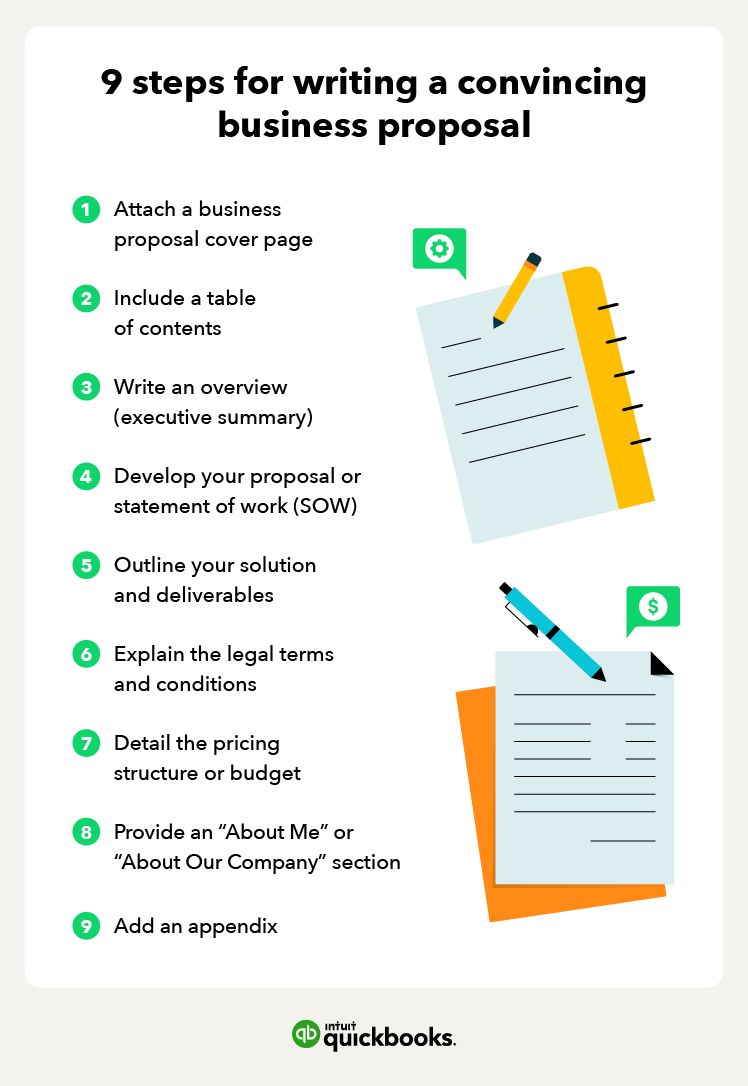
Appendices (Supporting Documents)
Include any supplementary materials that strengthen your proposal without cluttering the main body. This might include resumes of key personnel, testimonials, detailed market research data, financial statements, technical specifications, or elaborate case studies. Ensure that anything in the appendix is referenced in the main text.
Crafting Compelling Content and Presentation
Beyond the structural components, the way you craft your message and present it physically significantly impacts its reception and effectiveness. A brilliant idea can fall flat if poorly communicated.
Language and Tone: Professional Persuasion
Use clear, concise, and professional language. Avoid jargon unless you are certain your audience is familiar with it. The tone should be confident, authoritative, and persuasive, yet respectful and empathetic to the recipient’s needs. Maintain a positive and forward-looking outlook. Your writing should reflect your expertise and commitment to delivering value.
Visual Appeal and Formatting
A well-formatted proposal is easier to read and leaves a positive impression. Use headings, subheadings, bullet points, and ample white space to break up text and improve readability. Incorporate professional branding elements (logo, consistent fonts, color scheme). Charts, graphs, and images can effectively convey complex information or illustrate key points, especially when demonstrating financial projections or market data. A visually appealing document shows attention to detail and professionalism.
Proofreading and Editing: The Mark of Professionalism
Errors in grammar, spelling, or punctuation undermine your credibility. Thoroughly proofread and edit your proposal multiple times. Consider having a fresh pair of eyes review it for clarity, coherence, and accuracy. This final step is non-negotiable for presenting a polished and professional document that reflects your business’s commitment to excellence.
Strategic Considerations for Success
Writing a proposal is not a standalone task; it’s part of a broader strategic effort to achieve your business objectives.
Research and Due Diligence
Before you even begin writing, conduct thorough research on your target audience, their specific needs, market conditions, and any relevant competition. The more you know, the better equipped you will be to tailor your proposal to their precise requirements and present a truly differentiated offering. This deep understanding also helps in formulating realistic financial projections and risk assessments.
Customization Over Generic Templates
While templates can provide a useful starting point, resist the urge to simply fill in the blanks. Every proposal should be highly customized to the specific recipient and their unique situation. A generic proposal signals a lack of genuine interest and understanding, dramatically reducing your chances of success. Invest the time to make it personal and relevant.
Follow-Up and Relationship Building
Submitting a proposal is often just the beginning of a conversation. Plan your follow-up strategy. This might involve a polite email, a phone call, or scheduling a follow-up meeting. Be prepared to answer questions, address concerns, and negotiate. Cultivating a positive relationship throughout the process can be as crucial as the proposal itself. This ongoing dialogue is vital for securing and managing business finance outcomes.
Common Pitfalls to Avoid
Even with the best intentions, certain mistakes can derail an otherwise strong business proposal.
Lack of Clarity or Specificity
Vague language, ambiguous statements, or an unclear value proposition will leave your reader confused and uninspired. Be precise about what you offer, the problem it solves, and the financial benefits it brings. Avoid broad generalizations; instead, provide concrete examples and data.
Ignoring the Client’s Perspective
A common mistake is to write a proposal entirely from your own company’s perspective, focusing solely on your capabilities rather than the client’s needs. Remember, the proposal is about them. Frame your solution in terms of how it benefits them directly, solves their problems, or enhances their financial standing.
Overpromising or Underdelivering
Be realistic about what you can achieve and the timelines involved. Overly ambitious claims or unrealistic financial projections can damage your credibility if you fail to deliver. It’s better to under-promise and over-deliver, building a reputation for reliability and integrity. This honesty is fundamental in business finance.
Conclusion
Creating a successful business proposal is a multifaceted endeavor that demands clarity, strategic insight, and meticulous attention to detail. It is a critical skill for anyone seeking to secure funding, win new clients, or forge meaningful partnerships within the business finance landscape. By understanding your objective, meticulously crafting each component, and presenting your vision with professionalism and persuasive power, you transform a mere document into a powerful tool for achieving your financial and business aspirations.
Remember, a business proposal is your opportunity to showcase your expertise, demonstrate your value, and inspire confidence. Invest the necessary time and effort to make it exceptional, and you will significantly increase your chances of turning opportunities into tangible successes. Master the art of the business proposal, and unlock a pathway to sustained growth and financial prosperity for your ventures.
aViewFromTheCave is a participant in the Amazon Services LLC Associates Program, an affiliate advertising program designed to provide a means for sites to earn advertising fees by advertising and linking to Amazon.com. Amazon, the Amazon logo, AmazonSupply, and the AmazonSupply logo are trademarks of Amazon.com, Inc. or its affiliates. As an Amazon Associate we earn affiliate commissions from qualifying purchases.