
Dividing with percentages is a fundamental skill in personal finance, investing, and business management. Far from being a mere academic exercise, this mathematical operation underpins critical financial decisions, from understanding a discount to calculating investment returns or allocating business expenses. At its core, dividing with percentages allows individuals and organizations to dissect financial data, ascertain original values, determine individual contributions, and accurately prorate costs, leading to more informed and strategic financial planning. Mastering this concept is key to navigating the complexities of modern financial landscapes.
The Foundational Role of Division in Percentage Calculations
Percentages are omnipresent in financial discourse, representing parts of a whole, growth rates, discounts, or interest rates. While often perceived as straightforward, their application in division requires a nuanced understanding, particularly when the goal is to unravel a financial situation to its base components. Division becomes the essential tool to reverse-engineer scenarios where a percentage has already been applied, allowing us to see beyond the reported figure to its underlying drivers.

Deciphering Percentages in a Financial Context
A percentage, denoted by the ‘%’ symbol, simply means “per hundred.” So, 15% is 15 out of 100, or 0.15 in decimal form. The conversion to a decimal is crucial for any calculation involving percentages, especially division. For instance, if you see a 20% discount, it implies you are paying 80% of the original price. If you know the discounted price, division is the operation that helps you uncover that original, higher price.
In finance, percentages are used to:
- Express proportions: What percentage of your income goes to housing?
- Show change: A stock price increased by 5%.
- Indicate rates: An interest rate of 3.5% on a loan.
- Define margins: A profit margin of 10%.
Understanding what the percentage represents – whether it’s an addition, a subtraction, a share, or a rate – is the first step before applying division. This context clarifies whether you are dividing by (1 + percentage) or (1 – percentage), or simply the percentage itself.
When Division Becomes Essential: Identifying Key Scenarios
Division with percentages becomes indispensable in several common financial situations:
- Finding the Original Value: This is perhaps the most frequent application. If you know a final value after a percentage increase (like a markup or sales tax) or decrease (like a discount), you can divide to find the starting value. For example, knowing an item’s price after a 10% sales tax, you can determine its pre-tax price.
- Calculating Individual Contributions or Shares: When a total amount is known, and individual components are expressed as percentages, division might be used to understand the relative weight or actual dollar amount of each component, especially if the total itself is derived from a percentage of something larger. For instance, determining your share of a group investment fund where your contribution is a percentage of a larger pool.
- Prorating and Allocating Costs: In business finance or shared personal expenses, costs often need to be divided proportionally. If overhead costs are to be allocated based on, say, the percentage of revenue each department generates, division plays a role in applying these proportions accurately.
- Analyzing Financial Ratios: Many financial ratios involve percentages, and understanding how they relate to absolute figures often requires division. For example, calculating an effective tax rate by dividing total tax paid by total income.
These scenarios highlight that division isn’t just about splitting a number; it’s about accurately deconstructing financial figures to gain deeper insights into their composition and origin.
Mastering the Mechanics: Step-by-Step Financial Applications
Applying division with percentages effectively requires a clear understanding of the formula and its context. The core principle revolves around converting the percentage to its decimal equivalent and then performing the appropriate division.
Calculating Original Value After a Percentage Increase or Decrease
One of the most common applications is finding an item’s original price or value before a percentage adjustment.
-
Scenario 1: After a Percentage Increase (e.g., Sales Tax, Markup)
If a final price (FP) includes an initial price (OP) plus a percentage increase (I), the formula is:
FP = OP * (1 + I/100)
To find the original price (OP), you rearrange:
OP = FP / (1 + I/100)Example: You bought a gadget for $110, and you know there was a 10% sales tax. What was the price before tax?
Here, FP = $110, I = 10%.
OP = $110 / (1 + 10/100)
OP = $110 / (1 + 0.10)
OP = $110 / 1.10
OP = $100
The original price before tax was $100. -
Scenario 2: After a Percentage Decrease (e.g., Discount, Depreciation)
If a final price (FP) is an initial price (OP) minus a percentage decrease (D), the formula is:
FP = OP * (1 – D/100)
To find the original price (OP), you rearrange:
OP = FP / (1 – D/100)Example: A shirt is on sale for $45 after a 25% discount. What was its original price?
Here, FP = $45, D = 25%.
OP = $45 / (1 – 25/100)
OP = $45 / (1 – 0.25)
OP = $45 / 0.75
OP = $60
The original price of the shirt was $60.
These calculations are vital for businesses determining original costs after markups or discounts, or for individuals checking the true value of an item post-tax.
Determining Individual Contributions or Proportions
When a total value is known, and you need to understand how different elements contribute to it as a percentage, or how a specific percentage contributes to a whole.
Example: A startup received $1,000,000 in seed funding. You contributed $200,000. What percentage of the funding did you contribute?
Contribution Percentage = (Your Contribution / Total Funding) * 100
Contribution Percentage = ($200,000 / $1,000,000) * 100
Contribution Percentage = 0.20 * 100 = 20%
While this is a direct percentage calculation, the inverse often occurs. If you know your contribution is 20% of the total funding, and you know your contribution amount, you can divide to find the total funding.
Total Funding = Your Contribution / (Contribution Percentage / 100)
Total Funding = $200,000 / (20 / 100)
Total Funding = $200,000 / 0.20
Total Funding = $1,000,000
This method is critical for understanding equity stakes, market share analysis, or even calculating individual spending contributions to a shared budget.
Prorating and Allocating Costs
Proration involves dividing a cost proportionally based on a certain metric. For example, allocating shared utility bills or business overheads.
Example: A small business has an annual shared utility bill of $12,000. The marketing department occupies 30% of the total office space. How much of the utility bill should be allocated to the marketing department?
This is a multiplication, but what if the problem was reversed?
If Marketing’s allocated utility bill is $3,600, and this represents 30% of the total utility bill, what is the total utility bill?
Total Utility Bill = Marketing’s Allocated Bill / (Percentage / 100)
Total Utility Bill = $3,600 / (30 / 100)
Total Utility Bill = $3,600 / 0.30
Total Utility Bill = $12,000
This application is crucial for accurate departmental budgeting, understanding true cost centers in a business, or fairly splitting shared household expenses.
Advanced Financial Insights Through Percentage Division
Beyond basic calculations, division with percentages extends to deeper financial analysis, enabling comparisons and performance evaluations crucial for strategic decision-making.
Analyzing Financial Ratios and Performance Metrics
Financial ratios often involve dividing one financial metric by another, with the result sometimes expressed as a percentage or used to calculate a percentage.
-
Debt-to-Income Ratio: A common personal finance metric.
Debt-to-Income Ratio = (Total Monthly Debt Payments / Gross Monthly Income) * 100
If your debt payments are $1,500 and your DTI is 30%, what is your gross monthly income?
Gross Monthly Income = Total Monthly Debt Payments / (DTI / 100)
Gross Monthly Income = $1,500 / (30 / 100)
Gross Monthly Income = $1,500 / 0.30
Gross Monthly Income = $5,000 -
Profit Margin: A key business performance indicator.
Net Profit Margin = (Net Profit / Revenue) * 100
If a company made $50,000 in net profit with a 10% net profit margin, what was its total revenue?
Revenue = Net Profit / (Net Profit Margin / 100)
Revenue = $50,000 / (10 / 100)
Revenue = $50,000 / 0.10
Revenue = $500,000
These divisions help investors evaluate company health, lenders assess creditworthiness, and individuals manage their financial stability.
Understanding Tax Rates and Effective Percentages
Tax calculations often involve percentages, and understanding effective tax rates provides a truer picture than marginal rates.
- Effective Tax Rate: The actual percentage of your income paid in taxes.
Effective Tax Rate = (Total Tax Paid / Total Taxable Income) * 100
If you paid $7,500 in taxes and your effective tax rate was 15%, what was your total taxable income?
Total Taxable Income = Total Tax Paid / (Effective Tax Rate / 100)
Total Taxable Income = $7,500 / (15 / 100)
Total Taxable Income = $7,500 / 0.15
Total Taxable Income = $50,000
This type of calculation is crucial for tax planning, understanding the actual burden of taxes, and comparing tax efficiencies across different scenarios or entities.
Common Pitfalls and Best Practices in Financial Percentage Division
While the mechanics of dividing with percentages are straightforward, the application in complex financial scenarios can lead to errors if not handled carefully. Awareness of common pitfalls and adherence to best practices can significantly enhance accuracy and decision-making.
Avoiding Misinterpretations: The Difference Between Basis Points and Percentage Points
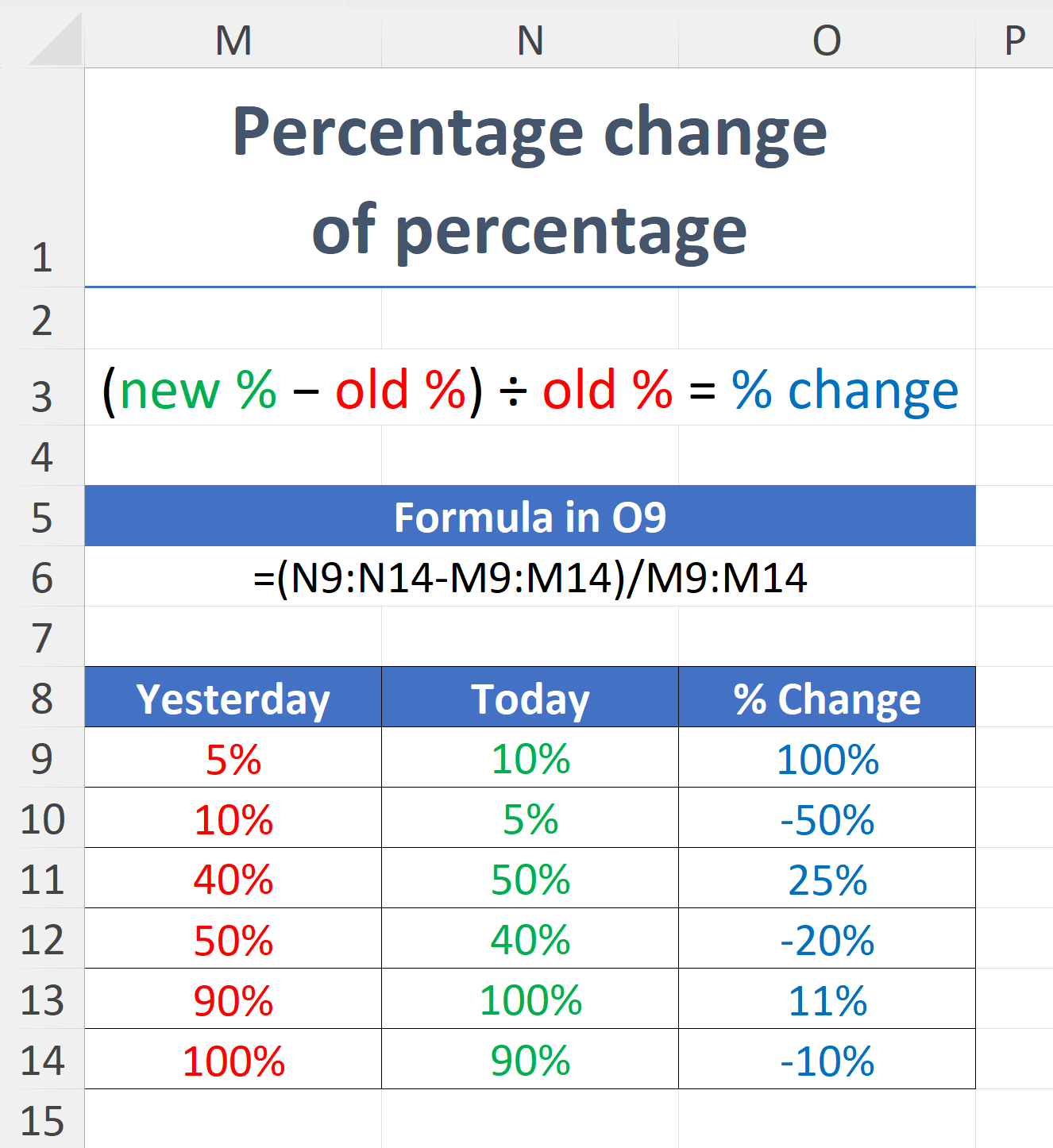
A common mistake is confusing “percentage points” with “percentages.” If an interest rate goes from 4% to 5%, that’s a one percentage point increase. However, it’s a 25% percentage increase (1/4 = 0.25). When dividing with percentages, ensure you are using the correct value and context. Financial professionals often use “basis points” (one basis point equals 0.01 percentage points, or 0.0001 in decimal form) to describe small changes in interest rates or yields to avoid this ambiguity. Misinterpreting these can lead to significant errors in calculating returns or costs.
The Importance of Precision and Verification
Financial calculations often demand a high degree of precision. Rounding too early or too aggressively can lead to material discrepancies, especially with large sums or over multiple periods. Always carry calculations out to several decimal places and only round the final answer as appropriate. Furthermore, it’s a best practice to verify your results. If you calculated an original price, apply the percentage increase or decrease back to it to see if you arrive at the original final price. This simple check can catch many errors.

Leveraging Financial Tools for Accuracy
While understanding the underlying math is crucial, modern financial tools can aid in complex calculations and reduce the risk of manual error. Spreadsheets (like Microsoft Excel or Google Sheets), financial calculators, and specialized accounting software are invaluable. These tools allow for automated calculations, scenario analysis, and easy adjustments, ensuring consistency and accuracy across numerous percentage-based divisions. However, remember that these tools are only as good as the formulas and data you input; a solid grasp of how to divide with percentages remains essential for setting up these tools correctly and interpreting their outputs.
By diligently applying these principles and best practices, individuals and businesses can confidently navigate the world of financial percentages, making sound decisions based on accurate and insightful analysis.
aViewFromTheCave is a participant in the Amazon Services LLC Associates Program, an affiliate advertising program designed to provide a means for sites to earn advertising fees by advertising and linking to Amazon.com. Amazon, the Amazon logo, AmazonSupply, and the AmazonSupply logo are trademarks of Amazon.com, Inc. or its affiliates. As an Amazon Associate we earn affiliate commissions from qualifying purchases.