
In the realms of business finance, personal investing, and corporate accounting, the ability to manipulate numbers with precision is the difference between a profitable venture and a costly oversight. While most individuals are comfortable with the concept of multiplying by a percentage—calculating a discount or adding sales tax—the inverse operation, dividing by a percentage, is a sophisticated financial tool. This process, often referred to as “grossing up” or “reversing a calculation,” allows professionals to determine a total value based on a known portion. Whether you are setting sales targets, calculating profit margins, or assessing investment returns, understanding how to divide by a percentage is a fundamental skill for high-level financial literacy.

The Logic of “Grossing Up”: Why Dividing by Percentage is Essential in Finance
At its core, dividing by a percentage is used to find the “whole” when you only have a “part.” In financial circles, this is often necessary when you need to work backward from a net figure to a gross figure. If you know that $20,000 represents 25% of your annual marketing budget, you cannot simply multiply to find the total; you must divide to reveal the full scope of your financial resources.
The Fundamental Formula
The mathematical formula for dividing by a percentage is straightforward:
Total = Amount / (Percentage / 100)
In financial modeling, we typically bypass the “divide by 100” step by converting the percentage into a decimal immediately. For instance, if you are dividing by 40%, you are dividing by 0.40. The result is always a larger number than the starting amount (provided the percentage is less than 100%), which represents the 100% value from which the original figure was derived.
Converting Percentages to Decimals for Accuracy
Precision is the hallmark of professional finance. When dividing by a percentage, the most common error is a decimal placement mistake. To convert any percentage to a decimal, move the decimal point two places to the left.
-
5% becomes 0.05
-
50% becomes 0.50
-
150% becomes 1.50
In complex financial environments, such as calculating compound interest or adjusted gross income, even a minor error in this conversion can lead to significant discrepancies in quarterly reports or tax filings. Mastering this conversion ensures that your division operations remain accurate across all financial instruments.
Strategic Business Applications: Margins, Markups, and Revenue Goals
For business owners and financial analysts, dividing by a percentage is a daily necessity. It is particularly vital when establishing pricing strategies and ensuring that the business remains solvent after accounting for costs.
The Critical Difference Between Margin and Markup
One of the most frequent applications of dividing by a percentage is in calculating the required selling price to achieve a specific profit margin. Many novice entrepreneurs make the mistake of using markup (adding a percentage to the cost) when they actually intended to target a margin (a percentage of the final selling price).
To achieve a 30% profit margin on a product that costs $70 to produce, you do not simply add 30% to $70 (which would be $91). Instead, you must divide the cost by the inverse of the desired margin. The formula is:
Selling Price = Cost / (1 – Desired Margin %)
In this case: $70 / (1 – 0.30) = $70 / 0.70 = $100.
By dividing by the percentage (expressed as the remaining portion of the whole), the business ensures that 30% of the final price is profit, rather than 30% of the cost. This distinction is critical for maintaining cash flow and meeting the expectations of investors who look at margin as a primary health metric.
Calculating Sales Targets Based on Market Share
Strategic planning often involves setting goals based on desired market penetration. If a company knows it has captured $5 million in revenue and that this represents 8% of the total addressable market (TAM), they can use division to calculate the total size of the market.
By calculating $5,000,000 / 0.08, the leadership team discovers that the total market is worth $62.5 million. This insight allows for more accurate forecasting and helps the business determine if there is enough “room” left in the market to justify further capital investment.
Budget Allocation and Resource Management
Department heads often receive “net” budget figures after certain fixed costs or taxes have been removed. If a manager is told that their remaining $150,000 represents 60% of their total annual allocation, they must divide by 0.60 to realize their total budget was $250,000. This helps in auditing where the other 40% ($100,000) was allocated, ensuring transparency in corporate financial structures.
Advanced Investment Analysis: Reversing the Impact of Market Volatility
Investors and portfolio managers use percentage division to assess risk and determine the necessary recovery path after market downturns. This is an area where the “math of loss” becomes incredibly apparent.
Calculating Required Returns to Break Even
One of the most sobering realities in investing is that a percentage loss requires a larger percentage gain to return to the original value. This is a classic “divide by percentage” scenario. If a portfolio loses 20% of its value, many assume a 20% gain will fix it. However, if you have $100 and lose 20%, you have $80.
To find out what you need to get back to $100, you are essentially looking for the “new whole.” The calculation involves dividing the original value by the current value’s percentage of the original. More simply, to find the required gain:
Required Gain = (1 / (1 – Loss %)) – 1
If you lost 50%, you divide 1 by 0.50, which equals 2. Subtracting 1 gives you 1, or a 100% required gain. Understanding this division-based relationship between loss and gain is essential for risk management and setting realistic expectations for portfolio recovery.
Grossing Up Dividend Yields and Tax Effects
For investors holding municipal bonds or other tax-advantaged assets, comparing them to taxable investments requires “grossing up” the yield. If a tax-free bond pays 4% and the investor is in a 25% tax bracket, the investor needs to know what a taxable bond would have to pay to be equivalent.
The formula is: Tax-Equivalent Yield = Tax-Free Yield / (1 – Tax Rate)
Calculation: 0.04 / (1 – 0.25) = 0.04 / 0.75 = 0.0533, or 5.33%.
By dividing by the percentage of income the investor actually keeps (75%), they can make an “apples-to-apples” comparison between different financial products, ensuring optimal capital allocation.
Practical Execution: Financial Tools and Spreadsheet Automation
While manual calculation is important for conceptual understanding, modern finance relies on software to handle these operations at scale. Whether you are using a dedicated financial calculator or a spreadsheet, the logic remains consistent.
Performing Percentage Division in Excel and Google Sheets
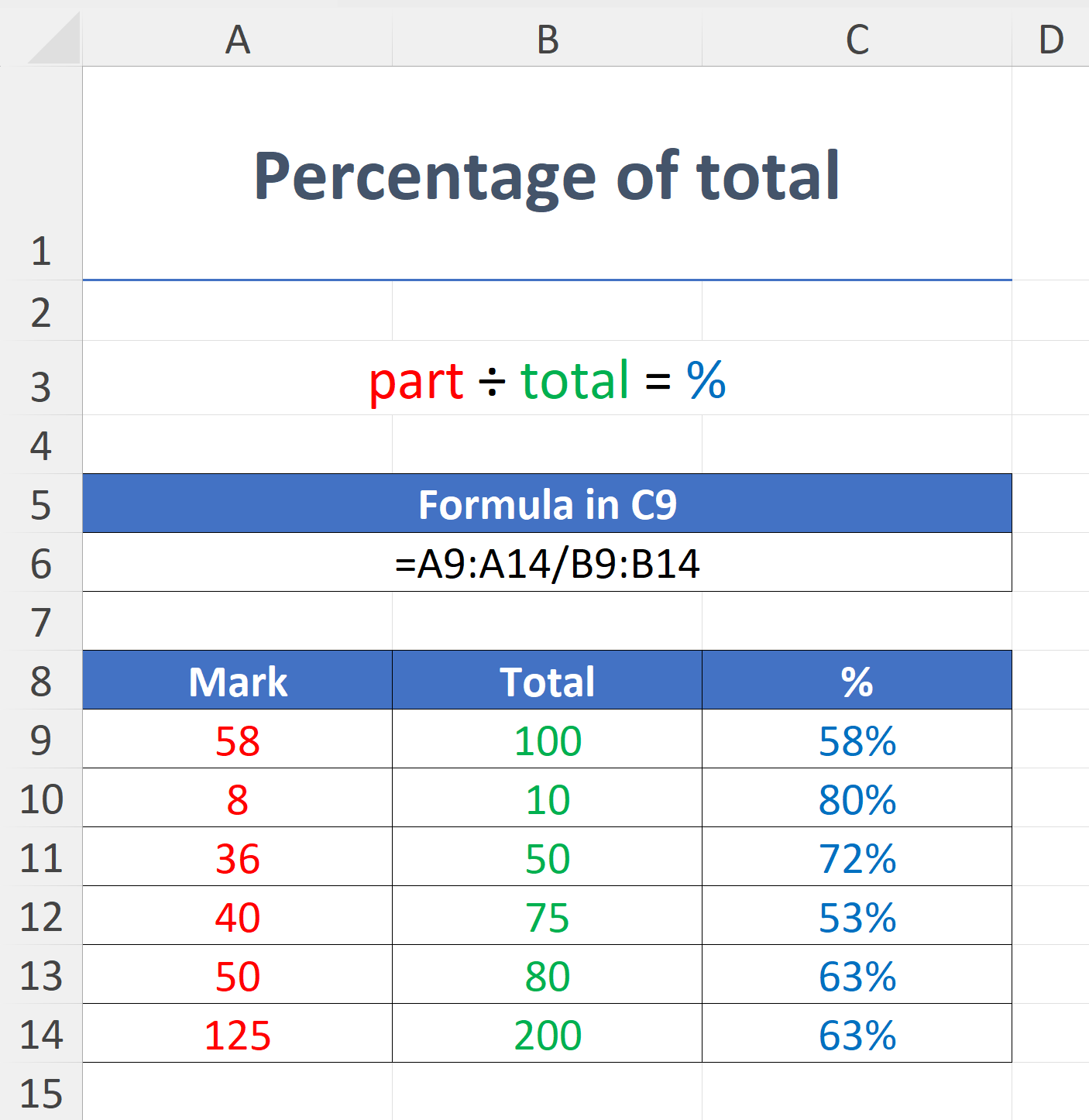
In applications like Microsoft Excel or Google Sheets, dividing by a percentage is common in financial modeling. If Cell A1 contains a dollar amount ($500) and Cell B1 contains a percentage (20%), the formula =A1/B1 will yield $2,500.
However, a common pitfall occurs if the cell is not formatted correctly. If “20” is entered into a cell that is not formatted as a percentage, the software will divide by 20 rather than 0.20. Professional analysts always ensure that their data types are strictly defined—either by using the percentage format or by explicitly dividing by 100 within the formula: =A1/(B1/100).
Building Dynamic Financial Models
Sophisticated financial models use division by percentage to create “what-if” scenarios. For example, a “Sensitivity Analysis” might look at how a change in the interest rate affects the principal amount of a loan. By setting up cells where the principal is calculated by dividing the annual interest payment by the interest rate percentage, an analyst can instantly see how a 1% shift in rates impacts the borrowing capacity of a business.
Mitigating Risk: Avoiding Common Errors in Percentage-Based Calculations
In high-stakes financial reporting, a misunderstanding of how to divide by a percentage can lead to “material misstatements,” which can have legal and regulatory consequences.
The Danger of the “Percentage Point” Trap
A frequent source of confusion in business finance is the difference between a “percentage” and a “percentage point.” If an interest rate grows from 10% to 12%, it has grown by two percentage points, but it has increased by 20% (2 / 10). When dividing by these figures, it is vital to know which one is being requested. Dividing a value by the 20% growth rate provides a different financial insight than dividing by the 12% total rate. Misidentifying these in a report can lead to an incorrect valuation of assets or liabilities.

Ensuring Data Integrity in Financial Reporting
To maintain the integrity of financial data, it is recommended to always “cross-check” a division by percentage with a multiplication operation. If you divided $1,000 by 0.10 to get $10,000, verify the result by multiplying $10,000 by 0.10 to ensure you return to $1,000.
This simple habit of “reversing the reverse” is a standard practice for auditors and accountants. In the fast-paced world of online income and digital business finance, where automated tools often hide the underlying math, maintaining this level of manual oversight ensures that your financial strategies are built on a foundation of absolute mathematical certainty. By mastering the art of dividing by a percentage, you gain the ability to look behind the numbers, revealing the true scale and potential of any financial endeavor.
aViewFromTheCave is a participant in the Amazon Services LLC Associates Program, an affiliate advertising program designed to provide a means for sites to earn advertising fees by advertising and linking to Amazon.com. Amazon, the Amazon logo, AmazonSupply, and the AmazonSupply logo are trademarks of Amazon.com, Inc. or its affiliates. As an Amazon Associate we earn affiliate commissions from qualifying purchases.