
In the intricate world of finance, where every decision can impact your financial well-being, understanding how to determine percentages is not just a useful skill—it’s an absolute necessity. From calculating the interest on a loan or the return on an investment to deciphering a company’s profit margin or budgeting your monthly expenses, percentages are the universal language that quantifies proportion, change, and risk. They empower individuals and businesses alike to make informed choices, track progress, and strategically plan for the future. Without a firm grasp of percentage calculations, navigating the complexities of personal finance, investment strategies, or business operations becomes a daunting and often perilous endeavor.

This comprehensive guide will demystify percentages, breaking down the core concepts and illustrating their myriad applications within the financial realm. We’ll explore everything from the basic formulas that underpin all percentage calculations to advanced scenarios encountered in investing and business analysis. By the end of this article, you’ll be equipped with the knowledge and confidence to not only calculate percentages accurately but also to interpret their significance, transforming raw numbers into actionable financial insights.
The Fundamentals of Percentage Calculation: Your Financial Foundation
At its heart, a percentage is a way of expressing a number as a fraction of 100. It’s a standardized method to compare proportions, making it easier to understand relative values regardless of the absolute numbers involved. In finance, this standardization is invaluable, allowing for apples-to-apples comparisons across different scales of operation or investment.
What is a Percentage and Its Basic Formula?
The word “percentage” derives from “per cent,” meaning “per hundred” or “out of one hundred.” So, if you say 25%, it literally means 25 out of 100. This concept underpins every financial calculation where percentages are used.
The most fundamental formula for determining a percentage is:
Percentage = (Part / Whole) × 100
Let’s say you’re tracking your monthly budget. If your total income for the month is $5,000 (the “Whole”) and you spent $1,250 on housing (the “Part”), you can determine the percentage of your income spent on housing:
( $1,250 / $5,000 ) × 100 = 0.25 × 100 = 25%
This simple formula is the bedrock for calculating everything from sales tax to investment returns.
Converting Decimals and Fractions to Percentages
Often, financial data will be presented in decimal or fractional form, and you’ll need to convert these into percentages for easier understanding and comparison.
- From Decimal to Percentage: Multiply the decimal by 100.
- Example: A stock’s value increased by a factor of 0.07. To express this as a percentage: 0.07 × 100 = 7%. This means a 7% increase.
- From Fraction to Percentage: First, convert the fraction to a decimal by dividing the numerator by the denominator. Then, multiply the resulting decimal by 100.
- Example: You paid 1/5 of your earnings in taxes. To express this as a percentage: (1 ÷ 5) × 100 = 0.20 × 100 = 20%.
Converting Percentages to Decimals for Calculations
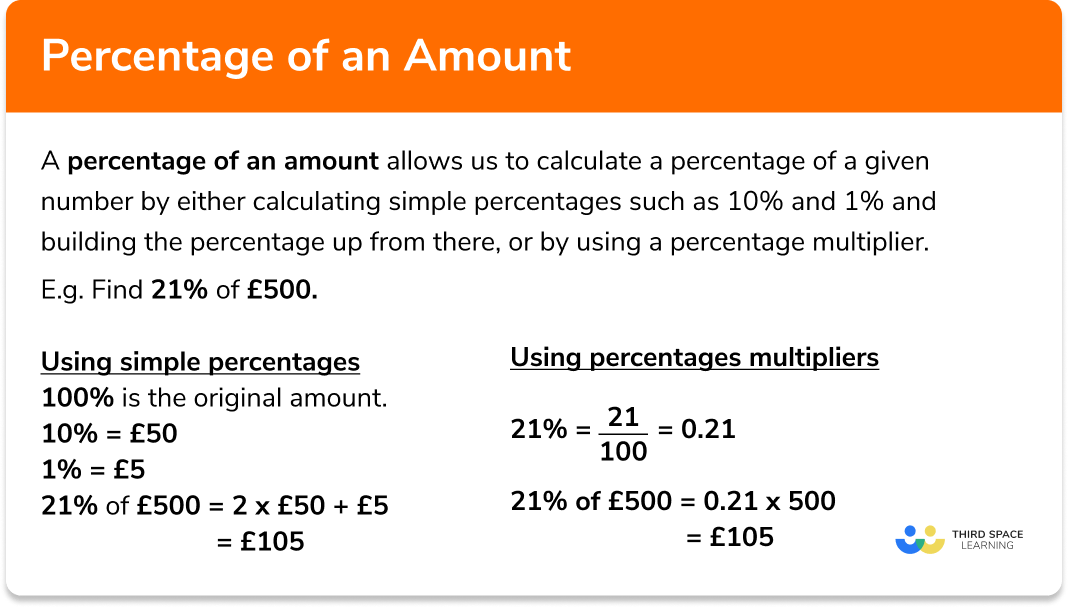
Conversely, when you need to use a percentage in a mathematical calculation (e.g., finding the dollar amount of a discount), you’ll often need to convert the percentage back into a decimal. This is done by dividing the percentage by 100.
- Example: A store is offering a 15% discount on an item. To find the actual discount amount on a $200 item, you’d convert 15% to a decimal: 15 ÷ 100 = 0.15. Then, multiply this decimal by the original price: 0.15 × $200 = $30 discount.
Mastering these basic conversions is essential for fluency in financial calculations.
Common Financial Applications of Percentages
The power of percentages truly shines in their diverse applications across personal and business finance. They provide a concise and intuitive way to convey financial health, performance, and impact.
Calculating Discounts, Markups, and Profit Margins
- Discounts: A common use in consumer finance. If an item costs $50 and has a 20% discount, the discount amount is $50 × (20 ÷ 100) = $50 × 0.20 = $10. The new price is $50 – $10 = $40.
- Markups: Businesses use markups to price products. If a product costs a retailer $20 and they want a 50% markup, the markup amount is $20 × 0.50 = $10. The selling price is $20 + $10 = $30.
- Profit Margins: A crucial business metric. Gross Profit Margin = (Gross Profit / Revenue) × 100. If a company has $1,000,000 in revenue and $400,000 in gross profit, their gross profit margin is ($400,000 / $1,000,000) × 100 = 40%. This tells investors and management how efficiently the company is turning revenue into profit.
Understanding Interest Rates: Loans, Savings, and Investments
Interest rates are almost universally expressed as percentages and dictate the cost of borrowing or the return on saving/investing.
- Simple Interest: The most straightforward. Interest = Principal × Rate × Time. If you borrow $1,000 at 5% simple interest for 1 year, the interest is $1,000 × 0.05 × 1 = $50.
- Annual Percentage Rate (APR): The annual cost of a loan, including interest and other charges. Critical for comparing loan offers.
- Annual Percentage Yield (APY): The effective annual rate of return on an investment or savings account, taking into account compounding interest. Higher APY means more earnings.
Analyzing Growth and Decline: Investments, Revenue, and Expenses
Percentages are vital for tracking changes over time, whether positive (growth) or negative (decline).
- Investment Returns: If your investment grew from $10,000 to $11,500, the percentage growth is (($11,500 – $10,000) / $10,000) × 100 = ($1,500 / $10,000) × 100 = 15%.
- Revenue Growth: A business might report 10% year-over-year revenue growth, signifying a healthy expansion.
- Expense Reduction: Conversely, a company aiming to cut costs might target a 5% reduction in operational expenses.
Budgeting and Allocating Funds
Personal and business budgets heavily rely on percentages to ensure responsible allocation of resources.
- The 50/30/20 Rule: A popular budgeting guideline suggesting 50% of income for needs, 30% for wants, and 20% for savings/debt repayment. This illustrates how percentages provide a flexible framework for financial planning, adapting to any income level.
- Expense Categories: By calculating what percentage of your total spending goes to housing, food, transportation, etc., you can identify areas for potential savings or reallocate funds more effectively.

Advanced Percentage Scenarios in Finance
While the basics are crucial, finance often presents more complex situations requiring a deeper understanding of percentage mechanics.
Percentage Change: Measuring Volatility and Performance
Calculating percentage change is fundamental for assessing performance over time.
Percentage Change = ((New Value – Old Value) / Old Value) × 100
- Stock Market Fluctuations: If a stock price goes from $100 to $110, it’s a 10% increase. If it then drops from $110 back to $100, it’s NOT a 10% decrease. It’s (($100 – $110) / $110) × 100 = (- $10 / $110) × 100 ≈ -9.09%. This highlights that percentage changes are always relative to the starting value.
- Inflation/Deflation: These economic indicators are expressed as percentage changes in price levels over a period, directly impacting purchasing power.
Compound Interest: The Eighth Wonder of the World
Albert Einstein is often attributed with calling compound interest “the eighth wonder of the world,” and for good reason. It’s the interest on an initial principal plus the accumulated interest from previous periods. Understanding its calculation is vital for long-term investing and debt management.
A = P(1 + r/n)^(nt)
Where:
- A = the future value of the investment/loan, including interest
- P = the principal investment amount (the initial deposit or loan amount)
- r = the annual interest rate (as a decimal)
- n = the number of times that interest is compounded per year
- t = the number of years the money is invested or borrowed for
Even small percentage interest rates, compounded over many years, can lead to substantial growth in savings or significant accumulation of debt. For example, a 7% annual return on an investment compounded annually will double your money in approximately 10 years (using the Rule of 72: 72 / 7 ≈ 10.28 years).
Multi-step Percentage Calculations: Real-World Complexity
Financial transactions often involve multiple percentage steps.
- Sales with Tax: If an item is $100 with a 20% discount and a 8% sales tax, you apply the discount first: $100 – ($100 × 0.20) = $100 – $20 = $80. Then, apply the tax to the discounted price: $80 + ($80 × 0.08) = $80 + $6.40 = $86.40.
- Commissions: A salesperson might earn a base salary plus a percentage commission on sales over a certain threshold, requiring layered calculations.
Understanding Basis Points (bps)
In financial markets, especially for interest rates, bond yields, and fee structures, small percentage changes are often expressed in “basis points” (bps). One basis point is equal to 0.01% (one hundredth of a percentage point).
- 1 bp = 0.01% = 0.0001
- 100 bps = 1%
- Example: If an interest rate increases by 25 basis points, it means it increased by 0.25%. If the rate was 3.50%, it’s now 3.75%. This unit allows for precision in quoting small changes in financial instruments.
Tools and Tips for Accurate Percentage Determination
While understanding the formulas is paramount, leveraging the right tools and being mindful of common pitfalls can greatly enhance your accuracy and efficiency.
Using Calculators and Spreadsheets for Precision
- Basic Calculators: For simple percentage calculations, any standard calculator will suffice. Most have a “%” button, but it’s often safer and clearer to perform the division and multiplication manually (e.g.,
Part / Whole * 100). - Financial Calculators: Dedicated financial calculators offer built-in functions for complex calculations like compound interest, present value, and future value, which heavily rely on percentages.
- Spreadsheets (Excel, Google Sheets): These are indispensable for financial analysis.
- Direct Percentage Formatting: You can format cells as percentages, and Excel will automatically multiply the decimal value by 100 and add a “%” sign.
- Formulas: Excel’s formula capabilities make it easy to set up dynamic calculations. For example, to calculate percentage change:
=(B2-A2)/A2(then format as percentage). This is particularly useful for budgeting, investment tracking, and business reporting where you need to analyze large datasets.
Avoiding Common Mistakes
- Incorrect Base: This is the most frequent error. Always ensure you’re dividing by the correct “whole” or “original” value. As seen with stock price fluctuations, a percentage decrease from a higher value is numerically different from an equal percentage increase from a lower value.
- Rounding Errors: Rounding intermediate steps in multi-step calculations can lead to significant inaccuracies, especially in large financial transactions. It’s best to perform calculations with maximum precision and only round the final answer to the required decimal places.
- Misinterpreting “of” vs. “than”: “20% of $100” is $20. “20% more than $100” is $100 + ($100 * 0.20) = $120. “20% less than $100” is $100 – ($100 * 0.20) = $80. Be precise with language.
- Confusing Absolute vs. Relative Change: A $100 gain on a $1,000 investment is a 10% return. A $100 gain on a $10,000 investment is a 1% return. While the absolute gain is the same, the relative (percentage) gain is vastly different.
Practical Examples and Case Studies
Let’s consider a practical scenario. Imagine you’re evaluating two investment options:
- Option A: Grew from $5,000 to $5,800 in one year.
- Percentage Growth = (($5,800 – $5,000) / $5,000) × 100 = ($800 / $5,000) × 100 = 16%
- Option B: Grew from $10,000 to $11,000 in one year.
- Percentage Growth = (($11,000 – $10,000) / $10,000) × 100 = ($1,000 / $10,000) × 100 = 10%
While Option B had a larger absolute dollar gain ($1,000 vs. $800), Option A provided a higher percentage return (16% vs. 10%), indicating it was a more efficient investment for the capital deployed. This kind of percentage analysis is critical for making sound investment decisions.
In another example, a small business owner is analyzing their cost structure. If their total monthly expenses are $20,000, and rent accounts for $4,000, while salaries are $8,000:
- Rent as a percentage of total expenses = ($4,000 / $20,000) × 100 = 20%
- Salaries as a percentage of total expenses = ($8,000 / $20,000) × 100 = 40%
This breakdown immediately highlights that salaries are the largest expense, allowing the owner to focus cost-cutting efforts strategically.
Conclusion
The ability to accurately determine and interpret percentages is more than just a mathematical skill; it’s a fundamental financial literacy tool that empowers individuals and businesses to navigate the modern economic landscape with confidence and precision. From the simplicity of calculating a sales discount to the complexity of analyzing investment returns compounded over decades, percentages provide the indispensable framework for understanding proportions, measuring change, and evaluating financial performance.
By mastering the basic formulas, understanding common financial applications, and delving into more advanced scenarios like compound interest and basis points, you unlock a deeper understanding of your money. Leveraging tools like spreadsheets and being aware of common pitfalls will further refine your accuracy and efficiency. In a world increasingly driven by data, your proficiency in determining percentages is a powerful asset, transforming raw numbers into meaningful insights that drive smarter financial decisions, foster growth, and build lasting wealth. Embrace this essential skill, and take charge of your financial future.
aViewFromTheCave is a participant in the Amazon Services LLC Associates Program, an affiliate advertising program designed to provide a means for sites to earn advertising fees by advertising and linking to Amazon.com. Amazon, the Amazon logo, AmazonSupply, and the AmazonSupply logo are trademarks of Amazon.com, Inc. or its affiliates. As an Amazon Associate we earn affiliate commissions from qualifying purchases.