
In the realms of personal finance, corporate accounting, and aggressive investing, the ability to accurately measure growth is the difference between making informed decisions and operating on guesswork. Whether you are tracking the performance of a diversified stock portfolio, analyzing year-over-year revenue for a startup, or calculating the impact of inflation on your purchasing power, the “percentage increase” is your most vital diagnostic tool.
Understanding how to determine percentage increase is more than just a mathematical exercise; it is the language of progress. It allows stakeholders to strip away the raw numbers—which can often be misleading—and look at the relative velocity of growth. This article provides a comprehensive guide to mastering this calculation and applying it within the sophisticated context of the financial world.
The Fundamental Formula for Financial Growth
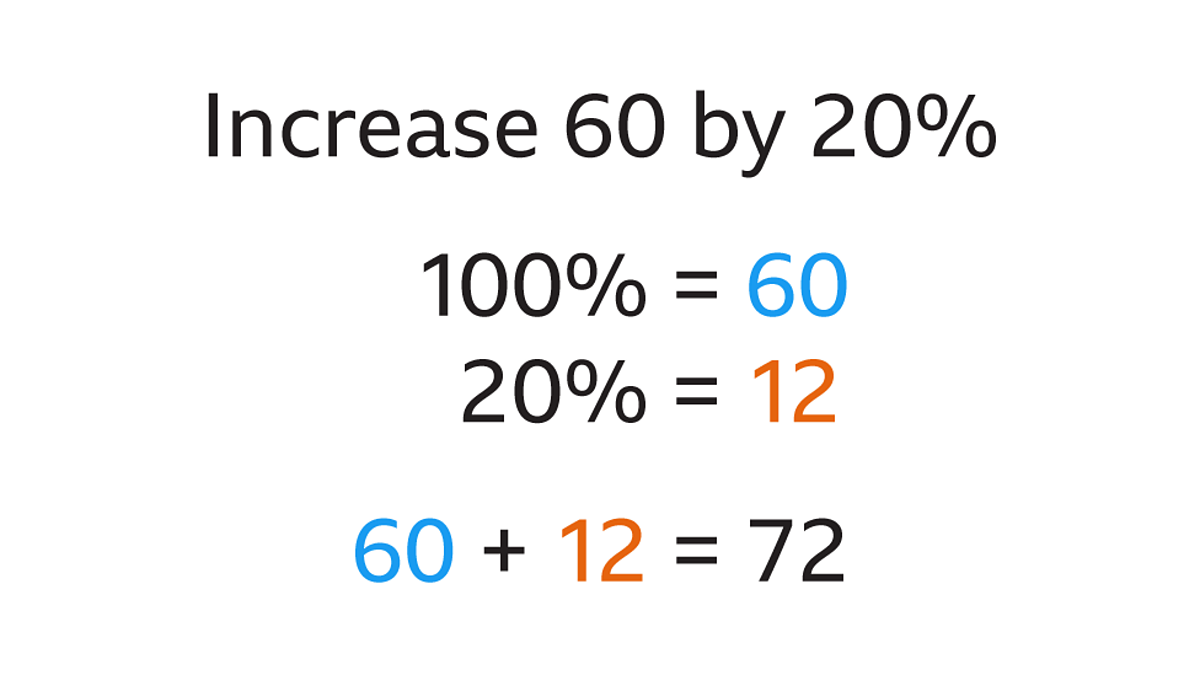
Before diving into complex balance sheets or investment ratios, one must master the core arithmetic. The percentage increase represents the relationship between a starting value and a final value, expressed as a portion of 100.
The Core Equation: New vs. Old
The formula for determining a percentage increase is straightforward yet powerful:
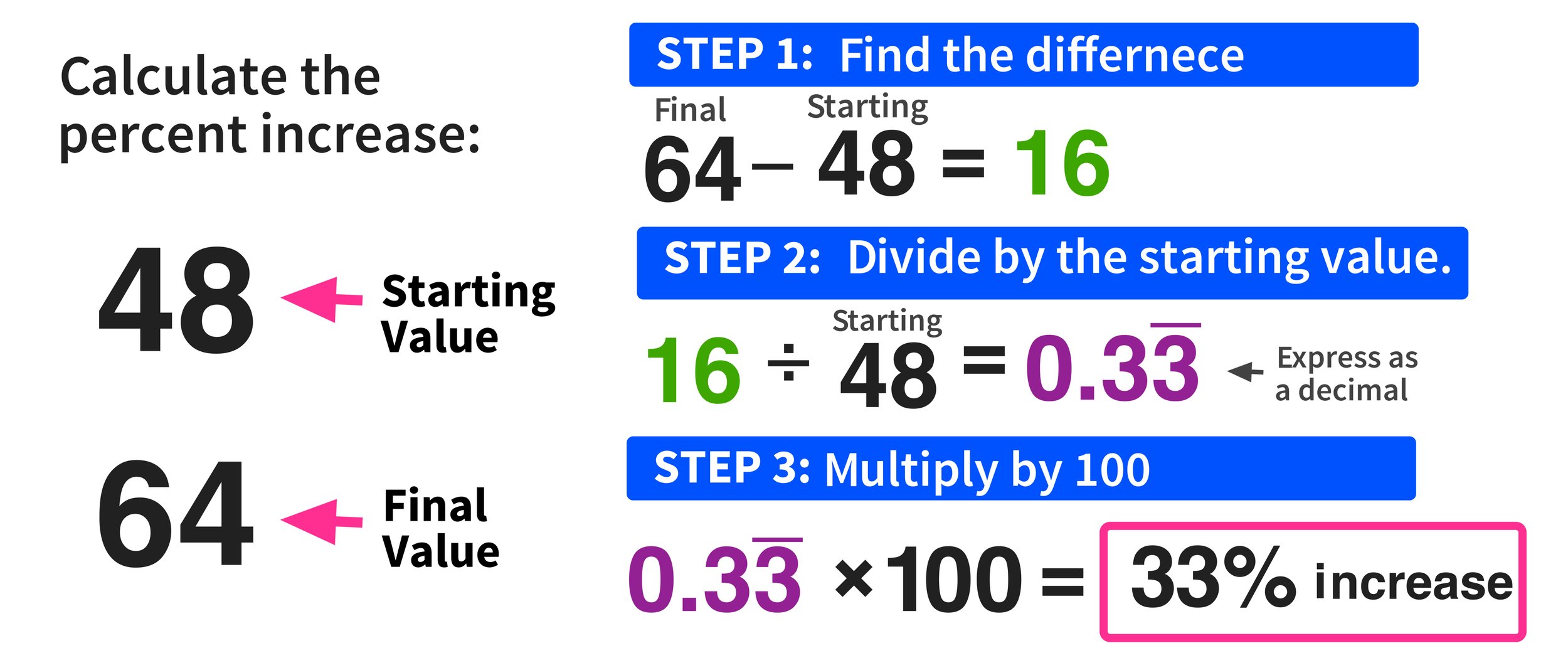
[(New Value – Old Value) / Old Value] × 100 = Percentage Increase.
To apply this, follow three logical steps:
- Find the Difference: Subtract the original value (the “old” number) from the current value (the “new” number). This result is the “increase” or the “delta.”
- Divide by the Original: Take that increase and divide it by the original value. This step is crucial because it benchmarks the growth against the starting point.
- Convert to a Percentage: Multiply the decimal result by 100 to get the final percentage.
For example, if a business generated $500,000 in revenue last year and $650,000 this year, the calculation would be: ($650,000 – $500,000) / $500,000 = 0.30. Multiplying by 100 gives you a 30% increase.
Why Decimals and Percentages Matter in Accounting
In professional financial reporting, you will often see these figures expressed as decimals (0.30) or percentages (30%). While they represent the same value, their application differs. Decimals are preferred for internal modeling and algorithmic trading because they are easier to integrate into complex multi-step formulas. Percentages, however, are the standard for “Money” communication—they are used in annual reports, pitch decks, and client updates because they provide an immediate, intuitive sense of scale.
Understanding the decimal-to-percentage conversion is also vital when calculating cumulative growth. If an asset grows by 10% (1.10) and then grows by 10% again, the total increase isn’t 20%, but rather 21% (1.10 × 1.10 = 1.21). Mastering the basic formula is the first step in avoiding these common “additive” errors in financial planning.
Applying Percentage Increase to Investment Portfolios
For the individual investor or the fund manager, percentage increase is the primary metric for evaluating asset performance. However, raw percentage increase only tells part of the story; it must be viewed through the lenses of time and external economic factors.
Measuring Capital Appreciation
When you purchase a stock or a piece of real estate, your primary goal is capital appreciation. To determine the percentage increase of an investment, you must account for your “cost basis.” If you bought shares of a technology company at $120 and the current market price is $155, your percentage increase is 29.1%.
However, seasoned investors also include transaction costs and dividends in this calculation. This is known as “Total Return.” To calculate the percentage increase in total return, you would add any dividends received to the final price before applying the standard formula. This provides a more accurate picture of the wealth generated by the asset.
Compound Annual Growth Rate (CAGR) vs. Simple Percentage Increase
A common mistake in personal finance is looking at a multi-year percentage increase and assuming it represents steady growth. If an investment grows 100% over five years, it did not grow 20% each year. Due to the effects of compounding, the actual annual growth rate is lower.
This is where the Compound Annual Growth Rate (CAGR) becomes essential. While the simple percentage increase tells you the total distance traveled, CAGR tells you the average speed of the journey. For any serious investor, calculating the percentage increase over a long period must be supplemented with CAGR to determine if the investment is meeting its long-term benchmarks compared to the broader market.
Factoring in Inflation and Real Rate of Return
In an era of fluctuating currency values, the “nominal” percentage increase (the number you see on your bank statement) can be deceptive. To find your “real” rate of return, you must subtract the percentage increase of the Consumer Price Index (inflation) from the percentage increase of your investment.

If your high-yield savings account saw a 5% increase over a year, but inflation rose by 6%, your real percentage “increase” is actually a 1% decrease in purchasing power. Professional financial management requires always distinguishing between nominal gains and real growth.
Leveraging Growth Metrics for Business Strategy
In the corporate world, determining percentage increase is a daily requirement for executives and entrepreneurs. It is the pulse check for a company’s health, used to justify budgets, pivot strategies, and attract venture capital.
Tracking Year-over-Year (YoY) Revenue Growth
Year-over-Year (YoY) analysis is the gold standard for business finance. It compares a specific period (like Q3 2023) to the same period in the previous year (Q3 2022). This eliminates “seasonal noise”—the natural fluctuations in business that occur during holidays or specific weather cycles.
When a CEO reports a “20% YoY increase in revenue,” they are telling investors that the company is fundamentally stronger than it was twelve months ago, regardless of month-to-month volatility. This metric is the most common way to value a company during an acquisition or an IPO.
Customer Acquisition Cost (CAC) and Lifetime Value (LTV) Ratios
Percentage increase isn’t just for revenue; it is also for efficiency. A business might see a 50% increase in revenue, but if their Customer Acquisition Cost (CAC) saw a 70% increase over the same period, the business is actually becoming less profitable.
Strategic business finance involves monitoring the percentage increase of expenses relative to the percentage increase of income. Ideally, a “scaling” business is one where the percentage increase of revenue significantly outpaces the percentage increase of operational costs. This is known as operating leverage, and it is the hallmark of a high-performance brand.
Pricing Strategies: Analyzing the Impact of Price Hikes
When a business decides to raise its prices, it must use percentage increase calculations to predict consumer elasticity. If a company increases the price of a subscription service by 15%, they are betting that the percentage of customers who cancel (churn) will be lower than the percentage increase in revenue per user.
By analyzing historical data and determining the percentage increase in profit margins following past price adjustments, financial analysts can create models that maximize “Bottom Line” growth without alienating the customer base.
Avoiding Common Pitfalls in Financial Calculations
While the math is simple, the interpretation of percentage increases is rife with potential for error. Professionals must be wary of how these numbers are presented and perceived.
The Danger of “Small Numbers” Bias
One of the most frequent traps in business finance is the “Small Numbers” bias. A startup might brag about a 400% increase in users, which sounds revolutionary. However, if they went from 1 user to 5 users, the percentage increase is massive, but the actual business impact is negligible.
When evaluating a side hustle or a new business line, always look at the absolute values alongside the percentage increase. A 5% increase on a $1 million revenue stream is often more valuable than a 500% increase on a $1,000 revenue stream.
Mistaking Percentage Points for Percentage Change
This is a sophisticated error often seen in financial news reporting. There is a profound difference between a “percentage increase” and an “increase in percentage points.”
If interest rates move from 3% to 4%, that is an increase of one percentage point, but it is a 33.3% increase in the cost of borrowing. In the world of “Money,” confusing these two can lead to catastrophic errors in mortgage planning, bond valuation, and debt management. Always clarify whether a change refers to the relative growth of the number or the absolute movement of a rate.
Conclusion: The Language of Wealth
Mastering how to determine percentage increase is the first step toward financial literacy and professional mastery. In the context of “Money,” these calculations provide a clear, objective lens through which to view the world. They allow you to cut through the marketing jargon of investment firms and the emotional highs and lows of entrepreneurship to see the cold, hard reality of growth.
By consistently applying these formulas to your investments, your business operations, and your personal savings, you gain the ability to spot trends before they become obvious to the general public. In finance, those who understand the math of growth are the ones who ultimately control the direction of their wealth. Whether you are aiming for a 10% increase in your savings rate or a 100% increase in your company’s valuation, the journey starts with the simple, disciplined application of the percentage increase formula.
aViewFromTheCave is a participant in the Amazon Services LLC Associates Program, an affiliate advertising program designed to provide a means for sites to earn advertising fees by advertising and linking to Amazon.com. Amazon, the Amazon logo, AmazonSupply, and the AmazonSupply logo are trademarks of Amazon.com, Inc. or its affiliates. As an Amazon Associate we earn affiliate commissions from qualifying purchases.