
Navigating the world of auto financing can often feel like deciphering a complex code. Between dealership jargon, varying lender requirements, and the emotional excitement of choosing a new vehicle, the actual cost of borrowing often becomes obscured. At the heart of this financial puzzle is the Annual Percentage Rate (APR). Understanding how to determine the APR for a car loan is not merely an academic exercise; it is a vital financial skill that can save you thousands of dollars over the life of your vehicle ownership.
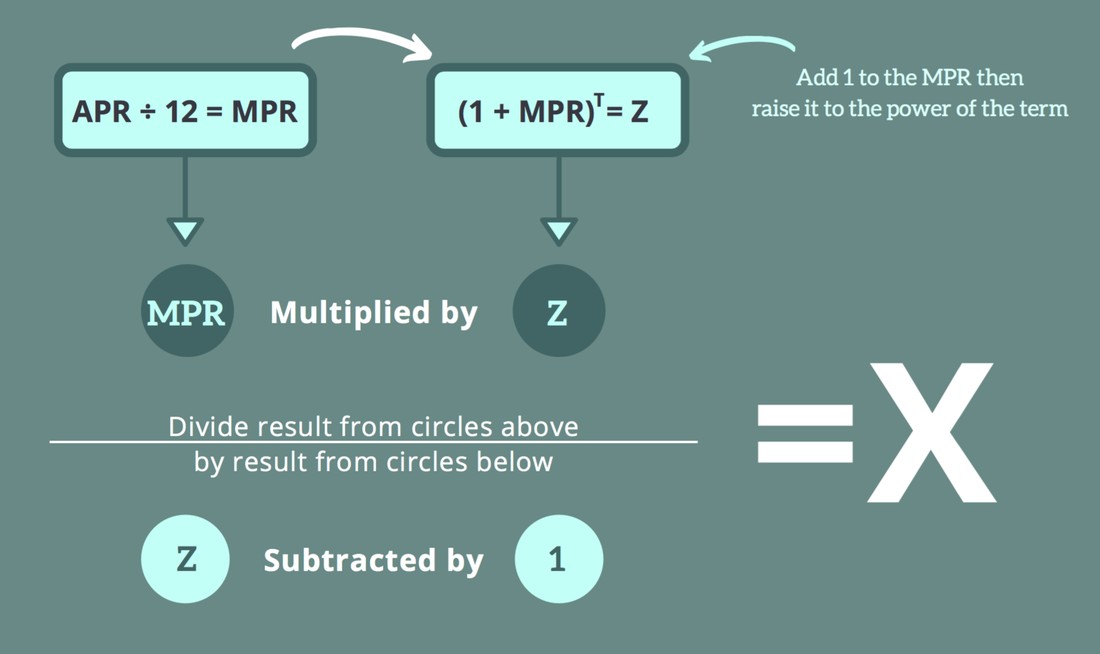
In the realm of personal finance, the APR represents the true cost of credit. Unlike a simple interest rate, the APR provides a more holistic view of what you are paying to borrow money. For those looking to optimize their cash flow and minimize interest expenses, mastering the mechanics of APR is the first step toward a successful car purchase.
Understanding the Fundamentals of APR in Auto Loans
Before diving into the calculations, it is essential to distinguish between the two terms often used interchangeably but which have distinct meanings: the interest rate and the APR.
The Difference Between Interest Rate and APR
The interest rate is the percentage of the principal loan amount that the lender charges you for borrowing the money. It is the base cost of the debt. However, car loans frequently involve more than just the principal and interest. Lenders may include origination fees, documentation fees, and other prepaid finance charges.
The APR combines the interest rate with these additional fees to provide an annualized representation of the total cost. When you determine the APR for a car, you are looking at the effective rate you are paying. If a loan has an interest rate of 5% but carries $500 in processing fees, the APR will be higher than 5%. If there are zero fees, the interest rate and the APR will be identical.
Why APR Matters More Than the Monthly Payment
Dealerships often focus on the monthly payment to make a car seem affordable. By extending the loan term to 72 or 84 months, they can lower the monthly obligation while significantly increasing the total interest paid. The APR is the ultimate equalizer. It allows you to compare a loan from a credit union with a loan from a manufacturer’s captive lender on an apples-to-apples basis. Regardless of the loan’s length or the monthly payment amount, the APR tells you the efficiency and cost of the capital you are utilizing.
Factors That Dictate Your Specific Car Loan APR
To determine what your APR will be, you must understand the variables that lenders use to price their risk. Your APR is essentially a reflection of how likely the lender believes you are to repay the loan in full and on time.
Credit Score and Financial History
The most influential factor in determining your APR is your credit score, typically your FICO or VantageScore. Lenders categorize borrowers into tiers:
-
Superprime (781–850): These borrowers receive the lowest possible APRs, often near the “prime rate.”
-
Prime (661–780): These borrowers still qualify for competitive rates but may not get the promotional 0% or 1.9% offers.
-
Nonprime and Subprime (Below 660): As scores dip, the APR rises sharply to compensate the lender for the increased risk of default.
Beyond the score, lenders look at your credit history—specifically, whether you have had prior auto loans and if they were paid successfully. A borrower with a 700 score and a history of three paid-off car loans will likely get a better APR than a borrower with a 700 score who has never financed a vehicle.
Loan-to-Value Ratio and Down Payments
The Loan-to-Value (LTV) ratio is the amount of the loan compared to the value of the vehicle. If you are buying a $30,000 car and putting $6,000 down, your loan is $24,000, resulting in an 80% LTV. Lenders view lower LTVs as lower risk. If you default, the lender can easily recoup their money by selling the car. Consequently, a substantial down payment can often lower your APR because it reduces the lender’s exposure.
The Impact of Loan Terms and Vehicle Age
The duration of the loan also dictates the APR. Generally, shorter loan terms (36 to 48 months) carry lower APRs than longer terms (72 to 84 months). Lenders charge more for longer terms because there is a higher statistical probability that your financial situation could change over seven years, and the vehicle’s value will depreciate significantly during that time.
Furthermore, new cars typically qualify for lower APRs than used cars. Manufacturers often subsidize new car rates to move inventory, and used cars represent a higher risk because their mechanical reliability is less certain, making them less stable collateral.
How to Calculate APR: From Manual Formulas to Digital Tools
While the federal Truth in Lending Act (TILA) requires lenders to disclose the APR in writing before you sign a contract, knowing how to calculate it yourself—or at least how to verify it—is crucial for financial transparency.

The Basic Mathematical Formula
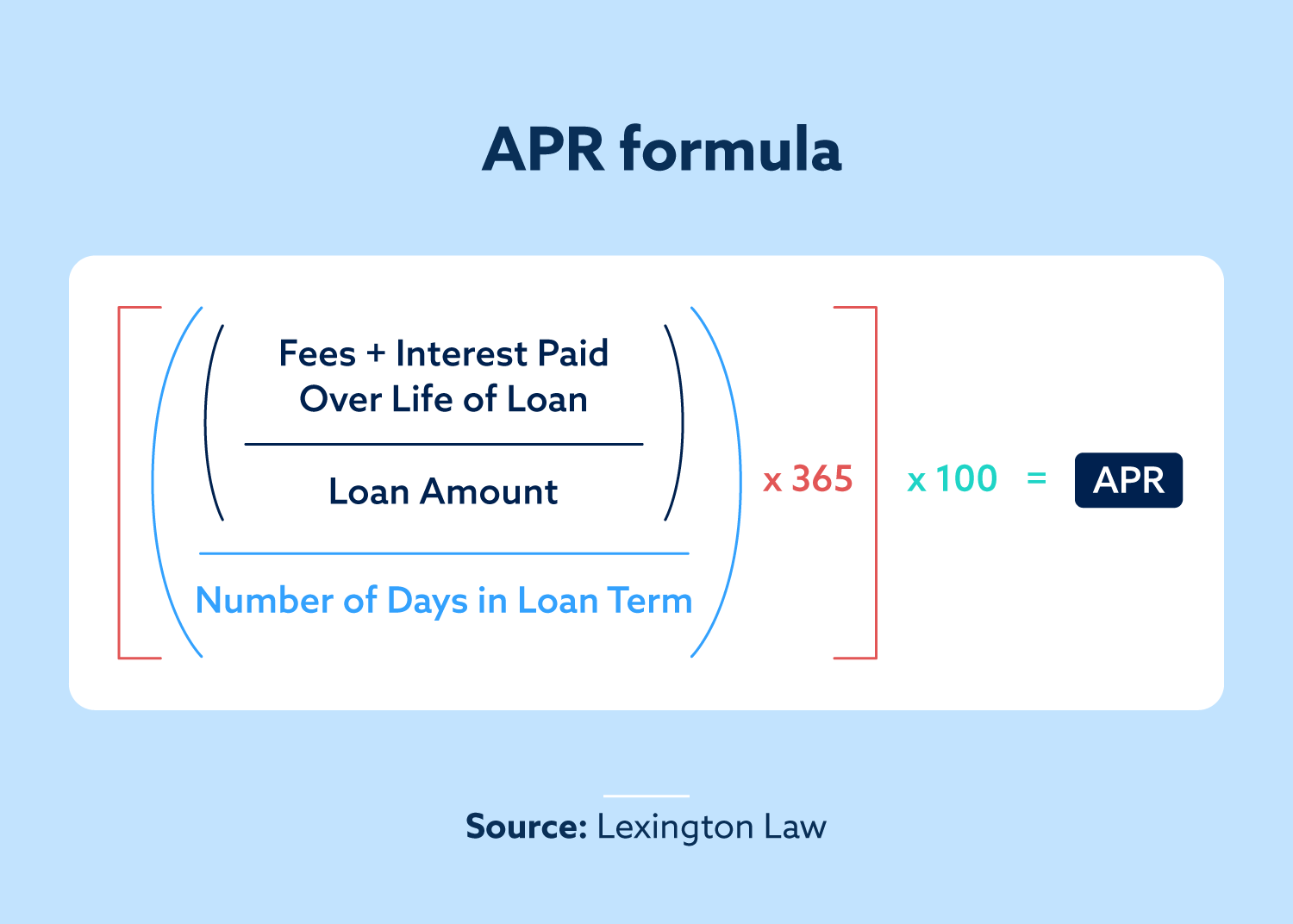
Calculating APR manually is complex because it involves an iterative process, but the simplified logic is as follows:
-
Add all the fees and interest paid over the life of the loan.
-
Divide that total by the principal loan amount.
-
Divide that result by the total number of days in the loan term.
-
Multiply by 365 to get the annual rate.
-
Multiply by 100 to get the percentage.
Because car loans are amortized (the ratio of interest to principal changes every month), most professionals use an “effective rate” calculation. For the average consumer, the most practical way to determine the APR is to use the “Rate” function in a spreadsheet or a financial calculator, inputting the loan amount, the monthly payment, and the number of months.
Factoring in Fees and Prepaid Interest
To get an accurate APR, you must ensure that all “finance charges” are included in the calculation. These typically include:
-
Origination fees: Charged for processing the loan.
-
Documentation fees: Sometimes bundled into the loan.
-
Gap Insurance: If rolled into the financing, this can affect your total cost, though it isn’t always included in the formal APR calculation depending on state law.
If a lender offers you a 4% interest rate but adds $1,200 in “administrative fees” to the loan balance, your APR is actually closer to 5%. By calculating the APR based on the total amount you will pay back versus the actual value of the car, you reveal the true cost of the transaction.
Strategies to Secure the Lowest Possible APR
Determining your APR isn’t just about observation; it’s about intervention. You can actively influence the rate you are offered by following a strategic approach to the financing process.
Improving Your Credit Profile Before Applying
If you aren’t in a rush to buy, spend three to six months polishing your credit. Paying down credit card balances to reduce your credit utilization ratio can provide a quick boost to your score. Ensure there are no errors on your credit report, as even a small mistake can push you from “Prime” to “Nonprime,” potentially costing you hundreds of dollars in annual interest.
Comparison Shopping and Pre-approval
The biggest mistake car buyers make is “one-stop shopping” at the dealership. To determine what a fair APR looks like for your specific profile, seek pre-approval from at least three different sources:
-
Your Local Credit Union: These are member-owned and frequently offer the lowest rates on used vehicles.
-
National Banks: They offer convenience and competitive rates for Superprime borrowers.
-
Online Lenders: Fintech companies often have lower overhead and can provide rapid, competitive quotes.
When you walk into a dealership with a pre-approval letter stating an APR of 4.5%, the dealer’s finance office knows they must beat that rate to earn your business. This creates a competitive environment where the consumer wins.
The Role of Co-signers and Refinancing
If your credit is less than ideal, a co-signer with an excellent credit history can help you secure an APR that would otherwise be unavailable to you. However, this is a significant responsibility for the co-signer. Alternatively, if you are forced to accept a high APR today due to a temporary credit setback, you can determine to refinance the loan in 12 to 18 months. As you make consistent on-time payments, your score will improve, allowing you to swap the high-interest loan for one with a much lower APR.
Avoiding Common Pitfalls in Car Financing Negotiations
The final step in determining and securing your APR occurs in the dealership’s “F&I” (Finance and Insurance) office. This is where the most common financing traps are laid.
Dealing with Dealer Markups
Many consumers do not realize that the APR offered by a dealership is often “marked up.” A lender may approve you for a 5% APR, but the dealer may present it to you as 7%. The 2% difference is known as “reserve” or a dealer markup, which the lender shares with the dealership as profit. By having a pre-approval in hand, you can identify if a dealer is marking up your rate and negotiate it back down to the “buy rate”—the actual rate provided by the lender.
The Truth About 0% Financing Offers
Manufacturers often advertise 0% APR to attract buyers. While these are excellent deals, they come with caveats. First, they are usually reserved for those with the highest credit scores. Second, choosing 0% APR often means you must forfeit a cash rebate. To determine if 0% APR is the better deal, you must calculate the total cost of the loan with 0% interest versus a loan with a slightly higher interest rate but a lower principal (due to the rebate). In many cases, the rebate combined with a low credit union rate results in a lower total cost of ownership than the 0% APR offer.
By meticulously evaluating these factors and understanding the mechanics of the Annual Percentage Rate, you transform yourself from a passive borrower into a sophisticated financial actor. Determining the APR for your car is not just about the number on the contract; it is about ensuring that every dollar you spend on your vehicle is working as efficiently as possible for your long-term financial health.
aViewFromTheCave is a participant in the Amazon Services LLC Associates Program, an affiliate advertising program designed to provide a means for sites to earn advertising fees by advertising and linking to Amazon.com. Amazon, the Amazon logo, AmazonSupply, and the AmazonSupply logo are trademarks of Amazon.com, Inc. or its affiliates. As an Amazon Associate we earn affiliate commissions from qualifying purchases.