
In the realm of finance, numbers are the language of progress. Whether you are tracking the growth of a retirement account, analyzing the profitability of a business venture, or simply trying to stick to a monthly budget, one mathematical concept reigns supreme: the percentage. Understanding how to determine a percentage is more than a basic arithmetic skill; it is a fundamental tool for financial literacy that allows investors and professionals to compare disparate values on an equal playing field.
Percentages provide a standardized way to measure change, risk, and value. Without them, a $500 gain on an investment would be difficult to contextualize—is it a 1% return on a $50,000 portfolio or a 50% return on a $1,000 stake? This article explores the various ways to calculate and apply percentages within the “Money” niche, ensuring you have the precision required to manage your personal and professional finances effectively.

The Fundamentals of Percentage in Personal Finance
At its core, a percentage is a ratio that represents a fraction of 100. In personal finance, this “part-to-whole” relationship is the building block of every budget and savings plan. To determine a percentage, you simply divide the “part” (the specific amount you are looking at) by the “whole” (the total amount) and multiply by 100.
The Core Formula: Part over Whole
The mathematical formula is straightforward: (Value / Total Value) × 100 = Percentage. For example, if you aim to save $500 out of a $4,000 monthly salary, you divide 500 by 4,000 to get 0.125. Multiplying by 100 gives you 12.5%. This simple calculation is the first step in understanding your “savings rate,” a metric many financial advisors consider more important than your total income. By mastering this basic formula, you can strip away the complexity of large numbers and focus on the proportions that drive long-term wealth.
Applying Percentages to Monthly Budgeting
One of the most popular financial frameworks is the 50/30/20 rule. This strategy suggests allocating 50% of your income to “needs,” 30% to “wants,” and 20% to “savings and debt repayment.” To implement this, you must know how to work backwards from a percentage to a dollar amount.
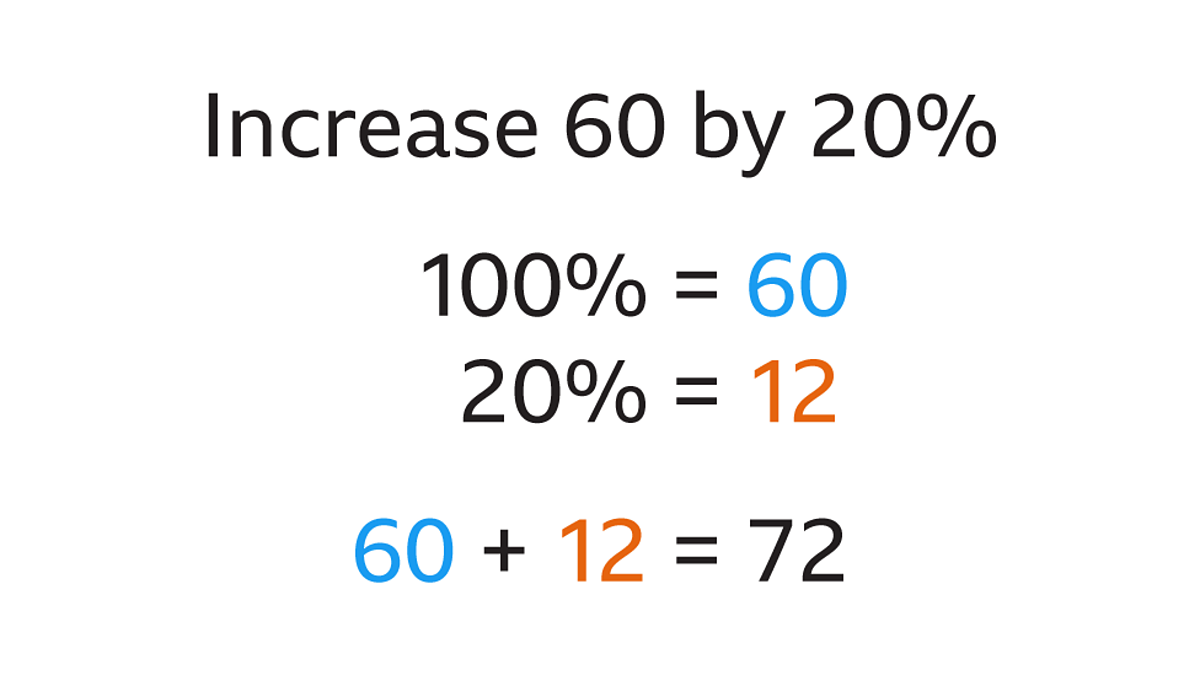
To find a specific percentage of a total, you multiply the total by the percentage in decimal form (e.g., 20% becomes 0.20). If your take-home pay is $5,000, your savings goal would be $5,000 × 0.20 = $1,000. Regularly performing these calculations allows you to audit your spending habits and ensure that your lifestyle doesn’t outpace your financial goals.
Calculating Investment Returns and Portfolio Growth
In the world of investing, percentages are the primary metric for performance. Unlike raw dollar amounts, percentages allow you to compare the performance of a high-priced stock like Amazon with a lower-priced ETF or a mutual fund.
Determining Return on Investment (ROI)
The Return on Investment (ROI) is perhaps the most critical percentage any investor needs to calculate. It measures the efficiency of an investment or compares the efficiencies of several different investments. The formula for ROI is: [(Current Value - Original Cost) / Original Cost] × 100.
Suppose you purchased shares of a company for $2,000 and sold them a year later for $2,400. Your capital gain is $400. To find the percentage return: $400 / $2,000 = 0.20, or 20%. Understanding this percentage is vital because it accounts for the “cost of entry.” A $400 profit might look good, but if it required a $20,000 investment, the ROI would only be 2%—potentially less than the rate of inflation, meaning you actually lost purchasing power.
Rebalancing Your Portfolio via Percentages
Asset allocation is the practice of dividing an investment portfolio among different asset categories, such as stocks, bonds, and cash. A common strategy might be a “60/40” split (60% stocks, 40% bonds). Over time, as the stock market fluctuates, your portfolio might shift to 70/30 because your stocks grew faster than your bonds.
To bring your portfolio back to its target, you must determine the current percentage of each asset class. If your total portfolio is now worth $100,000 and your stocks are worth $70,000, they represent 70% of your holdings. To rebalance, you would calculate how much stock to sell to bring that $70,000 back down to 60% ($60,000) of the total. This disciplined, percentage-based approach forces you to “buy low and sell high” automatically.
Understanding Interest Rates and Debt Management
Percentages act as a double-edged sword in finance: they can work for you through investments or against you through debt. Determining the true cost of borrowing requires a deep dive into annual percentage rates (APR) and the mechanics of interest.

How to Calculate Interest on Loans
When you take out a loan, the interest is usually expressed as an annual percentage. However, interest is often calculated monthly or even daily. To understand how much interest you are paying in a single month on a credit card with a 24% APR, you divide the annual rate by 12 months. This gives you a monthly periodic rate of 2%.
If you carry a balance of $3,000, your interest for that month would be $3,000 × 0.02 = $60. By determining this percentage-based cost, you can see exactly how much of your monthly payment is going toward the principal balance versus the lender’s pocket. This realization often provides the necessary motivation to prioritize high-interest debt repayment.
The Impact of Compound Interest
Compound interest is the process where the interest you earn on your money also earns interest. The “Rule of 72” is a quick, percentage-based shortcut to determine how long it will take for your money to double at a given fixed annual rate of interest. By dividing 72 by the annual rate of return, investors can get a rough estimate of years to double. For instance, at a 6% return, your money doubles in 12 years (72 / 6 = 12). This highlights the exponential power of even small percentage increases in your return rate over long horizons.
Business Finance: Profit Margins and Growth Metrics
For business owners and corporate finance professionals, percentages are used to measure the health and scalability of an enterprise. Raw revenue numbers can be deceiving; it is the margins that tell the real story.
Calculating Gross and Net Profit Margins
A business might generate $1 million in revenue, but if its expenses are $950,000, the business is in a precarious position. The “Profit Margin” is the percentage of revenue that remains after all expenses are paid.
- Gross Profit Margin: This is calculated as
[(Revenue - Cost of Goods Sold) / Revenue] × 100. It shows how efficiently a company produces its core products. - Net Profit Margin: This is the “bottom line” percentage, calculated as
(Net Income / Revenue) × 100. It accounts for taxes, interest, and operating expenses.
A high net profit margin indicates a “moat” or a competitive advantage, while a shrinking margin suggests rising costs or increased competition. Investors look at these percentages to determine if a company is a viable long-term hold.
Year-over-Year (YoY) Growth Percentages
To determine the trajectory of a business or an economy, we look at growth percentages. The formula for percentage change is: [(New Value - Old Value) / Old Value] × 100.
If a side hustle earned $10,000 in 2022 and $15,000 in 2023, the dollar increase is $5,000. However, the growth percentage is ($15,000 - $10,000) / $10,000 = 0.50, or 50%. Tracking YoY growth allows you to see if your financial strategies are accelerating, plateauing, or declining.
Practical Tools and Strategies for Financial Precision
While the math behind percentages is relatively simple, the complexity arises when dealing with large datasets or fluctuating market conditions. Utilizing the right tools can prevent costly errors.
Automating Calculations with Spreadsheets
Programs like Microsoft Excel or Google Sheets are indispensable for financial percentage calculations. Using the “Percent” format button automatically multiplies your decimal by 100 and adds the “%” symbol. Furthermore, using cell references—such as =A1/B1—allows you to create “what-if” scenarios. You can change your total income figure and instantly see how it affects your savings percentage across your entire budget.
Avoiding Common Mathematical Pitfalls
One of the most common errors in financial thinking is the “Asymmetric Return” problem. If an investment loses 50% of its value, many people mistakenly believe it only needs to gain 50% to get back to even. However, if a $100 investment drops 50%, it is worth $50. To get back to $100, that $50 must now gain $50, which is a 100% increase.
Understanding this nuance is critical for risk management. It illustrates why preserving capital is often more important than chasing high-percentage returns. By accurately determining percentages, you gain a clearer view of the risks you are taking and the actual recovery needed after a market downturn.
In conclusion, knowing how to determine a percentage is the “Swiss Army Knife” of the financial world. It enables you to budget with intent, invest with clarity, manage debt with strategy, and run businesses with precision. By consistently applying these calculations to your monetary decisions, you move away from guesswork and toward a data-driven path to financial independence.
aViewFromTheCave is a participant in the Amazon Services LLC Associates Program, an affiliate advertising program designed to provide a means for sites to earn advertising fees by advertising and linking to Amazon.com. Amazon, the Amazon logo, AmazonSupply, and the AmazonSupply logo are trademarks of Amazon.com, Inc. or its affiliates. As an Amazon Associate we earn affiliate commissions from qualifying purchases.