
In an increasingly digital world, where transactions are often just a tap away, the lingering presence of physical cash can sometimes feel like an anachronism. Yet, cash remains a vital component of many personal economies, from tips and gifts to everyday purchases at cash-only establishments. For those who rely on digital financial tools like Cash App for managing their money, the challenge often lies in seamlessly converting this physical currency into usable digital funds. This article delves into the practicalities of depositing cash onto your Cash App balance, framing it within the broader context of personal finance and the strategic use of financial technology. Understanding this process is not just about convenience; it’s about optimizing your financial flow, ensuring all your funds are accessible and manageable within your preferred digital ecosystem.
Understanding Cash App’s Role in Modern Personal Finance
Cash App has emerged as a significant player in the personal finance landscape, primarily due to its user-friendly interface and multifaceted financial services. It offers a convenient platform for sending and receiving money, direct deposits, investing in stocks and Bitcoin, and even filing taxes. However, its utility in bridging the gap between physical cash and digital funds is particularly noteworthy for individuals navigating a hybrid financial existence.
Bridging the Gap: Cash to Digital Funds
The core challenge for many individuals is the conversion of physical cash into a digital format that can be used for online payments, bill pay, or direct transfers. Traditional banking methods often involve a trip to a brick-and-mortar branch or an ATM, which can be inconvenient or inaccessible for some. Cash App addresses this by partnering with various retail locations, allowing users to transform their tangible earnings or gifts into an immediately spendable digital balance. This capability democratizes access to digital financial services, especially for those who might primarily operate in a cash economy or have limited access to traditional banking infrastructure. It provides a crucial pathway for individuals to integrate their diverse income streams into a single, manageable digital wallet, thereby enhancing financial inclusivity and flexibility.
The Convenience Factor for Everyday Users
For the average user, the convenience offered by Cash App’s cash deposit feature is unparalleled. Imagine receiving cash as payment for a gig, a birthday gift, or selling an item. Instead of holding onto it or making a separate trip to a bank, you can simply visit a nearby participating retailer during your regular errands. This integration into daily routines minimizes disruption and maximizes efficiency. The ability to quickly digitize cash means funds can be almost instantly available for use with your Cash App Card, for sending money to friends, or for investing. This seamless transition from physical to digital cash streamlines personal financial management, making it easier to keep track of all funds within a single application and reducing the mental load associated with managing multiple financial accounts and physical currency.
Step-by-Step Guide to Depositing Cash on Cash App
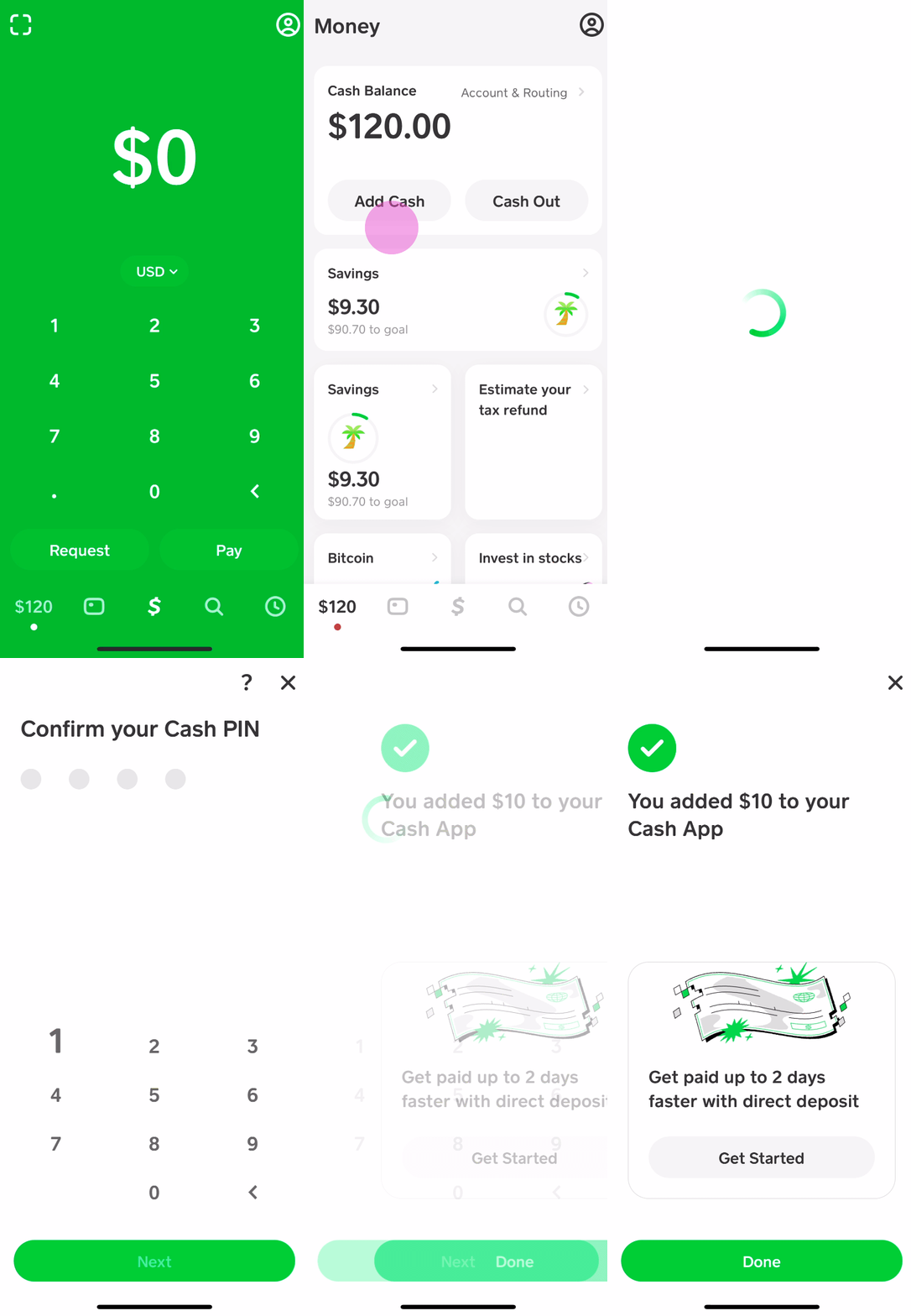
The process of depositing cash onto your Cash App account is designed to be straightforward, leveraging a network of established retail partners. Following these steps ensures a smooth and successful transaction, bringing your physical cash into your digital wallet efficiently.
Finding Participating Retailers
The first crucial step is identifying a retail location that supports Cash App cash deposits. Cash App has partnered with numerous major retailers across the United States. To find the nearest participating store:
- Open Your Cash App: Launch the Cash App on your smartphone.
- Navigate to the Banking Tab: Tap the “Banking” tab (the house icon) in the bottom-left corner of the screen.
- Select “Paper Money”: Scroll down and tap on the “Paper Money” option.
- Find a Location: Cash App will display a map showing nearby locations where you can deposit paper money. These often include major convenience stores, pharmacies, and general merchandise stores. You can also manually search for locations if you’re planning a trip.
- Check Store Hours: Once you’ve identified a suitable location, it’s always wise to check their operating hours to ensure they are open and able to process your deposit.
Being prepared with a list of nearby options can save time and effort, making the deposit process as convenient as possible.
The Deposit Process at the Store
Once you’re at a participating retailer, the actual deposit process is similar to making a purchase or adding funds to a prepaid card.
- Inform the Cashier: Approach the cashier and inform them you wish to “deposit cash to your Cash App” or “add money to your Cash App.” Some retailers might use the term “Paper Money Deposit.”
- Generate Your Barcode: On your Cash App, navigate back to the “Paper Money” section. Select “Show Barcode.” This will generate a unique barcode on your phone’s screen.
- Scan the Barcode: The cashier will scan this barcode. This links your transaction directly to your Cash App account.
- Hand Over the Cash: Give the cashier the exact amount of cash you wish to deposit. Ensure the bills are in good condition (not excessively torn or damaged).
- Complete the Transaction: The cashier will process the transaction. You’ll typically receive a receipt from the store, which you should keep as proof of transaction.
The entire process usually takes just a few minutes, making it a quick and efficient way to digitize your funds.
Verifying Your Deposit
After completing the transaction at the retailer, it’s essential to verify that the funds have successfully been added to your Cash App balance.
- Check Your Cash App Balance: Open your Cash App. Your updated balance should reflect the deposited amount almost immediately.
- Review Activity Feed: Tap the “Activity” tab (the clock icon) to see a detailed transaction history. You should see an entry for “Paper Money Deposit” with the corresponding amount.
- Keep Your Receipt: Always retain the physical receipt provided by the retailer until you’ve confirmed the funds are in your Cash App. This receipt serves as crucial proof of transaction should any issues arise.
In most cases, the deposit will be instantaneous. However, in rare circumstances, there might be a slight delay. If funds are not reflected within a reasonable timeframe (e.g., 10-15 minutes), refer to the troubleshooting section or contact Cash App support with your retail receipt handy.
Important Considerations and Best Practices for Cash Deposits
While depositing cash on Cash App is straightforward, understanding the nuances of limits, fees, and security protocols is paramount for responsible financial management. Adhering to best practices ensures a smooth, cost-effective, and secure experience.
Understanding Limits and Fees
Like most financial services, Cash App imposes certain limits and may charge fees for cash deposits:

- Deposit Limits: Cash App typically has daily, weekly, and monthly limits on how much cash you can deposit. These limits can vary and are often displayed within the app’s “Paper Money” section or on their support pages. For example, a common daily limit might be $500, with a weekly limit of $1,000, and a monthly limit of $4,000 or $7,500. It’s crucial to check your specific limits within the app before heading to a retailer, especially if you plan to deposit a large sum. Attempting to deposit beyond these limits will result in the transaction being declined.
- Deposit Fees: Retailers often charge a small fee for processing cash deposits. This fee is typically a flat rate (e.g., $1 or $1.50) per transaction, regardless of the amount deposited, up to the maximum limit. This fee is usually deducted from the total amount you deposit or added to the transaction, so if you deposit $100 and there’s a $1 fee, you might see $99 credited to your Cash App balance. Being aware of these fees allows you to factor them into your financial planning and decide if combining smaller deposits into one larger deposit (within limits) makes more financial sense.
Always review the fee structure and your personal limits directly in the Cash App before making a deposit to avoid surprises.
Security Measures for Cash Deposits
Security is a paramount concern when handling money, whether physical or digital. When depositing cash on Cash App:
- Protect Your Barcode: Your barcode is unique to your account. Treat it like a password. Only display it to the cashier at the time of transaction. Do not share screenshots of it or allow unauthorized individuals to scan it.
- Be Aware of Your Surroundings: When handling cash in a public place, exercise caution. Keep your cash discreetly until you are at the register and ready to complete the transaction.
- Confirm Amounts: Before handing over your cash, double-check the amount you are providing to the cashier and the amount they input into their system. Discrepancies should be resolved immediately.
- Retain Receipts: As mentioned, your retail receipt is vital. It serves as proof of your transaction. In the rare event of a dispute or an error, this receipt will be your primary documentation for Cash App support. Keep it until the funds are successfully posted and confirmed in your account.
- Secure Your Phone: Ensure your phone is password-protected and that your Cash App uses additional security measures like PINs, fingerprint ID, or facial recognition. This prevents unauthorized access to your funds if your phone is lost or stolen.
By adopting these security practices, you can significantly mitigate risks associated with cash deposits.
Troubleshooting Common Issues
While generally smooth, occasionally issues might arise during a cash deposit. Knowing how to troubleshoot can save time and frustration:
- Barcode Not Scanning: Ensure your phone screen is clean, bright, and free of glare. Try repositioning the phone or asking the cashier to try scanning again. If it persists, restart the Cash App or your phone.
- Funds Not Appearing:
- Check Activity Feed: First, re-verify your Cash App activity feed. Sometimes, a slight delay might occur during peak times.
- Retailer System Issue: Occasionally, the retailer’s system might experience a delay. If a significant amount of time has passed (e.g., 30 minutes to an hour), confirm with the retailer if their system processed the transaction correctly on their end.
- Contact Cash App Support: If funds are still missing after an hour, contact Cash App support directly through the app. Provide them with the transaction details from your retail receipt (date, time, amount, retailer name, transaction ID if available on the receipt).
- Exceeding Limits: If your deposit is declined at the register, it’s highly likely you’ve exceeded your daily, weekly, or monthly deposit limits. Check your limits within the app and adjust your deposit amount accordingly or wait until your limits reset.
- Cashier Unfamiliarity: In some cases, a cashier might be new or unfamiliar with the Cash App cash deposit process. Politely ask if another cashier is available or if they can refer to their training materials. Clearly state you want to “deposit cash to Cash App via Paper Money.”
Prompt action and clear communication, coupled with your retail receipt, are key to resolving any issues efficiently.
Maximizing Your Cash App Experience Beyond Deposits
Depositing cash into your Cash App is merely one facet of leveraging this powerful financial tool. By integrating it into a broader financial strategy, users can unlock its full potential for managing their money more effectively.
Budgeting and Tracking with Cash App
Once your cash is digitized within Cash App, you gain significantly enhanced control over your funds, making budgeting and tracking much simpler.
- Centralized Spending: With most of your funds in one place, it becomes easier to monitor all your expenditures. Every transaction, whether sending money, paying with the Cash App Card, or investing, is recorded in your activity feed.
- Categorization (Manual): While Cash App doesn’t offer robust automatic categorization like some dedicated budgeting apps, you can manually review your activity and export statements to track where your money is going. This visibility is far superior to managing loose cash.
- Instant Notifications: Receive real-time notifications for all transactions, allowing you to stay on top of your spending and quickly identify any unauthorized activity.
- Goal-Oriented Savings: For specific savings goals, having funds within Cash App allows for easier allocation or transfer to other savings vehicles, fostering a more disciplined approach to financial planning.
By digitizing cash, you remove one of the biggest blind spots in personal budgeting – the untracked spending of physical currency.
Leveraging Other Cash App Features
Cash App is more than just a money transfer service. Once your cash is in the app, a suite of other features becomes accessible, enhancing its value as a comprehensive financial tool:
- Cash App Card: The Cash App Card is a free, customizable debit card linked to your Cash App balance. It allows you to spend your deposited funds anywhere Visa is accepted, online or in stores, and withdraw cash from ATMs (though ATM fees may apply). This effectively transforms your digitized cash into universally usable funds.
- Direct Deposit: You can set up direct deposit with Cash App to receive paychecks, tax refunds, or government benefits directly into your account. This is particularly useful for those who might not have a traditional bank account or prefer to manage their primary funds within Cash App.
- Investing in Stocks & Bitcoin: Cash App offers simplified access to investing in fractional shares of stocks and Bitcoin directly from your balance. This provides an entry point into investment for many, allowing them to grow their money beyond just holding it.
- Boosts: The Cash App Card offers “Boosts,” which are instant discounts at specific retailers, saving you money on everyday purchases. These personalized rewards add tangible value to using the card.
- Taxes: Cash App also offers Cash App Taxes (formerly Credit Karma Tax), providing free tax filing services, integrating another crucial financial aspect into its ecosystem.
These features, when combined with seamless cash deposit capabilities, position Cash App as a versatile platform capable of supporting a wide range of personal financial needs.
Integrating Cash App into Your Financial Strategy
For many, Cash App can serve as a primary financial hub or a critical supplementary tool within a broader financial strategy.
- Primary Banking Alternative: For freelancers, gig workers, or those who prefer mobile-first banking, Cash App can function as a viable alternative to traditional bank accounts, especially with its direct deposit and bill payment capabilities.
- Expense Management: Use Cash App for specific categories of expenses (e.g., entertainment, dining out) to keep these separate from your main banking account, aiding in expense tracking.
- Emergency Fund Component: While not a dedicated savings account, for those who struggle with traditional savings, having an accessible balance in Cash App that can be quickly moved or spent can serve as a small, highly liquid emergency fund for immediate needs.
- Diversification of Funds: For savvy financial managers, Cash App can be one of several tools used to diversify where funds are held, providing flexibility and leveraging different features across various platforms.
By thoughtfully integrating Cash App into your financial planning, you can enhance convenience, gain greater control over your money, and leverage modern financial technology to achieve your personal finance goals.

Conclusion
The ability to seamlessly deposit physical cash onto Cash App represents a significant stride in personal finance, effectively bridging the divide between traditional currency and the increasingly digital economy. This feature empowers users to consolidate their funds, manage expenses more effectively, and access a suite of financial tools, from peer-to-peer payments to investing. By understanding the straightforward process, adhering to security best practices, and leveraging the full spectrum of Cash App’s offerings, individuals can optimize their financial flow, ensuring every dollar, whether physical or digital, works harder for them. In an era where financial flexibility and accessibility are paramount, mastering how to deposit cash on Cash App is more than just a convenience; it’s a strategic move towards a more integrated and empowered financial life.
aViewFromTheCave is a participant in the Amazon Services LLC Associates Program, an affiliate advertising program designed to provide a means for sites to earn advertising fees by advertising and linking to Amazon.com. Amazon, the Amazon logo, AmazonSupply, and the AmazonSupply logo are trademarks of Amazon.com, Inc. or its affiliates. As an Amazon Associate we earn affiliate commissions from qualifying purchases.