
In the realm of personal finance, there is perhaps no tool more transformative than a well-constructed budget sheet. While many view budgeting as a restrictive practice—a digital ledger of things they cannot do—the reality is quite the opposite. A budget sheet is a roadmap to financial freedom. It provides the clarity needed to make informed decisions, the discipline required to eliminate debt, and the foresight necessary to build generational wealth.
To create a budget sheet that actually works, one must look beyond simple subtraction. It requires an understanding of cash flow, the psychology of spending, and the strategic allocation of resources. This guide will walk you through the process of building a comprehensive financial framework that serves as the heartbeat of your economic life.

Understanding the Architecture of a Personal Budget Sheet
Before you open a spreadsheet or pick up a pen, you must understand the structural components that make a budget sheet effective. A budget is not merely a list of bills; it is a dynamic model of your financial ecosystem. To capture this ecosystem accurately, you must categorize your data with precision.
Fixed vs. Variable Expenses: The Core Components
The foundation of any budget sheet is the distinction between fixed and variable expenses. Fixed expenses are those that remain relatively constant from month to month. These typically include rent or mortgage payments, insurance premiums, subscription services, and loan repayments. Because these costs are predictable, they provide the “floor” of your budget—the absolute minimum required to maintain your current lifestyle.
Variable expenses, on the other hand, are the “fluctuating” costs that often lead to financial leakage. This category includes groceries, dining out, entertainment, and fuel. Because these costs change based on behavior, they represent the greatest opportunity for optimization. When building your sheet, ensure these two categories are separated. This allows you to see exactly how much of your income is “pre-committed” and how much is subject to your daily choices.
Tracking Income Streams for a Complete Picture
A common mistake in budget creation is focusing solely on the “outgo” while oversimplifying the “income.” To have a professional-grade budget sheet, you must track all forms of cash inflow. This includes your primary salary (after-tax), side hustle earnings, investment dividends, and even occasional bonuses or tax refunds.
By documenting every dollar that enters your accounts, you gain a clear view of your “Total Available Capital.” This figure is the starting point for all your financial maneuvers. Without an accurate income assessment, your expense tracking is happening in a vacuum, making it impossible to calculate your true savings rate or your capacity for investment.
Step-by-Step Blueprint for Building Your Budget Sheet
With the conceptual framework in place, the next phase is the physical construction of the tool. Whether you are using Excel, Google Sheets, or a specialized financial application, the logic remains the same. The goal is to create a user-friendly interface that balances granularity with ease of use.
Setting Up Your Categories and Timeframes
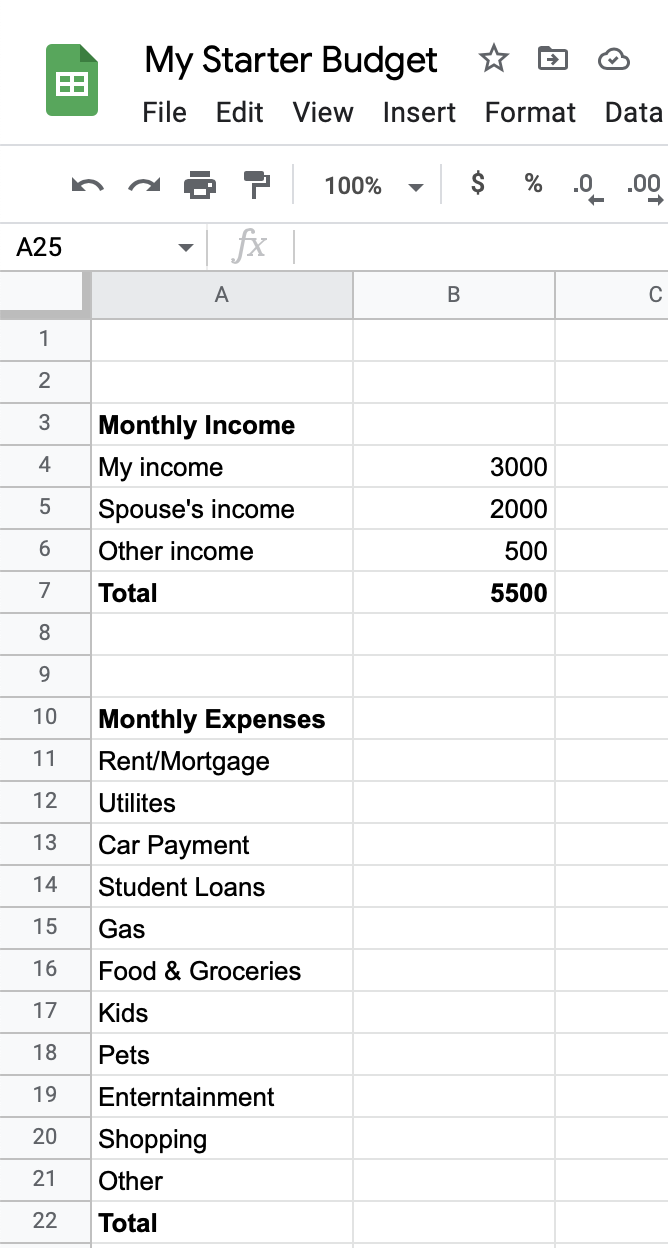
The most effective budget sheets are organized chronologically and categorically. Start by creating columns for “Budgeted Amount,” “Actual Amount,” and “Variance.” The variance column is critical; it tells you the difference between what you intended to spend and what you actually spent. A negative variance in an expense category is a “win,” while a positive variance indicates an overspend.
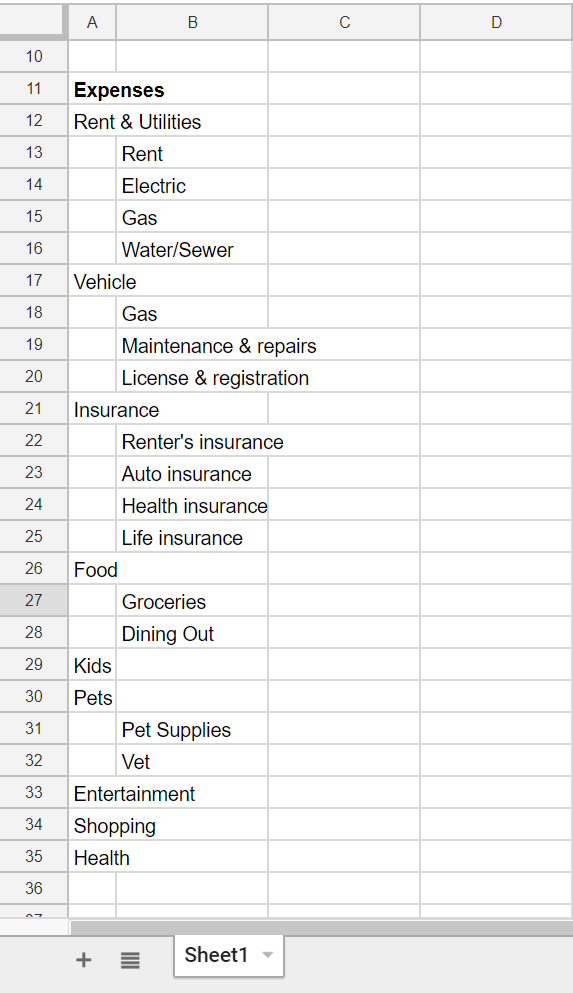
When it comes to categories, avoid the trap of being too vague. A category labeled “Misc” is where budgets go to die. Instead, break your expenses down into logical clusters:
- Housing: Mortgage/Rent, Utilities, Maintenance, Property Tax.
- Transportation: Car payments, Fuel, Public Transit, Maintenance.
- Lifestyle: Groceries, Personal Care, Gym Memberships, Hobbies.
- Financial Goals: Debt Repayment, Emergency Fund, Retirement Contributions.
The Power of the Zero-Based Budgeting Framework
If you want to move from passive tracking to active management, you should adopt the “Zero-Based Budgeting” (ZBB) method within your sheet. The philosophy of ZBB is that every single dollar of your income must be assigned a “job” until the remaining balance is zero.
If you earn $5,000 and your expenses total $4,000, you do not simply leave $1,000 floating in your checking account. That $1,000 is assigned to a specific task, such as “Extra Principal Payment on Mortgage” or “Vanguard Index Fund Contribution.” By giving every dollar a destination on your sheet, you prevent the “lifestyle creep” that often consumes unallocated funds.
Leveraging Advanced Financial Ratios and Formulas
A basic budget sheet tells you what happened; an advanced budget sheet tells you what should happen. By integrating financial ratios and formulas, you transform a simple log into a sophisticated financial advisor.
Implementing the 50/30/20 Rule
One of the most effective ways to audit your budget sheet is to apply the 50/30/20 rule. This framework suggests that 50% of your income should go toward Needs (housing, utilities, basic groceries), 30% toward Wants (dining out, travel, luxury items), and 20% toward Financial Goals (debt payoff, savings, investments).
As you populate your budget sheet, create a summary table that calculates these percentages automatically. If your “Needs” are taking up 70% of your income, your budget sheet is alerting you to a structural problem—likely being “house poor” or “car poor.” This high-level view allows you to make strategic adjustments that go beyond just skipping a morning latte.
Calculating Your Savings Rate and Debt-to-Income Ratio
The ultimate metric of financial health is your savings rate. This is the percentage of your total income that is redirected toward building your net worth. In your budget sheet, create a formula that divides your total monthly savings and investments by your total monthly income. Aiming for a savings rate of 15% to 25% is a hallmark of financial stability.
Additionally, tracking your Debt-to-Income (DTI) ratio within your sheet provides a clear picture of your creditworthiness. By comparing your total monthly debt payments to your gross monthly income, you can see how lenders view your financial profile. Keeping this ratio below 36% is generally recommended for maintaining a strong financial position.
Maintaining Your Budget: Behavioral Finance and Auditing
The most beautifully designed budget sheet is worthless if it is not maintained. The challenge of budgeting is rarely the math; it is the behavior. To ensure long-term success, you must build a system of accountability and regular auditing.
The Monthly Reconciliation Process
Set aside a “Money Minute” once a week and a “Financial Summit” once a month. During the monthly summit, you reconcile your budget sheet against your actual bank and credit card statements. This is the moment of truth.
Ask yourself: Where did I overspend? Were there “stealth expenses” I forgot to include? Reconciliation allows you to adjust the following month’s budget based on reality. It also helps you identify patterns. For example, if you consistently overspend on “Dining Out” every Friday, you might decide to increase that budget category and decrease another to reflect your actual lifestyle priorities.
Planning for Irregular Expenses and Sinking Funds
One of the primary reasons budgets fail is the “emergency” that isn’t actually an emergency. Annual car registrations, holiday gifts, and quarterly insurance premiums are predictable, yet they often catch people off guard.
A professional budget sheet should include “Sinking Funds.” These are categories where you save a small amount each month for a future, non-monthly expense. If you know you spend $1,200 on holiday gifts in December, your budget sheet should have a line item for $100 every month starting in January. This smooths out your cash flow and prevents “budget shock” when those large bills inevitably arrive.
Scaling Your Budget Sheet into a Wealth Management Tool
As you become proficient in tracking your monthly cash flow, your budget sheet can evolve. It should eventually transition from a tool that manages your spending to a tool that manages your wealth.
Integrating Net Worth Tracking
While your budget tracks the “flow” of money, your net worth tracks the “reservoir.” On a separate tab of your budget sheet, list all your assets (cash, investment accounts, home value, car value) and all your liabilities (mortgages, student loans, credit card debt).
Update this net worth tracker at the end of every month. Seeing your net worth grow—even if by a small amount—is the ultimate motivator. It provides a visual representation of the progress you are making through the discipline recorded on your primary budget sheet.
Forecasting for Long-Term Financial Independence
The final evolution of a budget sheet is the inclusion of a forecasting model. Using your current savings rate and an assumed rate of return (e.g., 7% for a diversified stock portfolio), you can project your future wealth.
This turns the “boring” task of budgeting into an exciting game of “What If?” What if you increased your savings rate by 5%? What if you paid off your car early? By using your budget sheet to run these scenarios, you gain a sense of agency over your future. You are no longer a spectator in your financial life; you are the architect.
In conclusion, creating a budget sheet is an act of self-empowerment. It is the process of taking vague financial anxieties and turning them into a concrete, actionable plan. By focusing on structure, leveraging ratios, maintaining behavioral discipline, and scaling toward wealth management, you transform a simple spreadsheet into the most valuable asset in your financial portfolio. The numbers on the sheet are merely reflections of your priorities; master the sheet, and you master your life.
aViewFromTheCave is a participant in the Amazon Services LLC Associates Program, an affiliate advertising program designed to provide a means for sites to earn advertising fees by advertising and linking to Amazon.com. Amazon, the Amazon logo, AmazonSupply, and the AmazonSupply logo are trademarks of Amazon.com, Inc. or its affiliates. As an Amazon Associate we earn affiliate commissions from qualifying purchases.