
Building a secure financial future often hinges on effective retirement planning, and Individual Retirement Arrangements (IRAs) stand as a cornerstone of this strategy for millions. For those seeking to take control of their long-term savings and leverage significant tax advantages, understanding how to contribute to an IRA is not just beneficial—it’s essential. An IRA offers a powerful vehicle for growth, allowing your investments to compound over decades, often shielded from annual taxation, and ultimately providing a reliable income stream during your golden years.
This comprehensive guide will demystify the process of IRA contributions, from the foundational principles to the practical steps and strategic considerations. Whether you’re a seasoned investor looking to optimize your contributions or a newcomer embarking on your retirement savings journey, understanding the nuances of IRAs is a critical step towards achieving your financial independence.

Understanding the Fundamentals of an IRA
Before diving into the mechanics of contributing, it’s crucial to grasp what an IRA is and why it’s such a valuable tool in personal finance. Far more than just a savings account, an IRA is a specially designated investment account that comes with unique tax benefits designed to encourage long-term saving for retirement.
What is an Individual Retirement Arrangement?
An Individual Retirement Arrangement (IRA) is an investment account that allows individuals to save money for retirement with tax-advantaged growth. The “arrangement” aspect refers to the contractual agreement between an individual and a financial institution (like a bank, brokerage, or mutual fund company) to hold investments on a tax-deferred or tax-free basis until retirement. Unlike employer-sponsored plans such as 401(k)s, IRAs are typically set up by individuals independently, offering greater control over investment choices. While the term “IRA” broadly covers several types, each serves the overarching goal of retirement saving with distinct tax treatments.
The Core Benefits of IRA Contributions
The primary allure of contributing to an IRA lies in its tax advantages, which can significantly boost your retirement nest egg over time. These benefits vary depending on the type of IRA you choose:
- Tax-Deferred Growth (Traditional IRA): With a Traditional IRA, your contributions might be tax-deductible in the year they are made, reducing your taxable income in the present. More importantly, all earnings and growth within the account accrue tax-deferred. You only pay taxes on your contributions and earnings when you withdraw them in retirement, typically when you are in a lower tax bracket.
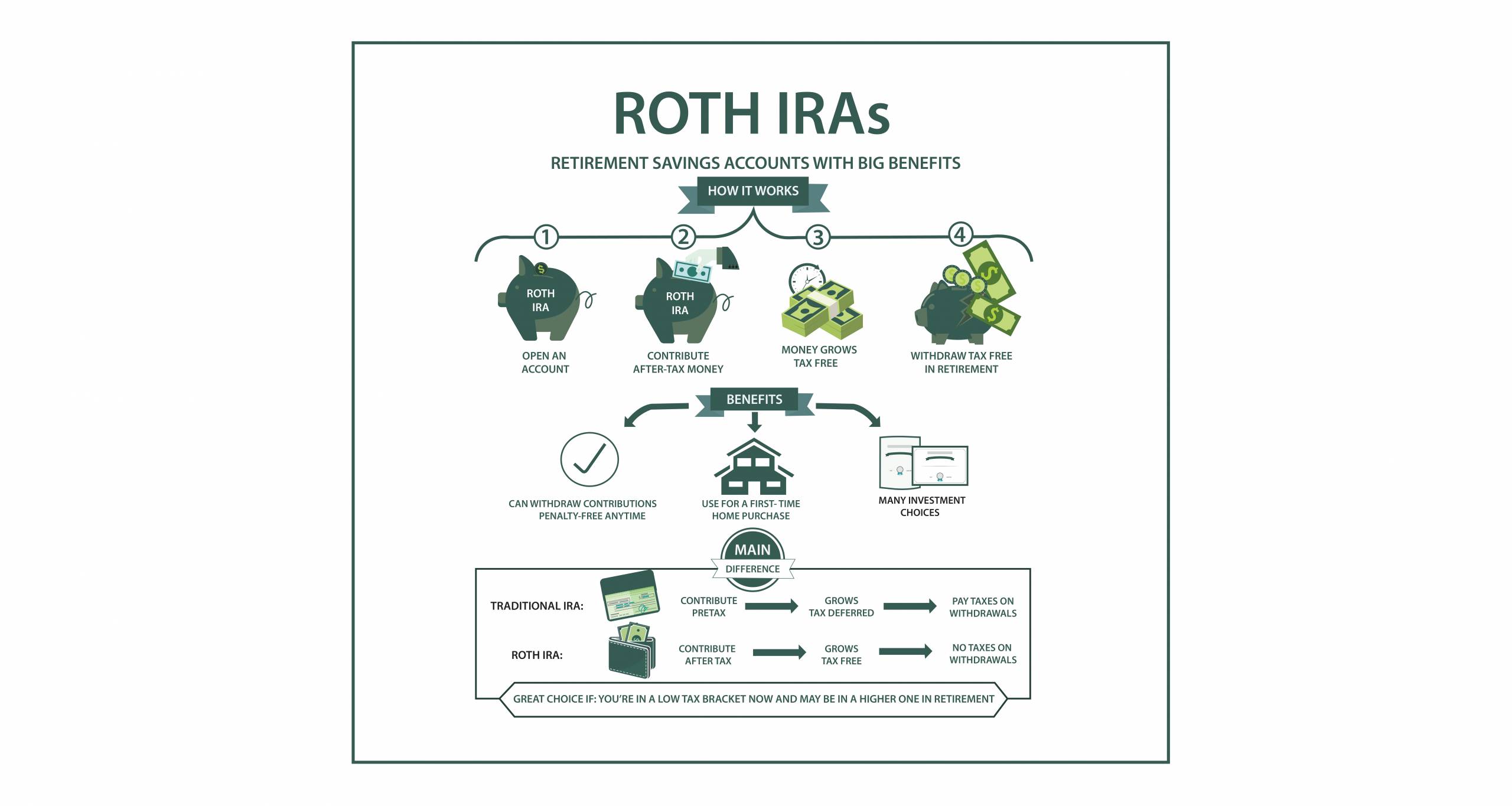
- Tax-Free Withdrawals (Roth IRA): Contributions to a Roth IRA are made with after-tax dollars, meaning they are not tax-deductible. However, the immense benefit here is that qualified withdrawals in retirement—including all earnings and growth—are completely tax-free. This provides incredible predictability and value, especially if you anticipate being in a higher tax bracket during retirement.
- Compounding Returns: Beyond the tax benefits, IRAs facilitate the power of compound interest. By regularly contributing and investing your funds, your money earns returns, and then those returns themselves start earning returns. Over decades, this exponential growth can transform modest contributions into substantial wealth.
- Investment Flexibility: Unlike some employer-sponsored plans that may limit your investment choices, IRAs typically offer a wide array of options, including stocks, bonds, mutual funds, exchange-traded funds (ETFs), and sometimes even real estate or other alternative investments, giving you greater control to tailor your portfolio to your risk tolerance and financial goals.
Distinguishing Between Key IRA Types: Traditional vs. Roth
The two most common and fundamental types of IRAs for individual savers are the Traditional IRA and the Roth IRA. Understanding their differences is paramount to choosing the right vehicle for your retirement strategy.
-
Traditional IRA:
- Contributions: May be tax-deductible, reducing your current taxable income.
- Growth: Tax-deferred.
- Withdrawals in Retirement: Taxable (both contributions and earnings).
- Eligibility: Generally open to anyone with earned income.
- Income Limits: No income limits for contributing, but income limits apply to the deductibility of contributions if you or your spouse are covered by a workplace retirement plan.
-
Roth IRA:
- Contributions: Made with after-tax dollars; not tax-deductible.
- Growth: Tax-free.
- Withdrawals in Retirement: Qualified withdrawals are tax-free.
- Eligibility: Must have earned income, and there are income limits to contribute directly.
- Income Limits: Specific Modified Adjusted Gross Income (MAGI) limits apply for direct contributions, which can prevent high-income earners from contributing. (However, the “Backdoor Roth” strategy can bypass this for some).
The choice between a Traditional and Roth IRA often comes down to your current income, your projected income in retirement, and your current tax bracket versus your anticipated future tax bracket. If you expect to be in a higher tax bracket now than in retirement, a Traditional IRA’s upfront deduction might be more appealing. If you anticipate being in a higher tax bracket in retirement, a Roth IRA’s tax-free withdrawals offer significant long-term value.
Eligibility and Contribution Limits: What You Need to Know
Once you understand the basic types and benefits, the next step is to determine if you’re eligible to contribute and how much you can put in each year. The IRS sets specific rules regarding who can contribute and the maximum amounts.
Who is Eligible to Contribute to an IRA? (Earned Income Rule)
The fundamental requirement for contributing to either a Traditional or Roth IRA is having “earned income.” Earned income includes wages, salaries, tips, commissions, and net earnings from self-employment. It does not include passive income like rental income, interest, dividends, or pension and annuity income.
- Age Requirement: There is no maximum age for contributing to a Roth IRA, as long as you have earned income. For Traditional IRAs, prior to 2020, there was an age limit (70 ½), but the SECURE Act eliminated this, allowing individuals of any age with earned income to contribute.
- Spousal IRA: Even if one spouse doesn’t have earned income, they can still contribute to an IRA based on their spouse’s earned income. This is known as a spousal IRA, allowing both spouses to save for retirement, even if only one is working.
Decoding Annual Contribution Limits (and Catch-Up Contributions)
The IRS sets annual limits on how much you can contribute to all your IRAs combined. These limits are subject to change year to year, so it’s vital to stay updated with the most current figures.
For instance, in recent years, the standard annual contribution limit has often been around $6,500 or $7,000. This amount applies across all your Traditional and Roth IRAs combined. If you have both, your total contributions cannot exceed this cap.
- Catch-Up Contributions: For individuals aged 50 and over, the IRS allows for “catch-up contributions.” This provision acknowledges that individuals closer to retirement may need to save more aggressively. The catch-up contribution typically adds an extra $1,000 to the standard limit, allowing those 50 and older to contribute, for example, $7,500 or $8,000 annually. This is a powerful tool for accelerating retirement savings later in your career.
It’s crucial to monitor these limits closely, as over-contributing can lead to penalties. If you accidentally contribute more than the allowable amount, you generally have until the tax filing deadline (including extensions) to withdraw the excess to avoid a 6% excise tax on the excess amount each year it remains in the account.
Income Limitations for Roth IRA Contributions
While Traditional IRAs have no income limits for contributions, Roth IRAs do. These limits are based on your Modified Adjusted Gross Income (MAGI) and are also adjusted annually by the IRS.
If your MAGI is above a certain threshold, your ability to contribute directly to a Roth IRA may be phased out or eliminated entirely. For example, for a single filer, if your MAGI is below a certain amount (e.g., $140,000), you can contribute the full amount. As your MAGI increases beyond that threshold (e.g., up to $153,000), the amount you can contribute is gradually reduced. Once your MAGI exceeds the upper limit (e.g., $153,000), you cannot contribute directly to a Roth IRA for that year.
It’s important to note that these income limits apply only to direct contributions. High-income earners who exceed these limits can often still fund a Roth IRA through a strategy known as the “Backdoor Roth IRA,” which involves contributing to a Traditional IRA (non-deductible) and then converting it to a Roth IRA. This strategy requires careful planning and understanding of the pro-rata rule for pre-tax IRA assets.
Practical Steps for Making Your IRA Contributions
Once you’ve determined your eligibility and contribution capacity, the next phase is the practical execution of making your contributions. This involves opening an account, funding it, and understanding the critical deadlines.
Opening an IRA Account
The first step is to open an IRA with a financial institution. You have several options, each with its own advantages:
- Brokerage Firms: Offer the widest range of investment options (stocks, bonds, mutual funds, ETFs) and are ideal for those who want to actively manage their investments or seek professional advice.
- Banks: Often provide IRAs that hold certificates of deposit (CDs) or savings accounts. While generally lower risk, these typically offer lower returns compared to market-based investments.
- Mutual Fund Companies: Focus on their own family of mutual funds, which can be a good choice if you prefer a diversified, professionally managed portfolio.
- Robo-Advisors: Offer automated investment management with low fees, making them a great option for beginners or those who prefer a hands-off approach.
When opening an account, you’ll need to decide whether to open a Traditional or Roth IRA (or both) and provide personal information, including your Social Security number.
Direct Contributions: Your Regular Savings
Direct contributions are the most common way to fund an IRA. This simply means depositing money directly into your IRA account.
- Lump Sum: You can contribute the entire annual limit in one go if you have the funds available.
- Regular Payments: Many individuals prefer to set up automatic, recurring contributions (e.g., monthly or bi-weekly) from their checking or savings account. This strategy, known as dollar-cost averaging, can help reduce risk by spreading out your investment purchases over time and removes the burden of remembering to contribute.
- Transfer of Funds: You can also transfer funds from another investment account or even cash.
Indirect Contributions: Rollovers and Transfers
Beyond direct cash contributions, IRAs can also receive funds through rollovers and transfers, which are crucial for consolidating retirement assets or moving them between different account types.
- Rollovers: When you leave an employer, you typically have the option to roll over your 401(k) or other employer-sponsored retirement plan into an IRA. This is called a “direct rollover” if the funds go directly from your old plan administrator to your new IRA custodian, avoiding taxes and penalties. An “indirect rollover” involves the funds being sent to you, and you then have 60 days to deposit them into a new IRA. If you miss the 60-day window, the funds become taxable and may incur penalties. Rollovers are an excellent way to maintain control over your retirement funds and potentially access a broader range of investment options.
- Transfers: This involves moving an IRA from one financial institution to another (e.g., from Bank A to Brokerage B). Unlike rollovers, transfers are typically custodian-to-custodian and do not involve you directly handling the funds. This process is usually tax-free and penalty-free and doesn’t count towards your annual contribution limits.
Understanding Contribution Deadlines
A critical aspect of IRA contributions is adhering to the deadlines. You can contribute to an IRA for a given tax year up until the tax filing deadline for that year, typically April 15th of the following calendar year, not including extensions.
For example, to contribute to your IRA for the 2024 tax year, you would generally have until April 15, 2025, to make those contributions. This flexibility allows individuals to assess their financial situation and make contributions even after the calendar year has ended, potentially maximizing tax deductions or Roth opportunities. It’s important to designate which tax year your contribution is for when you make it, especially if you’re contributing in the new year for the prior year.
Strategic Considerations for Optimizing Your IRA Contributions
Merely contributing to an IRA is a good start, but strategic planning can significantly enhance its impact on your long-term financial health. This involves choosing the right account, maintaining consistency, and understanding advanced strategies.
Choosing the Right IRA for Your Financial Goals
The decision between a Traditional and Roth IRA is often the most significant strategic choice. Consider the following:
- Current vs. Future Tax Bracket: If you believe you are in a higher tax bracket now than you will be in retirement, a Traditional IRA’s upfront tax deduction is likely more beneficial. If you expect your tax bracket to be higher in retirement (or simply want tax-free income in retirement), a Roth IRA is generally preferred.
- Income Level: Roth IRA income limits may make direct contributions impossible for high earners.
- Access to Funds: Roth IRAs offer more flexibility, as you can withdraw your original contributions at any time, tax-free and penalty-free, for any reason. This can provide an emergency fund backup, though it’s generally not recommended to tap into retirement savings. Traditional IRA withdrawals before age 59½ typically incur penalties.
Many financial advisors recommend a blended approach, contributing to both a Traditional and Roth IRA, or using a Roth IRA for part of your contributions to hedge against future tax rate uncertainty.
The Power of Consistency: Dollar-Cost Averaging
As mentioned earlier, setting up recurring contributions, or dollar-cost averaging, is a powerful strategy. Instead of trying to time the market (which is notoriously difficult), you invest a fixed amount regularly. This means you buy more shares when prices are low and fewer when prices are high, averaging out your purchase price over time. This approach reduces risk, smooths out market volatility, and instills a disciplined savings habit, making it easier to stick to your retirement plan.
Avoiding Common Pitfalls and Penalties
Several common mistakes can lead to penalties or diminish the effectiveness of your IRA:
- Excess Contributions: Contributing more than the annual limit can result in a 6% excise tax per year on the excess amount until it’s withdrawn.
- Early Withdrawals: Generally, withdrawing funds from an IRA before age 59½ can incur a 10% early withdrawal penalty, in addition to income taxes on Traditional IRA withdrawals. While exceptions exist (e.g., first-time home purchase, qualified education expenses), it’s best to consider IRA funds sacrosanct for retirement.
- Not Investing Funds: Simply depositing money into an IRA cash account is not enough; the funds must be invested to grow. Many people mistakenly believe the act of contributing is enough, forgetting to select actual investments like mutual funds or ETFs.
- Ignoring RMDs (Traditional IRA): For Traditional IRAs, once you reach a certain age (currently 73), you must start taking Required Minimum Distributions (RMDs). Failing to do so can result in significant penalties (a 25% excise tax on the amount not withdrawn). Roth IRAs do not have RMDs for the original owner.
The Backdoor Roth IRA Strategy
For high-income earners who exceed the Roth IRA MAGI limits, the “Backdoor Roth IRA” is a legal strategy to contribute to a Roth IRA. It involves two main steps:
- Contribute to a Non-Deductible Traditional IRA: Since there are no income limits for contributing to a Traditional IRA, even high earners can contribute to one, but their contributions will not be tax-deductible.
- Convert the Traditional IRA to a Roth IRA: Soon after the non-deductible contribution, the funds are converted to a Roth IRA. Since the original contribution was non-deductible (after-tax), this conversion is typically tax-free.
This strategy can be complex, especially if you have existing pre-tax Traditional IRA balances (due to the pro-rata rule), and it’s highly advisable to consult with a tax professional before attempting it.
Maximizing Your Retirement Savings Beyond Basic Contributions
Contributing to an IRA is a crucial piece of the retirement puzzle, but truly maximizing your long-term savings involves more than just depositing funds. It encompasses thoughtful investment selection, continuous monitoring, and integrating your IRA with a broader financial strategy.
The Role of Investment Selection Within Your IRA
An IRA is a container; the true growth comes from what you put inside it. Selecting appropriate investments is paramount to reaching your retirement goals. Consider:
- Diversification: Spread your investments across different asset classes (stocks, bonds, real estate, etc.) to mitigate risk.
- Risk Tolerance: Your investment choices should align with how much risk you’re comfortable taking. Younger investors with a longer time horizon can typically afford to be more aggressive, while those closer to retirement might prefer a more conservative approach.
- Expense Ratios: Opt for low-cost index funds or ETFs where possible. High fees can significantly erode your returns over decades.
- Long-Term Strategy: Avoid emotional decisions based on short-term market fluctuations. Stick to a well-researched, long-term investment strategy.
- Rebalancing: Periodically adjust your portfolio to bring it back to your desired asset allocation. For instance, if stocks have performed exceptionally well, you might sell some to buy more bonds, maintaining your target risk level.
Monitoring and Adjusting Your IRA Strategy
Your financial life is dynamic, and your IRA strategy should be too. Regularly review your IRA performance, your financial goals, and your life circumstances:
- Annual Review: At least once a year, check your IRA’s performance against your benchmarks, re-evaluate your asset allocation, and ensure you’re contributing the maximum allowable amount.
- Life Events: Major life changes—marriage, divorce, having children, career changes, or significant income shifts—should prompt a re-evaluation of your IRA contributions and investment strategy. Your risk tolerance and financial goals may shift, necessitating adjustments.
- Tax Law Changes: Tax laws are not static. Stay informed about changes that could impact your IRA contributions, deductions, or withdrawal rules, such as those introduced by the SECURE Act or other legislative reforms.

Integrating IRAs with Other Retirement Plans
While powerful, IRAs are often just one component of a comprehensive retirement plan. For many, they complement employer-sponsored plans like 401(k)s, 403(b)s, or TSPs.
- Maximize Employer Match: If your employer offers a matching contribution to their retirement plan, always contribute enough to get the full match first. This is essentially “free money” and should be your top priority.
- Hybrid Approach: A common strategy is to contribute enough to your 401(k) to get the match, then fully fund your IRA (prioritizing Roth if eligible and suitable), and then return to maximizing your 401(k) contributions if you have more savings capacity.
- Diversify Account Types: Holding funds in both pre-tax (Traditional IRA, 401(k)) and after-tax (Roth IRA) accounts provides flexibility in retirement. You can strategically withdraw from different account types to manage your taxable income in your retirement years.
In conclusion, contributing to an IRA is a fundamental step toward building a robust retirement foundation. By understanding the types of IRAs, eligibility rules, contribution limits, and strategic considerations, you can harness the power of these accounts to grow your wealth tax-efficiently. Regular contributions, smart investment choices, and periodic reviews will position you to enjoy the financial freedom you envision in retirement. It’s a journey of discipline and foresight, but one that promises substantial rewards.
aViewFromTheCave is a participant in the Amazon Services LLC Associates Program, an affiliate advertising program designed to provide a means for sites to earn advertising fees by advertising and linking to Amazon.com. Amazon, the Amazon logo, AmazonSupply, and the AmazonSupply logo are trademarks of Amazon.com, Inc. or its affiliates. As an Amazon Associate we earn affiliate commissions from qualifying purchases.