
Navigating the complexities of Social Security can feel like deciphering an intricate financial puzzle. For millions of Americans, these hard-earned benefits represent a cornerstone of their retirement security, providing a vital income stream that complements savings and pensions. Understanding how and when to collect Social Security isn’t just a matter of filling out forms; it’s a strategic decision with profound implications for your long-term financial well-being. This comprehensive guide will demystify the process, offering insights into maximizing your benefits and ensuring a smooth transition into your retirement years.
Understanding Your Social Security Benefits
Before you can collect, it’s crucial to grasp what Social Security is, the various types of benefits available, and the fundamental criteria for eligibility. This foundational knowledge empowers you to make informed choices.
What is Social Security?
Social Security is a federal insurance program in the United States, primarily funded through payroll taxes. Workers pay into the system throughout their careers, and these contributions, along with those from employers, fund current retirees, survivors, and disabled individuals. It’s not a savings account in the traditional sense, but rather a pay-as-you-go system designed to provide a safety net for Americans. Its primary goals include providing retirement income, disability insurance, and survivor benefits. The program has been a cornerstone of American economic stability since its inception, continually adapting to demographic and economic shifts.
Types of Benefits
While most people associate Social Security with retirement income, the program offers a broader spectrum of benefits designed to support individuals and families through various life events.
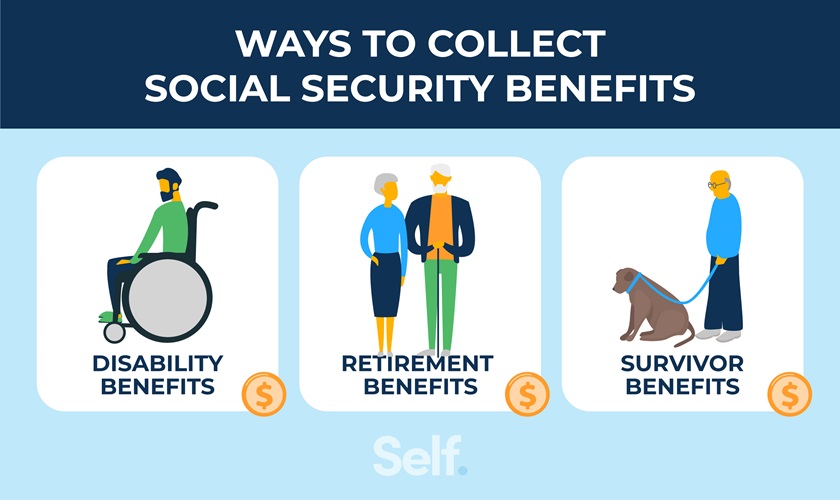
- Retirement Benefits: This is the most common type, paid to eligible workers who have reached a certain age and accumulated enough work credits. The amount you receive depends on your earnings history and the age at which you begin claiming.
- Spousal Benefits: If you are married or divorced, you may be eligible to receive benefits based on your spouse’s or former spouse’s earnings record. This is particularly beneficial if your spouse has a higher earnings history or if you have limited work credits of your own.
- Survivor Benefits: In the event of a worker’s death, certain family members—including surviving spouses, children, and dependent parents—may be eligible for benefits. These benefits provide crucial financial support during a difficult time.
- Disability Benefits: If you become unable to work due to a severe medical condition that is expected to last at least a year or result in death, you may qualify for Social Security Disability Insurance (SSDI). This provides an income stream when you can no longer earn a living.
Eligibility Requirements
To qualify for Social Security benefits, you must accumulate “work credits” by earning income and paying Social Security taxes. The Social Security Administration (SSA) determines eligibility based on these credits, which are earned throughout your working life. In 2024, you earn one credit for every $1,730 in earnings, up to a maximum of four credits per year. Most people need 40 credits, or 10 years of work, to qualify for retirement benefits. The specific number of credits required can vary for disability and survivor benefits, depending on age and circumstances. Beyond work credits, your age is another critical factor, particularly for retirement benefits.
When to Claim: The Critical Decision
Perhaps the most impactful decision you’ll make regarding Social Security is when to start collecting your benefits. This choice can significantly affect the total amount you receive over your lifetime.
Full Retirement Age (FRA) Explained
Your Full Retirement Age (FRA) is the age at which you are entitled to receive 100% of your primary insurance amount (PIA), which is your Social Security benefit before any reductions or increases. FRA is not universal; it depends on your birth year. For those born between 1943 and 1954, FRA is 66. It gradually increases for subsequent birth years, reaching 67 for anyone born in 1960 or later. Understanding your FRA is paramount because it serves as the benchmark for calculating your monthly benefit.
Claiming Early: Pros and Cons
You can start receiving Social Security retirement benefits as early as age 62. However, there’s a significant catch: claiming before your FRA results in a permanent reduction of your monthly benefit. For example, if your FRA is 67 and you claim at 62, your monthly benefit could be reduced by up to 30%. While this provides an earlier income stream, it means less money each month for the rest of your life.
- Pros of claiming early: Immediate access to income, which can be crucial for those facing health issues, job loss, or a desire for an earlier retirement. It also allows you to invest your benefits, though this comes with inherent market risks.
- Cons of claiming early: Substantially reduced monthly payments, potentially impacting your long-term financial security, especially if you live a long life. It also affects spousal and survivor benefits, as these are often based on your reduced amount.
Delaying Benefits: Maximizing Your Monthly Payments
Conversely, you can delay claiming your Social Security benefits beyond your FRA, up to age 70. For each year you delay past your FRA, your monthly benefit increases by a certain percentage, known as Delayed Retirement Credits (DRCs). These credits accumulate at 8% per year for those born in 1943 or later. This means that if your FRA is 67 and you wait until 70, your monthly benefit will be 124% of what it would have been at your FRA.
- Pros of delaying: Significantly higher monthly payments for life, providing a stronger financial cushion, especially in later years. It also provides a higher base for spousal and survivor benefits. This strategy often acts as longevity insurance, protecting against the risk of outliving your savings.
- Cons of delaying: You forgo income for several years, requiring other sources of funds to cover living expenses during that period. This strategy might not be suitable for those with health concerns or a lower life expectancy.
Factors Influencing Your Decision
The optimal time to claim Social Security is highly individual and depends on a confluence of factors:
- Health and Life Expectancy: If you have a family history of longevity and are in good health, delaying benefits might be a wise choice to maximize total lifetime income. Conversely, if your health is poor, claiming early could be more beneficial.
- Other Income and Savings: If you have substantial retirement savings or other income sources, you might be able to afford to delay claiming Social Security, allowing your benefits to grow. If Social Security will be your primary income, early claiming might be necessary, though it should be carefully weighed.
- Spousal and Family Considerations: Coordinated claiming strategies for married couples can significantly increase combined lifetime benefits. One spouse might claim early to provide immediate income while the other delays to maximize their own benefit.
- Debt and Financial Obligations: High debt or ongoing financial responsibilities might necessitate claiming benefits earlier to improve cash flow.
The Application Process: A Step-by-Step Guide
Once you’ve decided when to claim, the next step is the application process. While it might seem daunting, the Social Security Administration (SSA) has streamlined procedures to make it relatively straightforward.
Gathering Necessary Documents
Before you begin your application, gather all essential documents. Having these ready will expedite the process and prevent delays. Typically, you will need:
- Proof of Age: Birth certificate or other acceptable evidence of birth.
- Social Security Card: Your own and, if applying for spousal benefits, your spouse’s.
- Proof of Identity: A driver’s license, state-issued non-driver ID card, or U.S. passport.
- W-2 Forms or Self-Employment Tax Returns: For the last year, to verify earnings.
- Bank Account Information: For direct deposit of benefits.
- Marriage Certificate: If applying for spousal benefits.
- Military Service Discharge Papers (Form DD-214): If you served in the military.
- Children’s Birth Certificates: If applying for benefits on behalf of children.

The SSA website provides a comprehensive checklist of required documents for various benefit types.
Application Methods
The SSA offers several convenient ways to apply for benefits:
- Online: For retirement and spousal benefits, applying online is often the easiest and fastest method. The SSA’s website (ssa.gov) provides a secure portal to complete your application. It typically takes less than 15 minutes to complete the application if you have all your documents ready.
- By Phone: You can call the SSA toll-free at 1-800-772-1213 (TTY 1-800-325-0778) to speak with a representative and apply.
- In-Person: You can visit your local Social Security office. It’s advisable to call ahead to make an appointment to minimize wait times. This option can be helpful if you prefer face-to-face assistance or have complex questions.
What Happens After You Apply?
Once your application is submitted, the SSA will review it and verify your information.
- Processing Time: It typically takes a few weeks to a few months for an application to be processed, depending on the complexity and type of benefit. Retirement benefit applications generally process faster than disability claims.
- Notification: The SSA will send you a letter informing you of their decision. If approved, the letter will detail your benefit amount, the start date of your payments, and how they will be disbursed.
- Appeals Process: If your application is denied, you have the right to appeal the decision. The appeal process involves several levels, from reconsideration to a hearing before an administrative law judge, and potentially further appeals to the Appeals Council and federal court. It’s crucial to understand the deadlines for each stage of the appeal.
Managing Your Benefits Post-Collection
Collecting your Social Security benefits is not the final step; understanding how to manage them post-collection is vital for optimizing your financial situation.
Understanding Taxation of Benefits
A common misconception is that Social Security benefits are tax-free. In reality, a portion of your benefits may be subject to federal income tax, depending on your “provisional income.” Provisional income includes your adjusted gross income, tax-exempt interest, and 50% of your Social Security benefits.
- If your provisional income is between $25,000 and $34,000 for an individual (or $32,000 and $44,000 for a married couple filing jointly), up to 50% of your benefits may be taxable.
- If your provisional income exceeds $34,000 for an individual (or $44,000 for a married couple filing jointly), up to 85% of your benefits may be taxable.
Some states also tax Social Security benefits, so it’s important to check your state’s specific laws. You can elect to have federal income tax withheld from your benefits or make quarterly estimated tax payments.
Cost-of-Living Adjustments (COLAs)
Social Security benefits are designed to maintain their purchasing power over time through annual Cost-of-Living Adjustments (COLAs). These adjustments are typically announced in October and take effect in December, influencing benefits starting in January of the following year. COLAs are based on the Consumer Price Index for Urban Wage Earners and Clerical Workers (CPI-W). While COLAs help keep pace with inflation, they are not guaranteed to fully offset rising costs, especially in areas like healthcare.
Working While Receiving Benefits
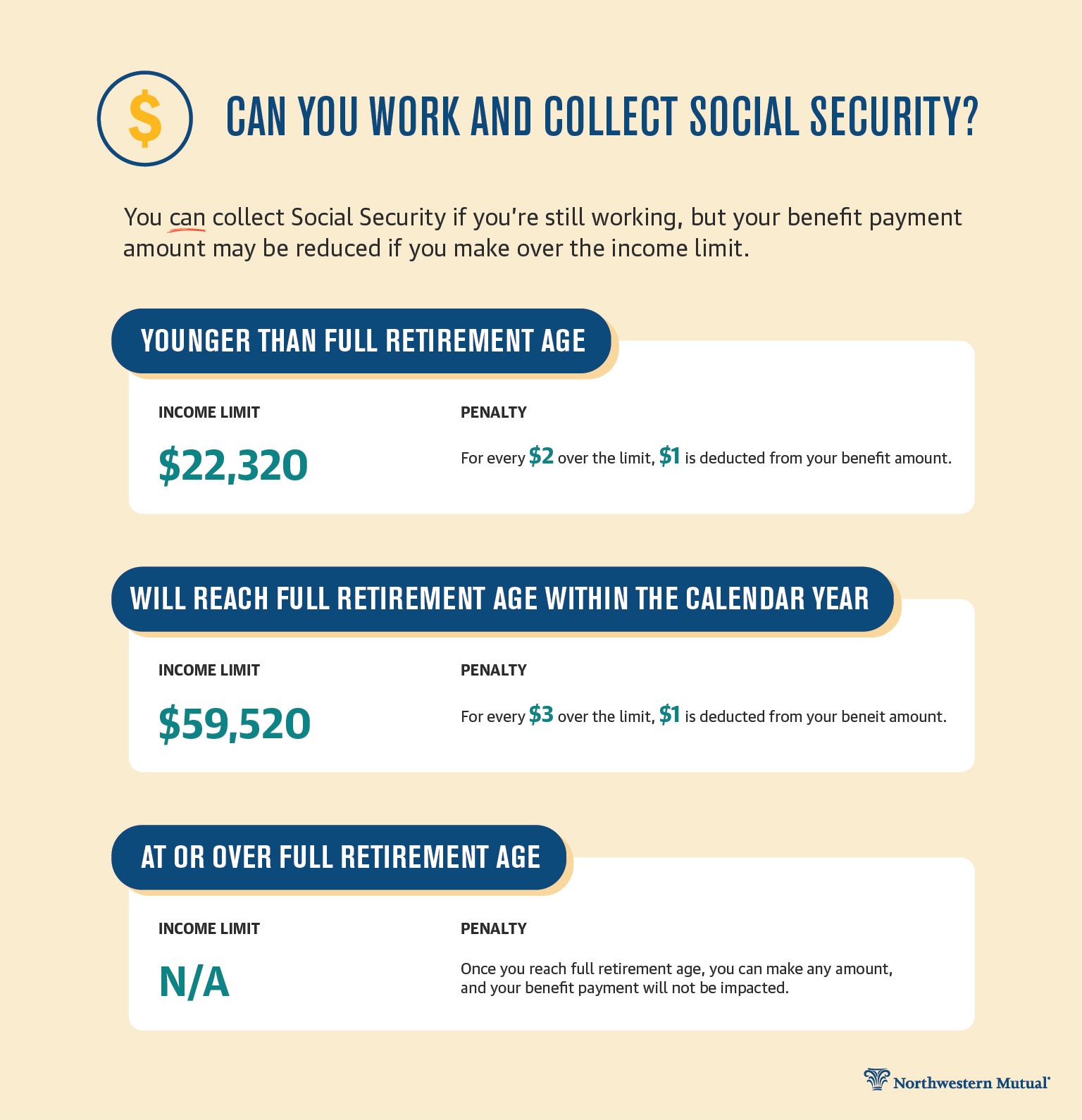
If you decide to work after you start collecting Social Security, your earnings might affect your benefits, particularly if you are below your Full Retirement Age.
- Before FRA: If you are under your FRA, the SSA has an “earnings limit.” For 2024, if you earn more than $22,320, the SSA will deduct $1 from your benefits for every $2 you earn above the limit.
- In the Year You Reach FRA: In the year you reach your FRA, a higher earnings limit applies. For 2024, it’s $59,520, and the SSA will deduct $1 from your benefits for every $3 you earn above this limit, until the month you reach your FRA.
- At or After FRA: Once you reach your Full Retirement Age, there is no earnings limit, and your benefits will not be reduced regardless of how much you earn. Importantly, any benefits withheld due to earnings limits before FRA are not lost forever; they are used to recalculate your benefit at your FRA, leading to a higher monthly payment going forward.
Keeping Your Information Updated
It’s essential to keep the SSA informed of any changes that could affect your benefits. This includes changes in your address, bank account information for direct deposit, marital status, or if you begin or stop working. You can manage your information through your My Social Security account online. Regularly reviewing your Social Security statement is also a good practice to ensure your earnings record is accurate.
Expert Tips for a Smooth Retirement Transition
Collecting Social Security is a key milestone, but it’s part of a larger financial landscape. Proactive planning and seeking guidance can make your transition to retirement significantly smoother.
Seek Professional Financial Advice
The decision of when and how to collect Social Security is complex and interconnected with your other financial assets, liabilities, and goals. A qualified financial advisor can help you integrate your Social Security strategy into your broader retirement plan, considering factors like your investment portfolio, tax situation, healthcare costs, and legacy planning. They can also assist with spousal claiming strategies that maximize combined lifetime benefits.
Plan Ahead Comprehensively
Don’t wait until you’re 62 to start thinking about Social Security. Begin reviewing your Social Security statement and understanding your potential benefits years in advance. This allows you to forecast your retirement income, identify any gaps, and make necessary adjustments to your savings and investment strategies. A holistic retirement plan encompasses not just Social Security, but also pensions, 401(k)s, IRAs, and other assets.
Monitor Your Statements and Account
The SSA provides annual Social Security statements to workers, which detail your earnings history and estimated future benefits at various claiming ages. If you are not receiving these, you can create a “My Social Security” account online at ssa.gov. This online portal allows you to access your statement, estimate benefits, review your earnings record for accuracy, and manage your account. Regularly checking this information can help you identify and correct any errors that could impact your future benefits.
In conclusion, collecting Social Security is a crucial financial decision that requires careful consideration and planning. By understanding the different benefit types, strategically choosing your claiming age, navigating the application process efficiently, and managing your benefits wisely, you can ensure that Socialify Security plays its intended role as a robust pillar of your financial security in retirement.
aViewFromTheCave is a participant in the Amazon Services LLC Associates Program, an affiliate advertising program designed to provide a means for sites to earn advertising fees by advertising and linking to Amazon.com. Amazon, the Amazon logo, AmazonSupply, and the AmazonSupply logo are trademarks of Amazon.com, Inc. or its affiliates. As an Amazon Associate we earn affiliate commissions from qualifying purchases.