
Choosing to close a bank account is a significant financial move that requires more strategy than simply withdrawing your cash and walking away. Whether you are switching to a high-yield online savings account, consolidating your finances after a major life event, or moving to a new institution with better customer service, the process must be handled with precision. An improperly closed account can lead to a cascade of financial headaches, ranging from unexpected “zombie” account fees to damaged credit scores and missed payment penalties.
Successfully navigating this transition involves a systematic approach to auditing your current automated ecosystem, securing your funds, and obtaining formal confirmation from the institution. This guide provides a professional roadmap to ensuring your exit from a financial institution is clean, secure, and permanent.
The Preparation Phase: Auditing Your Financial Ecosystem
The most common mistake individuals make when closing a bank account is failing to account for the digital threads that connect their bank to the rest of their lives. In modern personal finance, a bank account is rarely a static vault; it is a hub for automated inflows and outflows.
Identifying Linked Subscriptions and Direct Debits
Before you notify your bank of your intent to leave, you must conduct a thorough audit of at least six months of transaction history. This long-range view is essential because it captures quarterly or semi-annual payments that might be missed in a standard 30-day review. Identify every recurring debit, including utility bills, streaming services, gym memberships, and insurance premiums.
Failing to redirect these payments to a new account before closing the old one can result in failed payment fees from the service provider and potentially a “returned item” fee from the bank if the account is in the process of closing. Create a checklist of every merchant authorized to pull funds from your account to ensure none are overlooked.
Managing Direct Deposits and Income Streams
The inflow of money is just as critical as the outflow. You must coordinate with your employer’s payroll department or use your company’s HR portal to update your direct deposit information. This shift can sometimes take one to two pay cycles to take effect. If you receive government benefits, such as Social Security, or dividends from investment accounts, these must also be rerouted. It is a best practice to keep your old account open with a small “buffer” balance until you see the first full deposit successfully land in your new account.
Resolving Pending Transactions
A bank account cannot be cleanly closed if there are “pending” items on the ledger. This includes outstanding checks you have written that have not yet been cashed, as well as “holds” from hotels or gas stations. If you close an account while a check is still circulating, that check will bounce when the recipient attempts to deposit it, leading to professional embarrassment and potential legal or financial penalties.
Executing the Closure: Methods and Best Practices
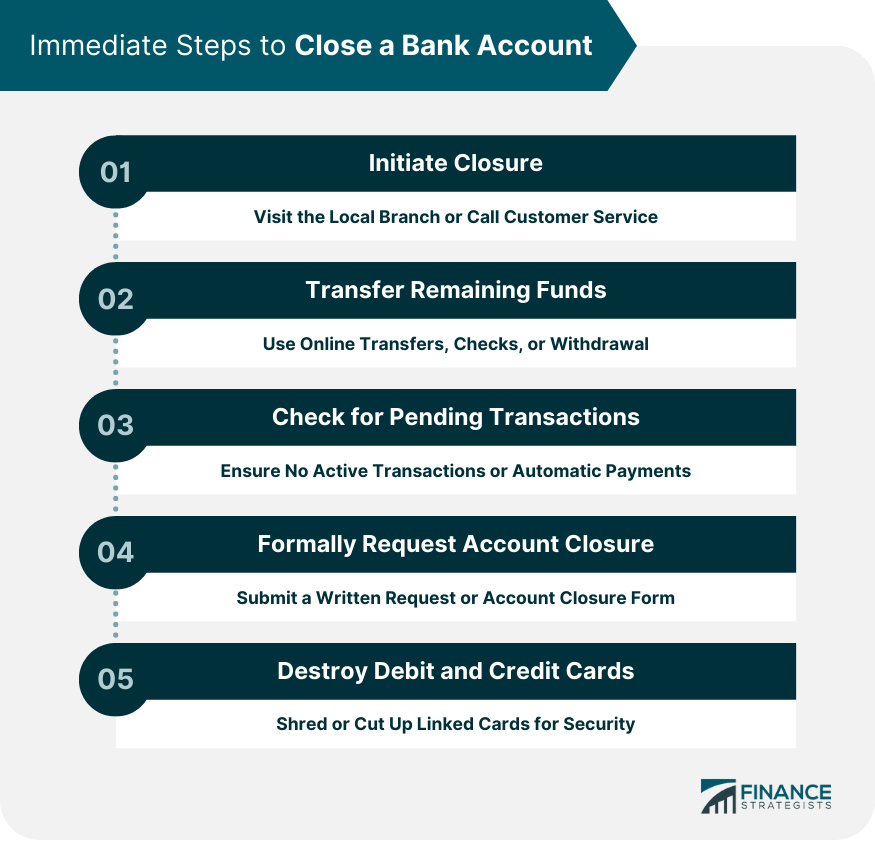
Once your new account is operational and your automated transactions have been migrated, you are ready to initiate the formal closure. Financial institutions offer several pathways for this, but the “best” method often depends on the bank’s specific policies and your own need for a paper trail.
Closing in Person at a Local Branch
For traditional brick-and-mortar banks, visiting a branch is often the most efficient method. It allows you to speak directly with a personal banker who can verify your identity and process the closure immediately. When closing in person, you can request an immediate cashier’s check for the remaining balance or have the funds handed to you in cash (though a check is safer for large amounts). Most importantly, you can walk out with a printed receipt confirming the account status is “Closed” and the balance is zero.

Utilizing Online and Mobile Portals
Many modern banks and digital-only institutions allow you to close accounts through their secure messaging systems or mobile apps. While convenient, this method requires diligence. Ensure you save screenshots or download PDFs of your final statements and the confirmation message of the closure request. Some banks may require you to zero out the balance yourself via an ACH transfer to an external bank before the “Close Account” button becomes active.
The Importance of Written Requests
In cases where you cannot visit a branch and the online system is insufficient, sending a formal letter via certified mail is the most legally robust method. This is particularly useful for resolving disputes or ensuring a “clean break” from a difficult institution. Your letter should include your account number, a clear request to close the account, and instructions on how to remit the remaining balance. By using certified mail with a return receipt, you have documented proof that the bank received your request, which serves as a vital safeguard if the bank continues to charge fees after the fact.
Managing Potential Roadblocks and Hidden Costs
Banks are businesses, and losing a customer is rarely in their financial interest. Consequently, there may be hurdles designed to retain your business or recoup costs associated with your departure.
Understanding Early Account Closure Fees
Some institutions charge an “early closure fee” if you shutter an account within a specific timeframe after opening it—typically 90 to 180 days. This is common if you received a sign-up bonus or promotional rate. Before proceeding, review your account agreement to see if you will be penalized. In some cases, it may be more cost-effective to leave the minimum required balance in the account until the penalty window expires.
The “Zombie Account” Phenomenon
A “zombie account” occurs when an account that was thought to be closed is inadvertently reopened by an incoming automated payment or a stray debit. If a merchant attempts to charge your old account and the bank honors the transaction, they may reopen the account, apply the charge, and then hit you with an overdraft fee and an inactivity fee. To prevent this, ensure that you receive a formal “Account Closed” notice and monitor your credit report and mail for any unexpected communications from the old institution for several months following the closure.
Handling Joint Accounts
Closing a joint account usually requires the consent of both parties, though this varies by the specific terms of the account agreement. Some banks allow either party to close the account unilaterally, while others require both signatures. If the closure is part of a legal separation or divorce, it is imperative to coordinate this through legal counsel to ensure that funds are distributed according to the settlement and that neither party is left liable for future fees.
Post-Closure Security and Long-Term Record Keeping
The work is not done once the bank confirms the closure. Protecting your identity and maintaining your financial records are the final steps in a professional account transition.
Physical Security and Data Destruction
Once an account is closed, your physical debit cards, ATM cards, and unused checkbooks become liabilities. Do not simply throw them in the trash. Use a cross-cut shredder to destroy cards, specifically cutting through the EMV chip and the magnetic stripe. For checkbooks, shred every remaining check and deposit slip. This prevents “dumpster divers” from obtaining your old account number and personal details, which could be used for identity theft or fraudulent “re-opening” attempts.
Impact on Credit and Financial History
Standard checking and savings accounts do not typically appear on your credit report, so closing them will not directly impact your FICO score. However, there are exceptions. If your account had an integrated overdraft line of credit, closing that account will close a line of credit, which could slightly affect your credit utilization ratio or the average age of your accounts. Additionally, if an account is closed with a negative balance due to unpaid fees, the bank may report this to ChexSystems—a consumer reporting agency that banks use to screen new customers. A negative mark on ChexSystems can make it nearly impossible to open a bank account at another institution for several years.
Maintaining Financial Records for Tax Purposes
It is vital to download and archive at least the last year’s worth of bank statements before you lose access to the online banking portal. Once an account is closed, your login credentials will often be deactivated immediately. You may need these statements for tax filing, mortgage applications, or future audits. Specifically, ensure you have records of any interest earned, as the bank will still send a Form 1099-INT at the end of the year if you earned more than $10 in interest, regardless of whether the account is currently open.

Final Confirmation
The final step in the process is a simple follow-up. Approximately 30 days after you believe the account is closed, contact the bank’s customer service line to verify that the account remains in a closed status with a $0.00 balance. This one-minute phone call provides the ultimate peace of mind, ensuring that your financial transition was successful and that your old bank account is officially a thing of the past. By following this structured approach, you protect your capital, your credit, and your time, allowing you to move forward with your new financial strategy with total confidence.
aViewFromTheCave is a participant in the Amazon Services LLC Associates Program, an affiliate advertising program designed to provide a means for sites to earn advertising fees by advertising and linking to Amazon.com. Amazon, the Amazon logo, AmazonSupply, and the AmazonSupply logo are trademarks of Amazon.com, Inc. or its affiliates. As an Amazon Associate we earn affiliate commissions from qualifying purchases.