
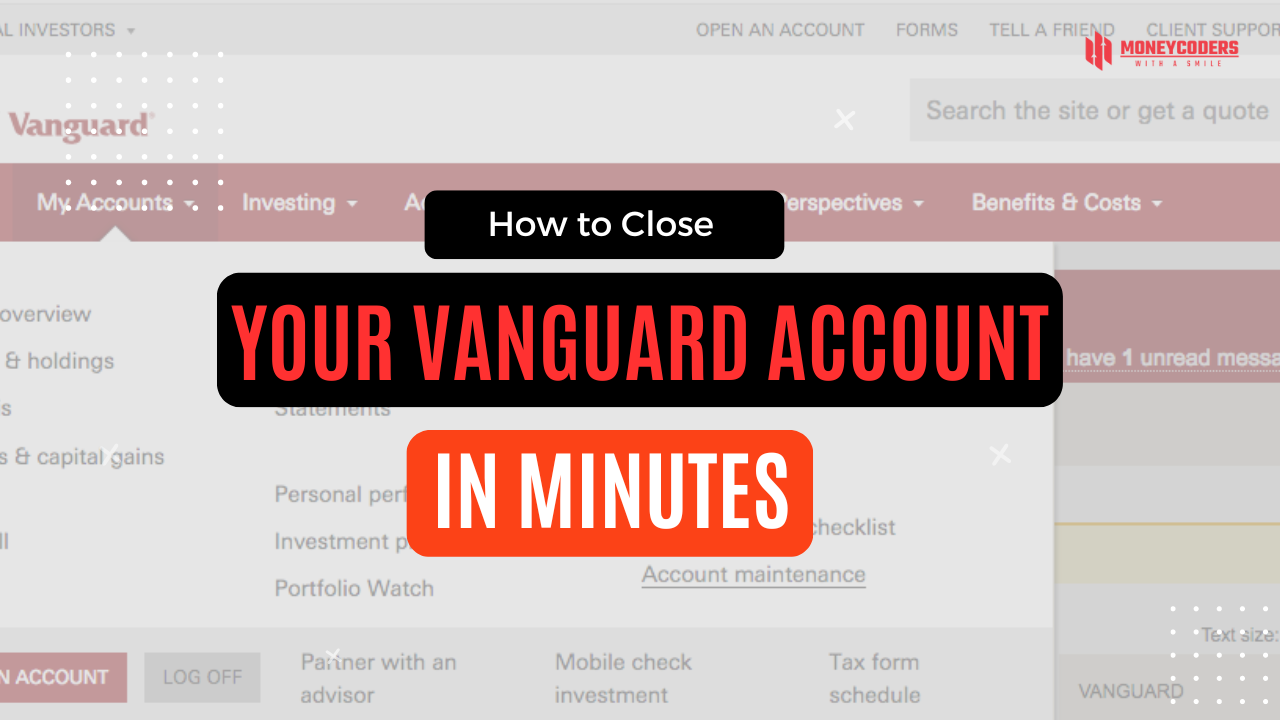
Closing an investment account, especially one held with a reputable firm like Vanguard, is a significant financial decision that requires careful consideration and a methodical approach. Whether you’re consolidating your investments, moving to a different provider, or simply cashing out, understanding the implications and following the correct procedures is paramount. This guide will walk you through the process, helping you navigate the complexities to ensure a smooth and financially sound closure of your Vanguard account.
Vanguard is known for its low-cost index funds, ETFs, and a strong commitment to investor-first principles. Many investors choose Vanguard for their long-term wealth building. However, life changes, financial goals evolve, and sometimes, closing an account becomes necessary. This decision isn’t merely administrative; it has potential tax, investment, and long-term financial planning ramifications. Rushing the process without adequate preparation can lead to unexpected costs, tax liabilities, or disruptions to your financial strategy. Our aim is to provide an insightful and engaging roadmap, ensuring you are well-equipped to make informed choices at every step.
Understanding Your Reasons for Closing
Before initiating the closure process, it’s beneficial to reflect on why you’re closing your Vanguard account. Your reasons often dictate the best approach and highlight specific considerations you might need to address. Identifying the underlying motivation helps in planning the most efficient and financially advantageous exit strategy.
Consolidating Investments
One of the most common reasons for closing an account is to consolidate investments. Managing multiple accounts across different platforms can be cumbersome, leading to fragmented oversight and potentially higher fees. By bringing all your assets under one roof, you simplify your financial life, streamline portfolio management, and potentially gain access to better features or lower costs at a single institution. When consolidating, the primary method will likely be an account transfer, minimizing liquidation and potential tax events. This approach emphasizes efficiency and strategic alignment of your entire investment portfolio, rather than a full divestment from the market.
Dissatisfaction with Services or Performance
While Vanguard maintains a strong reputation, individual investor experiences can vary. Dissatisfaction might stem from a desire for different investment options, a preference for a different customer service model, or a perception of underperformance relative to your expectations or other opportunities. Before closing due to dissatisfaction, it’s worth exploring if Vanguard offers alternative solutions or if a different product within Vanguard might better suit your needs. If not, this reason often leads to a transfer of assets to a new broker, a process that should be handled with due diligence regarding the new provider’s offerings and fees.
Financial Hardship or Life Changes
Major life events, such as job loss, retirement, a significant medical expense, or purchasing a home, can necessitate accessing invested capital. In situations of financial hardship, closing an investment account might be the only viable option to generate liquidity. Similarly, retirement often involves shifting from an accumulation phase to a distribution phase, potentially requiring changes to investment vehicles or access to funds. These scenarios often involve liquidating assets, which brings significant tax implications depending on the account type (taxable vs. tax-advantaged) and holding period. Understanding these implications is crucial to avoid further financial strain.
Estate Settlement
In the unfortunate event of an account holder’s passing, the executor or administrator of the estate will need to close the Vanguard account as part of the estate settlement process. This involves providing death certificates, letters of testamentary, and other legal documentation to Vanguard. The assets will then be distributed according to the deceased’s will or state intestacy laws. This process is highly sensitive and legally intricate, often requiring the guidance of an estate attorney to ensure compliance and proper transfer of assets to heirs.
Essential Preparations Before You Close
Regardless of your reason, preparation is key to a smooth account closure. Skipping crucial steps can lead to delays, unexpected fees, or adverse financial outcomes. This preparatory phase is where you gather information, assess consequences, and plan your actions strategically.
Reviewing Your Account Type and Holdings
The first step is to understand exactly what kind of account you have (e.g., individual taxable brokerage, joint, IRA, Roth IRA, 529 plan, 401k) and what assets it holds (e.g., mutual funds, ETFs, stocks, bonds). Each account type has different rules regarding transfers, withdrawals, and tax treatment. For instance, withdrawing from an IRA before age 59½ can incur penalties, while a taxable brokerage account sale will trigger capital gains or losses. Identify all holdings, their cost basis, and their current market value. This information is critical for tax planning and deciding whether to transfer or liquidate.
Understanding Tax Implications
This is arguably the most critical aspect of closing an investment account.
- Taxable Brokerage Accounts: Selling assets in a taxable account will trigger capital gains or losses. Short-term gains (assets held for one year or less) are taxed at ordinary income rates, while long-term gains (assets held for more than one year) receive preferential tax treatment. If you transfer assets in-kind (without selling) to another brokerage, there’s generally no immediate tax event.
- Retirement Accounts (IRAs, 401ks): Direct rollovers or transfers between qualified retirement accounts are typically tax-free. However, taking a distribution (cash withdrawal) from a traditional IRA or 401k before retirement age (59½) can result in income taxes and a 10% early withdrawal penalty. Roth IRAs offer tax-free withdrawals in retirement, but early distributions of earnings can be taxable and penalized.
- 529 Plans: Withdrawals for non-qualified educational expenses are subject to income tax on earnings and a 10% penalty.
Consulting a tax advisor is highly recommended to understand your specific tax situation and minimize liabilities.
Transferring Funds vs. Liquidating Assets
You generally have two primary options for moving your investments:
- Transfer In-Kind (ACATS Transfer): This involves moving your existing investments (e.g., Vanguard ETFs, mutual funds) directly to another brokerage account without selling them. This is often the preferred method for taxable accounts as it avoids triggering capital gains taxes. Most brokerages support the Automated Customer Account Transfer Service (ACATS), which facilitates this process. The receiving firm typically initiates the transfer.
- Liquidating Assets and Withdrawing Funds: This involves selling all your investments, converting them to cash, and then withdrawing the cash. This method will trigger capital gains/losses in taxable accounts and can lead to penalties and taxes in retirement accounts if not handled as a direct rollover. Liquidation is necessary if you’re closing the account for cash needs or if the receiving brokerage doesn’t support the specific assets you hold.
Updating Beneficiaries and Contact Information
Ensure that your beneficiaries are up-to-date, especially if you’re handling an estate or if the account is being closed due to a significant life change. Also, verify that Vanguard has your current contact information, including mailing address, email, and phone number, to ensure you receive all final statements and tax documents. Incorrect information can lead to delays and complications.
Gathering Necessary Documents
Prepare any relevant documents you might need. This could include recent statements, account numbers, login credentials, and, in the case of estate settlement, legal documents like death certificates, letters of testamentary, or trust agreements. Having these readily available will expedite the process.
The Step-by-Step Process of Closing Your Account
Once you’ve completed your preparations, you can initiate the closure. The specific steps will vary slightly depending on your account type and whether you’re transferring or liquidating.
Contacting Vanguard Customer Service
Your first official step should be to contact Vanguard’s customer service. You can typically do this by phone or via secure message through their online portal. Explain your intention to close the account. They will provide specific instructions tailored to your account type and situation. Be prepared to verify your identity. Vanguard’s representatives can guide you on the necessary forms and procedures, and answer any questions about minimum balances, potential fees, or transfer timelines.
Initiating an Account Transfer (ACATS)
If you’re transferring your assets to another brokerage, the process is usually initiated by the receiving firm.
- Open an account with your new brokerage: Ensure the new account is of the same registration type (e.g., individual to individual, joint to joint, IRA to IRA) to facilitate a seamless transfer.
- Provide the new firm with your Vanguard account details: They will typically require your Vanguard account number and a recent statement.
- Complete the transfer request form: The new brokerage will provide this. You might need to specify whether you’re transferring all assets or just a portion.
- The new firm handles the rest: They will submit the ACATS request to Vanguard. This process usually takes 5-10 business days, though it can sometimes be longer if there are discrepancies or non-transferable assets.
During the transfer, your assets will be temporarily frozen, meaning you cannot trade them.
Selling Holdings and Withdrawing Funds
If you choose to liquidate your assets:
- Sell all your holdings: Log into your Vanguard account online or contact customer service to place sell orders for all your mutual funds, ETFs, stocks, and bonds. Be mindful of market timing and potential tax implications as discussed earlier.
- Wait for trades to settle: Stock and ETF trades typically settle in two business days (T+2). Mutual fund settlement times can vary.
- Withdraw the cash: Once the funds are settled and available, you can typically initiate an electronic funds transfer (EFT) to a linked bank account, request a check, or wire transfer. Be aware of any minimum withdrawal amounts or fees for specific methods.
Vanguard may require a small residual balance to remain until all dividends, interest, and final fees are processed. They will then send the remaining small balance to your linked bank account or by check.
Handling Retirement Accounts (IRAs, 401ks)
Closing retirement accounts requires particular care to avoid penalties and taxes.
- Direct Rollover: The safest way to move an IRA or 401k without tax implications is a direct rollover. This means the funds are transferred directly from Vanguard to another qualified retirement account (e.g., another IRA or 401k at a new employer). Vanguard can send the funds directly to the new custodian.
- Indirect Rollover: If Vanguard sends the check to you, you have 60 days to deposit the funds into another qualified retirement account. Failure to do so results in the distribution being treated as taxable income, subject to ordinary income tax and potentially a 10% early withdrawal penalty if you’re under 59½. Vanguard may also withhold 20% for taxes, which you would need to cover from other sources to complete the full 60-day rollover.
- 401k from Former Employers: If you have a 401k from a previous employer administered by Vanguard, you can roll it over into an IRA or your new employer’s 401k, or leave it with Vanguard. Contact Vanguard’s employer plan services for specific instructions.
Confirming Account Closure
After you’ve transferred or withdrawn all assets, it’s crucial to confirm the account is officially closed.
- Check your Vanguard account online: Look for a “closed” status or confirmation.
- Contact customer service: A quick call can confirm that the balance is zero and the account has been formally closed.
- Expect a final statement: Vanguard should send a final statement confirming a zero balance and account closure.
Potential Challenges and Considerations
While the process can be straightforward, certain situations might present challenges. Being aware of these can help you proactively address them.
Minimum Balance Requirements and Fees
Some Vanguard accounts, particularly certain mutual funds, may have minimum investment requirements. If your balance drops below this threshold during the liquidation process, or if you’re closing a smaller account, you might incur maintenance fees or be forced to sell remaining holdings. Vanguard generally has low fees, but always check their current fee schedule.
Tax Withholding on Distributions
If you are taking a cash distribution from a retirement account, Vanguard is typically required to withhold 20% for federal income taxes (and potentially state taxes). This withholding applies even if you intend to complete a 60-day indirect rollover. This means you would need to make up the 20% from other funds to roll over the full original amount to avoid it being considered a taxable distribution.
Lingering Balances or Dividends
Even after you’ve seemingly emptied an account, small amounts of cash can sometimes remain from accrued dividends, interest payments, or fractional shares. Vanguard will typically send these residual amounts via check or direct deposit once they are fully settled. It’s important to monitor for these final payments.
Impact on Future Investment Goals
Closing an investment account, especially one that has been part of a long-term strategy, can impact your future financial goals. Ensure that your new investment setup aligns with your objectives and risk tolerance. Consider the implications of breaking your investment discipline or changing your asset allocation.
Seeking Professional Financial Advice
For complex situations, such as large estates, significant tax implications, or if you’re unsure about the best course of action, consulting a qualified financial advisor or tax professional is invaluable. They can help you navigate the intricacies, minimize tax liabilities, and ensure your decisions align with your broader financial plan.
What Happens After Closure?
Even after the account is closed, your responsibilities don’t entirely end.
Receiving Final Statements and Tax Documents
Vanguard will send you final statements for the period leading up to the closure, showing all transactions. Critically, you will also receive tax documents such as Form 1099-B (for sales in taxable accounts), Form 1099-R (for distributions from retirement accounts), and Form 1099-DIV (for dividends received) in the following tax year. Keep these records meticulously for tax filing purposes.
Maintaining Records
It’s wise to keep copies of all correspondence, statements, and confirmation of closure for several years. This documentation can be vital for tax audits, resolving future discrepancies, or simply for your own financial record-keeping.
Re-evaluating Your Investment Strategy
With your Vanguard account closed, take the opportunity to review your overall investment strategy. Ensure your current investments are appropriately diversified, aligned with your risk tolerance, and on track to meet your financial goals. This is a chance to refine your approach and ensure your financial future remains secure and on course.
Closing a Vanguard account, while a multi-step process, is manageable with proper planning and understanding. By approaching it systematically, understanding the financial implications, and communicating effectively with Vanguard, you can ensure a smooth transition and maintain control over your financial journey.
aViewFromTheCave is a participant in the Amazon Services LLC Associates Program, an affiliate advertising program designed to provide a means for sites to earn advertising fees by advertising and linking to Amazon.com. Amazon, the Amazon logo, AmazonSupply, and the AmazonSupply logo are trademarks of Amazon.com, Inc. or its affiliates. As an Amazon Associate we earn affiliate commissions from qualifying purchases.