
Closing a credit card, especially one from a major issuer like Citibank, is a decision that requires careful consideration. While it might seem like a straightforward task, there are several financial implications and procedural steps to navigate to ensure a smooth transition and protect your credit health. This guide provides a detailed roadmap for closing your Citibank credit card, focusing on the essential financial considerations and best practices within personal finance.
Understanding the Financial Impact of Closing a Credit Card
Before initiating the closure process, it’s crucial to understand how this action can affect your personal finances, particularly your credit score. A credit card is more than just a payment tool; it’s a part of your credit history, which lenders use to assess your creditworthiness.

The Role of Credit Utilization Ratio
One of the most significant factors is your credit utilization ratio. This ratio represents the amount of credit you’re currently using compared to your total available credit across all your accounts. If you close a card, your total available credit decreases. If your outstanding balances on other cards remain the same, your credit utilization ratio will increase. A higher utilization ratio signals to lenders that you might be over-reliant on credit, which can negatively impact your credit score. For instance, if you have a $5,000 limit on your Citibank card and a $5,000 limit on another card, with $1,000 charged to each, your total available credit is $10,000, and your utilization is $2,000/$10,000 = 20%. If you close the Citibank card, your total available credit drops to $5,000, and your utilization becomes $1,000/$5,000 = 20%. However, if you had $0 on the Citibank card, your utilization would improve on paper, but the loss of available credit could still be detrimental if you carry high balances on other cards.
Impact on Length of Credit History
Another key factor is the length of your credit history. The age of your oldest credit account and the average age of all your accounts contribute to your credit score. Closing an old, established Citibank card can shorten your average credit history, especially if it’s one of your oldest accounts. This can be more impactful for individuals with a relatively short overall credit history. While closed accounts generally remain on your credit report for up to 10 years, their positive influence on the average age of accounts diminishes over time.
Account Diversity and New Credit
Your credit mix (e.g., credit cards, installment loans, mortgages) and how recently you’ve opened new credit also play a role. Closing a credit card, especially if it’s one of your few credit lines, could reduce your credit diversity. However, for most individuals with multiple credit accounts, this impact is often minor. Conversely, frequently opening new credit can be seen as risky by lenders, so if you’re closing a card to consolidate or simplify, it’s wise to avoid applying for new credit immediately after.
Essential Preparations Before Closing
Before you contact Citibank, there are several crucial steps to take to ensure a smooth closure and avoid future financial headaches. These preparations are vital for protecting your credit and managing your financial responsibilities.
Settle All Outstanding Balances
This is the most critical step. You must pay off your entire balance on the Citibank credit card, including any pending transactions, accrued interest, or fees. Closing an account with an outstanding balance is generally not possible and can lead to complex financial situations, potentially impacting your credit score. Ensure the payment has fully cleared and the balance reflects $0 before proceeding. It’s often advisable to wait a billing cycle after paying off the balance to confirm all charges and credits have been processed.
Redeem All Rewards and Benefits
Citibank credit cards often come with loyalty programs, offering rewards points, cash back, or travel miles. Before closing your account, make sure to redeem all accumulated rewards. Once the account is closed, any unredeemed points or cash back will typically be forfeited. Check your account statement or log in to your Citibank online portal to see your rewards balance and understand the redemption options.
Update Automatic Payments and Subscriptions
Many individuals use their credit cards for recurring payments such as utility bills, streaming services, gym memberships, or insurance premiums. Before closing your Citibank card, update all these automatic payments to another card or bank account. Failure to do so can result in missed payments, late fees, service interruptions, and negative marks on your credit report for the service providers involved. Create a comprehensive list of all services linked to the card to ensure nothing is overlooked.
Review Your Credit Report

Obtain a copy of your credit report from all three major bureaus (Equifax, Experian, TransUnion) before and after closing the card. This allows you to verify that all information is accurate and that the Citibank account is correctly reported as “closed at consumer’s request” with a zero balance. You are entitled to a free credit report from each bureau annually via AnnualCreditReport.com.
The Process of Closing Your Citibank Credit Card
Once you’ve completed all the necessary preparations, you can proceed with officially closing your Citibank credit card account.
Contacting Citibank Customer Service
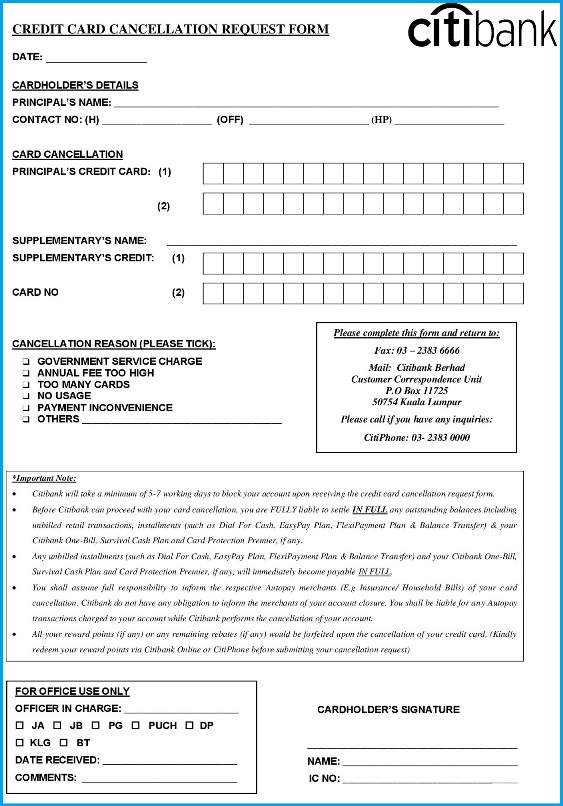
The most effective way to close your Citibank credit card is by contacting their customer service directly. This can typically be done via phone. Look for the customer service number on the back of your credit card or on Citibank’s official website.
When you call, be prepared for:
-
Verification: You will need to verify your identity by providing personal information such as your account number, full name, address, and potentially your Social Security number or date of birth.
-
Reason for Closure: The representative may ask for your reason for closing the account. You are not obligated to provide a detailed explanation, but stating “simplifying finances” or “no longer need the card” is generally sufficient.
-
Retention Offers: Be aware that Citibank might offer you incentives (e.g., bonus points, statement credits, annual fee waivers) to keep the account open. If your primary reason for closing is to avoid an annual fee or for specific financial benefits, consider these offers carefully. If your decision is firm, politely decline.
-
Confirmation: Explicitly state that you wish to close the account, not just cancel the card (which would only replace the physical card but keep the account active). Confirm that the account will be closed with a zero balance and that you will not incur any further charges or fees.
Requesting Written Confirmation
After the phone call, it is highly recommended to request written confirmation of the account closure. This documentation serves as proof that you officially requested the closure and that Citibank acknowledged it. This can be sent via email or postal mail. Keep this record with your important financial documents.
What to Do with the Physical Card
Once the account is officially closed, you should destroy the physical credit card to prevent any unauthorized use. Cut it into several pieces, making sure to cut through the EMV chip and the magnetic strip, before disposing of it securely.
Post-Closure Monitoring and Best Practices
Closing a credit card isn’t the final step; monitoring your financial situation afterward is equally important.
Monitor Your Credit Reports
Within one to two billing cycles after closing your Citibank card, check your credit reports again. Ensure that the account is accurately reported as “closed at consumer’s request” with a zero balance. If you find any discrepancies, contact Citibank and the credit bureaus immediately to rectify them. This vigilance helps prevent errors that could negatively affect your credit score.
Maintain Healthy Credit Habits
Even after closing a card, continue practicing good credit habits with your remaining accounts. This includes:
-
Paying on time: Payment history is the most significant factor in your credit score.
-
Keeping utilization low: Aim to keep your credit utilization ratio below 30% across all your active cards.
-
Monitoring your accounts: Regularly review your statements for any unusual activity.
Alternatives to Full Closure
In some cases, outright closing a credit card might not be the most advantageous option, especially if it’s an old account with a high credit limit. Consider these alternatives before making a final decision:
-
Product Change/Downgrade: Citibank might allow you to downgrade your existing card to a no-annual-fee version. This keeps the account open, preserving your credit history and available credit, while eliminating the annual fee. This is often an excellent strategy to retain an old account without incurring costs.
-
Balance Transfer: If you’re looking to reduce debt, a balance transfer to a new card with a 0% APR promotional period might be an option. However, this is a separate financial strategy and should be carefully evaluated for fees and long-term interest rates.
Closing a Citibank credit card is a significant financial decision that should be approached methodically. By understanding the potential impacts on your credit, completing all necessary preparations, following the proper closure protocol, and monitoring your accounts afterward, you can navigate this process effectively and ensure it aligns with your broader personal finance goals.
aViewFromTheCave is a participant in the Amazon Services LLC Associates Program, an affiliate advertising program designed to provide a means for sites to earn advertising fees by advertising and linking to Amazon.com. Amazon, the Amazon logo, AmazonSupply, and the AmazonSupply logo are trademarks of Amazon.com, Inc. or its affiliates. As an Amazon Associate we earn affiliate commissions from qualifying purchases.